
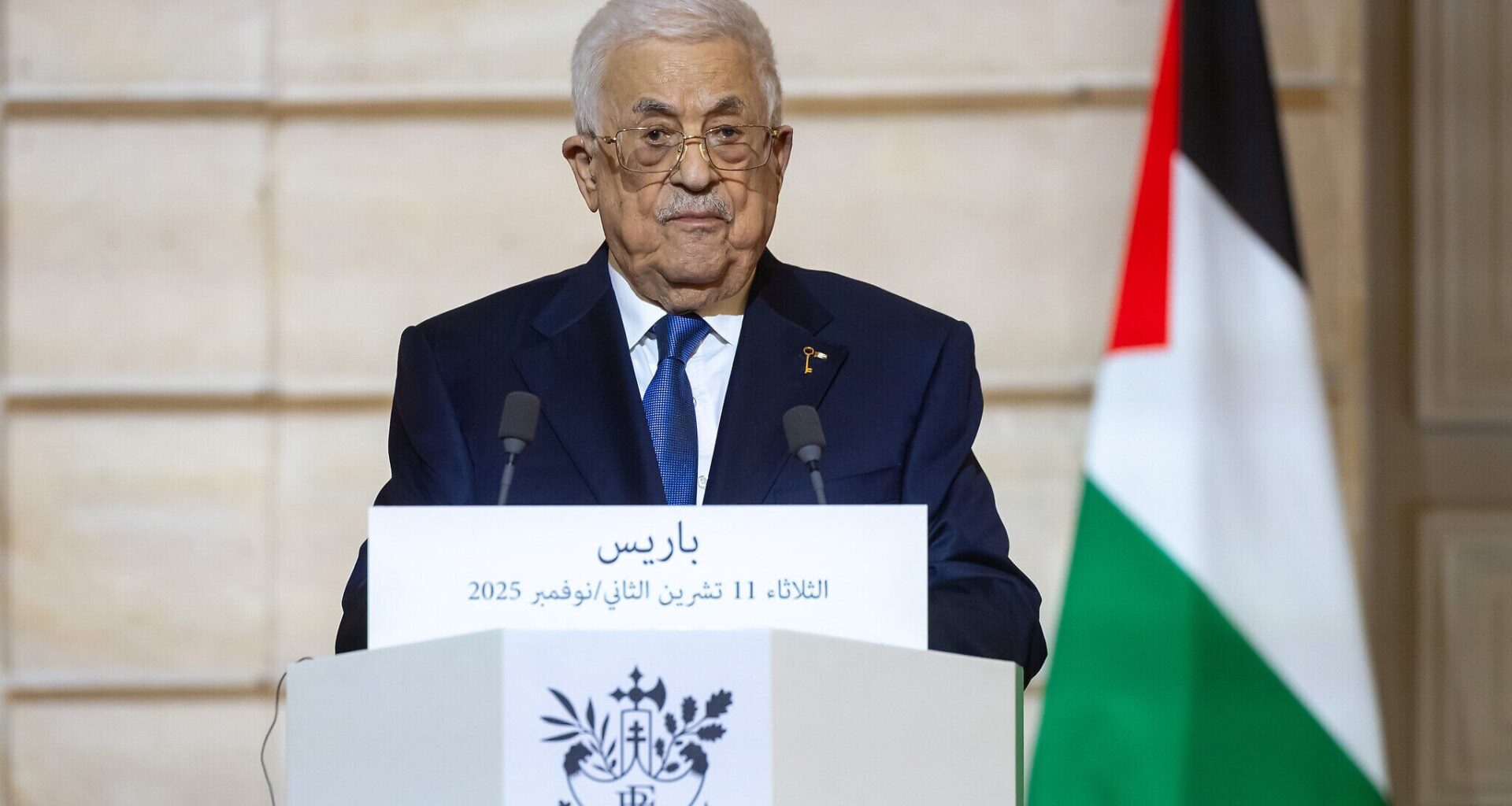
CAIRO — Palestinian Authority President Mahmoud Abbas turns 90 on Saturday, still holding authoritarian power in tiny pockets of the West Bank, but marginalized, weakened, deeply unpopular among Palestinians, and struggling for a say in a postwar Gaza Strip.
The world’s second-oldest serving president — after Cameroon’s 92-year-old Paul Biya — Abbas has been in office for 20 years, and for nearly the entire time has failed to hold elections. His weakness has left Palestinians leaderless, critics say, at a time when they face an existential crisis.
Palestinians say Israel’s devastating campaign in Gaza against Hamas amounts to genocide, which Israel vehemently denies. Meanwhile, Israel has tightened its lock on the West Bank, where Jewish settlements are expanding and attacks by settlers on Palestinians have spiked amid the olive harvest season that began early last month.
Prime Minister Benjamin Netanyahu has rejected Palestinian statehood under the PA, which Israel accuses of incitement to terrorism through its school system and payments to families of Palestinian prisoners. Netanyahu’s allies have pressed for outright annexation of the West Bank in a bid to torpedo the prospect of Palestinian statehood.
For now, the US has bent to Israel’s refusal to let the PA govern postwar Gaza. With no effective leader, critics fear Palestinians in the coastal territory will be consigned to live under an international body dominated by Israel’s allies, with little voice and no real path to statehood.
Get The Times of Israel’s Daily Edition
by email and never miss our top stories
By signing up, you agree to the terms
Abbas “has put his head in the sand and has taken no initiative,” said Palestinian pollster Khalil Shikaki, head of the independent Ramallah-based Palestinian Center for Policy and Survey Research.
“His legitimacy was depleted long ago,” Shikaki told The Associated Press. “He has become a liability to his own party, and for the Palestinians as a whole.”
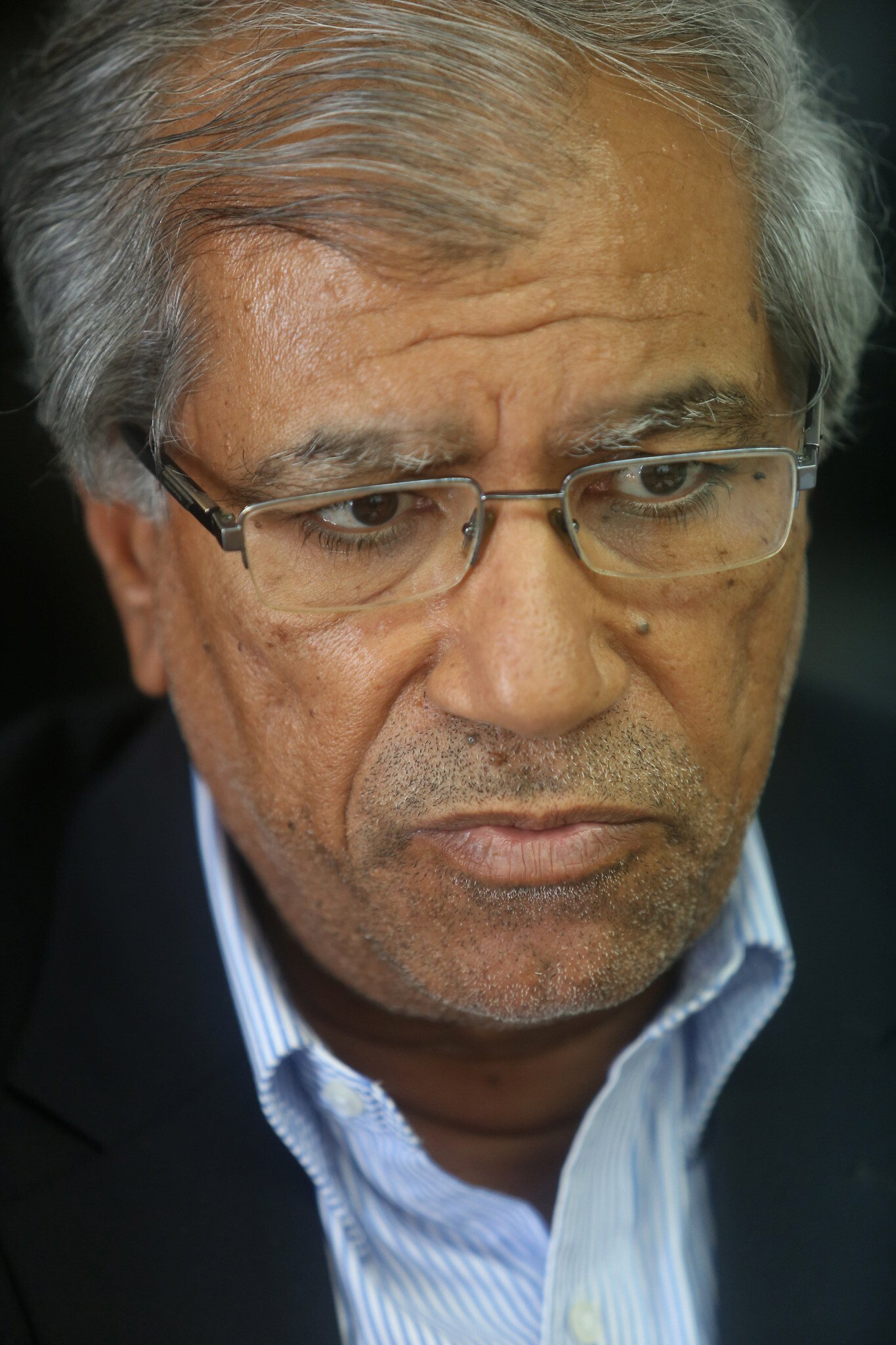
Dr. Khalil Shikaki, head of the Palestinian Center for Policy and Survey Research in the West Bank city of Ramallah, June 28, 2015. (FLASH90)
Within the pockets of the West Bank that it administers, the PA is notorious for corruption.
Abbas rarely leaves his headquarters in the city of Ramallah, except to travel abroad. He limits decision-making to his tight inner circle, including Hussein al-Sheikh, a longtime confidant whom he named as his designated successor in April.
An October poll by Shikaki’s organization found that 80% of Palestinians in the West Bank and Gaza want Abbas to resign.
Only a third want the PA to have full or shared governance of the Gaza Strip. The survey of 1,200 people had a margin of error of 3.5 percentage points.
Arafat’s successor
Abbas was a close adviser to longtime Palestinian leader Yasser Arafat and helped negotiate the 1993 Oslo Accords, which established the PA and sought to implement a two-state solution to the Israeli-Palestinian conflict.
In 2000, Arafat turned down an Israeli offer that would have established a Palestinian state on some 96% of the West Bank with a capital in East Jerusalem. The resultant impasse in talks contributed to the outbreak that year of the Second Intifada, when hundreds of Israelis were killed in a series of deadly terror bombings.
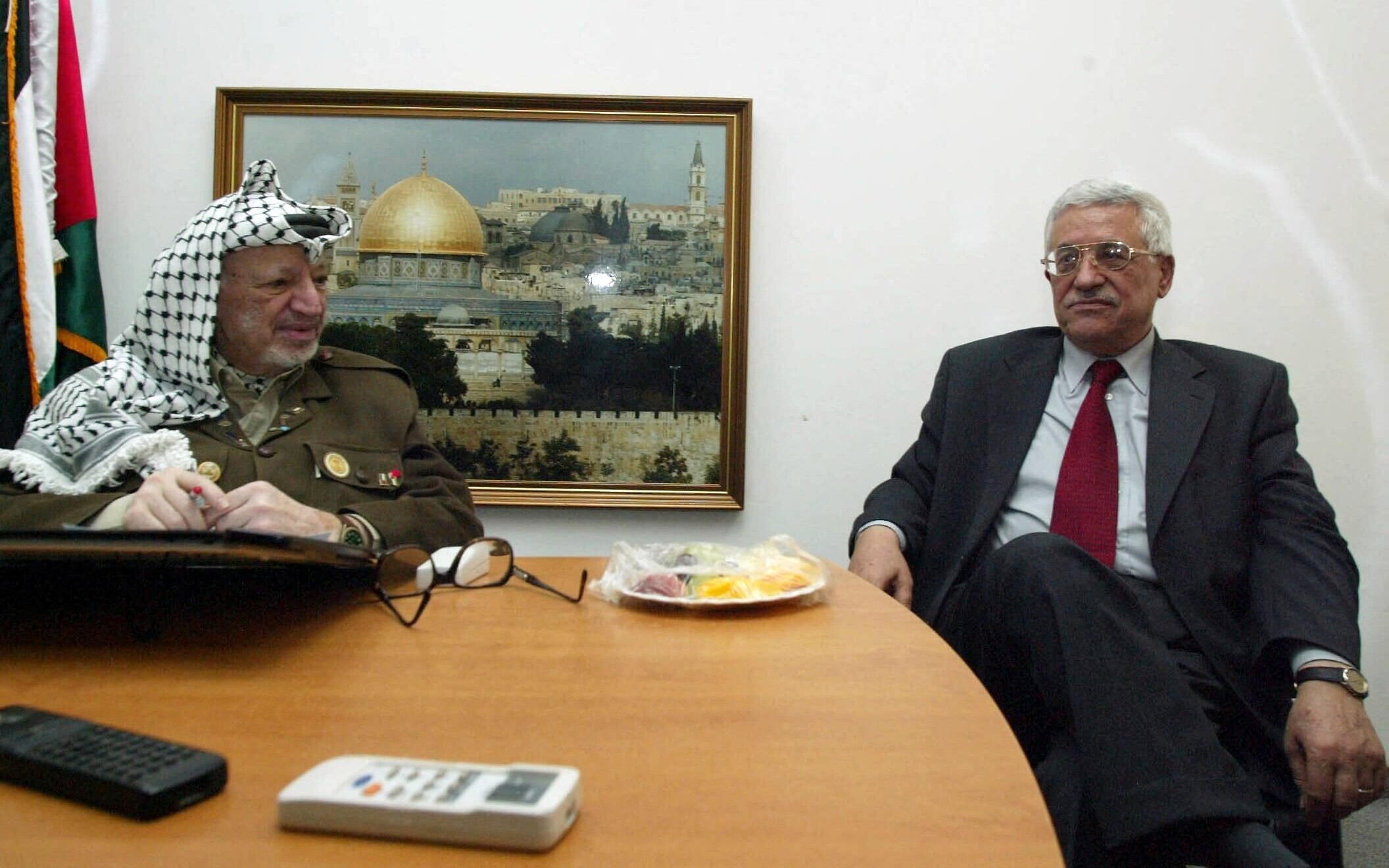
Then-Palestinian Authority President Yasser Arafat (L) and his then-prime minister, Mahmoud Abbas, meet in the West Bank City of Ramallah on July 20, 2003. (JAMAL ARURI / AFP)
Following Arafat’s death in 2004, Abbas, leader of the secularist Fatah faction, was elected PA president amid Palestinian hopes he could negotiate an independent state.
A major blow came after Hamas, Fatah’s Islamist rival, won the PA’s 2006 legislative election — the most recent PA election to date — and, a year later, drove forces loyal to Abbas out of Gaza in a violent takeover.
Abbas was left in charge of pockets around the West Bank’s main population centers. But his power is crippled because Israel has a chokehold on the economy, controlling the West Bank’s resources, most of its land and its access to the outside world.
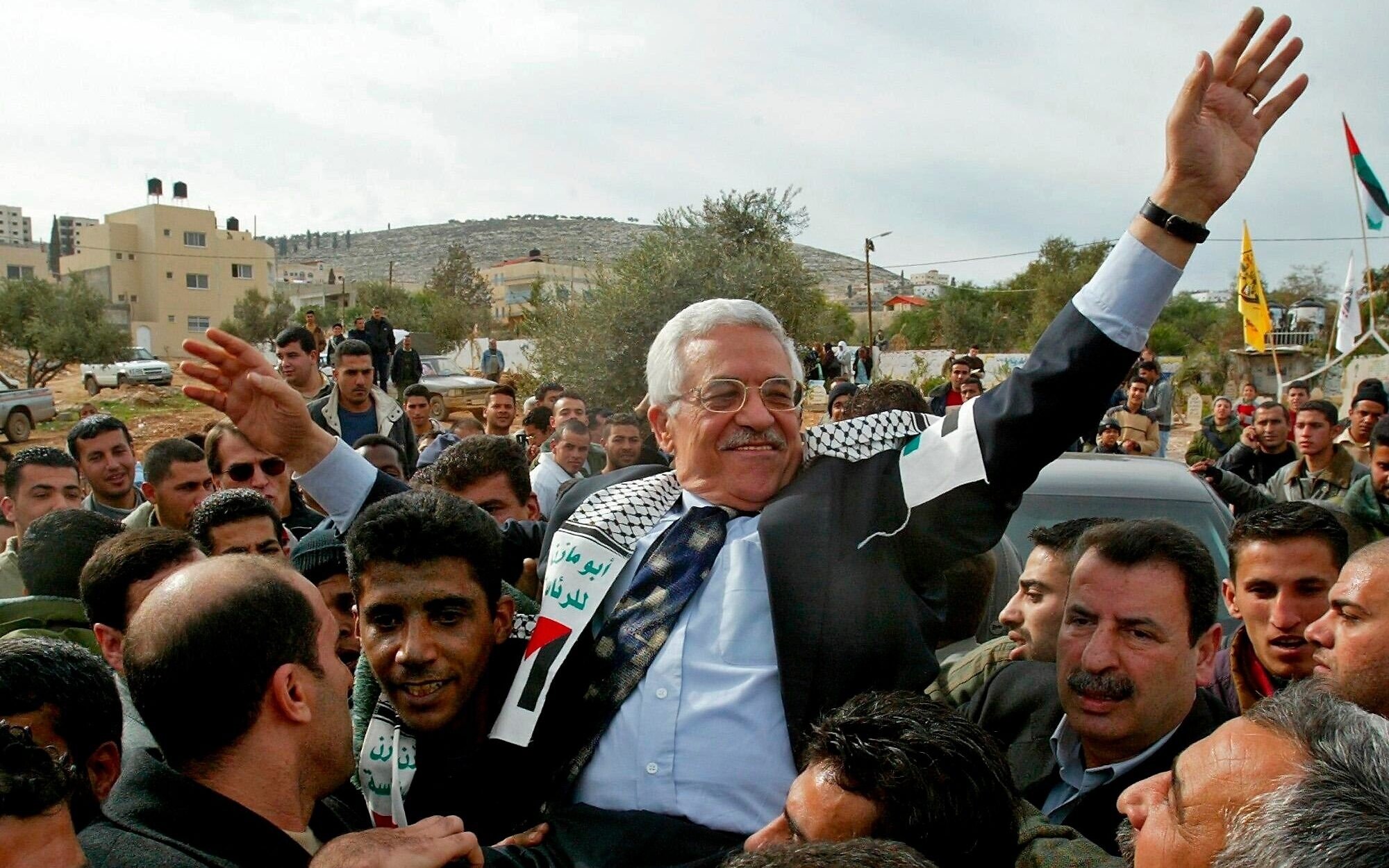
The PA’s then-interim president, Mahmoud Abbas, is carried by Zakaria Zubeidi, then-West Bank head of Fatah’s military wing, the Al Aqsa Martyrs’ Brigades, center left, during a campaign visit to the Jenin refugee camp on December 30, 2004. (AP Photo/Enric Marti)
Some on Israel’s right wing celebrated the intra-Palestinian schism, casting it as a strategic asset in thwarting Palestinian statehood.
Ehud Olmert, who served as prime minister from 2006 to 2009 before resigning due to corruption charges, and who tried while in office to reach a peace deal with Abbas, said Netanyahu’s “strategy from Day 1” has been to weaken the PA.
Netanyahu, who was first elected in 1996 amid his opposition to the Oslo Accords, and who returned to power after Olmert’s resignation, has sought to “prevent any genuine chance to come along with some agreement that could have been implemented into a historical agreement,” said Olmert.
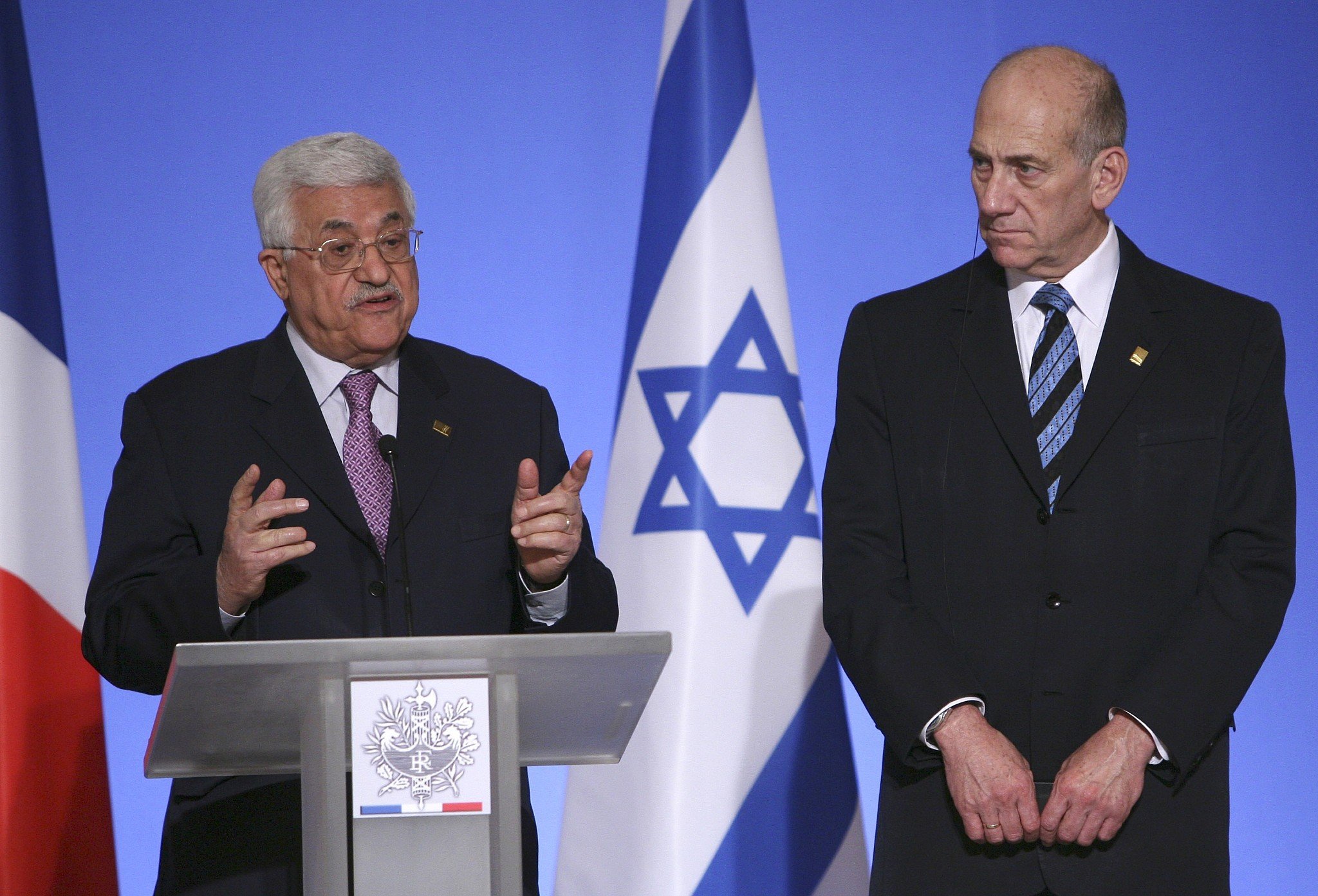
Palestinian Authority President Mahmoud Abbas, left, speaks while then-Prime Minister Ehud Olmert looks on during a media conference at the Elysee Palace in Paris, July 13, 2008. (AP Photo/Jacques Brinon)
Despite the campaign to weaken the PA, Abbas has overseen a policy of security coordination with Israel, trading intelligence and carrying out its own occasional crackdowns in the West Bank.
That security coordination put the PA “hand-in-hand with the Israeli occupation, even as [Israel] acts to make it more fragile and weaker,” said Abdaljawad Omar, an assistant professor of philosophy and cultural studies at the West Bank’s Bir Zeit University.
Netanyahu frequently accuses Abbas of not genuinely seeking peace and of inciting violence against Israel. Netanyahu’s government has repeatedly withheld transfers of tax money that Israel collects for the PA because of stipends the PA pays to families of those imprisoned or killed by Israel.
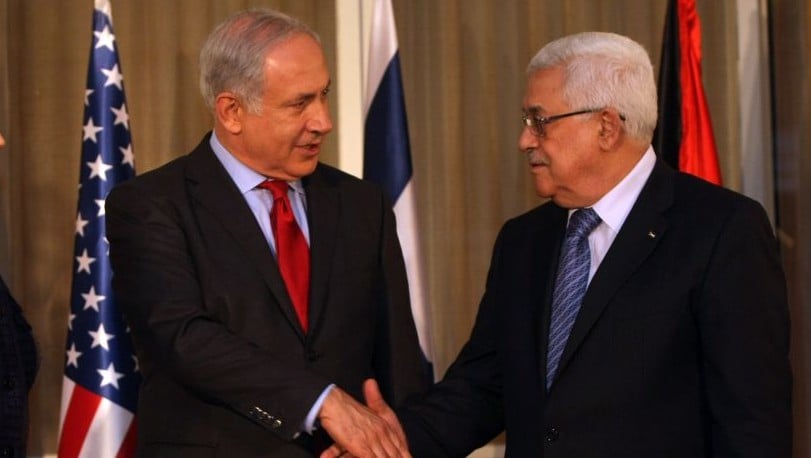
Prime Minister Benjamin Netanyahu (left) shakes hands with Palestinian Authority President Mahmoud Abbas in Jerusalem, September 15, 2010. (Kobi Gideon/Flash90)
Currently, Israel is withholding some $3 billion, according to the PA, which says it has taken steps to scrap the so-called pay-to-slay program.
That has worsened an ongoing economic crisis in the West Bank, which lost an important source of income when Israel barred the entry of workers from the territory following the Hamas terror group’s onslaught of October 7, 2023, which sparked the war in Gaza.
Israel’s campaign against the PA is “pushing it to the edge of collapse,” said Ghassan Khatib, who was Palestinian Authority planning minister under Abbas from 2005 to 2006.
Khatib defended what Abbas’s supporters call his policy of “practical realism.” By apparently working to prevent violence, Abbas has stayed credible on the international stage, he said, trying to build international backing and winning official recognition of a Palestinian state by a growing list of countries.
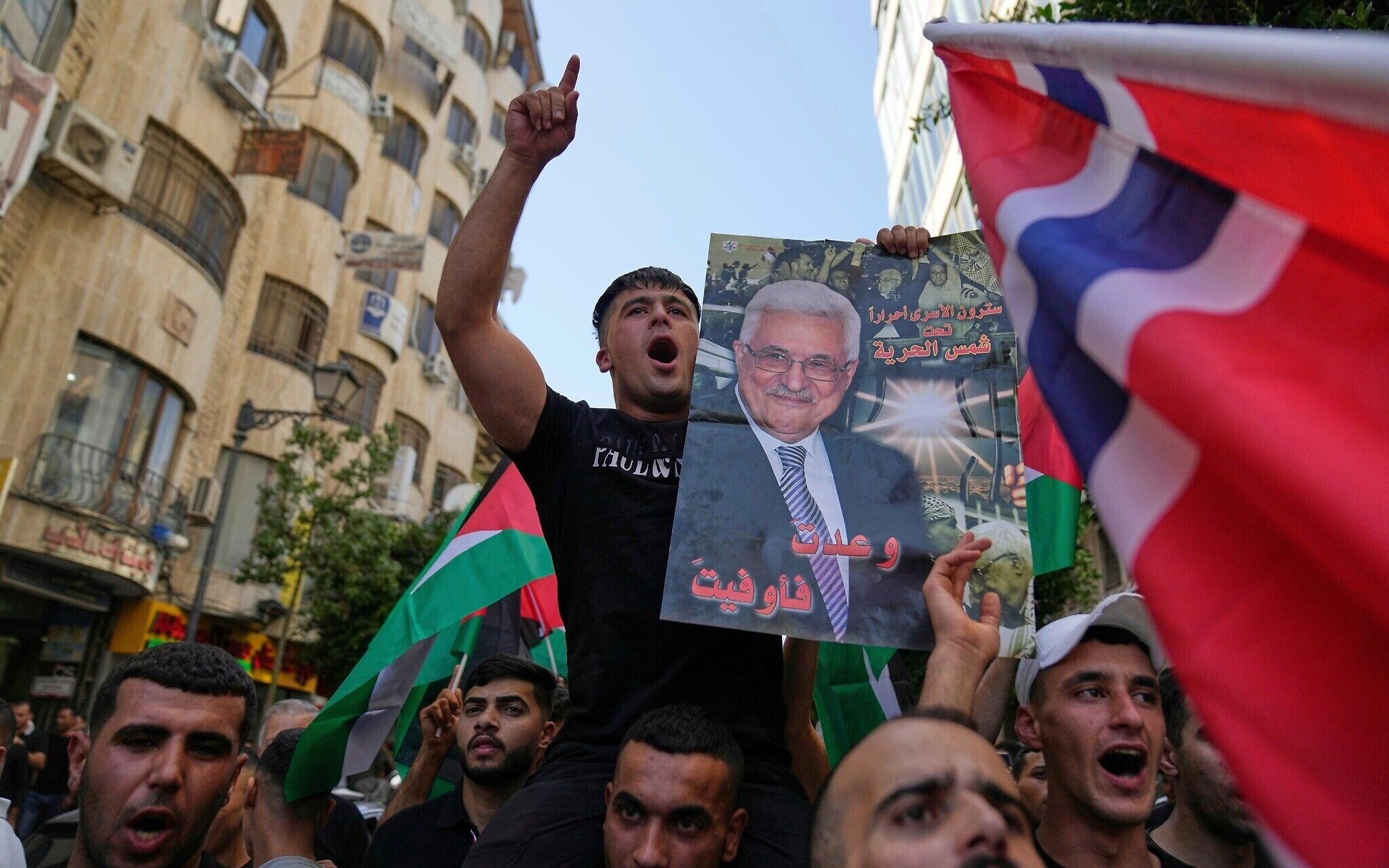
Palestinians chant national slogans and carry posters with pictures of PA President Mahmoud Abbas reading, ‘you kept your promise,’ during a rally celebrating a wave of Palestinian statehood recognition by Western nations, in the West Bank city of Ramallah, September 23, 2025. (AP Photo/Nasser Nasser)
But that hasn’t brought any successful pressure from the US or Europe against Israel to stop settlement expansion or reach a peace deal.
Omar, the Birzeit University professor, said Abbas’s pragmatic realism is “a form of national suicide” at a time when Israel’s far right pushes for “the eradication of the Palestinians.”
Fearing rivals, Abbas has prevented wide participation in government, alternative leadership or popular movements, even for significant non-violent resistance or civil disobedience against Israel, Omar said.
“Politics has been removed as a way for young people to engage, to stand against occupation,” said Omar, who was 17 when Abbas came to office.
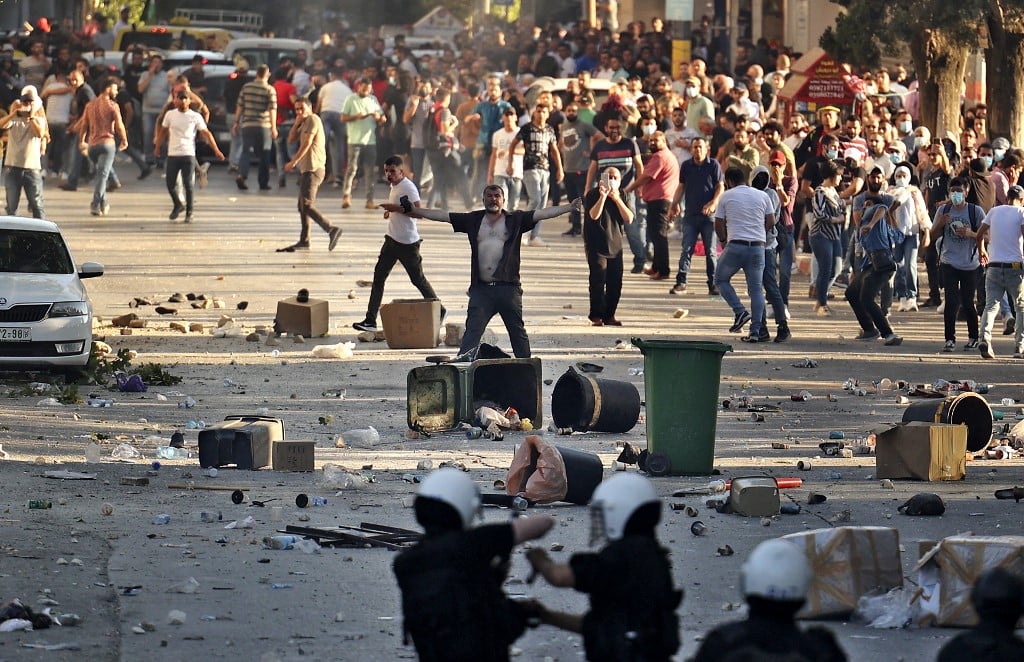
A man stands with his chest bared during clashes between Palestinian protesters and Palestinian security forces in the West Bank city of Ramallah in the West Bank, on June 26, 2021, following a demonstration against the death of human rights activist Nizar Banat while in the custody of Palestinian Authority (PA) security forces earlier in the week. (Abbas Momani / AFP)
Shikaki, the pollster, said Abbas’s inaction only fuels support for Hamas, which portrays its October 7 onslaught as aimed at dismantling Israeli control.
Even if some Palestinians believe the attack was disastrous, “they see Hamas as trying to do something on behalf of the Palestinian people,” he said. “They see Abbas is doing nothing.”
Reform attempts
US President Donald Trump’s comprehensive Gaza ceasefire plan, which Netanyahu endorsed in a joint press conference in September, calls for an international council to run a demilitarized Gaza Strip after Hamas is removed and disarmed.
Under the plan, a commission of Palestinian technocrats unaffiliated with the PA or Hamas, overseen by a Board of Peace chaired by Trump, would then carry out day-to-day services in Gaza, with the PA allowed to take control only after undergoing only once it completes an unspecified “reform program.”
According to the plan, “while Gaza re-development advances and when the PA reform program is faithfully carried out, the conditions may finally be in place for a credible pathway to Palestinian self-determination and statehood.”
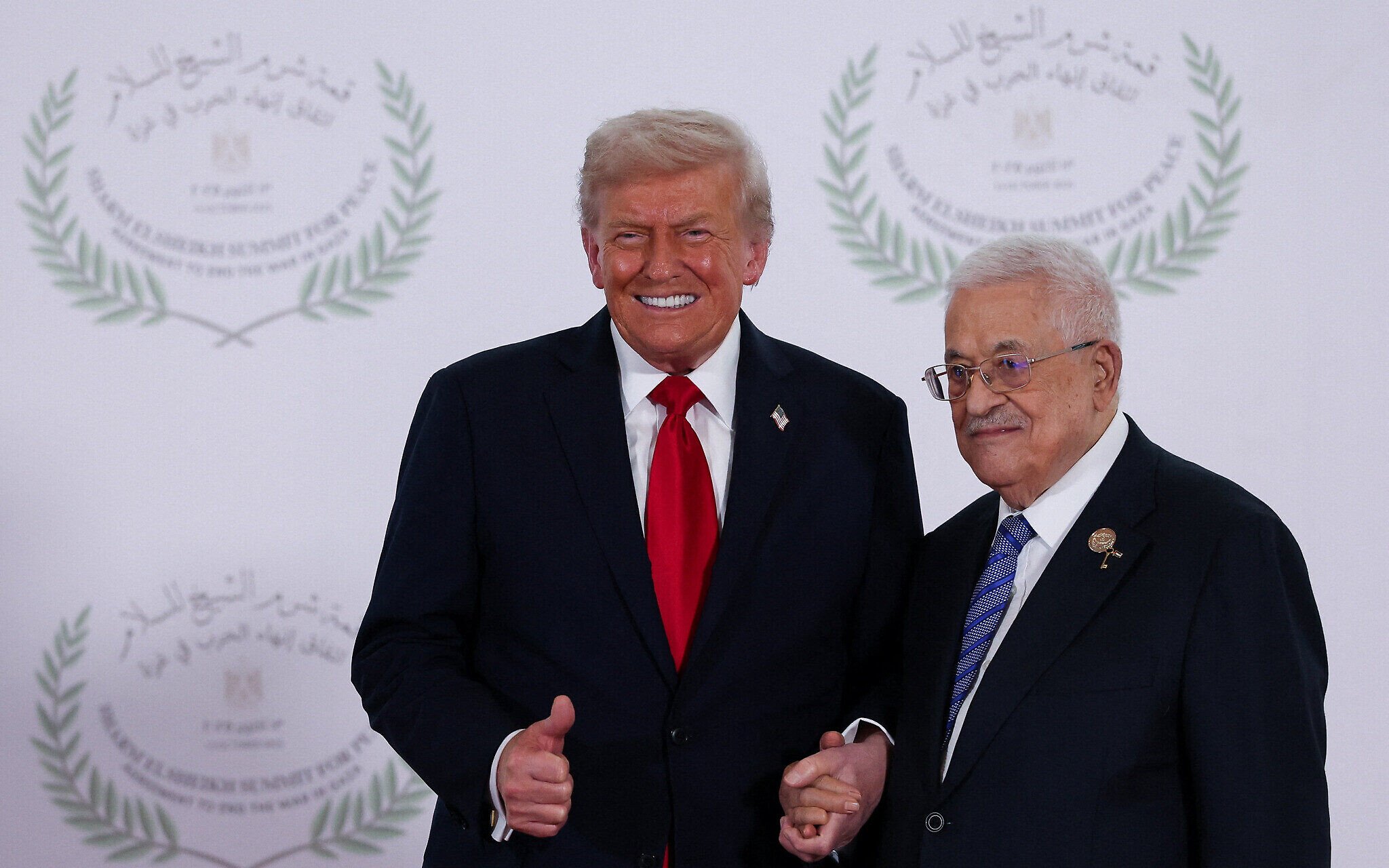
US President Donald Trump, left, and Palestinian Authority President Mahmoud Abbas pose for a photo in Sharm el Sheikh, Egypt, October 13, 2025. (Suzanne Plunkett, Pool Photo via AP)
Abbas has made some gestures toward reform, and has promised legislative and presidential elections within a year after the war in Gaza ends.
This week, meeting with French President Emmanuel Macron, he announced a Palestinian-French commission to draw up a new PA constitution.
In a high-profile move against corruption, the PA transport minister was removed in October and put under investigation on allegations of bribery, according to local media.
Palestinians are skeptical. In the PCPSR poll, 60% of respondents said they doubted Abbas will hold elections.
It found that if a vote were held, the clear winner would be Marwan Barghouti, a senior military figure from Abbas’s Fatah faction serving life in Israeli prison since 2002 in connection with deadly attacks during the Second Intifada. Abbas would come a distant third behind any Hamas candidate.
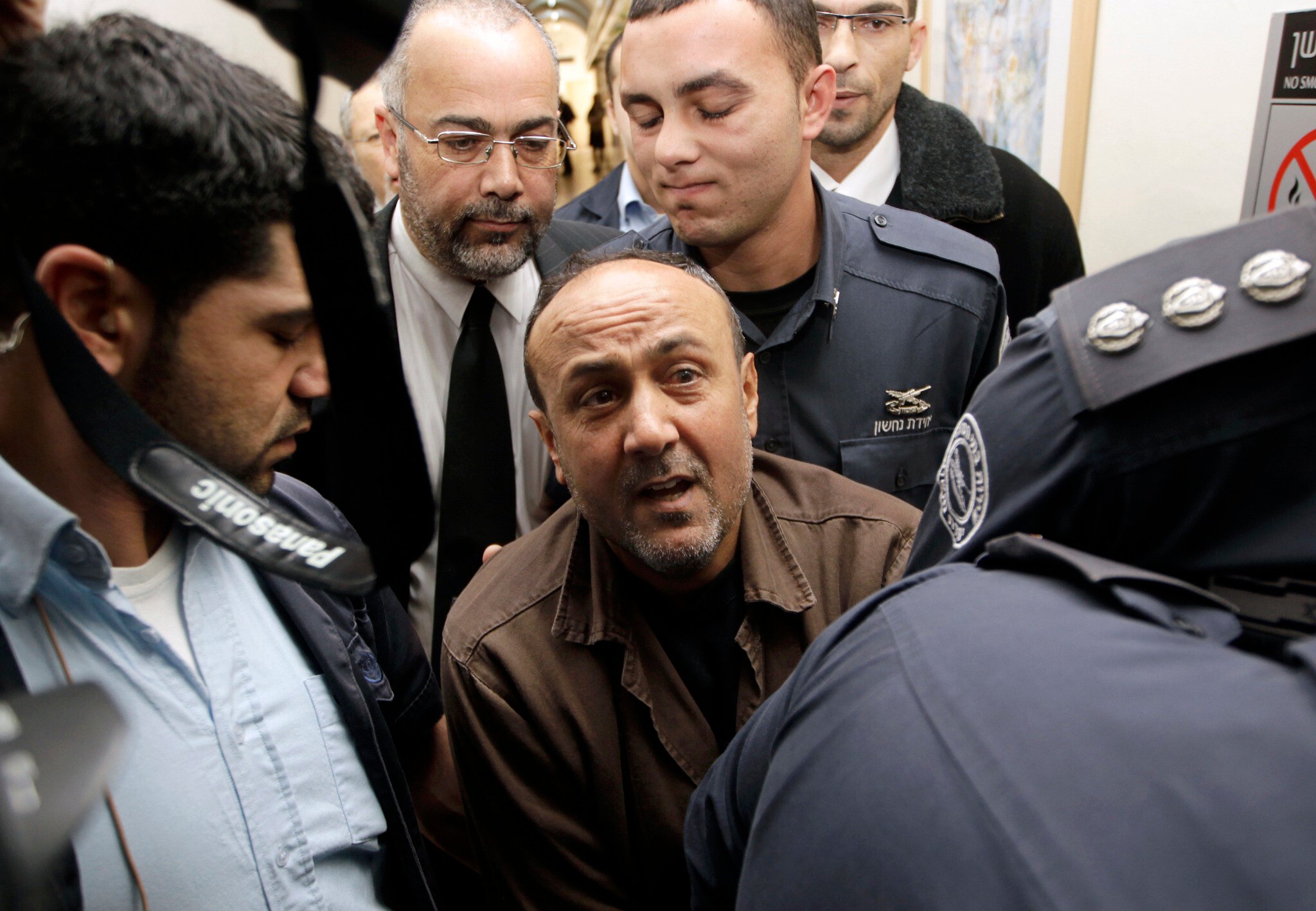
Jailed Fatah leader Marwan Barghouti (C) is accompanied by Israeli prison guards after a hearing at Jerusalem Magistrate’s Court, January 25, 2012. (REUTERS/Ammar Awad)
Ines Abdel Razak, co-director of the Palestine Institute for Public Diplomacy advocacy group, said the US and Israel don’t have an interest in real PA democratization.
“That would mean all Palestinians would actually have a voice,” he said. “Any effective ruler would confront the Israeli occupation.”
Khatib said Israel will likely be able to keep the PA out of Gaza, since uniting it with the West Bank would only boost Palestinian demands for statehood.
“Israel is the party that is calling the shots on the ground,” he said.