
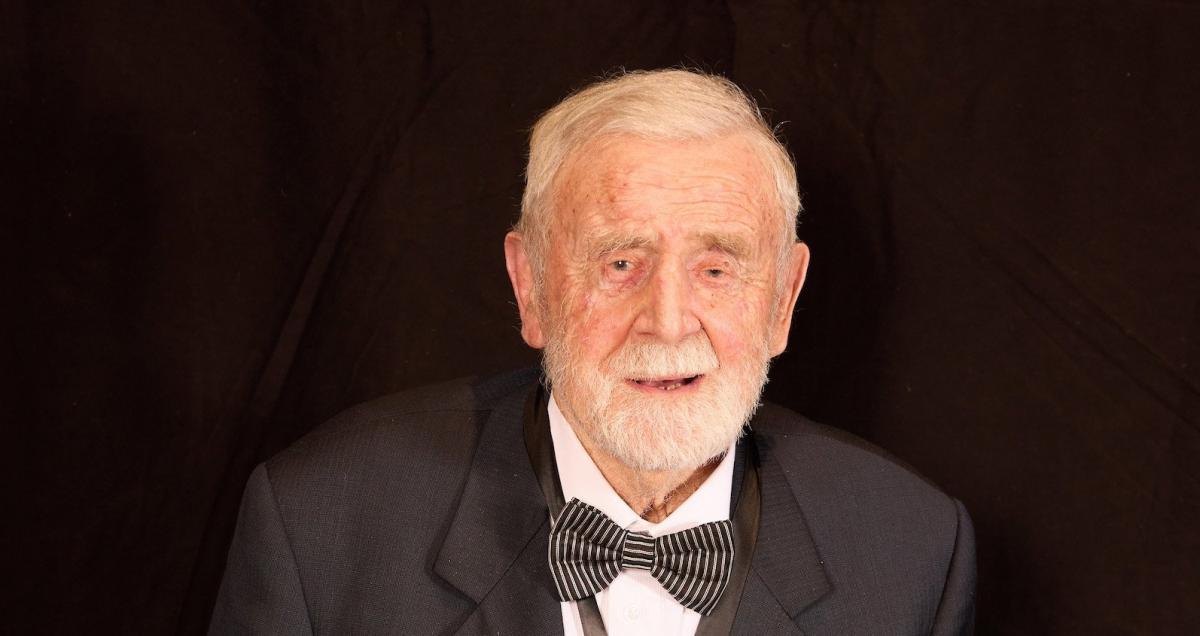
Emeritus Prof Sir Alan Mark may be 93 but he is not slowing down around environmental issues.
The University of Otago emeritus professor was awarded the prestigious Blake Medal in Hamilton on Thursday night.
He won the award for his contribution to New Zealand as a leading plant ecologist, lifelong environmentalist, and champion of science-based conservation which has helped protect and conserve some of New Zealand’s most significant landscapes.
Sir Alan said yesterday it was a real honour.
“It was a recognition of a lifetime of involvement in conservation and environmental issues, some of which have been quite controversial. You don’t win them all, but you keep trying,” he said.
Highlights included his research, which indicated high-country farming traditions were detrimental to the snow-tussock-covered grasslands of the South Island high country.
“And that went over OK with some farmers, but at least two of them contacted the vice-chancellor and asked that he dismiss me for undermining the traditional farming of the high country.
“That was Professor Robin Irvine. We talked about it and he supported my conclusions, which was based on quite a lot of research.”
“That was very much appreciated, having the university stand behind me rather than abandon me.”
Sir Alan was also front and centre during the Save Manapouri campaign which many saw as the start of the environmental movement in New Zealand.
The campaign was waged between 1969 and 1972 to prevent the raising of the levels of Lakes Manapouri and Te Anau as part of the construction of the Manapouri power project.
Former Labour Party leader Norman Kirk supported the campaign, which attracted 260,000 signatures on a petition, and the raising did not go ahead. Sir Alan was appointed the chairman of the Guardians of Lake Te Anau and Manapouri, where he stayed for 26 years.
Work though goes on.
He had written to Minister of Energy Simon Watts over the issue of changing the minimum level of Lake Te Anau to help with power generation.
“I’ve written to him and indicated that would be absolutely disastrous because we had a touch of it in Manapouri just before the 1972 election when Manapouri was dropped 50cm below its natural minimum and there was quite a bit of loss of beach material.”
Sir Alan said he had never met the late Sir Peter Blake, but he was a man he admired. Sir Alan was presented with his medal by Sir Peter’s daughter Sarah-Jane.
“It’s really an acknowledgement of the efforts that I made over a lifetime really, some of them being controversial. I’m not constrained by being a government scientist. Academic scientists are free to indulge in what they consider in their interests.”
Academic scientists were recognised now as “the critics and conscience of society”.
He said there was still a long way to go around climate change, and no political party or organisation wanted to make the big decision.
Other southern recipients of Blake awards were University of Otago emeritus professors Steve Dawson and Liz Slooten, who won the science award for their contribution over 35 years in the field of marine mammal biology.
NZ Marine Studies Centre director Sally Carson won the education award.