
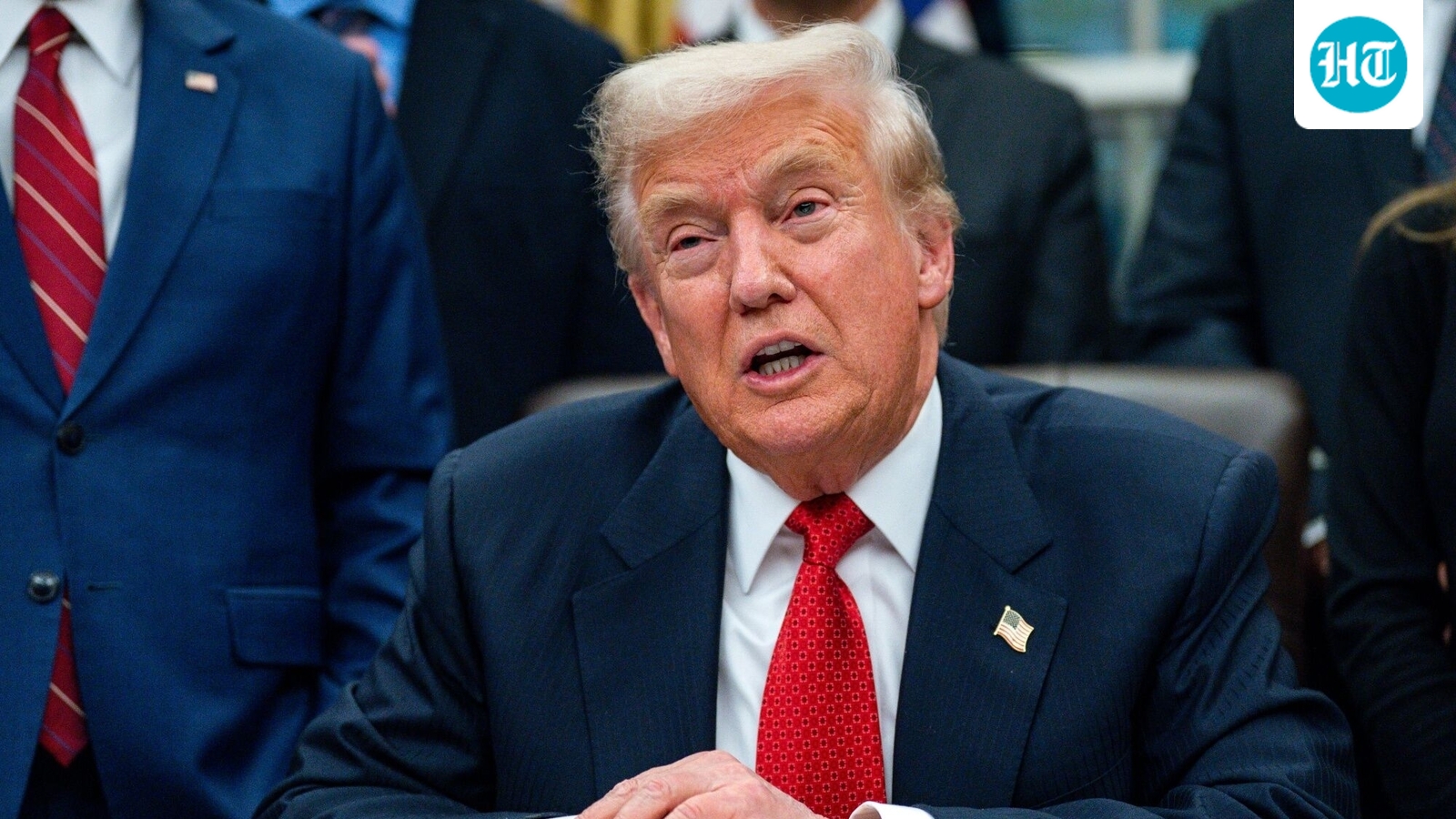
Green Card alert: Months after Donald Trump enacted a travel ban directive affecting 12 countries, the US Citizenship and Immigration Services (UCIS) may soon find itself obligated to adopt similar measures, considering the ramifications of what it referred to as “country-specific factors.”
 Green Card alert: The travel ban that Trump issued in early June prohibited nationals of the 12 nations from entering the US, mostly affecting countries in Africa and the Middle East.(Bloomberg)
Citing internal papers from the Department of Homeland Security (DHS), the New York Times on Thursday (US time) hinted at possible future immigration limitations. According to the reported documents, the Trump administration is preparing a new policy change that may eventually restrict Green Cards for foreign citizens from nations that are already subject to the President’s travel restriction.
The proposed regulations would fit with the MAGA leader’s strategy for executing the immigration crackdown, even if they haven’t been finalised yet.
Who will be impacted by potentially revised Green Card policy?
The travel ban that Trump issued in early June prohibited nationals of the 12 nations from entering the US, mostly affecting countries in Africa and the Middle East. These included Afghanistan, Myanmar, Chad, The Republic of Congo, Equatorial Guinea, Eritrea, Haiti, Iran, Libya, Somalia, Sudan and Yemen.
Trump’s restrictions were applied to seven other nations. But at the time, the US President did not put their nationals under a complete travel ban. Due to this, citizens of these Burundi, Cuba, Laos, Sierra Leone, Togo, Turkmenistan and Venezuela are unable to get tourist or student visas or establish permanent residency in the US.
A look at some exceptions
However, there were certain exceptions to the Trump’s travel ban:
Individuals possessing valid visas or Green Cards, also known as “lawful permanent” residents of the United States.
Athletes arriving in the US for the 2026 World Cup or the 2028 Summer Olympics in Los Angeles.
Afghans who qualify for the Special Immigrant Visa program.
US government personnel holding Special Immigrant Visas.
Individuals with immigrant visas designated for ethnic and religious minorities who are experiencing persecution in Iran.
Additionally, the US Secretary of State has the authority to broaden the list of exemptions to encompass individuals on a “case-by-case” basis, provided that their presence serves a national interest of the United States.
Also Read: Trump mocked as he refuses to reveal if MRI scan was for brain, but says ‘The other thing I took…’
USCIS refuses to offer any details, but ex-Biden officials targets Trump administration
Due to the ambiguity surrounding the implementation of the aforementioned policy, the USCIS has refrained from providing comments on the internal draft releases. Doug Rand, a former senior official at the agency during the Biden administration, highlighted the “country-specific factors” that could affect certain future Green Card applicants.
“Having something that applies to you based on your country is absurd. This is a radical change,” he stated, according to the NYT. They are now attempting to intervene within the United States and disrupt the established expectations of individuals who have already settled here, he added, calling it “an escalation” of the Trump administration’s assault on legal immigration.