
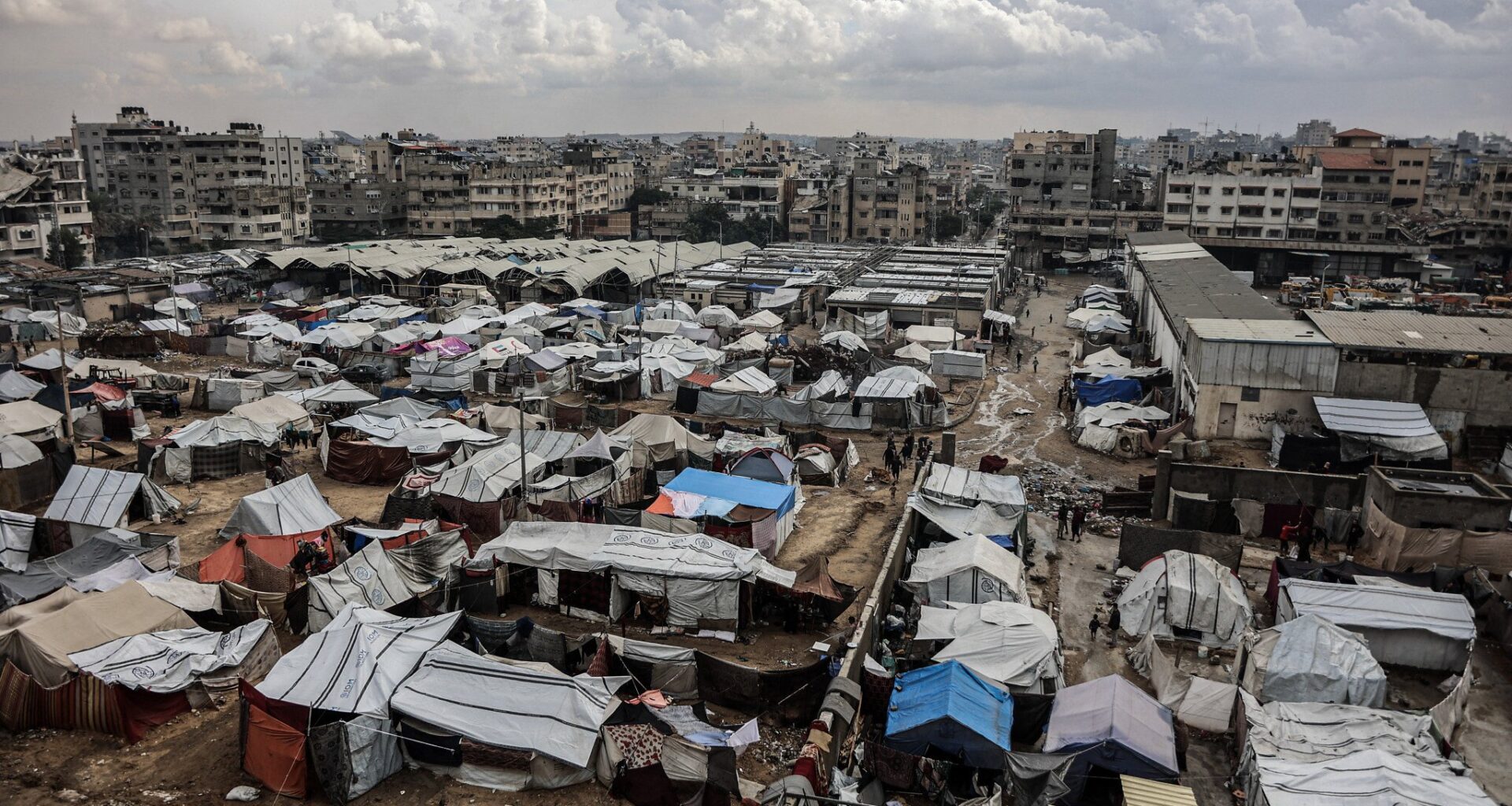
In a joint statement arranged by the US on Friday, multiple countries working toward an end to the Gaza conflict voiced backing for Washington’s UN Security Council resolution to establish an International Stabilization Force in Gaza, amid pushback from Russia and China.
The statement, supported by Qatar, Egypt, the United Arab Emirates, Saudi Arabia, Indonesia, Pakistan, Jordan and Turkey, noted that the process “offers a pathway to Palestinian self-determination and statehood.”
“We emphasize that this is a sincere effort, and the Plan provides a viable path towards peace and stability, not only between the Israelis and the Palestinians, but for the entire region,” the joint statement continued. We are looking forward to this resolution’s swift adoption.”
US President Donald Trump’s 20-point plan states that the conditions “may” be in place for “a credible pathway to Palestinian self-determination and statehood” while “Gaza re-development advances and when the PA reform program is faithfully carried out.”
Friday’s joint statement appeared to go further than the text of the plan by not leaving the question of a political horizon up for debate, possibly meeting a demand by signatories to the statement.
Get The Times of Israel’s Daily Edition
by email and never miss our top stories
By signing up, you agree to the terms
Despite the language of the 20-point plan, Trump has gone on the record in recent weeks saying that he hasn’t even decided whether he’ll back a two-state solution. Israel is vehemently opposed to the two-state framework.
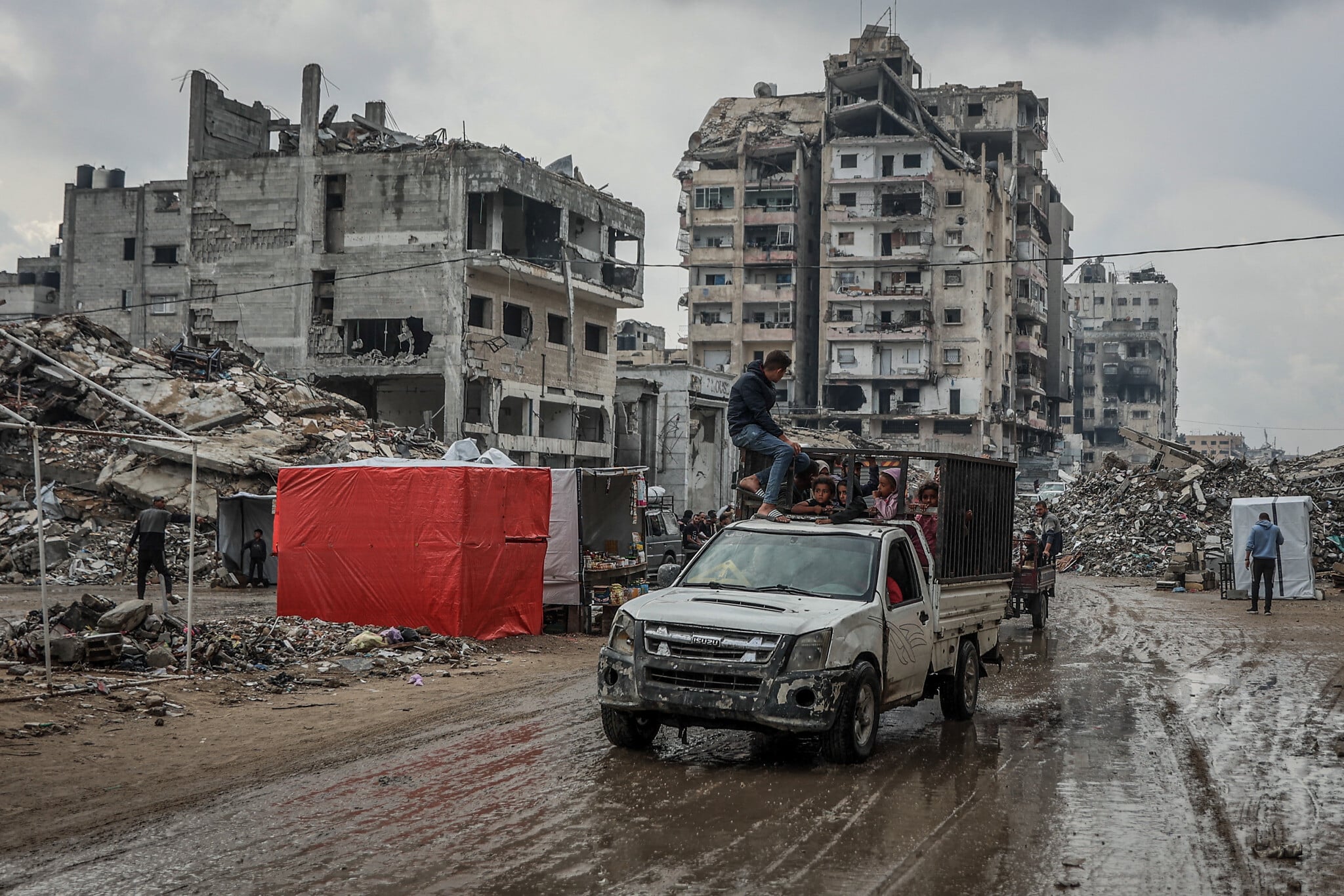
Palestinians drive down a muddy road after the first winter rainfall on a displacement camp in Gaza City on November 14, 2025 (Omar AL-QATTAA / AFP)
Thursday saw Washington publicly call on fellow members of the UN Security Council to back Washington’s resolution to establish an International Stabilization Force in Gaza. But the US proposal is facing opposition from Russia and China, which have expressed unease about a yet-to-be-established board that would temporarily govern the territory, and the lack of any transitional role for the Palestinian Authority.
The Chinese and the Russians — two veto-wielding members of the UN Security Council — have called for a “Board of Peace” specified in Trump’s 20-point plan to be removed from the resolution entirely, according to four UN diplomats briefed on the matter who spoke to the Associated Press.
Friday’s statement also came as the US was said to be pressing Saudi Arabia to normalize ties with Israel. As a condition for moving forward on establishing official relations, Riyadh has insisted that Israel commit to Palestinian statehood.
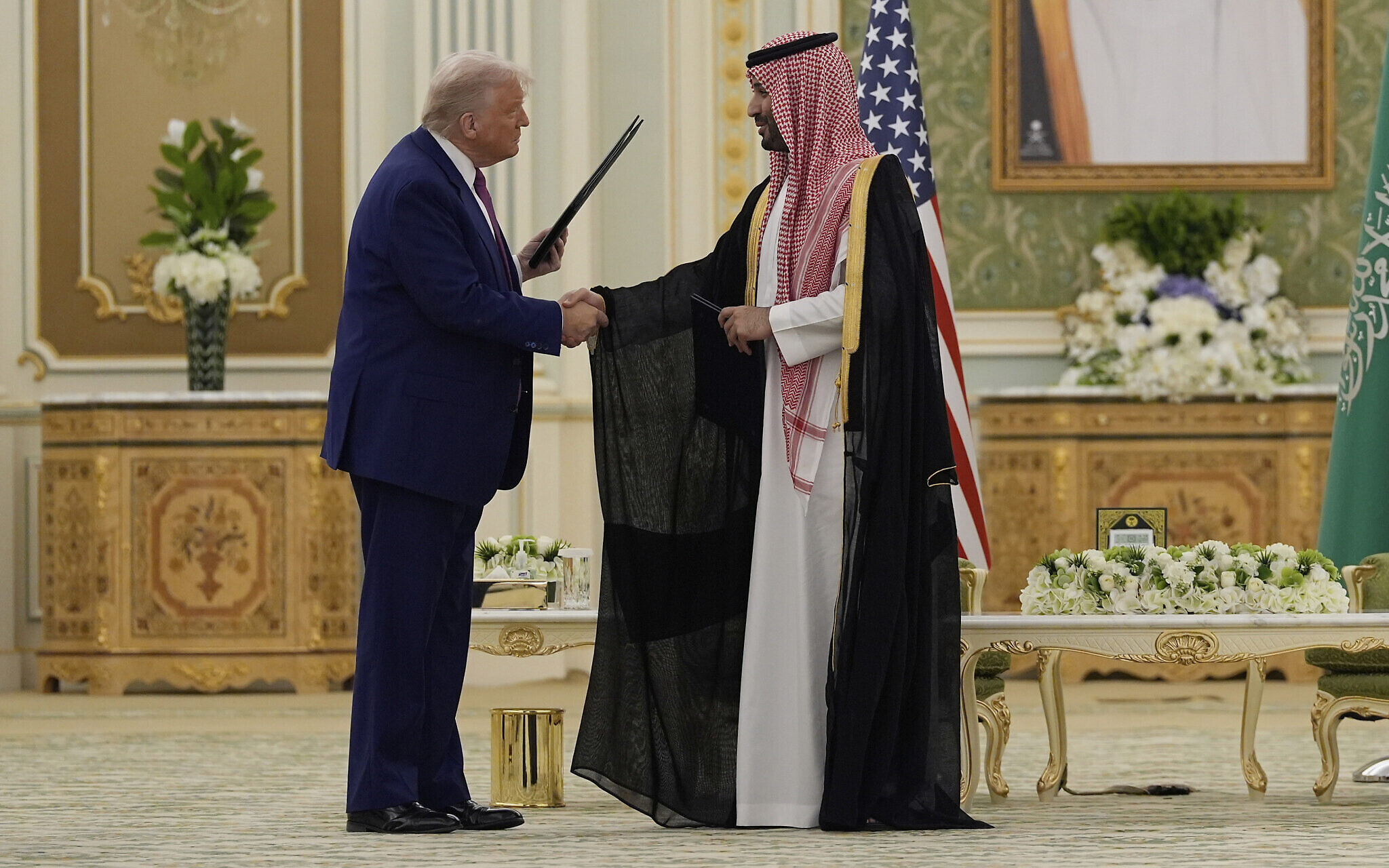
US President Donald Trump and Saudi Crown Prince Mohammed bin Salman shake hands after exchanging documents during a signing ceremony at the Royal Palace in Riyadh, Saudi Arabia, May 13, 2025. (AP Photo/Alex Brandon)
The Palestinian Authority welcomed the joint statement, which it said “affirms the right of the Palestinian people to self-determination, the establishment of their independent Palestinian state and the pursuit of peace, security and stability between Palestinians and Israelis, and stresses that this should be in accordance with international law.”
“The State of Palestine reaffirms its readiness to assume its full responsibilities in the Gaza Strip, within the framework of unity of the land, people and institutions, which considers the Strip an integral part of the State of Palestine,” the PA added.
Meanwhile, The New York Times reported that US special envoy Steve Witkoff is planning to meet with senior Hamas official Khalil al-Hayya in the near future to discuss the ongoing Gaza ceasefire.
It would be Witkoff’s second meeting with Hayya after the US envoy met with senior members of Hamas’s ceasefire negotiating team, along with fellow Trump adviser Jared Kushner, hours before an agreement was inked in Egypt on October 9.
A date has not yet been finalized for the meeting.
The imminent meeting highlights Washington’s desire to maintain a direct line of communication with the terror group after it long used intermediaries such as Egypt, Qatar and Turkey.
Watch DocuNation Season 3: The Heart of Israel
when you join the ToI Community
Support The Times of Israel’s independent journalism and receive access to our documentary series, DocuNation: The Heart of Israel.

In this season of DocuNation, you can stream seven outstanding Israeli documentaries with English subtitles and then join a live online discussion with the filmmakers. The selected films show Israel beyond the conflict: a place of storytellers and musicians, of dreamers, makers, and communities rooted in meaning and trust.
When you watch DocuNation, you’re also supporting Israeli creators at a time when it’s increasingly difficult for them to share their work globally.
To learn more about DocuNation: The Heart of Israel, click here.
Support ToI and get DocuNation
Support ToI and get DocuNation
Already a member? Sign in to stop seeing this
You appreciate our journalism

You clearly find our careful reporting valuable, in a time when facts are often distorted and news coverage often lacks context.
Your support is essential to continue our work. We want to continue delivering the professional journalism you value, even as the demands on our newsroom have grown dramatically since October 7.
So today, please consider joining our reader support group, The Times of Israel Community. For as little as $6 a month you’ll become our partners while enjoying The Times of Israel AD-FREE, as well as accessing exclusive content available only to Times of Israel Community members.
Thank you,
David Horovitz, Founding Editor of The Times of Israel