
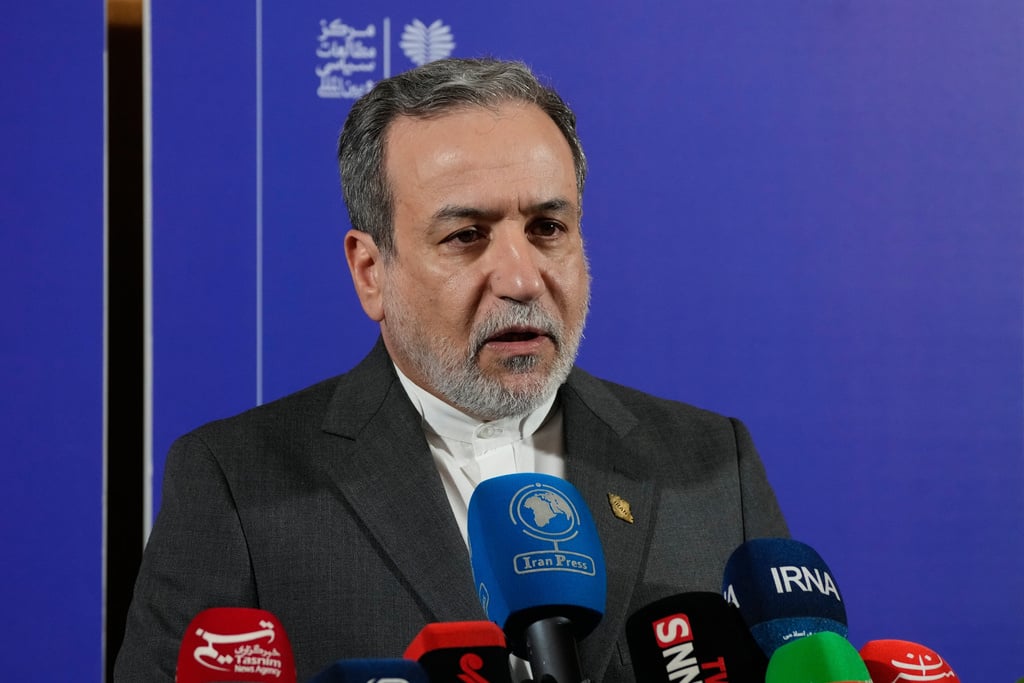
TEHRAN, Iran (AP) — Iran’s foreign minister said on Sunday that Tehran is no longer enriching uranium at any site in the country due to the strikes carried out by Israel and the US.
Answering a question from an Associated Press journalist visiting Iran, Foreign Minister Abbas Araghchi offered the most direct response yet from the Iranian government regarding its nuclear program following Israel and the United States’ bombing its enrichment sites in June.
“There is no undeclared nuclear enrichment in Iran. All of our facilities are under the safeguards and monitoring” of the International Atomic Energy Agency, Araghchi said. “There is no enrichment right now because our facilities — our enrichment facilities — have been attacked.”
Asked what it would take for Iran to continue negotiations with the US and others, Araghchi said that Iran’s message on its nuclear program remains “clear.”
“Iran’s right for enrichment, for peaceful use of nuclear technology, including enrichment, is undeniable,” the foreign minister continued. “We have this right and we continue to exercise that and we hope that the international community, including the United States, recognizes our rights and understands that this is an inalienable right of Iran and we would never give up our rights.”
Get The Times of Israel’s Daily Edition
by email and never miss our top stories
By signing up, you agree to the terms
Araghchi said Washington’s current approach toward Tehran does not indicate any readiness for “equal and fair negotiations” after US President Donald Trump hinted last week at potential discussions.
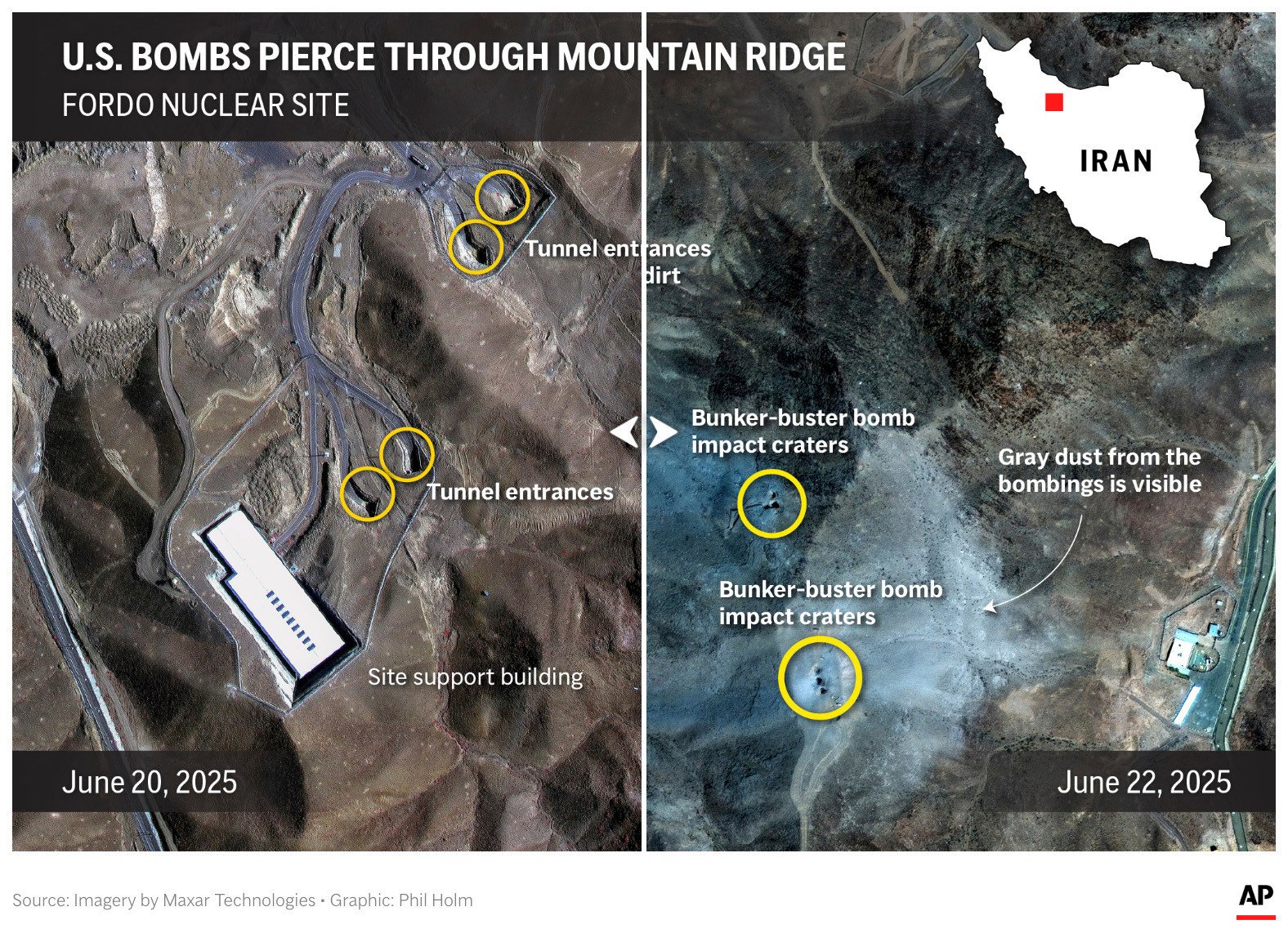
This graphic image compares Iran’s Fordo nuclear facility before and after the United States bombed the site on June 22, 2025. (AP Graphic)
Tehran and Washington underwent five rounds of indirect nuclear talks prior to the 12-day war, but faced obstacles such as the issue of domestic uranium enrichment, which the US wants Iran to forgo.
“The US cannot expect to gain what it couldn’t in war through negotiations,” Araghchi said. “Iran will always be prepared to engage in diplomacy, but not negotiations meant for dictation,” he added.
During the same conference, deputy foreign minister Saeed Khatibzadeh accused Washington of pursuing its wartime goals with “negotiations as a show.”
Iran, which avowedly seeks Israel’s destruction, denies trying to attain nuclear weapons, but it has enriched uranium to levels that have no peaceful application, obstructed international inspectors from checking its nuclear facilities, and expanded its ballistic missile capabilities. The Islamic Republic took steps toward weaponization shortly before Israel launched its military operation against the program in June, according to Jerusalem.
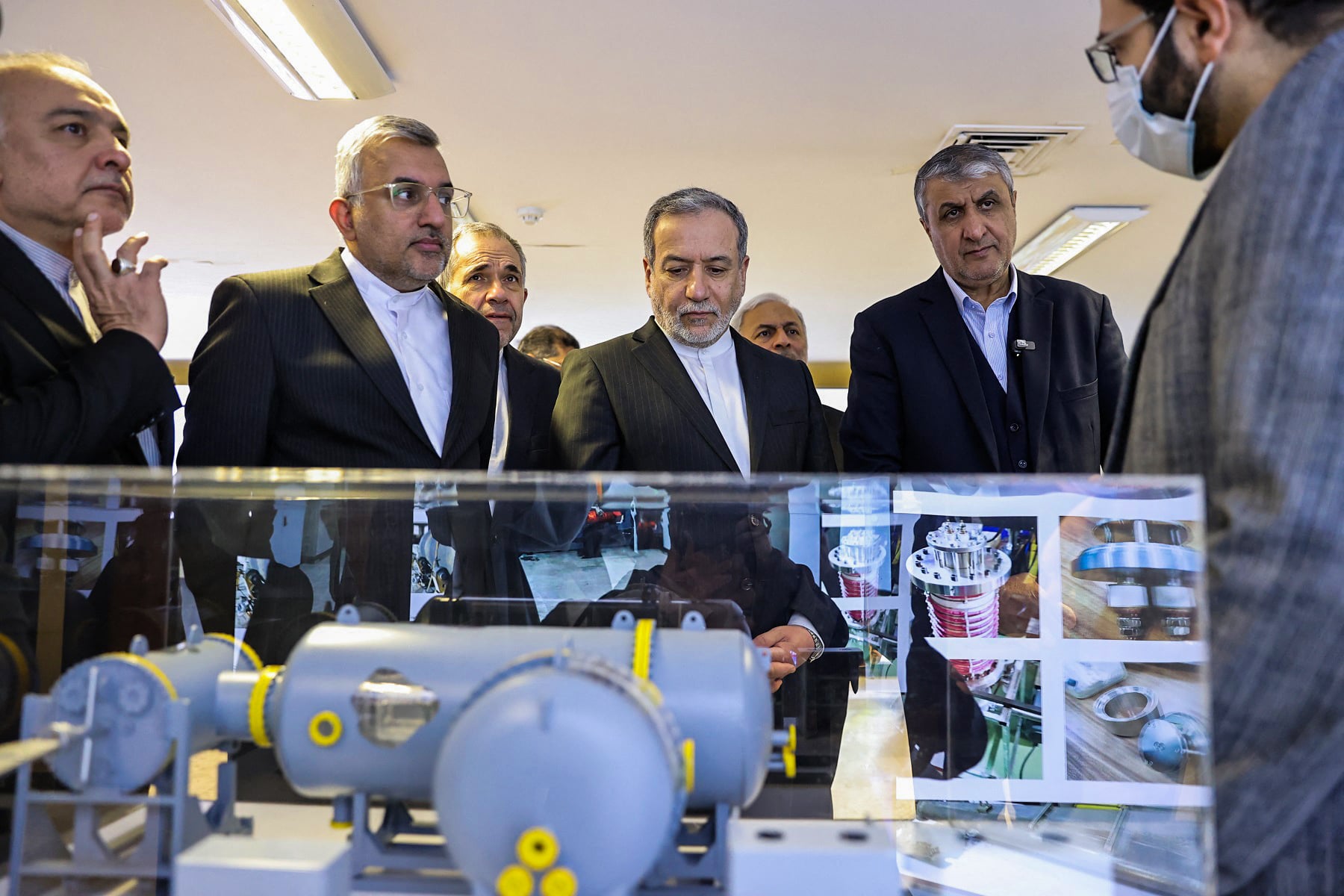
This handout photo released by the Atomic Energy Organization of Iran (AEOI) on November 10, 2025 shows Iran’s Foreign Minister Abbas Araghchi during a visit to a facility in Tehran. (Atomic Energy Organization of Iran / AFP)
Israel’s strikes in June targeted Iran’s top military leaders, nuclear scientists, uranium enrichment sites, and ballistic missile program. The US joined in, launching attacks on Iran’s heavily fortified underground nuclear sites. More than 1,000 people died in Iran.
Iran retaliated to Israel’s strikes by launching over 500 ballistic missiles and around 1,100 drones at Israel.
The attacks killed 32 people and wounded over 3,000 in Israel, according to health officials and hospitals.
The view from Tehran
Iran’s government issued a three-day visa for the AP reporter to attend a summit alongside other journalists from major British outlets and other media.
Iran’s Institute for Political and International Studies, affiliated with the country’s Foreign Ministry, hosted the summit. Titled “International Law Under Assault: Aggression and Self-Defense,” the conference included papers by Iranian political analysts offering Tehran’s view of the 12-day war in June, many seizing on comments from German Chancellor Friedrich Merz praising Israel for having done the West’s “dirty work” in launching its attack.
“Iran’s defensive response was remarkable, inspiring, historic and above all, pure,” wrote Mohammad Kazem Sajjadpour, an international relations professor. “How can one possibly compare Israel’s dirty deeds to the noble and clean actions of the Iranian nation?”
Images of children allegedly killed by Israel during the war lined the walkway outside the summit, held inside the Martyr General Qassem Soleimani Building, named for the Revolutionary Guard expeditionary leader killed by a US drone strike in 2020.
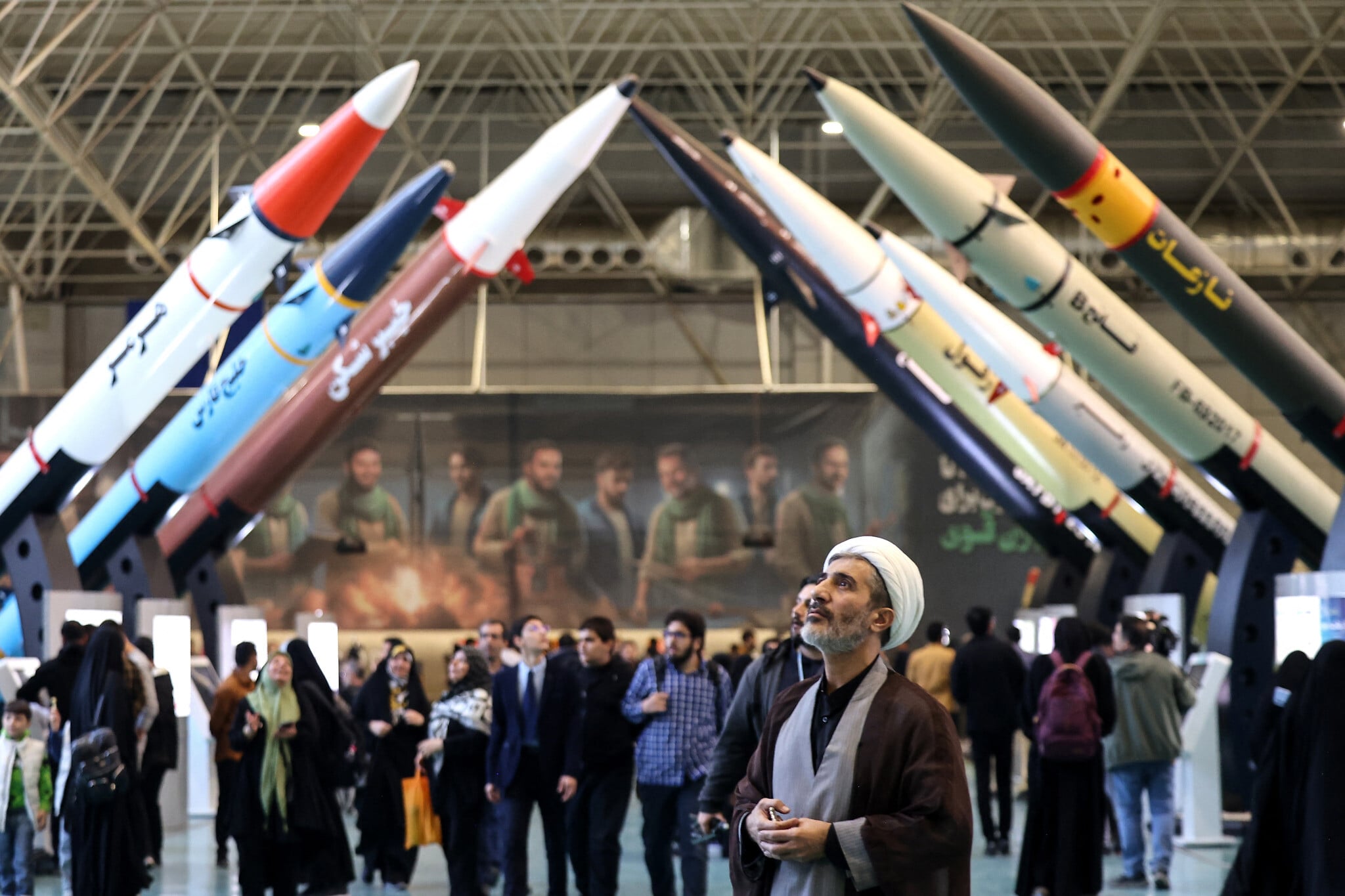
Iranians visit an exhibition showcasing missile and drone achievements in Tehran on November 12, 2025. (Photo by ATTA KENARE / AFP)
But Iran finds itself in a difficult moment after the war. Israel decimated the country’s air defense systems, potentially leaving the door open to further airstrikes as tensions remain high over Tehran’s nuclear program.
Meanwhile, economic pressures and societal change continue to challenge Iran’s Shiite theocracy, which so far has held off on making decisions on whether to enforce its mandatory hijab laws or raise the price of government-subsidized gasoline, both of which have sparked nationwide protests in the past.
Times of Israel staff and Reuters contributed to this report.
You appreciate our journalism

You clearly find our careful reporting valuable, in a time when facts are often distorted and news coverage often lacks context.
Your support is essential to continue our work. We want to continue delivering the professional journalism you value, even as the demands on our newsroom have grown dramatically since October 7.
So today, please consider joining our reader support group, The Times of Israel Community. For as little as $6 a month you’ll become our partners while enjoying The Times of Israel AD-FREE, as well as accessing exclusive content available only to Times of Israel Community members.
Thank you,
David Horovitz, Founding Editor of The Times of Israel