Russian forces conducted a series of missile and drone strikes against Ukraine on the night of November 14 to 15.
The Ukrainian Air Force reported that Russian forces launched three Kh-47M2 Kinzhal aeroballistic missiles from the Tambov Oblast airspace and 135 Shahed-type, Gerbera-type, and other drones — of which roughly 80 were Shahed-type drones — from the directions of Bryansk, Kursk, and Oryol cities; Millerovo, Rostov Oblast; Primorsko-Akhtarsk, Krasnodar Krai; and occupied Hvardiiske and Cape Chauda, Crimea.[97] The Ukrainian Air Force reported that Ukrainian forces downed two Kh-47M2 Kinzhal aeroballistic missiles and 91 drones. The Ukrainian Air Force reported that one missile and 41 drones struck 13 locations and that downed debris fell on four locations.
Ukrainian state electricity transmission operator Ukrenergo reported on November 14 that Russian forces launched over 1,500 missiles and 2,000 strike drones against Ukrainian critical infrastructure in four massive strikes in October and early November 2025.[98] Ukrenergo stated that Russian forces are targeting electricity generation facilities, transmission and distribution facilities, and gas infrastructure. Ukrenergo Chairperson Vitaly Zaichenko added that Russian forces are targeting power plants, high-voltage substations, and distribution network facilities. Zaichenko stated that Russian forces are launching an “enormous” number of weapons at each target.\
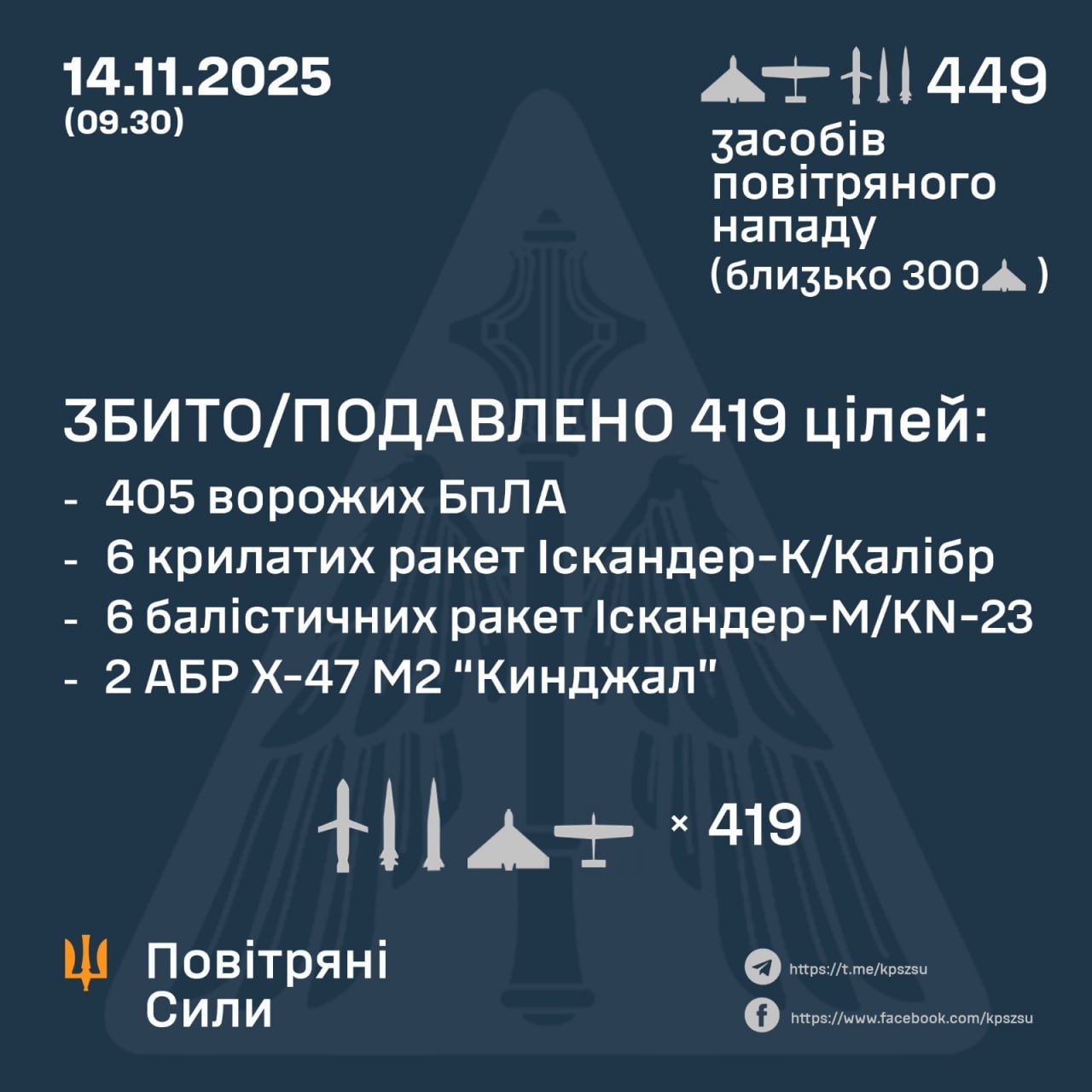
Overnight, russia launched a massive air attack on Ukraine. The aggressor used 430 Shahed-type UAVs, 6 Kalibr/Iskander-K cruise missiles, 9 Iskander-M/KN-23 ballistic missiles, 3 Kh-47M2 Kinzhal aeroballistic missiles, and 1 3M22 Zircon missile. Ukrainian air defenders shot down: 405 enemy UAVs 6 Kalibr/Iskander-K cruise missiles 6 Iskander-M/KN-23 ballistic missiles 2 Kh-47M2 Kinzhal aeroballistic missiles
Ukrainian forces appear to be trying to replicate Russia’s battlefield air interdiction (BAI) campaign on a limited scale. The Ukrainian 7th Rapid Reaction Corps of the Air Assault Forces reported on November 15 that Ukrainian forces conducted an airstrike against the M-30 road that runs between Pokrovsk and Selydove (southeast of Pokrovsk in the Russian near rear).[12] The corps reported that the airstrike impeded Russian forces from using the route to infiltrate Pokrovsk with light equipment. Geolocated footage of the strike published by the 7th Corps shows that Ukrainian forces struck the M-30 between Pokrovsk and Novopavlivka (just southeast of Pokrovsk).[13] Russian forces notably recently advanced into Pokrovsk on motorcycles, buggies, and transport trucks along the M-30 under heavy fog.[14] The Ukrainian Eastern Group of Forces reported on November 14 that the Ukrainian Air Force struck a Russian transport communications facility and a Russian manpower concentration near Shevchenko (south of Pokrovsk in the Russian near rear) with a GBU-62 Joint Direct Attack Munition-Extended Range (JDAM-ER) guided bomb.[15] A Ukrainian source reported on November 14 that Ukrainian forces also conducted a strike with a GBU-62 bomb against a road bridge in occupied Zaporizhia Oblast that Russian forces used for logistics.[16]
Russian forces have spent months conducting a strike campaign that achieved partial BAI efforts to shape the battlefield and set conditions for Russia’s recent advances in the Pokrovsk, Velykomykhailivka, and Hulyaipole directions.[17] The limited Ukrainian strikes targeting Russian ground lines of communication (GLOCs) and force concentrations are a step toward denying Russia the relative sanctuary that Russian forces have enjoyed in near rear areas.[18] A dramatically expanded Ukrainian BAI effort could disrupt the operations of the current Russian offensive approach. Russia’s BAI campaign notably began months before the recent intensification of offensive operations on the ground, however, and Ukraine should similarly work to incorporate BAI efforts into its longer-term campaign design.
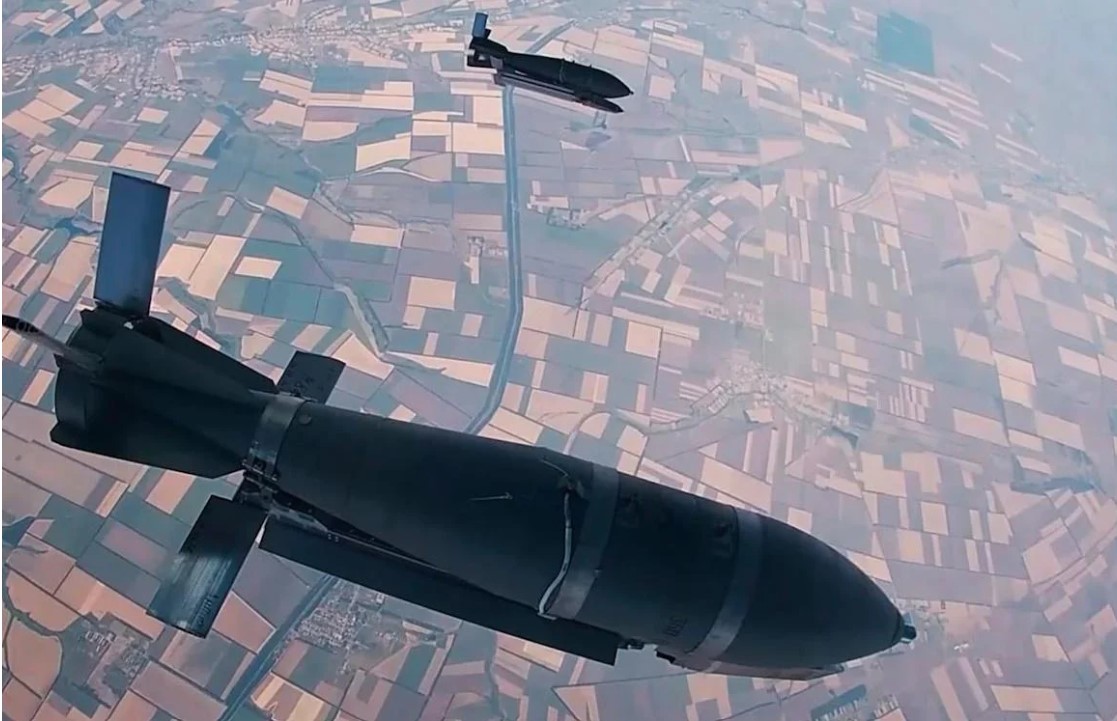
Russia’s large-scale production of glide bombs and Shahed-type drones will continue to facilitate Russia’s BAI campaign on the front. Ukrainian Main Military Intelligence Directorate (GUR) Deputy Chief Major General Vadym Skibitskyi told Reuters in an article published on November 14 that Russia plans to produce up to 120,000 glide bombs in 2025, including 500 of the longer-range glide bomb variants that can fly up to 200 kilometers.[19] Reuters noted that the 120,000 figure includes both new glide bomb production and the modernization of existing unguided bombs into guided versions. Skibitskyi stated that Russia is working to further modify the bombs to fly up to 400 kilometers. Skibitskyi reported that Russian forces have recently been launching 200 to 250 glide bombs daily — a sharp rise from an average of 170 per day in October 2025. Skibitskyi noted that Ukrainian forces can shoot down glide bombs, but that the quantity Russia is currently using is “enormous.” Skibitskyi also reported that Russia will make about 70,000 long-range drones in 2025, including 30,000 Shahed-type drones. Skibitskyi’s report is largely in line with GUR Spokesperson Colonel Andriy Yusov’s statement in early September 2025 that Russia can produce 2,700 Shahed-type drones per month.[20] ISW observed that Russia began using modified glide bombs with extended ranges of 100 to 180 kilometers against Ukrainian cities in October 2025.[21] Glide bombs have been integral to Russia’s BAI campaign in the Kursk, Kostyantynivka, Dobropillya, Pokrovsk, Velykomykhailivka, and Hulyaipole directions.[22] Russian forces have also begun to use Shahed drones to strike targets in the immediate and near rear areas as Russia’s Shahed production increased dramatically over Spring-Summer 2025. Russian forces have augmented their tactical drone campaign against Ukrainian ammunition depots and fortified defensive structures with guided glide bombs and Shahed drone strikes as these weapons deliver larger payloads than tactical drones, allowing Russian forces to target fortified structures.
Ukrainian forces continued their long-range strike campaign against Russian energy infrastructure on the night of November 14 to 15. The Ukrainian General Staff reported that Ukrainian forces struck the Ryazan Oil Refinery in Ryazan City overnight.[36] The Ukrainian General Staff noted that the refinery produces A-92/95/98/100 gasoline, diesel, jet fuel, liquefied gases, and other oil refining products, including an average of 840,000 tons of TS-1 aviation kerosene per year. Footage posted on November 15 reportedly shows explosions and fires at the refinery.[37] Ryazan Oblast Governor Pavel Malkov claimed on November 15 that Russian air defense and electronic warfare downed 25 drones over the oblast overnight and that falling drone debris started a fire at an unspecified business.[38]
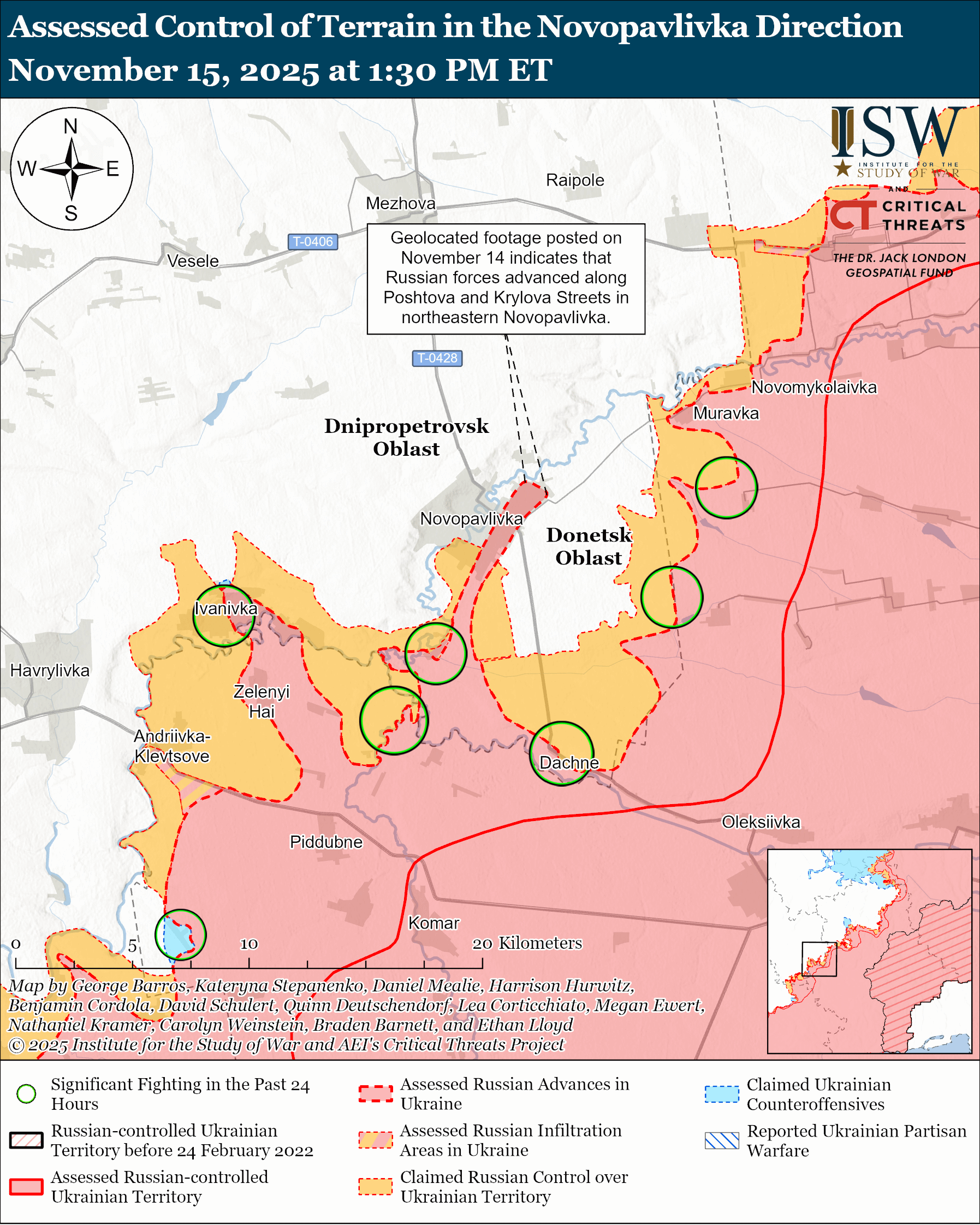
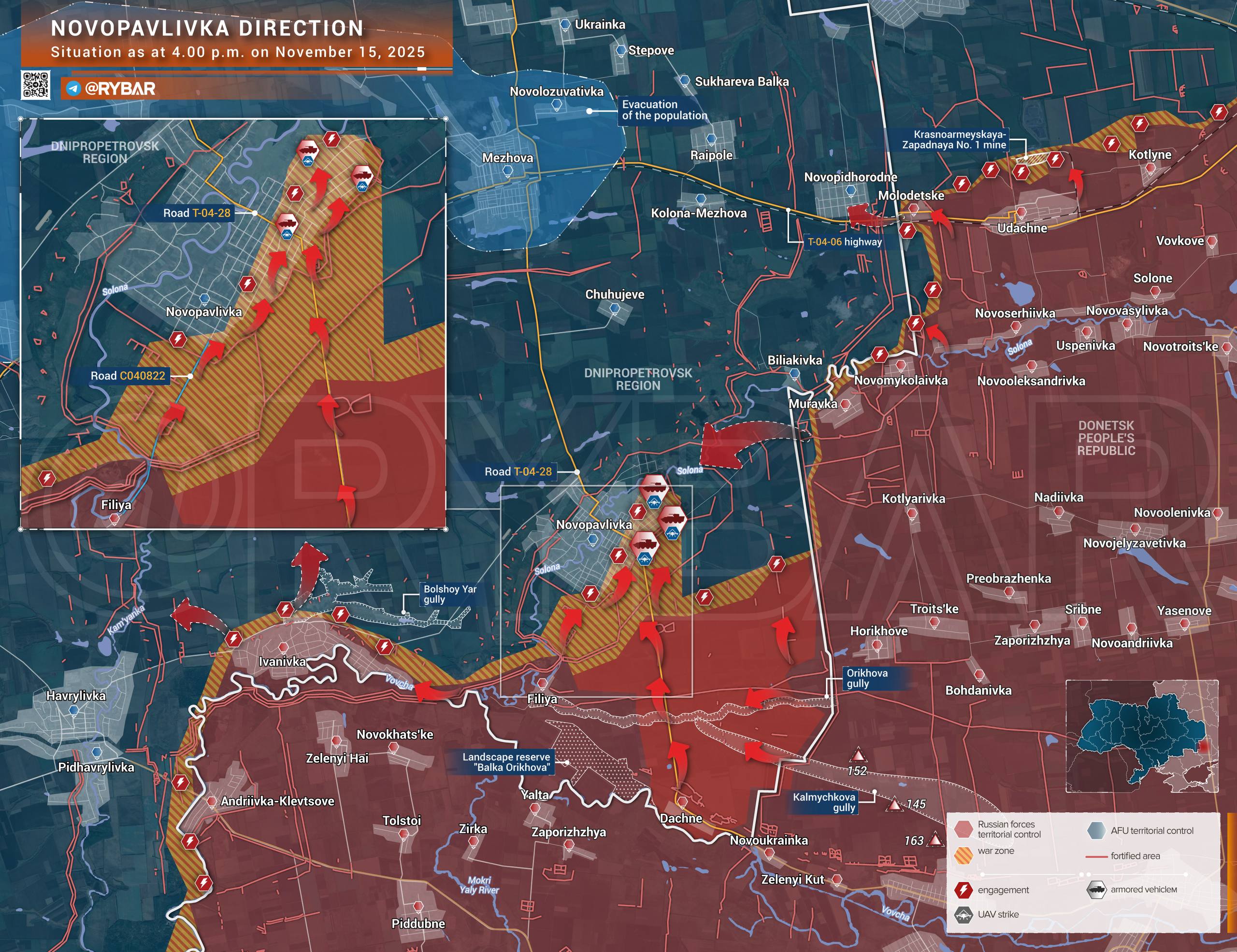
Russian forces used weather conditions to exploit vulnerabilities in Ukraine’s drone-based battlefield defenses in the Novopavlivka direction, highlighting Ukraine’s need for traditional weapons systems.
Ukrainian forces appear to be trying to replicate Russia’s battlefield air interdiction (BAI) campaign on a limited scale.
Russia’s large-scale production of glide bombs and Shahed-type drones will continue to facilitate Russia’s BAI campaign on the front.
North Korea continues to provide military support to Russia and may be preparing to provide Russia with drones in the future.
Russian forces continue their BAI campaign against Ukrainian railway infrastructure, seeking to disrupt Ukrainian rear logistics hubs to facilitate battlefield gains.
Russia’s long-range drone and missile strike tactics are precisely targeting gas infrastructure in Ukraine during the heating season.
Russia appears to be setting conditions to deploy involuntarily called up reservists to occupied Ukraine, likely in an effort to commit them to combat operations.
Russian forces continue to boast about executing Ukrainian servicemembers.
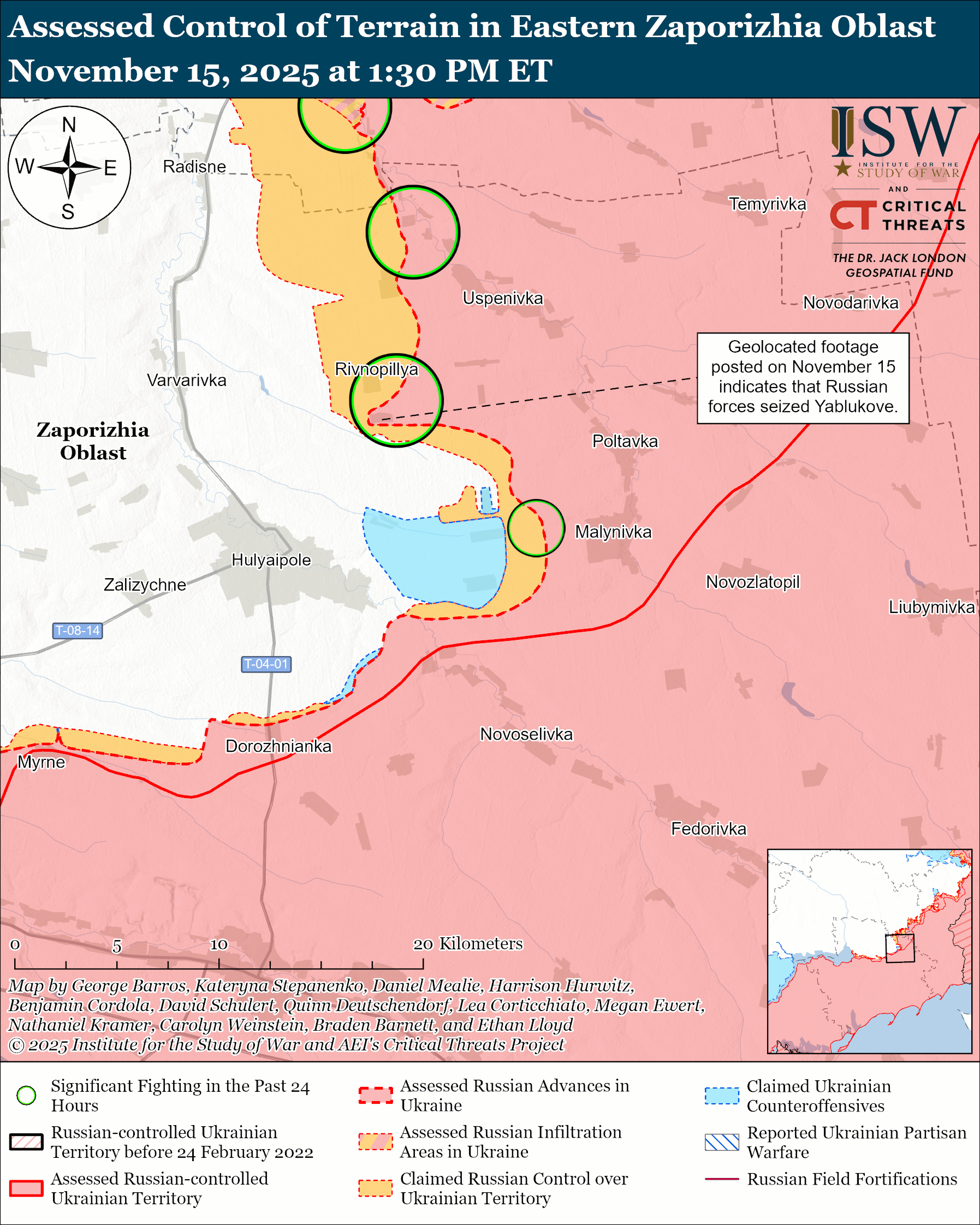
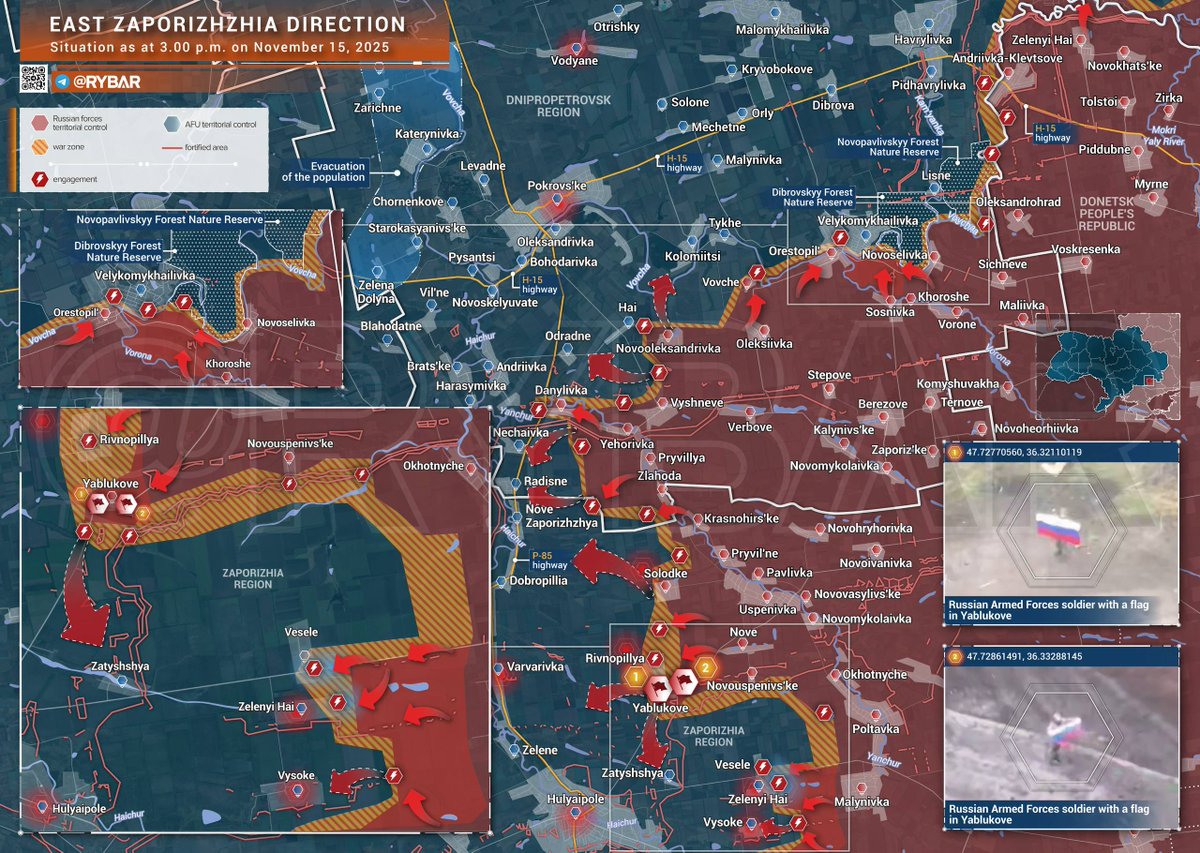
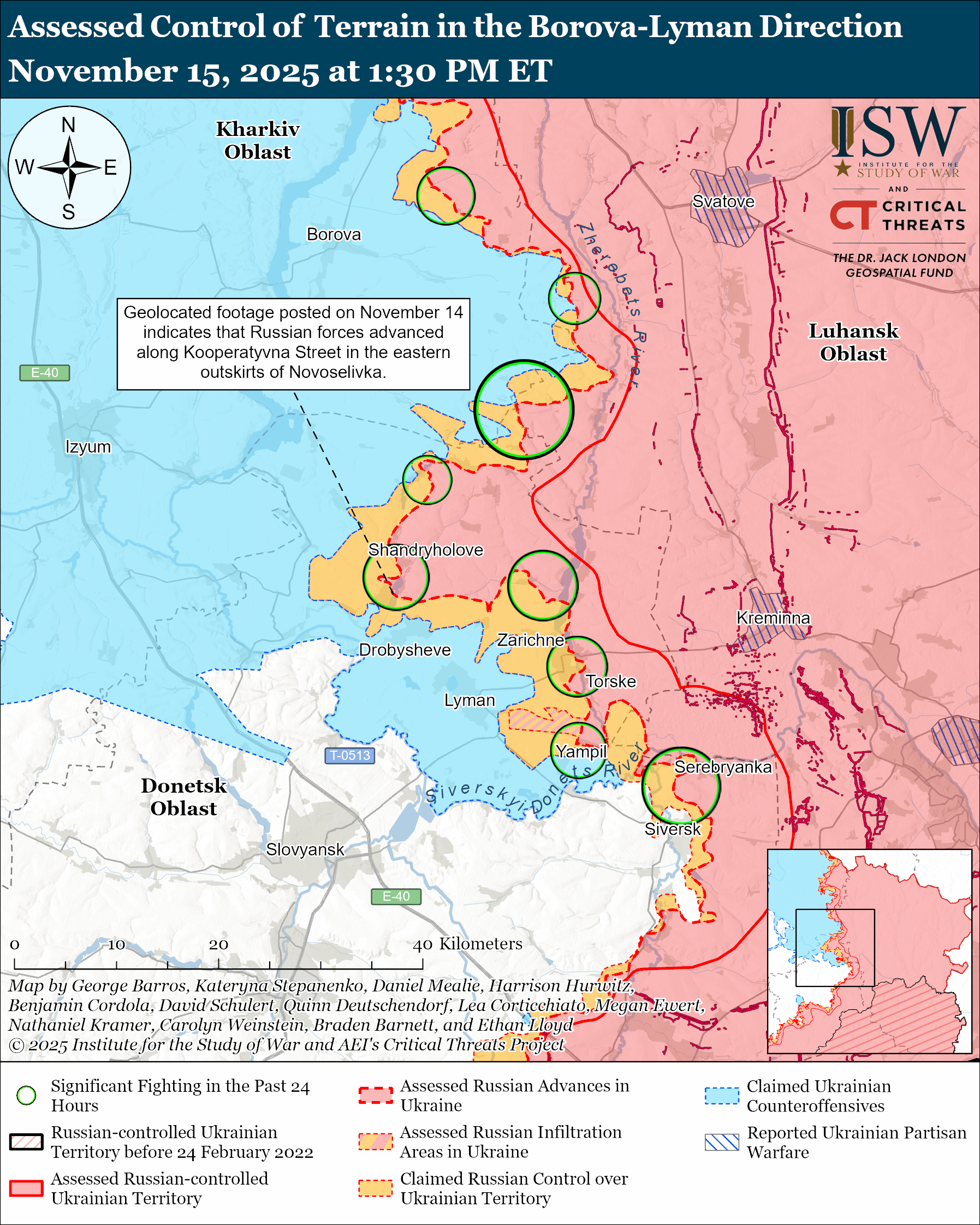
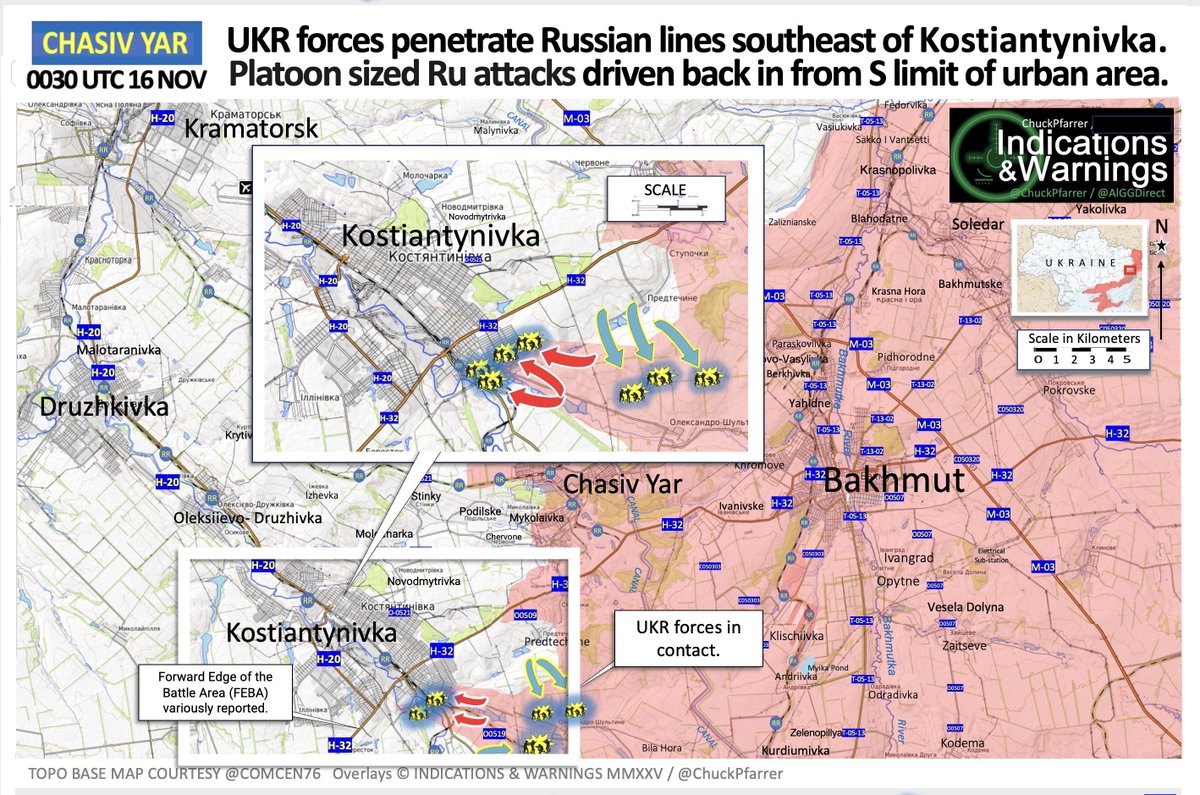
Russian forces recently advanced near Lyman, Novopavlivka, and Hulyaipole and in the Kostyantynivka-Druzhkivka tactical area.
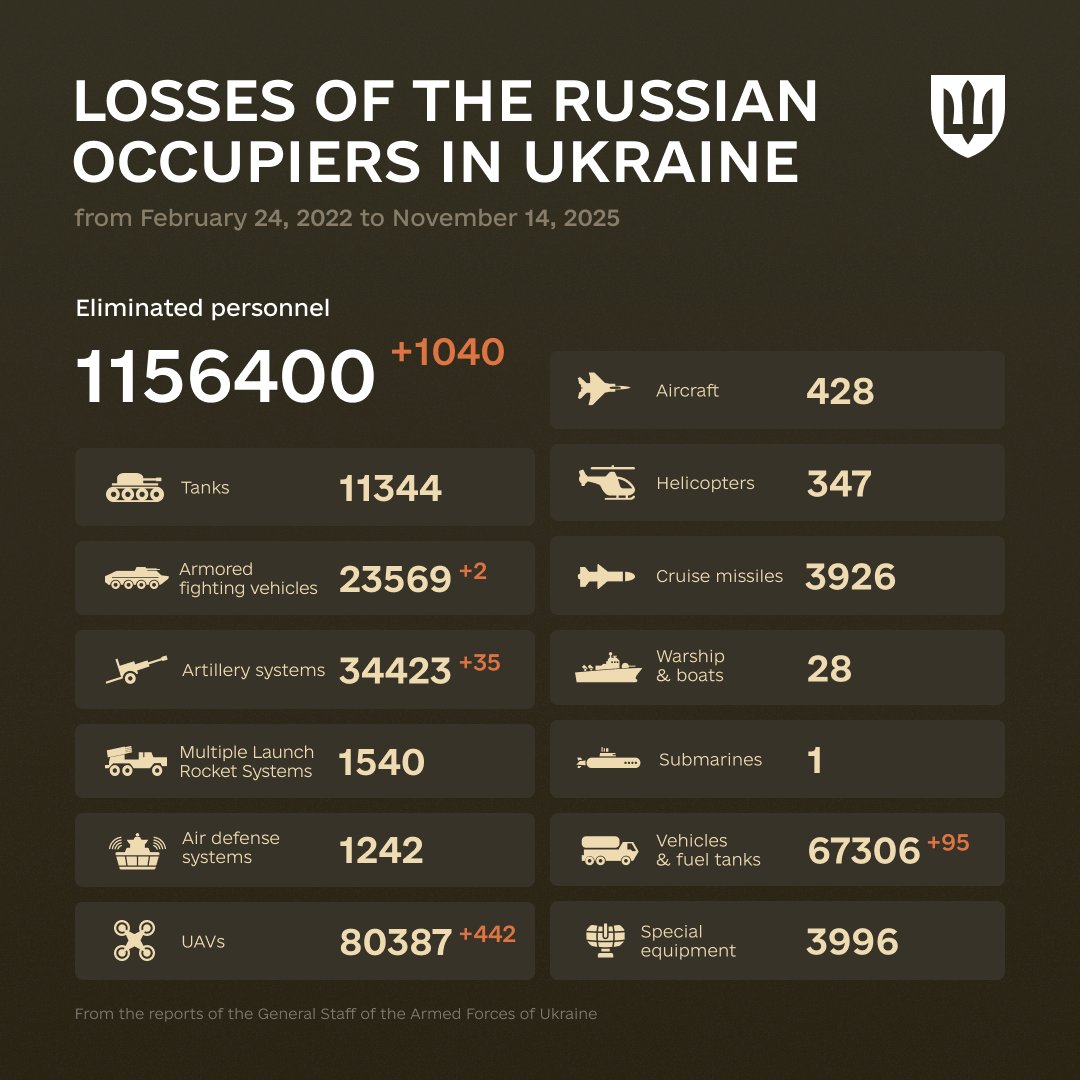
So when we say 34,943 Russians have died, we are really saying that at least that many died on camera. The real number is far higher. Most of them die out of sight, slowly and alone, in places where rescue is impossible. https://x.com/AndrewPerpetua
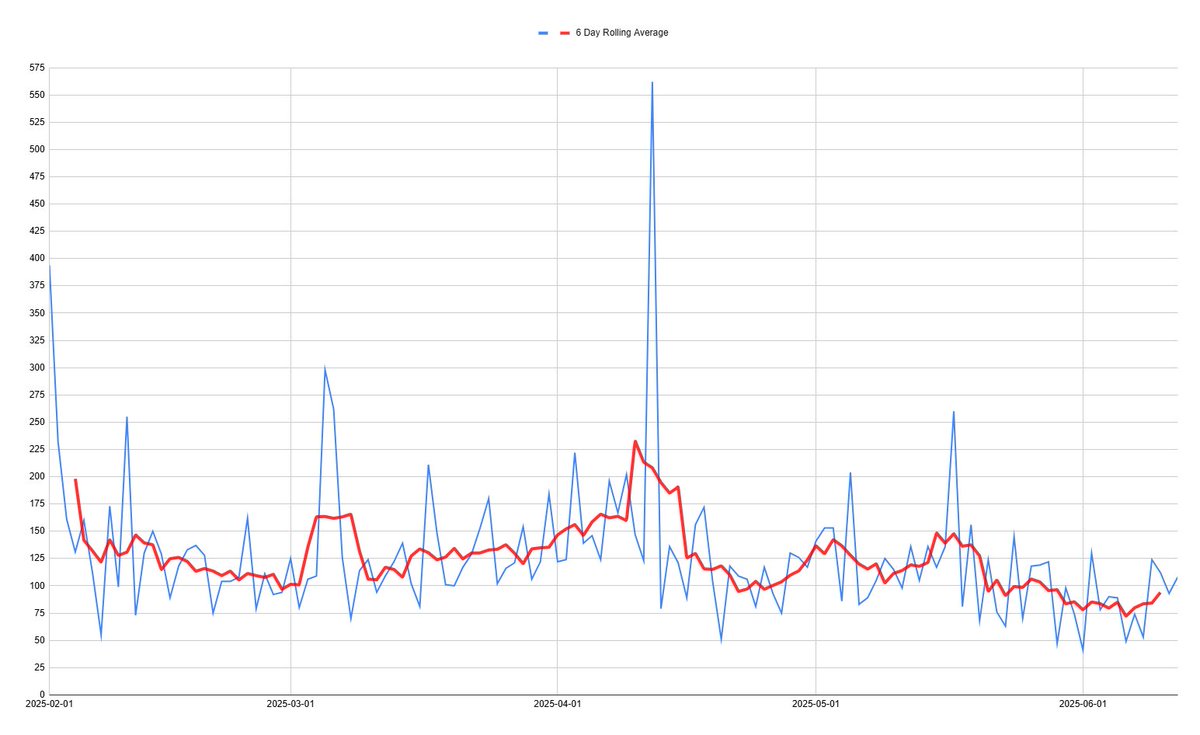
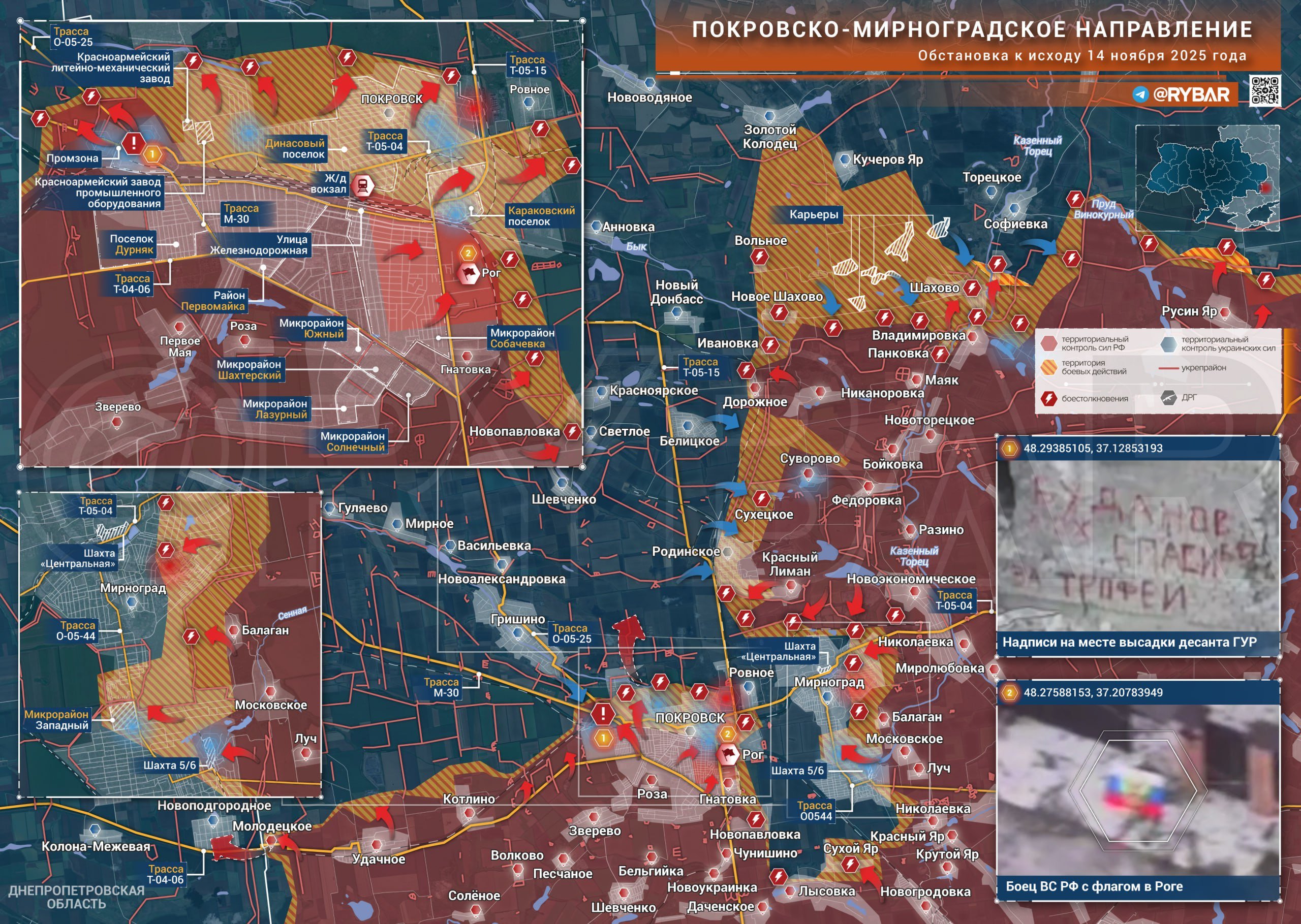
But tomorrow is a new day for vatniks to run propaganda that Pokrovsk has, is, will be falling today, tomorrow or the day after at the top. And then repeat it tomorrow. Because that’s the vatnik way.
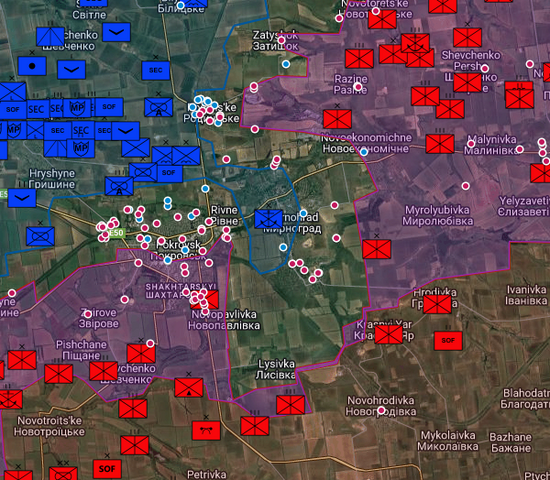
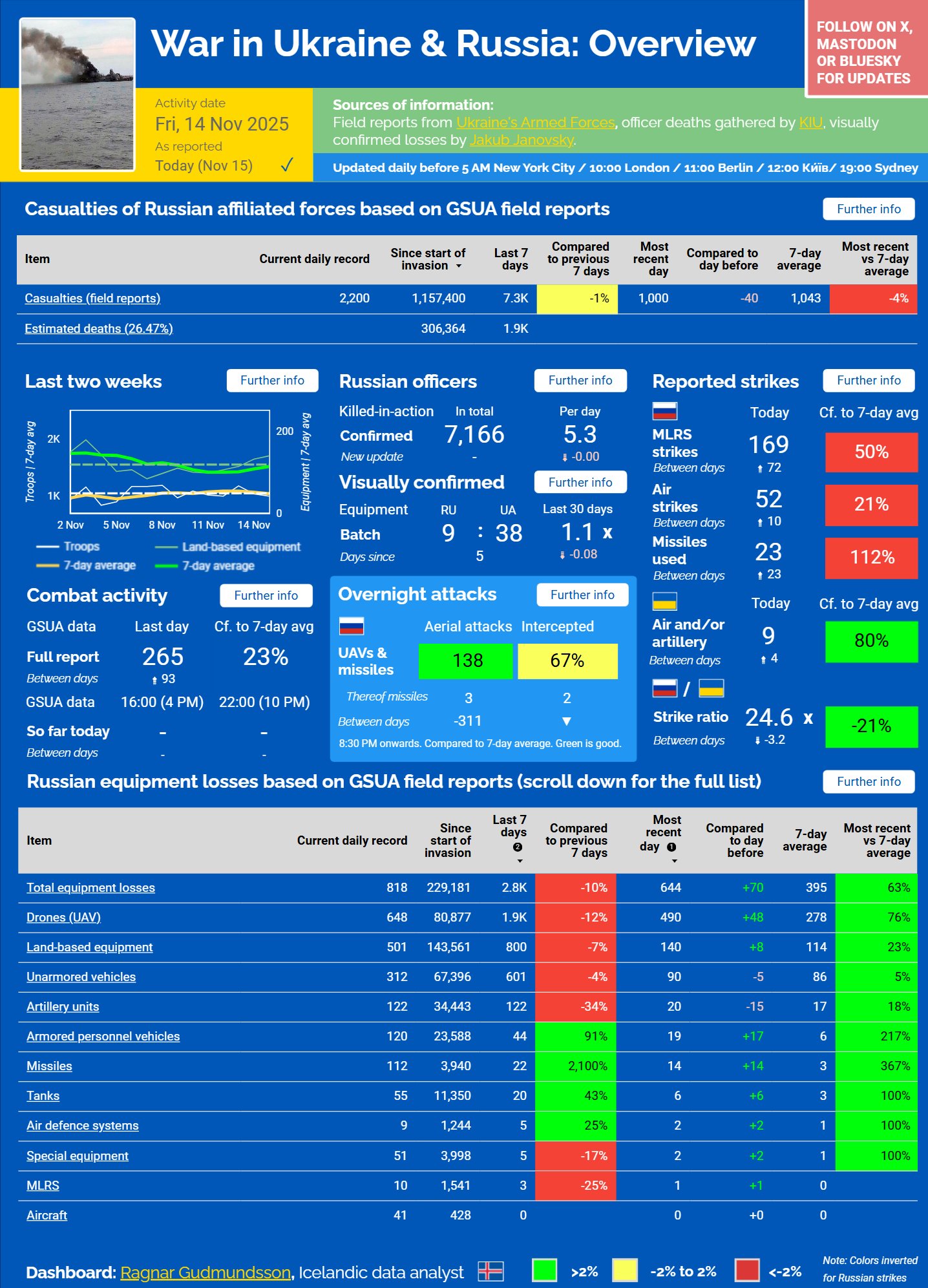
❗️Yesterday, 107 out of 265 combat clashes occurred in the Pokrovsk direction, — General Staff
The enemy launched two missile strikes on the positions of Ukrainian units and settlements, using 23 missiles, dropped 111 KAB + 5 on Kursk region. In addition, they carried out 4239 shellings, including 169 MLRS strikes, and used 4863 kamikaze drones.
In the past day, the aviation, missile forces, and artillery of the Defense Forces struck eight areas of enemy personnel concentration and one other important object of the Russian invaders.
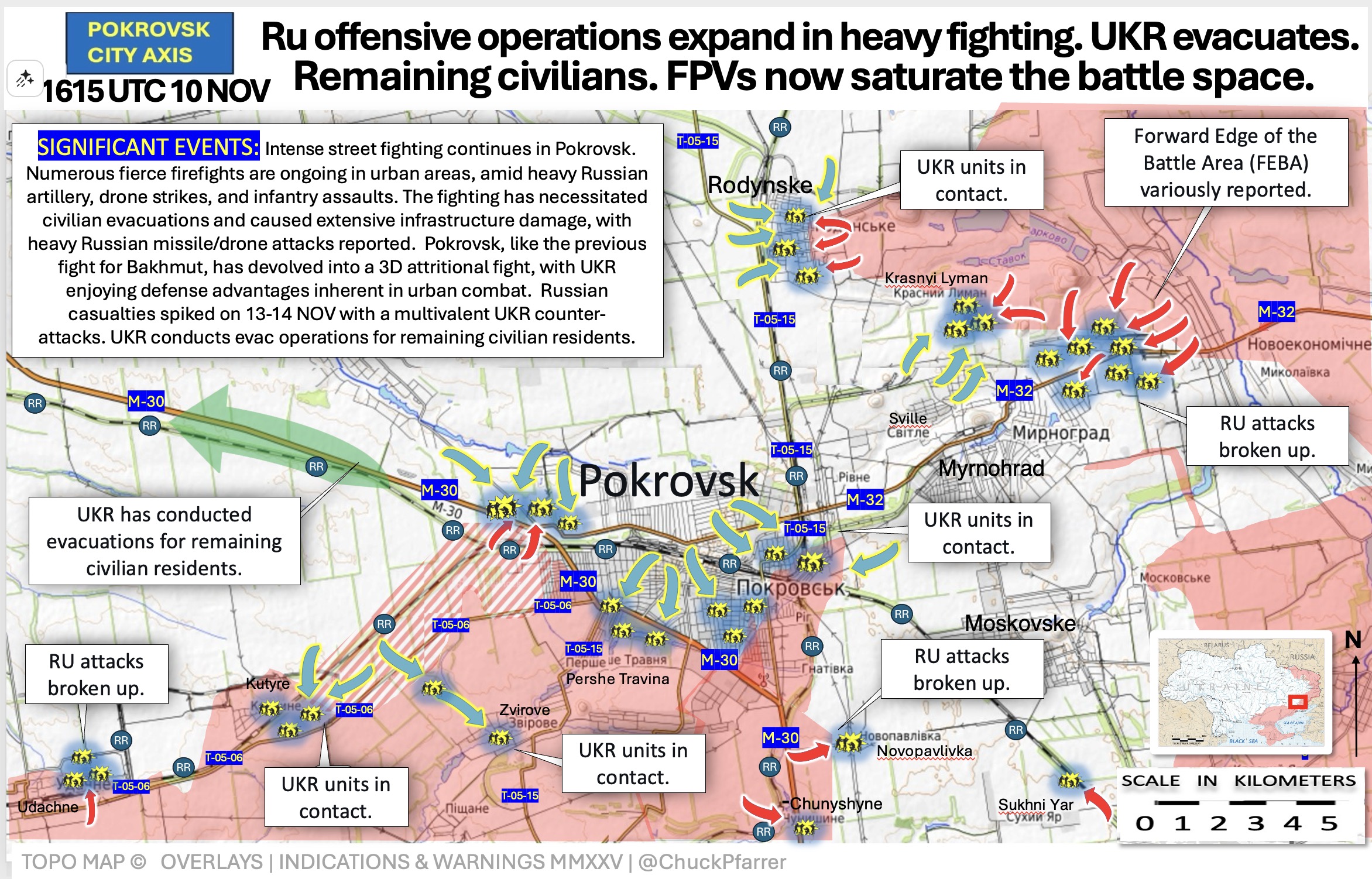
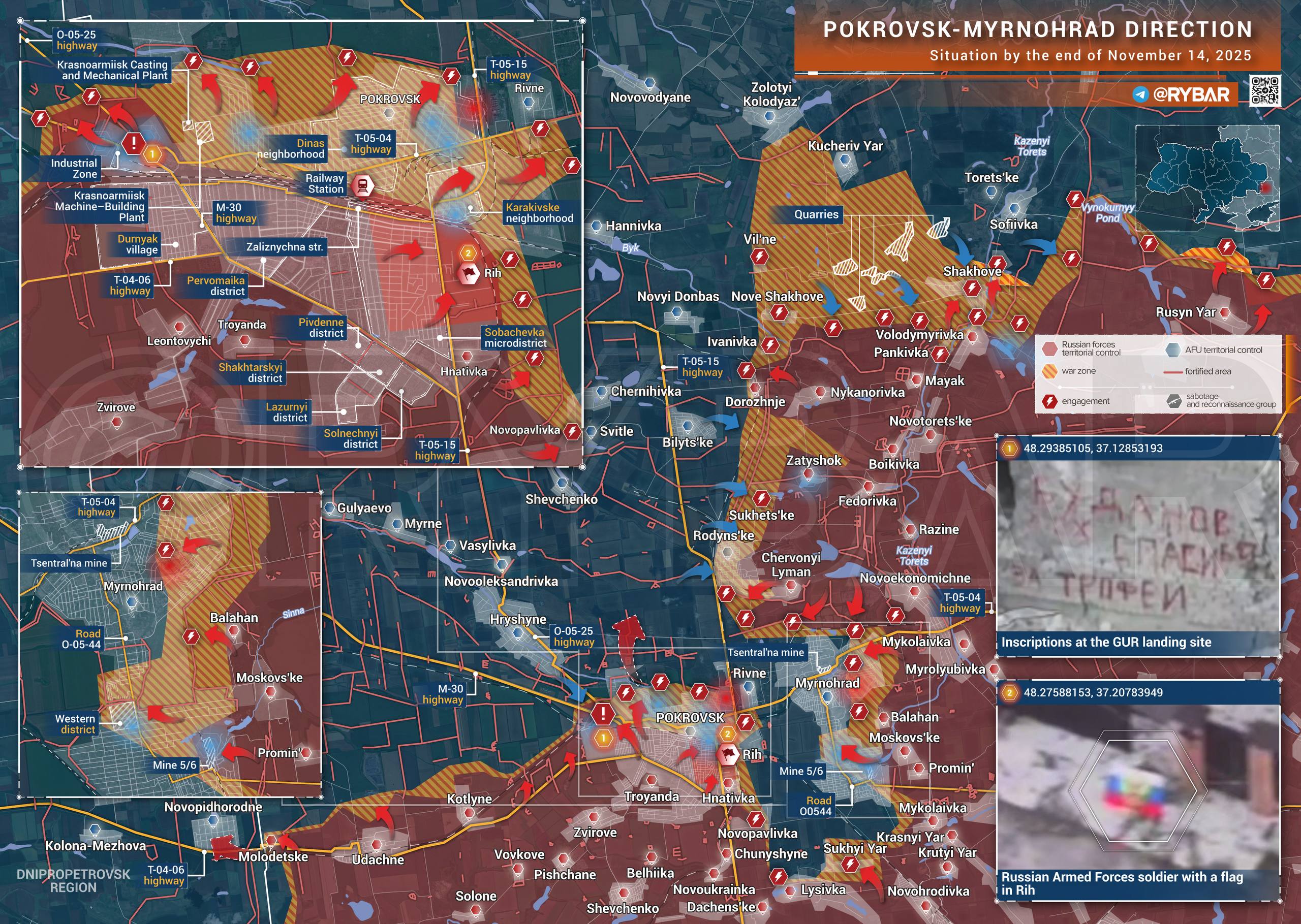

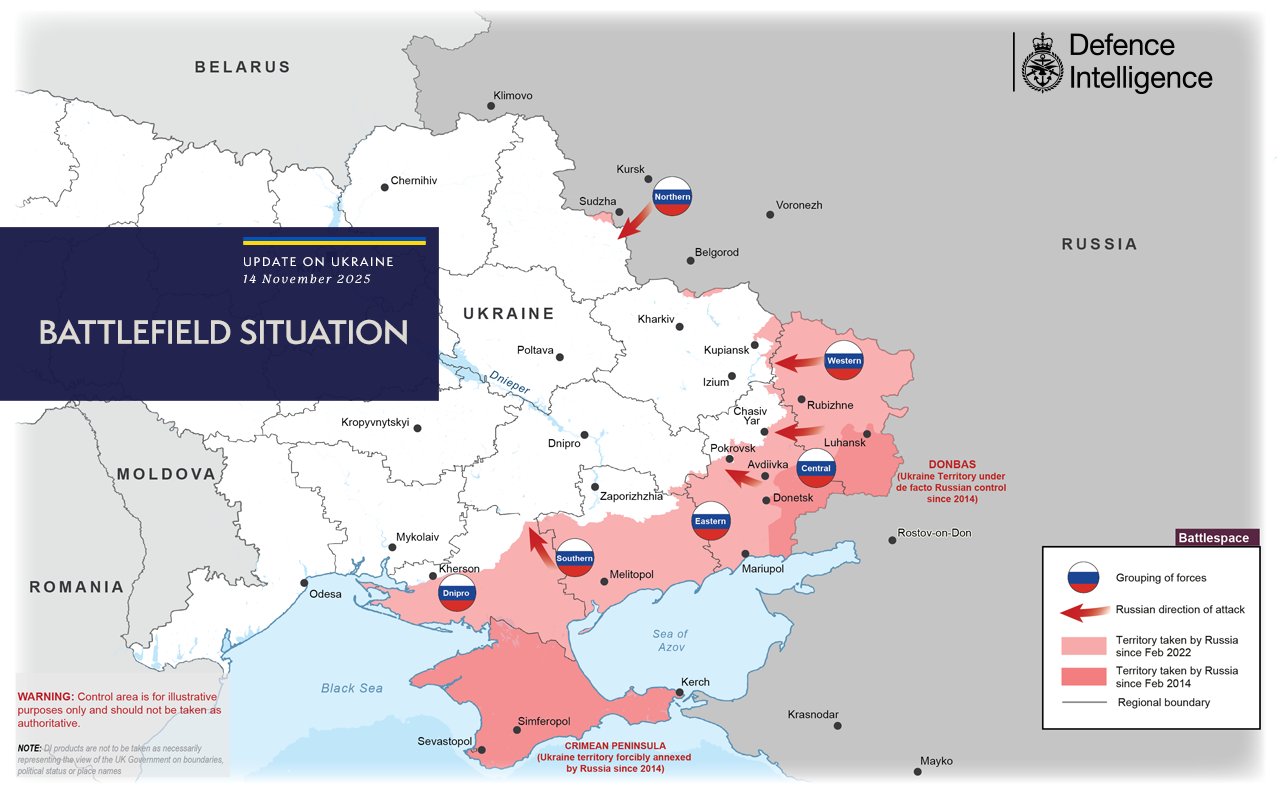
Russian forces used weather conditions to exploit vulnerabilities in Ukraine’s drone-based battlefield defenses in the Novopavlivka direction, highlighting Ukraine’s need for traditional weapons systems. Geolocated footage published on November 14 shows Ukrainian forces striking Russian armored vehicles in northeastern Novopavlivka.[1] A Russian milblogger claimed that Russian forces reached Novopavlivka’s northwestern outskirts during the mechanized assault.[2] Ukrainian volunteer Serhii Sternenko reported on November 15 that Russian forces took advantage of poor weather conditions to enter Novopavlivka several times with equipment and land infantry.[3] Sternenko stated that Russian forces set up a pontoon bridge between Yalta (south of Novopavlivka) and Dachne (east of Yalta) and moved about 10 pieces of equipment across the Vovcha River.[4] Sternenko stated that Ukrainian forces detected the Russian forces too late but struck two tanks and five infantry fighting vehicles (IFVs).