
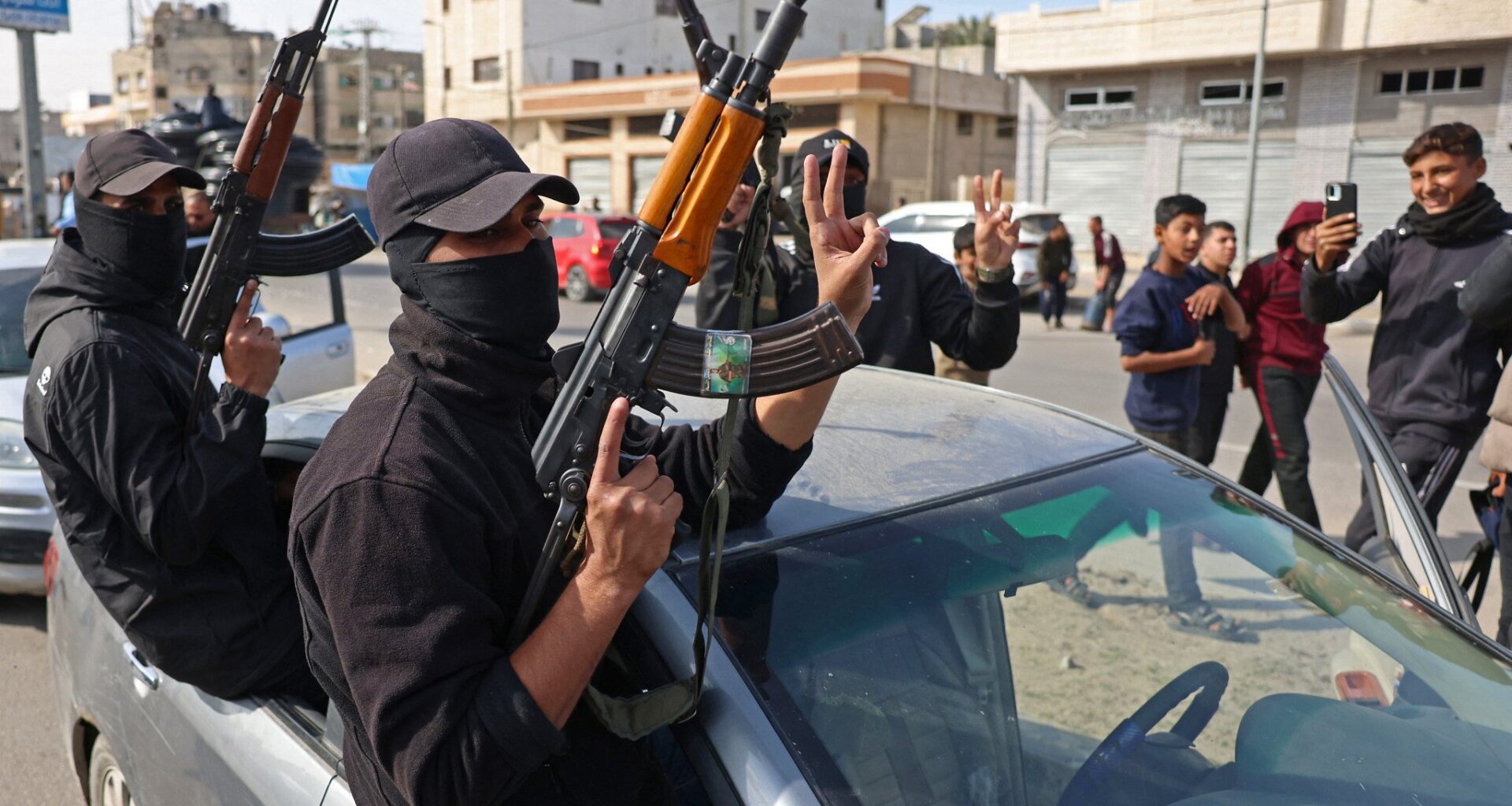
Hamas has begun amassing advanced weapons and stockpiling them abroad in hopes of smuggling them into Gaza in the future, according to a report Sunday, amid growing talk that the United States may forgo demanding the terror group’s disarmament.
An unsourced report aired by the Kan public broadcaster on Sunday evening alleged that the terror group had started amassing weapons in recent weeks and stockpiling them in unspecified African states, Yemen, and other countries.
Hamas is storing them there with the intention of moving them to “strategic locations,” including, but not limited to, the Gaza Strip, at a later date.
The report followed an item from the previous day, which alleged that US President Donald Trump’s administration was looking to forgo the stage in its peace plan that calls to disarm Hamas in favor of moving ahead with rebuilding the enclave, as further talks have stalled over the details of Hamas’s demilitarization and the future governance of the Gaza Strip.
An Israeli security source told Channel 13 that this option was being discussed as the White House is having trouble getting commitments from third-party countries to participate in disarming Hamas as part of an international stabilization force that will be deployed in the Strip.
Get The Times of Israel’s Daily Edition
by email and never miss our top stories
By signing up, you agree to the terms
Israel, however, is insisting that Trump’s plan for the Gaza Strip cannot advance further until Hamas is disarmed and the enclave demilitarized.
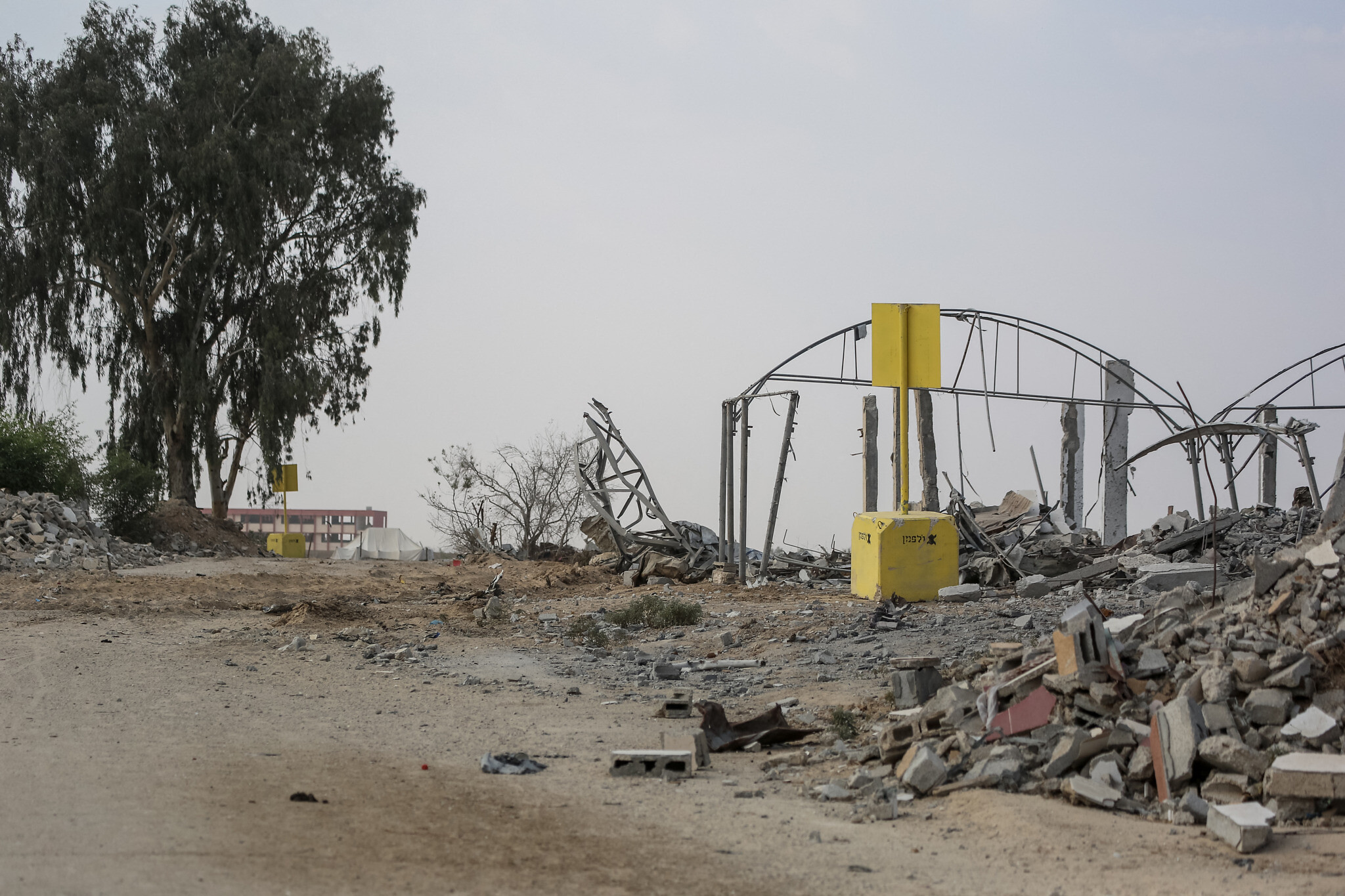
A general view of a concrete blocks marking the “Yellow Line,” the boundary of the Gaza territory still held by the Israeli military in Bureij, in the central Gaza Strip, on November 4, 2025. (Bashar Taleb/AFP)
On Sunday, Defense Minister Israel Katz said the IDF’s efforts to demolish Hamas’s tunnels on the Israeli side of the so-called “Yellow Line” in the Gaza Strip were “progressing well.”
“I was just updated by the deputy chief of staff that the operation to destroy Hamas’s terror tunnels in Gaza is progressing well. The IDF is working to destroy the tunnels through explosions, or by filling and pumping liquid concrete into the tunnels in all areas under its control,” Katz said in a statement.
Last month, Katz and the IDF said that around 60% of Hamas’s tunnels in Gaza were still intact.
On the other side of the Yellow Line, which is still controlled by Hamas, Katz said a “multinational force led by the United States is supposed to handle the demilitarization and disarmament of Hamas in old Gaza.”
The Israeli military currently still controls 53% of the territory inside the war-torn Palestinian enclave, including much of its farmland, along with Rafah in the south, parts of Gaza City and other urban areas.
The next stage of Trump’s plan for Gaza foresees Israel withdrawing further from the so-called Yellow Line, alongside the establishment of a transitional authority to govern Gaza, the deployment of a multinational security force meant to take over from the Israeli military, the disarmament of Hamas, and the start of reconstruction.
On Sunday, however, IDF Chief of Staff Lt. Gen. Eyal Zamir said the military must be ready to seize additional territory in the Strip, beyond the Yellow Line, if necessary.
“In the Gaza Strip, we control more than 50% of the territory, without controlling the population. The Yellow Line serves as a line of encirclement and control, and we continue to act to prevent Hamas’s build-up by holding the [strategic] terrain and the gateways to Gaza,” Zamir said during a visit to the Rafah area of southern Gaza.
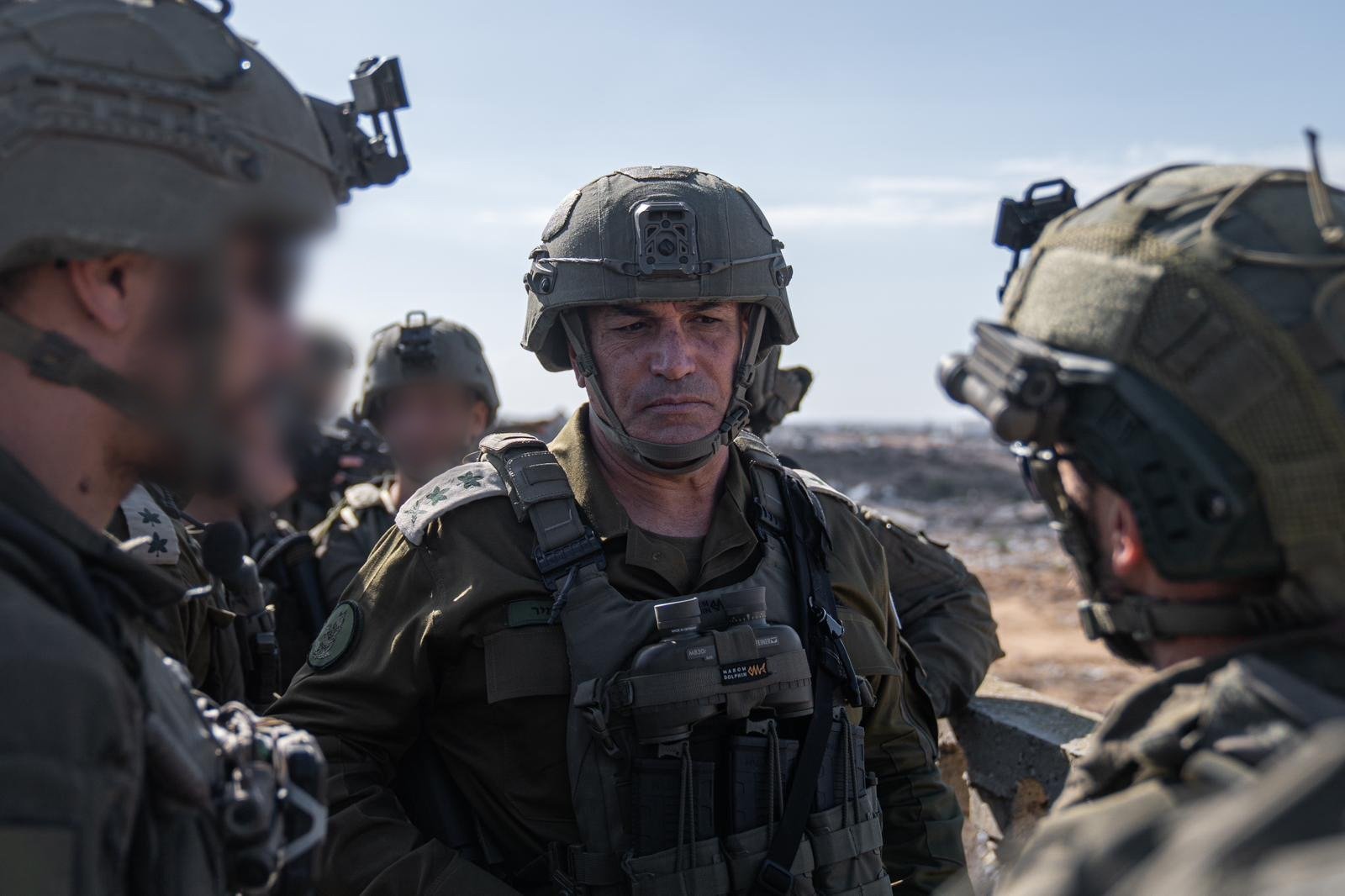
IDF Chief of Staff Lt. Gen. Eyal Zamir speaks with officers in southern Gaza’s Rafah, November 16, 2025. (Israel Defense Forces)
“If required, we must be prepared for a rapid transition to a broad offensive to seize territory in the Gaza Strip on the other side of the Yellow Line,” he was quoted by the IDF as saying.
He said troops were continuing to operate on the Israeli side of the line “to clear the area [of Hamas infrastructure] and enemy pockets.”
“We will continue to insist that Hamas’s rule will not exist on the other side of the border. Even if it takes time, we will persist in the mission of dismantling Hamas and demilitarizing the Strip, achieving this either through an agreement or through military means,” he added.
Hours after Zamir’s visit to the Strip, the IDF said it had killed a terror operative who crossed the Yellow Line and had “posed an immediate threat to troops.”
The Israeli forces then directed an airstrike that “eliminated the terrorist,” the military said, adding that it was deployed in Gaza “in accordance with the ceasefire agreement and will continue to operate to remove any immediate threat.”
Shedding light on Hamas operations
Separately on Sunday, an unsourced report by Channel 12 claimed that the IDF had uncovered a Hamas platoon commander’s diary in Beit Hanoun which shed light on the terror group’s routine use of Gaza’s infrastructure for military activity.
According to the report, the diary – written by Khaled Abu Akram, a Hamas platoon commander – was found in August in the northern Gaza town. Its entries detail how Hamas embeds its operations in schools, hospitals and UN facilities, and how its fighters repurpose unexploded IDF munitions.
In one entry from May 30, 2024, Abu Akram reportedly described preparing an ambush inside a Beit Hanoun school: “I went with Abu Salah [a company commander in another platoon]… to prepare a new ambush at the Hani Naim School, after the shafts located there were bombed and the previous ambush was destroyed.”
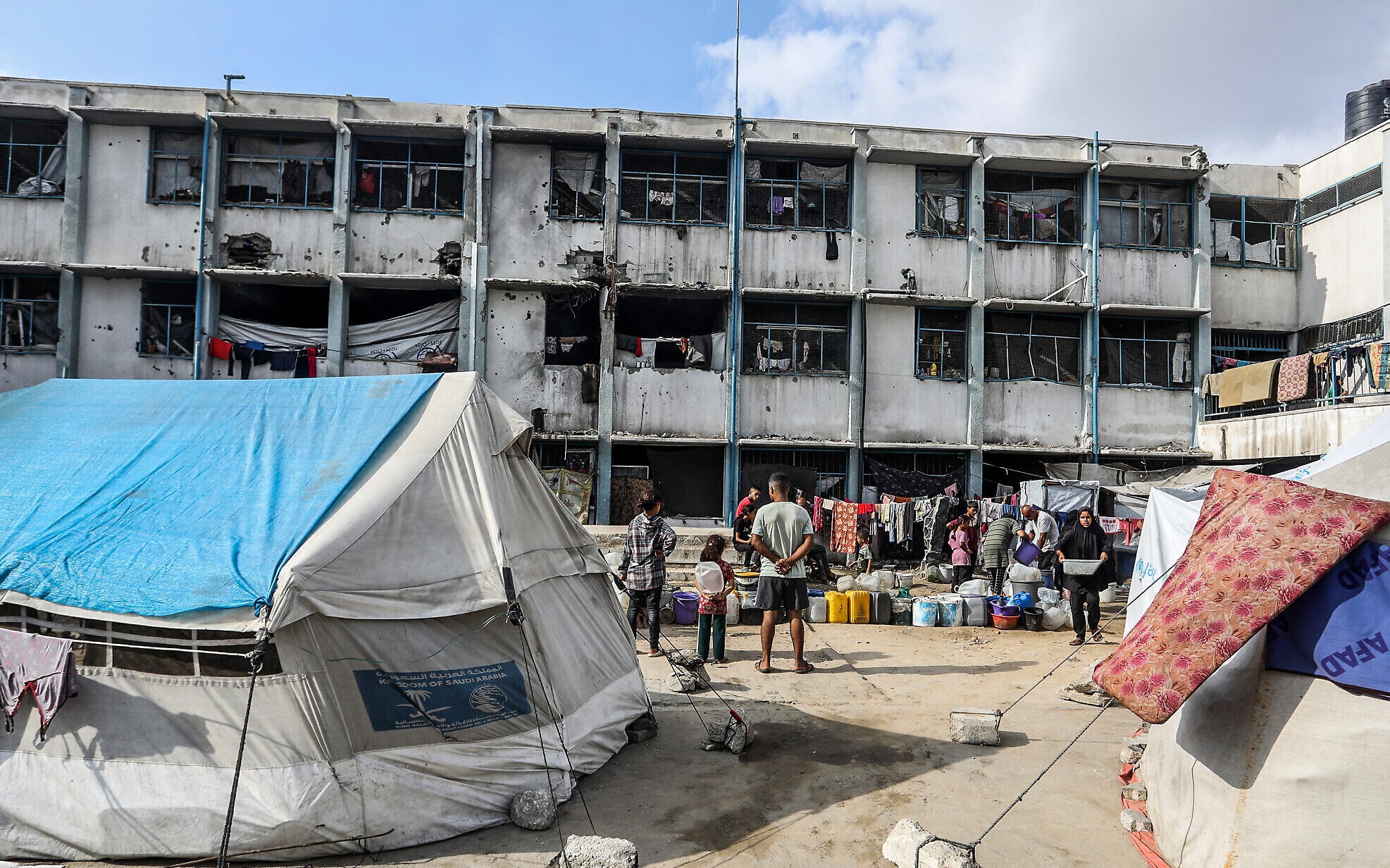
Palestinians live at an UNRWA school in Khan Younis, in the southern Gaza Strip, September 6, 2025. (Abed Rahim Khatib/Flash90)
Three months later, he wrote of burying an “F-16 missile and charges” in multiple locations and noted the removal of “batteries from the [UNRWA] agency clinic” as well as taking “the solar panels” and preparing a water well.
In another entry from July, he described how an unexploded missile fired from an F-16 warplane had been hidden inside a school as IDF troops advanced: “The [IDF] bulldozer began to destroy the school building… An F-16 missile was buried in the school, but the cameras were broken.”
The diary also details Hamas’s use of hospital infrastructure, Channel 12 reported.
In a November entry, Abu Akram wrote: “We laid an electrical cable from the hospital… to our house – to operate our well.” He added that when the power supply proved too weak, the operatives instead used the hospital’s electricity and later “brought a motor… and the water rose properly.”
The diary, Channel 12 stated, provides rare, firsthand documentation of how Hamas exploits civilian and humanitarian facilities across Gaza to sustain its military capabilities – a claim the IDF has repeatedly made in defense of its widespread bombardment of the Strip throughout more than two years of war.