
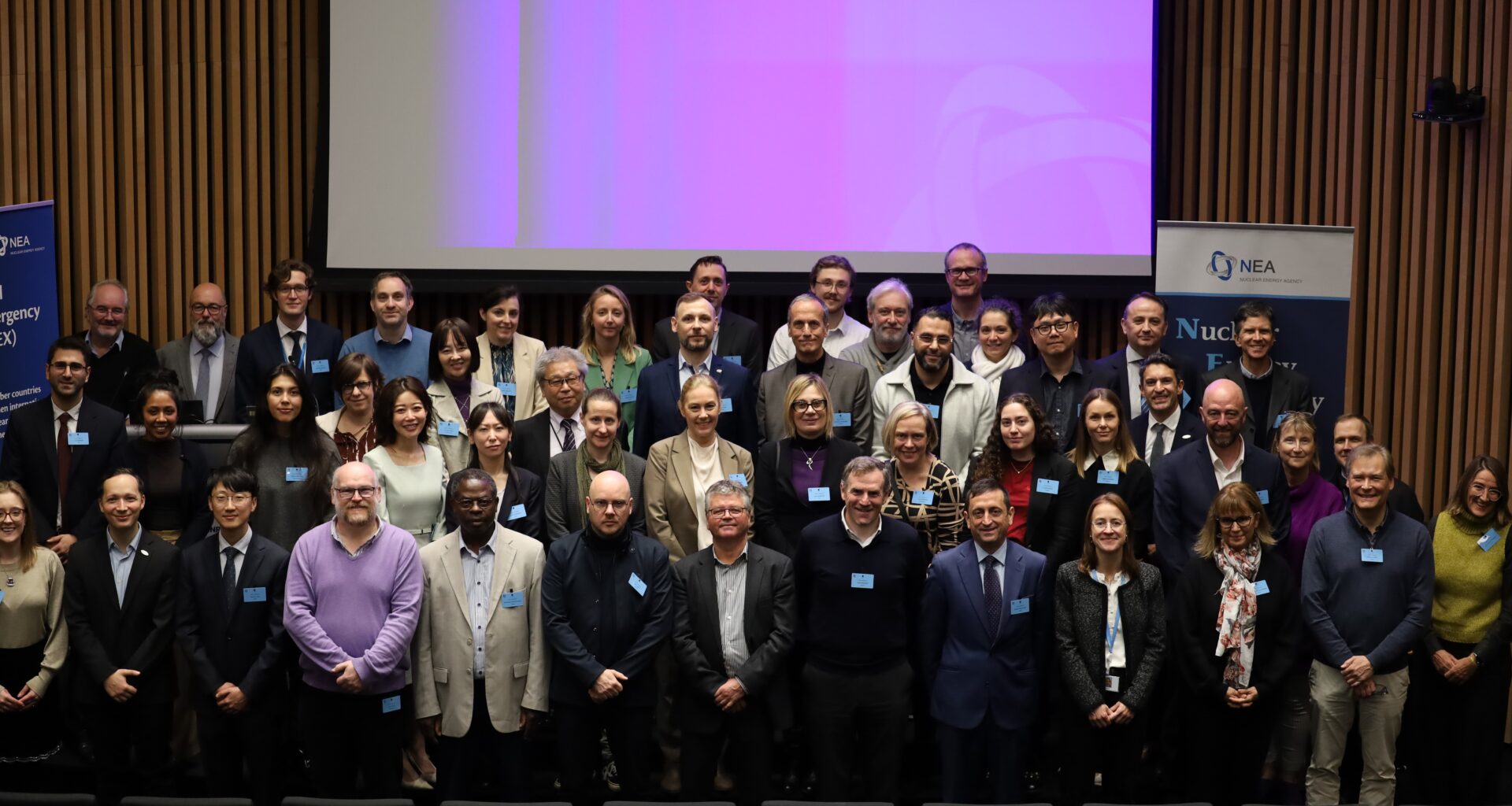
Participants of the INEX-6 recovery workshop at the ASNR Auditorium in Fontenay-aux-Roses, France (3–4 November 2025).
Emergency preparedness experts gathered at the Autorité de Sûreté Nucléaire et de Radioprotection (ASNR) in Fontenay-aux-Roses, France, for two back-to-back events dedicated to strengthening preparedness, response and long-term recovery following nuclear and radiological emergencies in early November.
Turning INEX-6 insights into recovery actions
For more than 30 years, the International Nuclear Emergency Exercise (INEX) series, organised by the NEA Working Party on Nuclear Emergency Matters (WPNEM), has provided a framework for countries to test and improve emergency preparedness arrangements. The sixth exercise in the series, INEX-6, was the first to be devoted entirely to the long-term recovery phase following a severe radiological release. It was conducted nationally by 26 participating countries and territories in 2024, using a common transport-accident scenario and four thematic modules addressing health impacts, food safety, remediation and decontamination, and radioactive waste management.
The two-day workshop brought together INEX-6 national organisers and players, members from the WPNEM and the NEA Committee on Radiological and Public Health (CRPPH), regulators, government officials, operators, international organisations and technical experts. Through a combination of plenary presentations, panel discussions and breakout sessions, participants examined consolidated INEX-6 findings, shared national experiences, and identified common strengths, gaps and good practices in recovery preparedness.
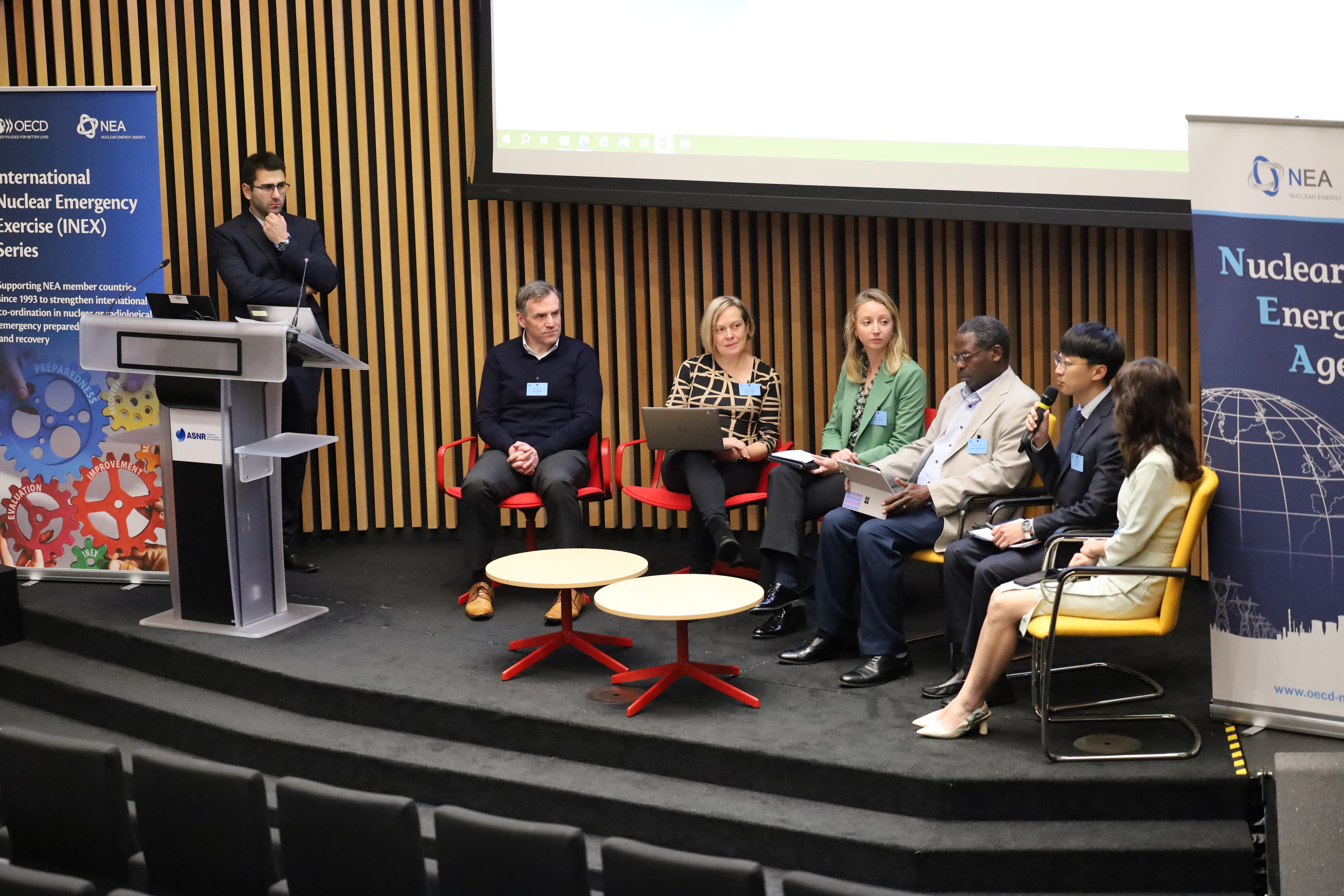 Panel discussion during INEX-6 Workshop
The outcomes of the workshop will be captured in a consolidated INEX-6 report to be published by the NEA. These findings are expected to inform future recovery exercises, guidance and broader efforts to strengthen long-term recovery preparedness.
WPNEM-50: Aligning the programme of work with emerging needs
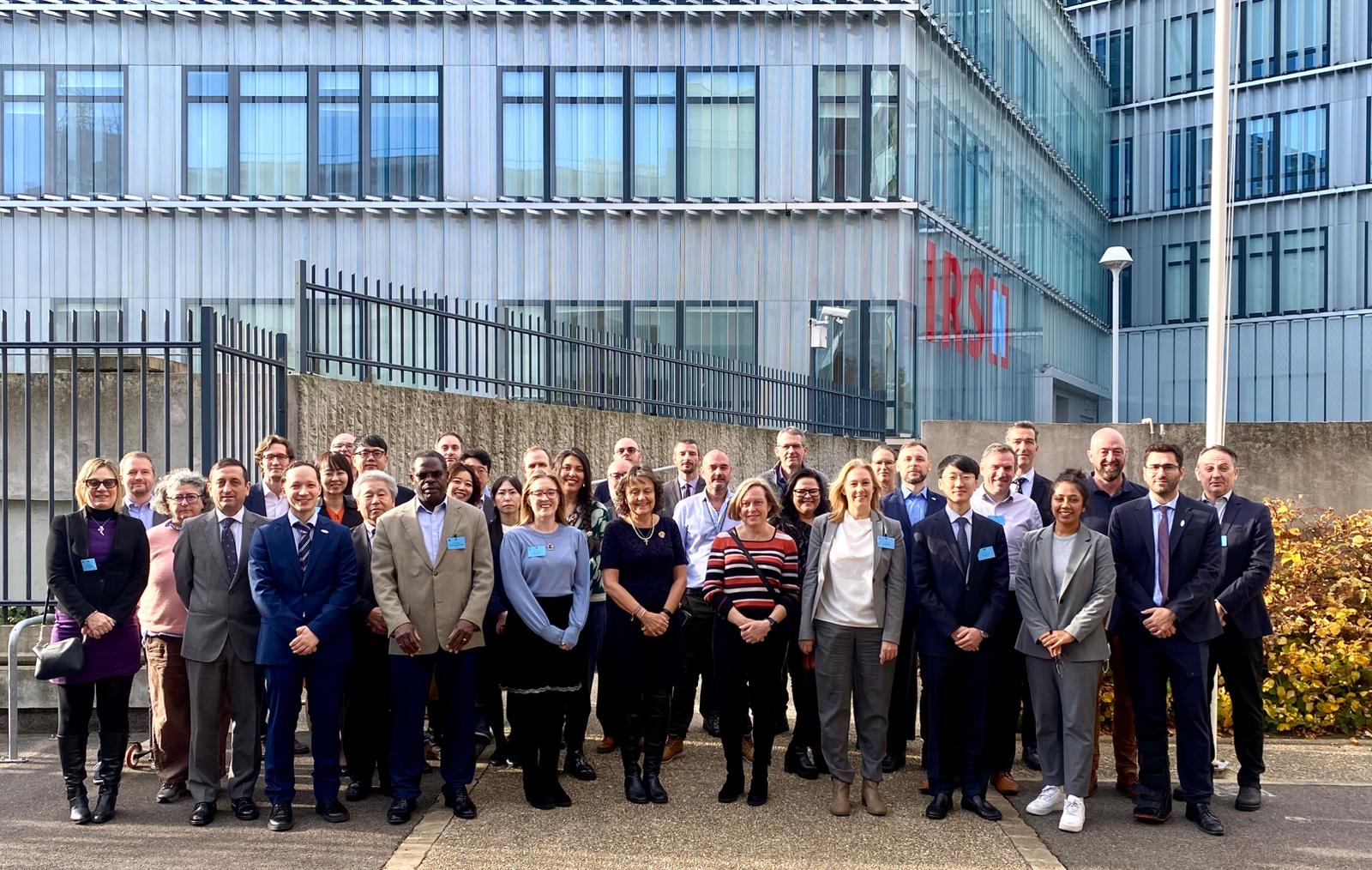 Participants of the WPNEM-50 Meeting in Fontenay-aux-Roses, France (5–6 November 2025).
The WPNEM 50th meeting, reviewed the programme of work of the working party, including ongoing and planned activities, and publications. Discussions had a particular focus on emergency preparedness for small modular reactors (SMRs), protective actions, radiological protection during armed conflict and evolving international standards for emergency preparedness and response.
On the first day, delegates received an update on the NEA Task Group on Radiological Protection during Armed Conflict (TGRPAC), which is developing practical recommendations to support radiological protection before, during and after armed conflicts.
A topical session on emergency preparedness for SMRs showcased the progress of the Expert Group on Emergency Preparedness for SMRs (EGEPSMR). Participants reviewed draft survey questions aimed at examining how existing and planned emergency preparedness and response (EPR) frameworks apply a graded approach across different nuclear facilities. They alsoprovided input for a planned international workshop to be organised alongside WPNEM-51 in late 2026.
The meeting also featured a technical visit to the ASNR Crisis Centre, allowing delegates to see first-hand how France organises its national co-ordination, decision-making and communication arrangements during radiological and nuclear emergencies.
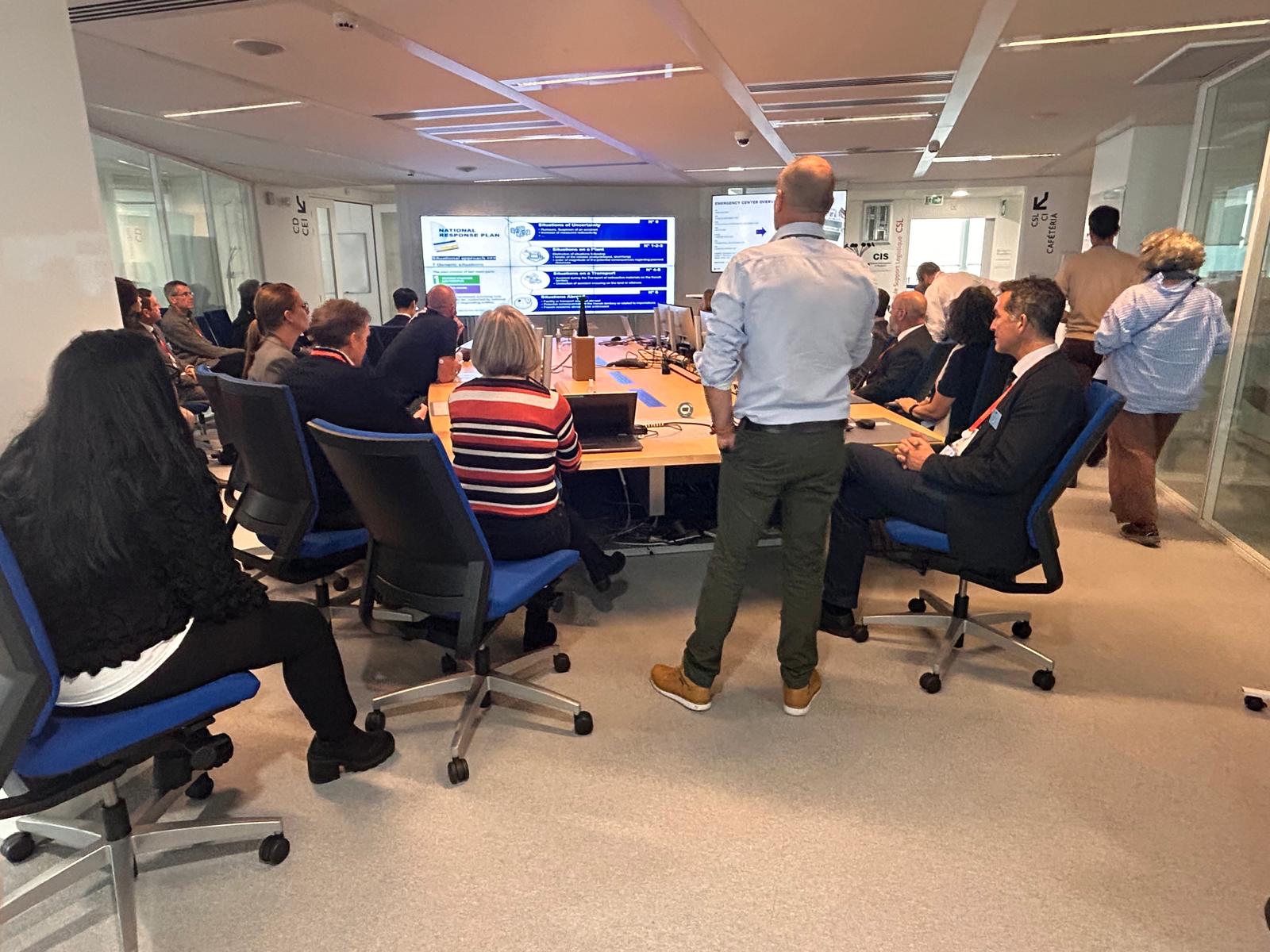
Visit to the ASNR crisis centre as part of the WPNEM-50 programme.
On the second day, WPNEM-50 turned its attention to the harmonisation of protective measures. The Task Group on updating the NEA Protective Measures Handbook (TGPMH) presented progress in revising the handbook’s scope, while the HERCA Working Group on Emergencies (HERCA-WGE) presented country fact sheets on national emergency preparedness and response arrangements. Discussions explored how WPNEM and HERCA can work together to support more coherent approaches for protective actions across borders.
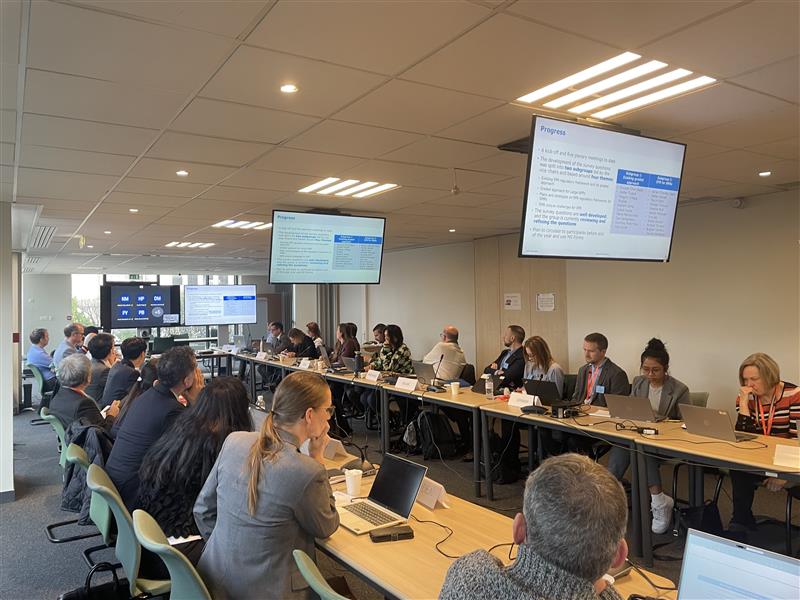
Delegates during WPNEM-50 Meeting
Recognising the importance of aligning national practices with evolving international standards, WPNEM-50 hosted a topical session on the ongoing revision of international recommendations. Delegates discussed the IAEA Safety Standards Series No GSR Part 7, Preparedness and Response for a Nuclear or Radiological Emergency, as well as the work of ICRP Task Group 120 on radiological protection for radiation emergencies and malicious events.
The meeting concluded with a consolidation of the WPNEM programme of work for 2025–2026 and initial reflections on priorities for a mandate extension for 2026–2029.