
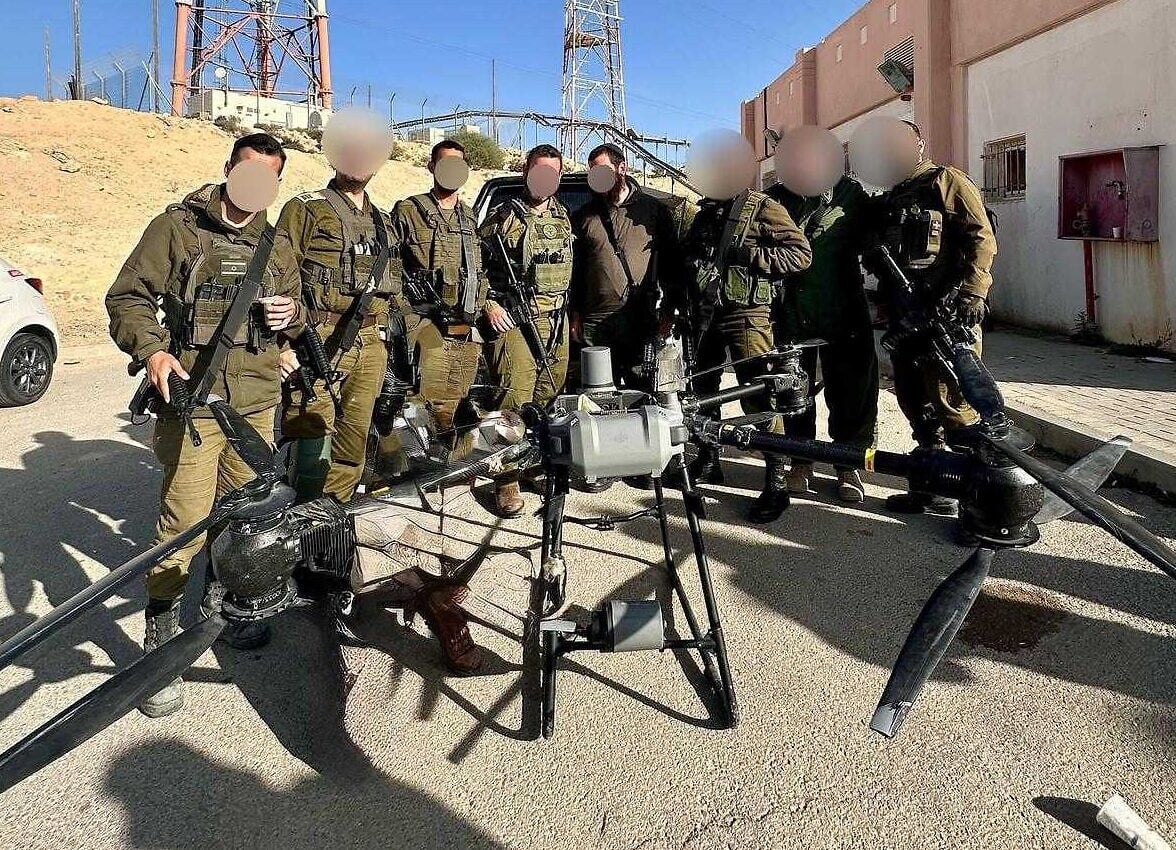
The Israel Defense Forces is engaged in an arms race with gun-runners along the Egyptian border, and without the assistance of the police, the Shin Bet security agency, and lawmakers, it is unlikely to come out on top.
For decades, the IDF has contended with smuggling attempts from Egypt into Israel, along the 200-kilometer (125-mile) border between the countries.
It began with people crossing the border, mainly African migrants, but also Islamist terrorists who operate in Egypt’s Sinai Peninsula. Israel in 2010 responded by constructing a large 241-kilometer (150-mile) barrier (longer than the actual border due to sections that wind through the mountainous terrain). When it was completed in 2013, the number of people crossing into Israel dropped drastically, along with attempts to smuggle contraband into the country.
With the fence in the way, drug smugglers instead resorted to tossing packages of heroin, marijuana, or other contraband over the border, where they were retrieved by Bedouin Israelis in trucks.
At times, these smuggling attempts turned violent, with gunmen on the Egyptian side of the border opening fire to provide cover for the smugglers.
Get The Times of Israel’s Daily Edition
by email and never miss our top stories
By signing up, you agree to the terms
Initially, the IDF disengaged from violent smuggling attempts.
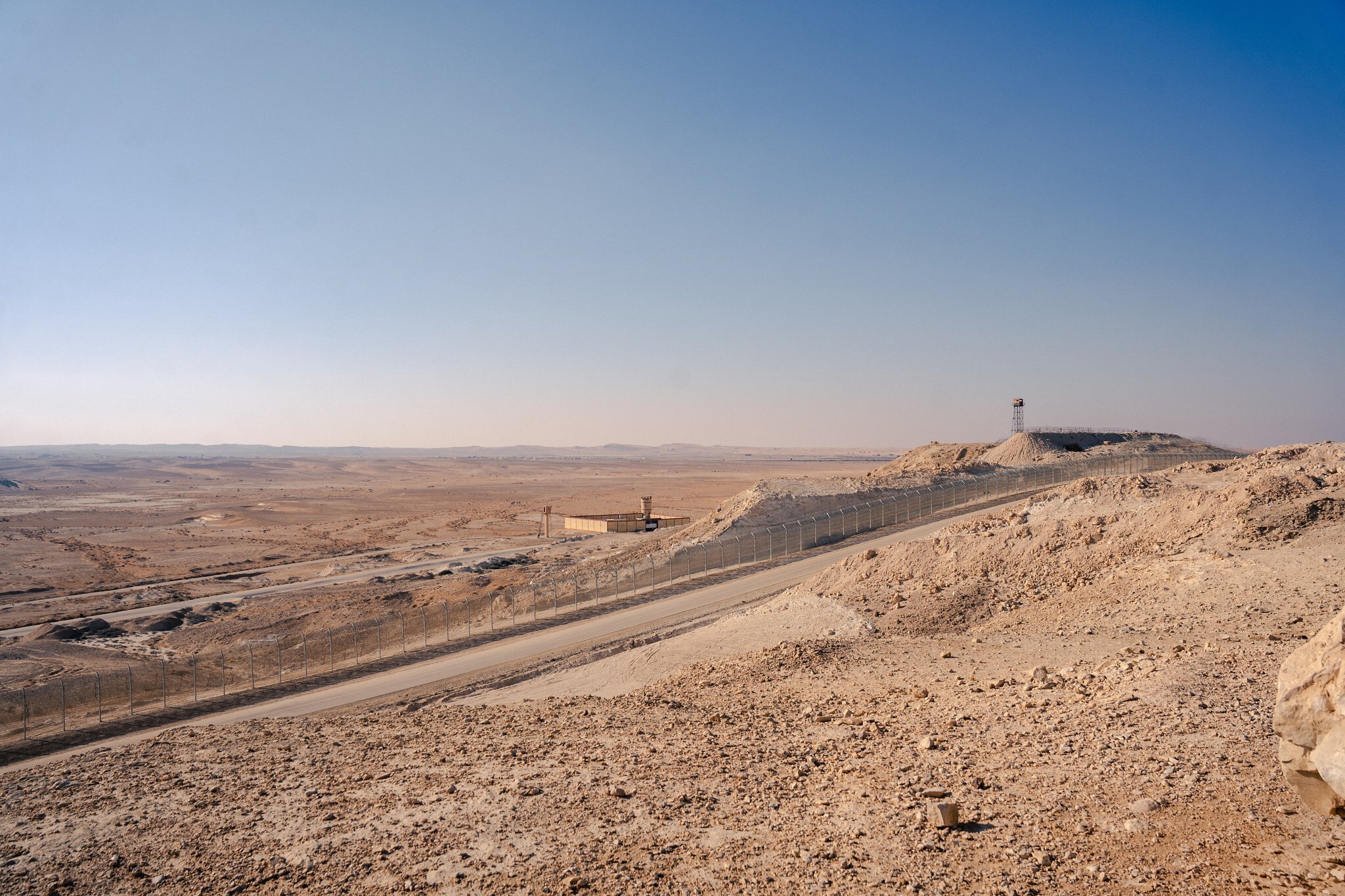
A view of the Israel-Egypt border south of the Nitzana Crossing, January 12, 2025. (Emanuel Fabian/Times of Israel)
But on June 3, 2023, an Egyptian border guard infiltrated into Israel via a shared opening in the fence and killed two IDF soldiers manning a guardpost. Another soldier was killed in a later exchange of fire with the gunman, who was also eliminated.
After the deadly incident, the IDF changed its open-fire regulations on the Egypt border, allowing troops to use deadly force against smugglers. And in turn, the number of smuggling attempts again dropped, according to military officials.
But since around May 2024, the IDF began to identify a new smuggling route — drones.
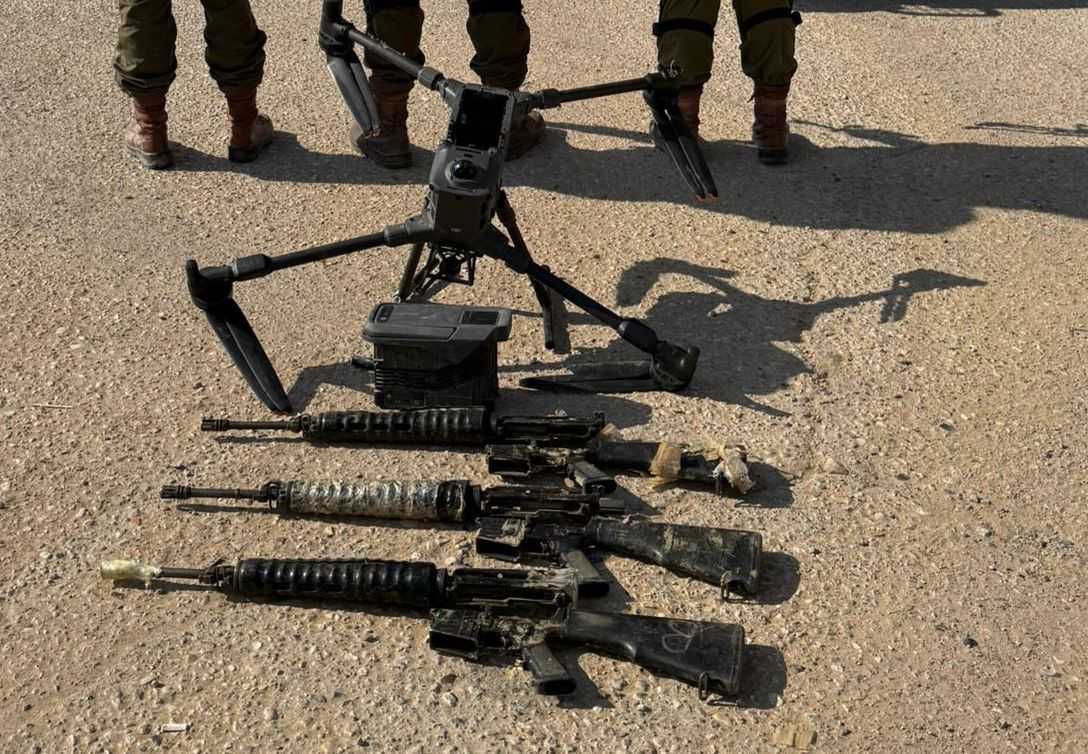
Weapons and a drone seized by IDF troops following an attempted smuggling on the Egyptian border, November 10, 2025. (Israel Defense Forces)
According to military officials, smugglers on the Israeli side of the border usually arrive at locations up to around nine kilometers (5.5 miles) from the fence, then fly drones over the border to Egypt and land them around two kilometers from the fence. There, smugglers on the Egyptian side load the drones with contraband, usually firearms, and the smugglers on the Israeli side pilot the drones back to them.
At first, the smugglers used small off-the-shelf drones that could carry payloads of a few kilograms. Lately, the IDF has foiled smuggling attempts with agricultural-grade drones, capable of carrying payloads of up to 100 kilograms.
The agricultural drones are also much pricier, with some of the larger models costing up to around NIS 150,000 ($45,000). But when it comes to smuggling millions of shekels worth of weapons or drugs, losing tens of thousands on a drone is thought to be negligible for the smugglers.
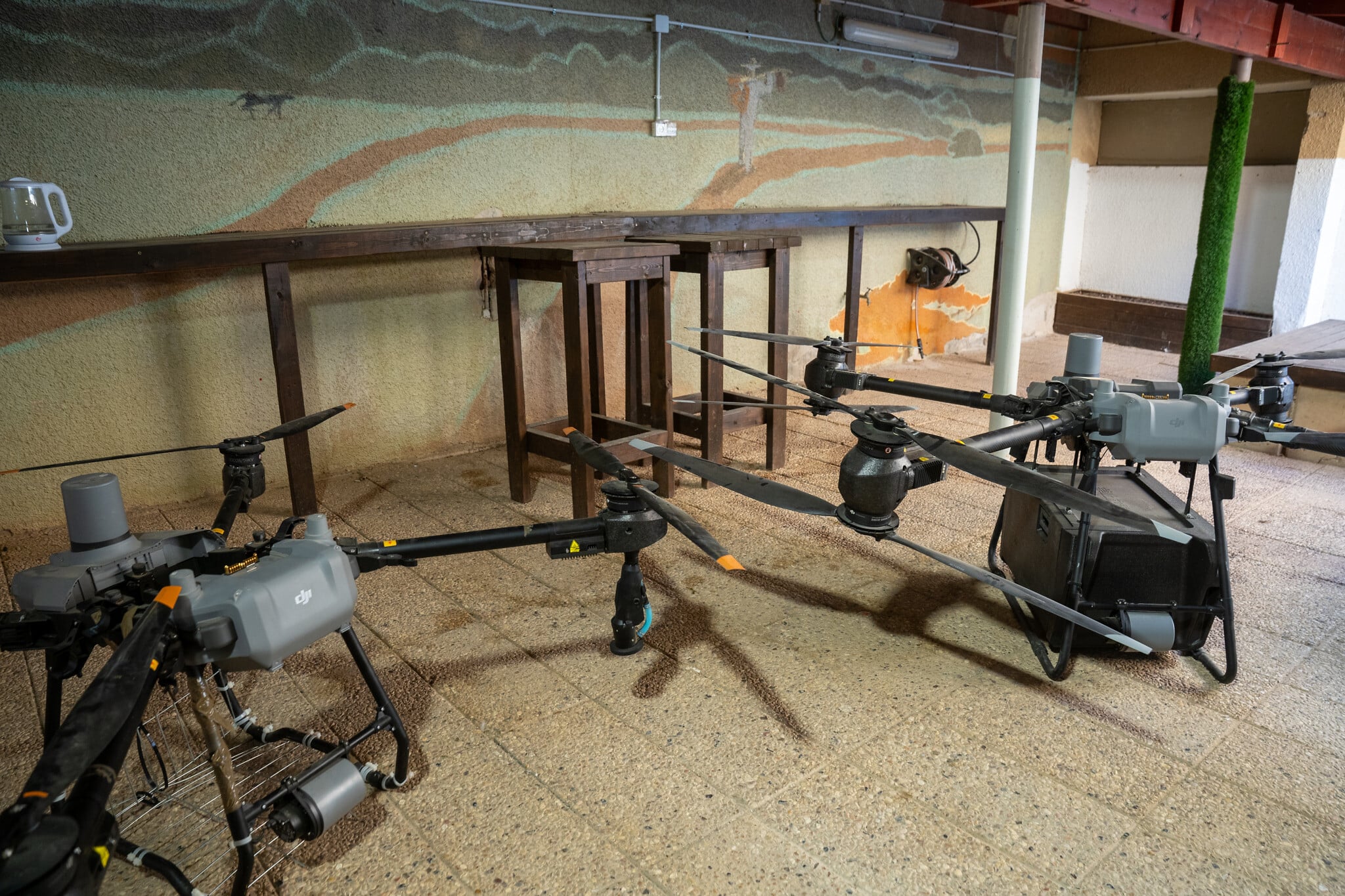
Large agricultural drones seized by IDF troops following gun smuggling attempts on the Egyptian border, as seen at an army base on November 16, 2025. (Emanuel Fabian/Times of Israel)
The IDF believes there are around 100-300 smugglers involved in such operations. In the past month alone, the military reported downing 130 drones, along with seizing 84 weapons — including two machine guns, 16 assault rifles, and 66 handguns.
To prevent drones from being flown over the border, troops are allowed to open fire on them in an attempt to knock them out of the sky. Additionally, the IDF has deployed electronic warfare capabilities that can jam or take control of the drones and bring them down.
On the other side of the border, there have been a handful of times where Egyptian forces have also managed to shoot down drones, according to military officials.
In recent weeks, the Israeli Air Force has also entered the picture, establishing a new air traffic control center under the aegis of the 80th “Edom” Regional Division — which is tasked with covering the entire Egyptian border and, provisionally, the southern portion of the Jordanian border.
According to military officials, the success rate of foiling the smuggling attempts using drones has gone up in recent weeks, and no drones are flying over any Israeli communities in the area.
A month ago, the IDF counted 153 drones crossing the border in a week. Recently, that number dropped to 46 in a week, most of which were downed, according to the IDF.
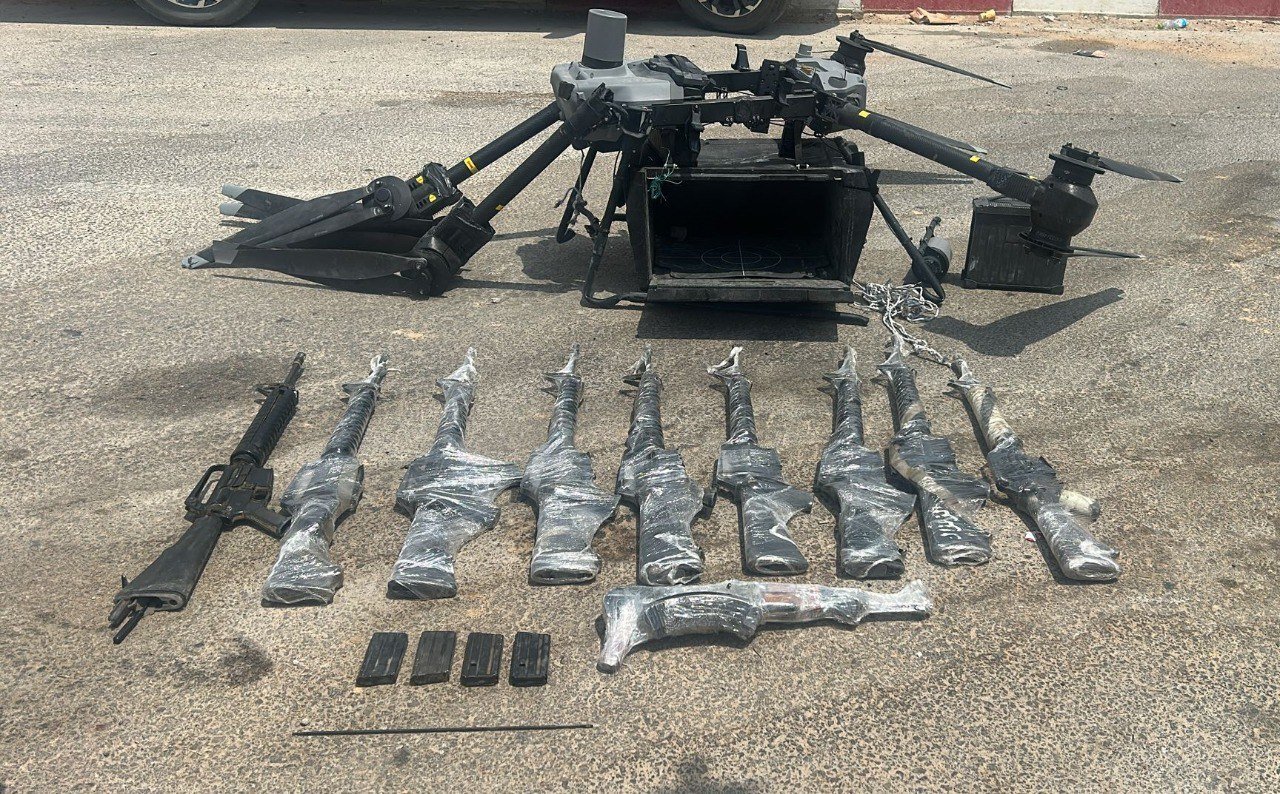
Weapons and a drone that were seized by IDF troops following an attempted smuggling on the Egyptian border, August 10, 2025. (Israel Defense Forces)
But the IDF does not know how many drones are crossing the border without being detected.
Some military officials claim that in recent months, the IDF has managed to take down at least 50% of the drones flying over the border. Before that, perhaps only 10%, they say.
This would mean that at least several thousand weapons have streamed into Israel from Egypt via drones in the past two years.
Who’s responsible
Military officials stationed on the Egyptian border said they were doing as much as they could to foil the weapon-smuggling attempts, but that the story does not start at the fence, and that the IDF needs outside help to combat the drone smuggling attempts.
For starters, the weapons themselves.
At least some are thought to come from Iran, potentially. On the Jordanian border, the Shin Bet has foiled several attempts by Iran to smuggle advanced weapons into the West Bank.
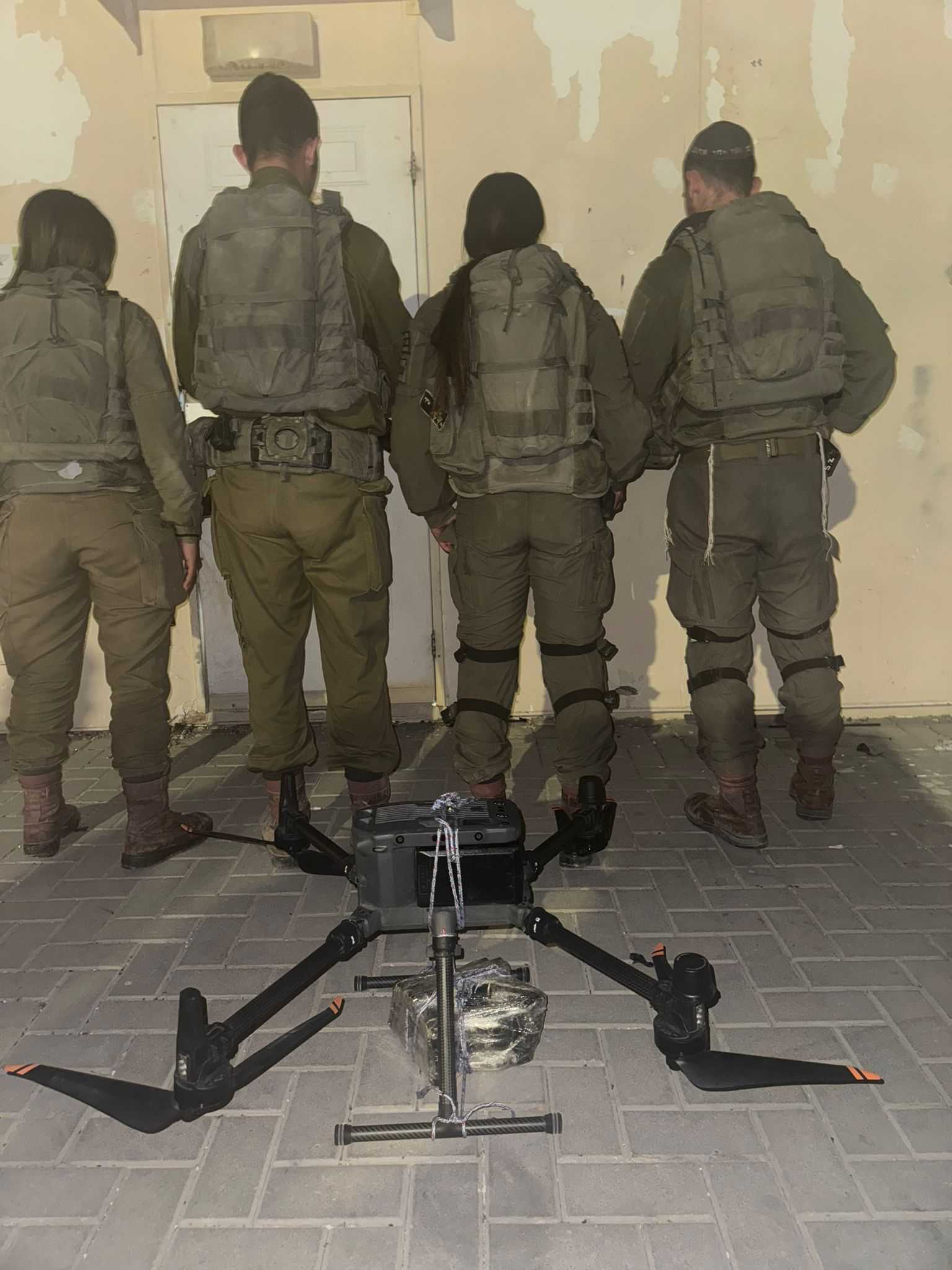
IDF troops pose with a drone that was used in an attempted weapons smuggling on the Jordan border, late July 10, 2025. (Israel Defense Forces)
Many of the weapons smuggled in from Egypt are believed to be used for criminal activity in Israel, where they cost tens of thousands of shekels on the black market. However, military officials are concerned that some of the more advanced weapons, like machine guns, could be used for terrorism.
Another issue is the drones. How many large agricultural drones costing as much as a car are being imported to Israel? Who is buying them?
These are questions that the IDF does not know how to answer, as it does not — at least legally — collect intelligence on Israeli civilians. Nor can the IDF change the licensing requirements for drones.
Instead, the police would need to track down the criminal gangs, thought to be mostly within the Bedouin community in southern Israel, and try to round up their weapons and drones.
Additionally, lawmakers would have to be responsible for changing licensing requirements and other legislation regarding the use, purchase, and possession of drones — especially the large agricultural ones.
Earlier this month, Defense Minister Israel Katz said he was “declaring war” on weapon smuggling via drones over the Egyptian border, instructing the military to declare a closed military zone in the area and the Shin Bet to define such attempts as terrorism. He also instructed the National Security Council to assist with the legislative amendments.
As of Monday, the IDF has yet to announce any new closed military zones along the border with Egypt.
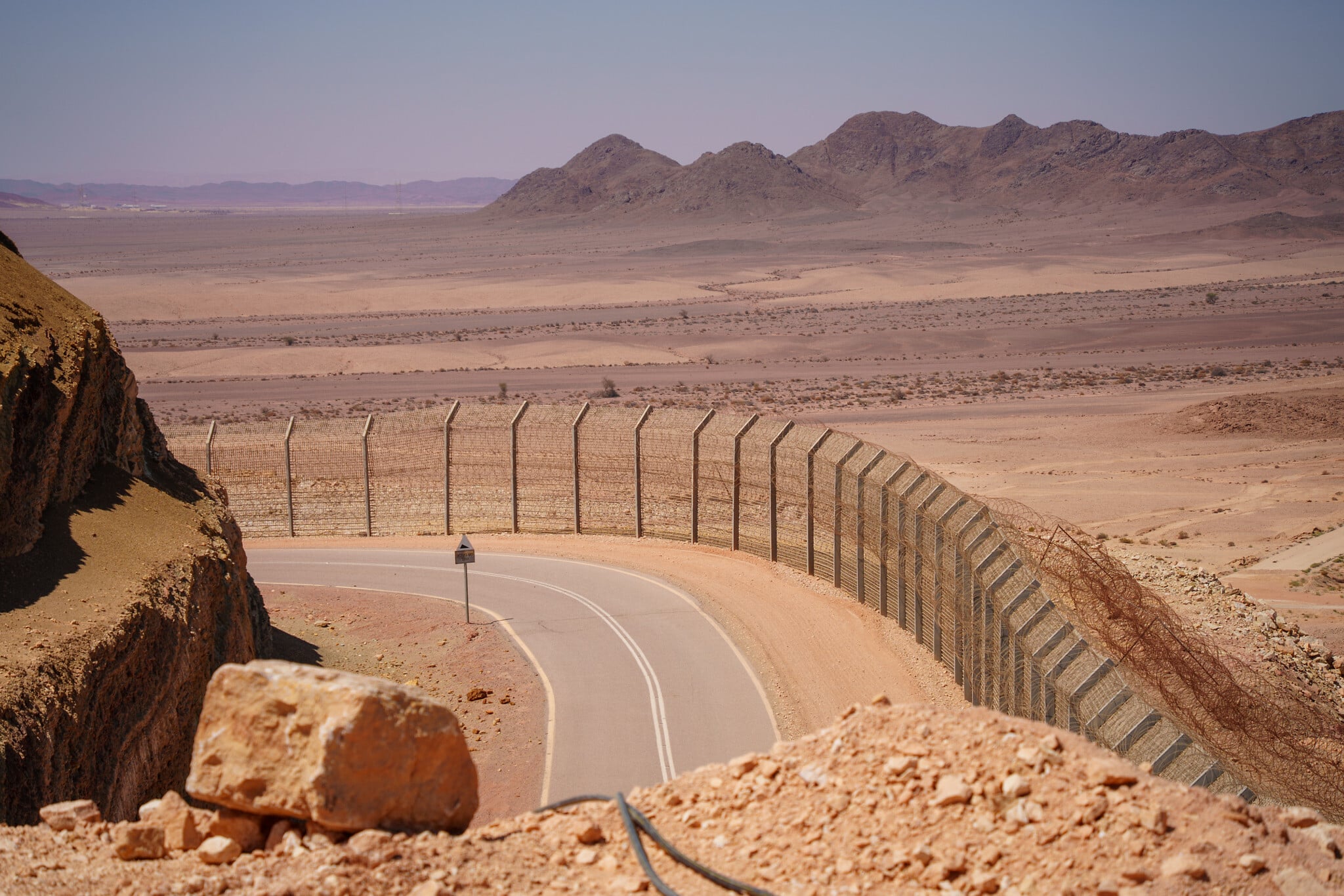
View of the Israeli-Egyptian border. September 9, 2025 (Yaniv Nadav/FLASH90)
A wider closed military zone on the border may enable the IDF to detain some smugglers and hand them over to the police, but army officials said it may not be enough, especially with newer drones having much longer ranges, which would allow suspects to pilot them from kilometers away.
Military officials said that no matter what solution they deploy to the border to stop the drones, the smugglers will always try to find a new way around it — just as they did in the past.