
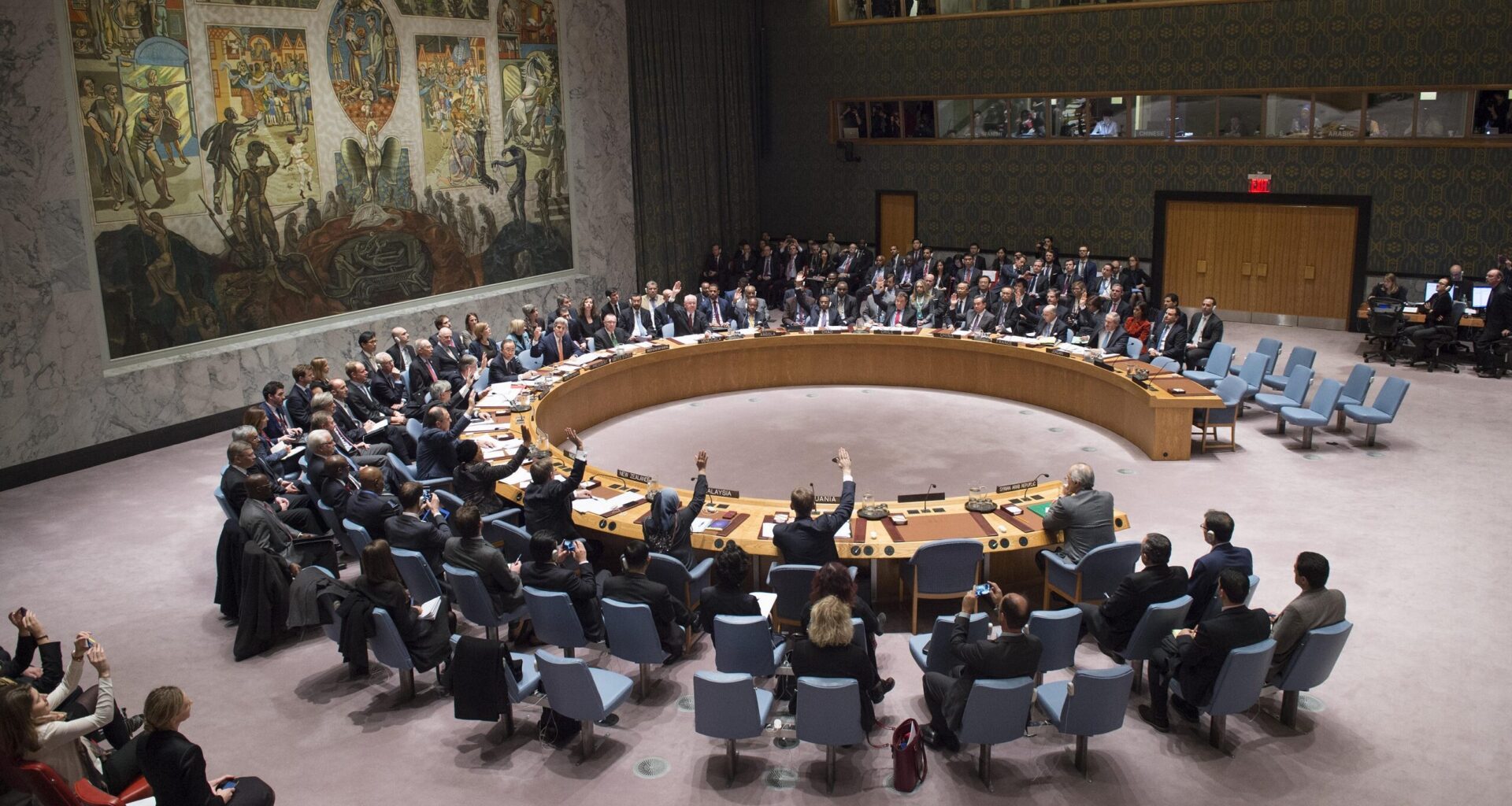
Keren Setton opens her report with a moment of possibility in the Gaza war: the UN Security Council is about to vote on dueling American and Russian blueprints that could lock in a fragile ceasefire and redraw the map of Palestinian statehood. At the center is President Donald Trump’s 20-point plan, packaged by Washington as a “credible path” to a reformed Palestinian Authority, an international force in Gaza, and, eventually, a state.
The American draft would cement the US-brokered truce, send a multinational International Stabilization Force into the Strip, and create an apolitical Palestinian administration overseen by the US president, who would chair a “Board of Peace.” It also envisions more than 10,000 Gazan police running day-to-day security while foreign troops work to demilitarize Gaza and push Hamas out of power.
For Israel, that vision comes with a price: a US-led Civil-Military Coordination Center on Israeli soil, unlimited humanitarian aid into Gaza, and no Israeli veto over key decisions. Prime Minister Benjamin Netanyahu publicly backs President Trump’s plan yet warns that Israel is fighting a seven-front war and must keep freedom of action if Hamas refuses to disarm. His right-wing partners threaten to topple his coalition over any move that smells like Palestinian statehood.
Moscow’s rival resolution leans on older UN language, gives the Palestinian Authority a larger role, and reflects Russia’s bid to challenge American influence in the region. With both Washington and Moscow holding veto power, the vote could end in deadlock—or set a new baseline for future US pressure on Israel, even if little changes on the ground. Setton’s full article traces how this diplomatic showdown might decide Gaza’s future, but also the region’s next political order.