
The Ford government will be introducing legislation next week that would begin consultations on making some information from the Ontario Sex Offender and Sex Tr
The Ontario government is eyeing changes that would make public some information from the province’s sex offender registry, CTV News Toronto has learned.
The Ford government will be introducing legislation next week that would begin consultations on making some information from the Ontario Sex Offender and Sex Trafficker Registry (OSOTR) publicly accessible.
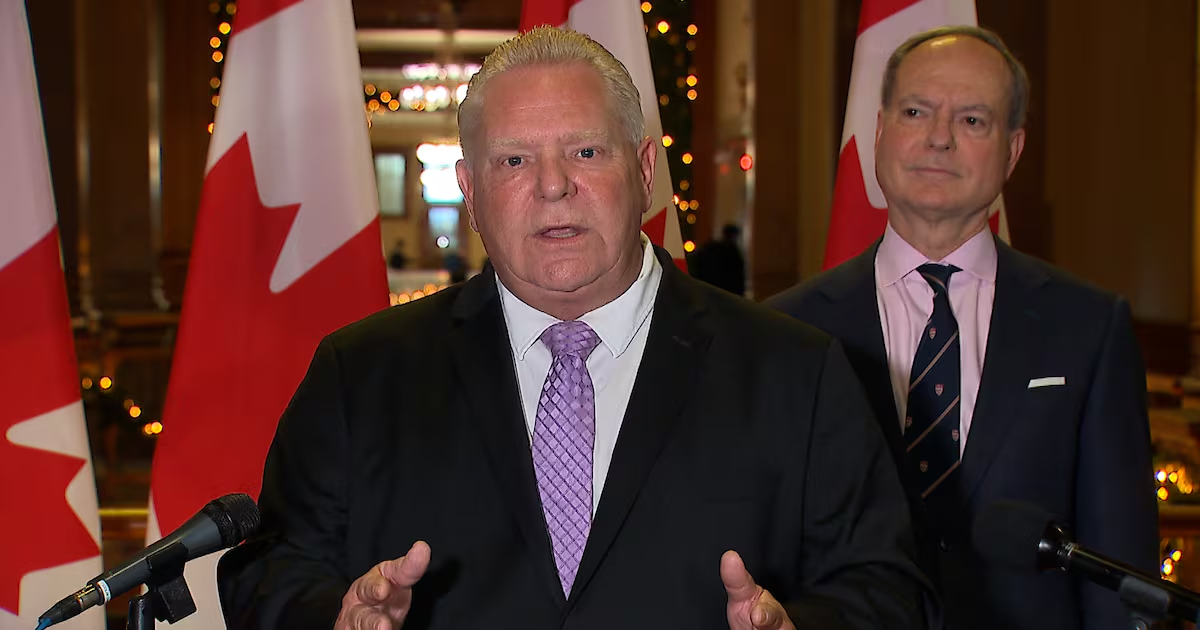
“If you have a sex offender who’s living next door or down the street and you have a bunch of kids, you want to know about it. So we’re going to make sure the sex offender registry is out there, public,” Premier Doug Ford said when asked about the move at Queen’s Park Monday.
Ford added he would use the notwithstanding clause “in a heartbeat” to make sure that the change can’t be overturned via a Charter challenge.
“We’re probably going to get shot down from the courts again, but I’ll use every single tool to make sure we protect the victims over the sex offenders. It’s a no brainer,” Ford said.
The Ministry of the Solicitor General says the proposal is aimed at protecting children, strengthening community safety and making sure “dangerous” individuals are held accountable.
The registry was established in 2001 under Chistopher’s Law to ensure those convicted of sex offences register with police and regularly report their information. Currently, the information in the registry is accessible only to law enforcement agencies.
“What we want to do is make sure there is a deterrent in place so that if a community knows there’s an individual that could cause them harm, then that gives a person who’s on the registry greater awareness that they must behave,” Solicitor General Michael Kerzner said. “They must uphold the laws. They must uphold the fact that our rights to live safely in our own homes and communities will never be compromised.”
He cited the recent case of a young child who police said was sexually assaulted in their Welland, Ont. home by a man who broke in. The suspect in the case had previously been sentenced to jail time for sexually assaulting a minor, court documents showed.
The move also comes as a number of Ontario municipalities call for changes in the wake of a recent decision by the Supreme Court of Canada to strike down one-year mandatory minimum jail sentences for accessing or possessing child pornography. The Ford government is also citing that decision in its rationale for pursuing the changes.
“Unfortunately the Supreme Court has chosen to protect these nasty criminals and they just make me sick,” Ford said.
“These child pornography people? Throw them in jail. Throw away the key. They can rot in there, because nothing’s more important to protect our communities, to protect them from people like these, I can’t even put the word out there. They’re a bunch of diddlers. I can’t stand them. They make me sick.”
The government did not immediately give specifics on what types of information from the registry might be made public.
“This is something that we’re going to look at,” Kerzner said. “I’m going to be introducing our fall justice bundle in the days ahead, and we will have a provision that we will look and have meetings with our stakeholders to see what information can be released.”
The province says it plans to consult with law enforcement, legal stakeholders, and subject-matter experts on the changes. It hopes to implement a public-facing component of the registry by next spring.
Just a year ago the Ford government said it was introducing changes to strengthen Christopher’s Law, including tightening travel rules and prohibiting sex offenders from legally changing their names.
At the time, the government said there were 14,000 registered sex offenders on the Ontario Sex Offender Registry with active reporting obligations.
Since its introduction, civil rights groups have challenged elements of the registry, including one case where they argued sex offender registries discriminate against those with mental illnesses.
The Canadian Civil Liberties Association said it was not able to immediately provide a response to the government’s plans around the registry.
Mark Mendelson, a former Toronto police homicide detective, said that while there may be members of the public who want to know whether sex offenders are living in their neighbourhood, the province’s plans raise a number of practical and civil questions.
“There are going to be hurdles that the province is going to have to overcome, aside from the notwithstanding clause,” Mendelson said.
“I think we’re going to see a lot of civil rights organizations having a lot to say about this, because I think what other people have to be concerned about is, what are people going to do with this information? Are we going to be looking at vigilantism in neighbourhoods, demonstrations in front of homes, things of that nature.”
He said police do currently have the ability to inform the public about a registered sex offender in the area if they deem there to be a risk to public safety, though they don’t do so often.
“By opening it up to the public, we have to be concerned about what reactions the public are going to have at the end of the day,” Mendelson said.
“Is somebody going to get hurt over this? Because there are varying degrees of offences and seriousness of offences that fall under the sexual assault and child pornography and human trafficking sections of the criminal code, and they’re very different.”