
President Trump has indicated that he is open to talks with President Maduro of Venezuela as the US deploys its biggest naval force to the Caribbean in decades, in a move widely seen as an attempt to topple the authoritarian leader.
The USS Gerald R Ford, the biggest aircraft carrier in the world, arrived in the region on Sunday along with several warships and attack planes.
An estimated 15,000 US troops have been deployed as part of an operation, purportedly against drug trafficking, which Pete Hegseth, the US war secretary, named Operation Southern Spear.
• Sign up for The Times’s weekly US newsletter
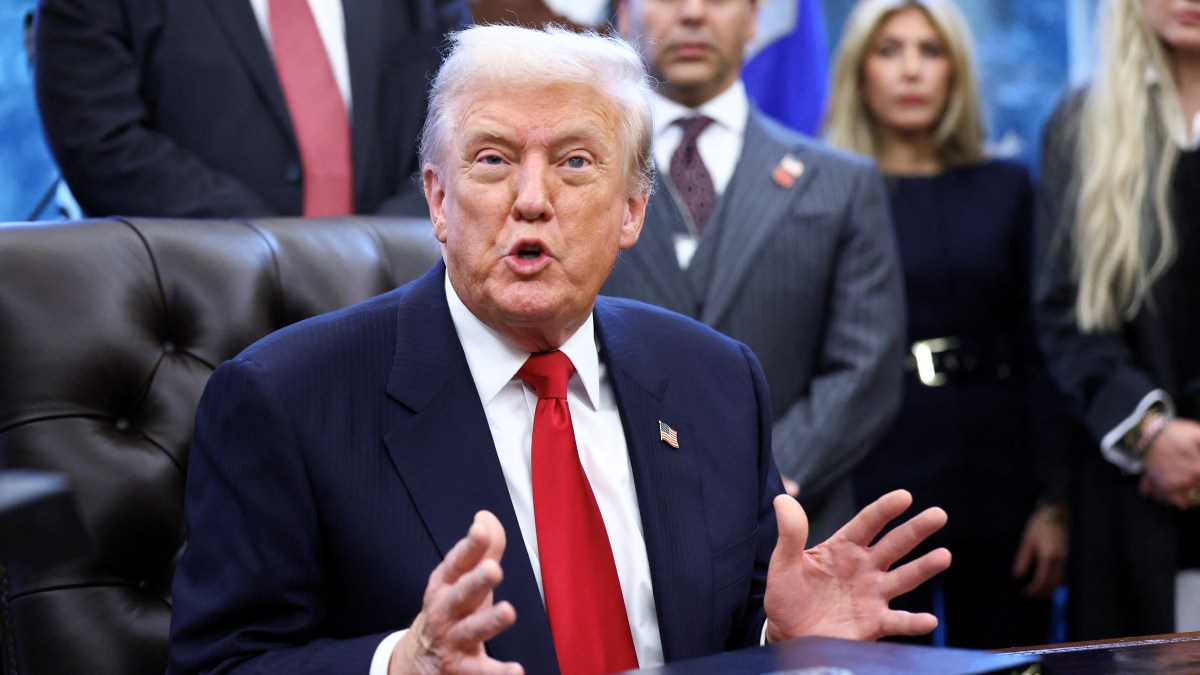
“We may be having some discussions with Maduro, and we’ll see how that turns out,” Trump said as he prepared to board Air Force One at Palm Beach airport on Sunday.
Maduro responded, saying that “whoever wants to talk with Venezuela will talk, face to face, without any problem”.
When Trump was asked if he would rule out American “boots on the ground” in Venezuela at a White House event on Monday, he said: “I don’t rule out that, I don’t rule out anything.”
As for talking to Maduro, he added: “I probably would talk to him, I talk to everybody.”
His comments, reopening the possibility of negotiations, came shortly after Marco Rubio, the US secretary of state, said he would designate a Venezuelan drug cartel — which he alleged Maduro leads — as a foreign terrorist organisation.
The designation, also applied to terrorist groups such as al-Qaeda and Isis, makes all financial transactions with the group or anyone associated with it a federal crime subject to severe penalties.
Labelling Maduro a terrorist may give the Trump administration some additional legal justification to strike targets in Venezuela, or even target the president himself. Unusually, it will not go into place until Monday November 24, a delay perhaps designed to open a one-week window for negotiations.

President Maduro is alleged to lead a drug ring called Cartel of the Suns
PEDRO MATTEY/ANADOLU VIA GETTY IMAGES
Concurrently opening the possibility of talks is a sharp shift for the Trump administration. Last month Washington was said to have suspended all efforts to reach a diplomatic agreement with Maduro when Trump bluntly told his special envoy, Richard Grenell, to stop “all outreach”.
• What is Operation Southern Spear?
The News York Times said at the time officials had indicated that the president had “grown frustrated with Mr Maduro’s failure to accede to American demands to give up power voluntarily and the continued insistence by Venezuelan officials that they have no part in drug trafficking”.
Trump said a few days later that Maduro “has offered everything — he’s offered everything … Do you know why? Because he doesn’t want to f*** around with the United States”.
The Miami Herald reported that senior Venezuelan officials privately floated opening the country’s natural resources to US companies and creating a transition in which Maduro would eventually step down. The regime angrily denied the report.
Since then a US naval build-up in the Caribbean, which began in August, has gathered pace.
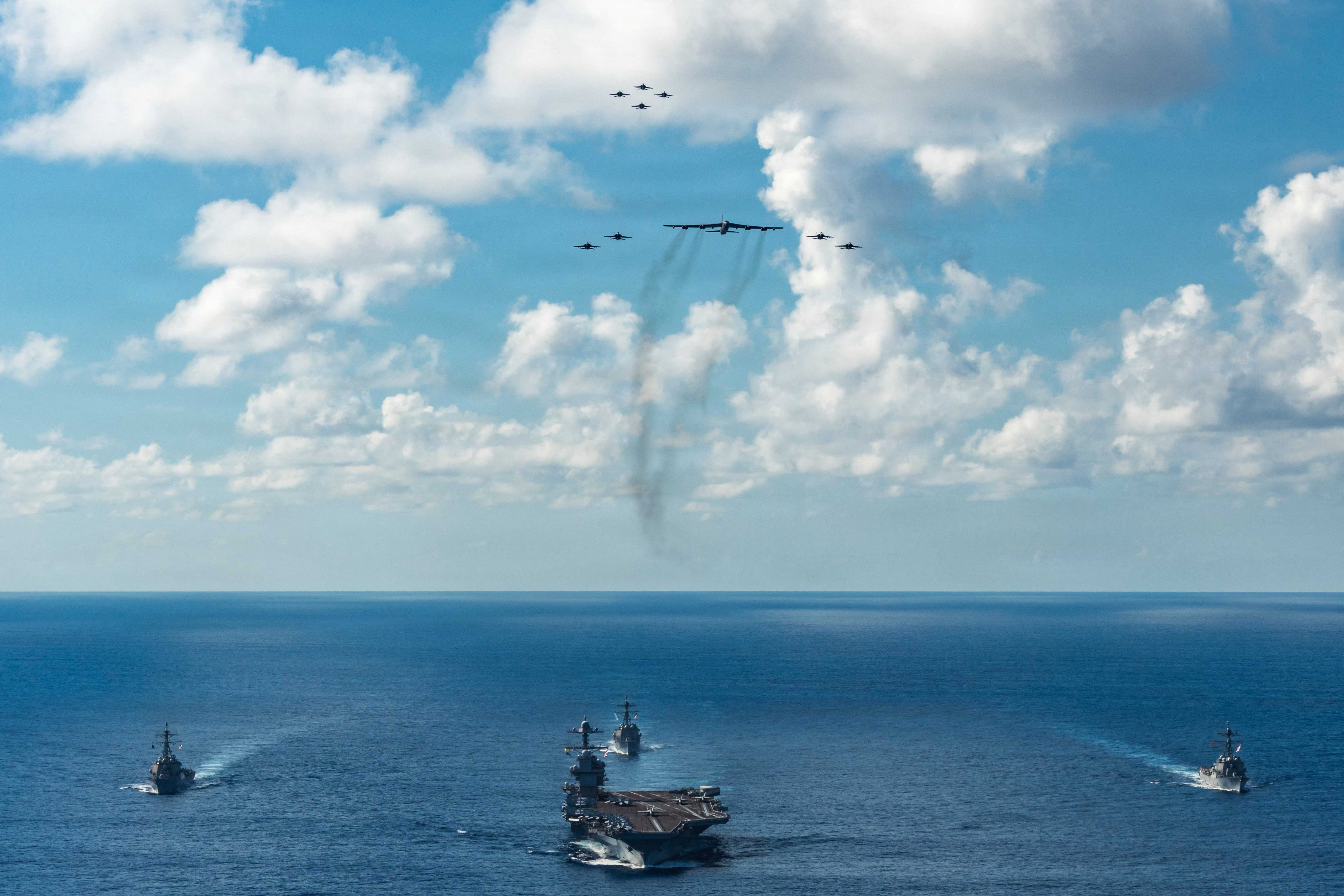
The USS Gerald R Ford, the world’s largest aircraft carrier, arrived in the Caribbean on Sunday
US NAVY/PETTY OFFICER 3RD CLASS GLAD JIMI BALISAGE/REUTERS
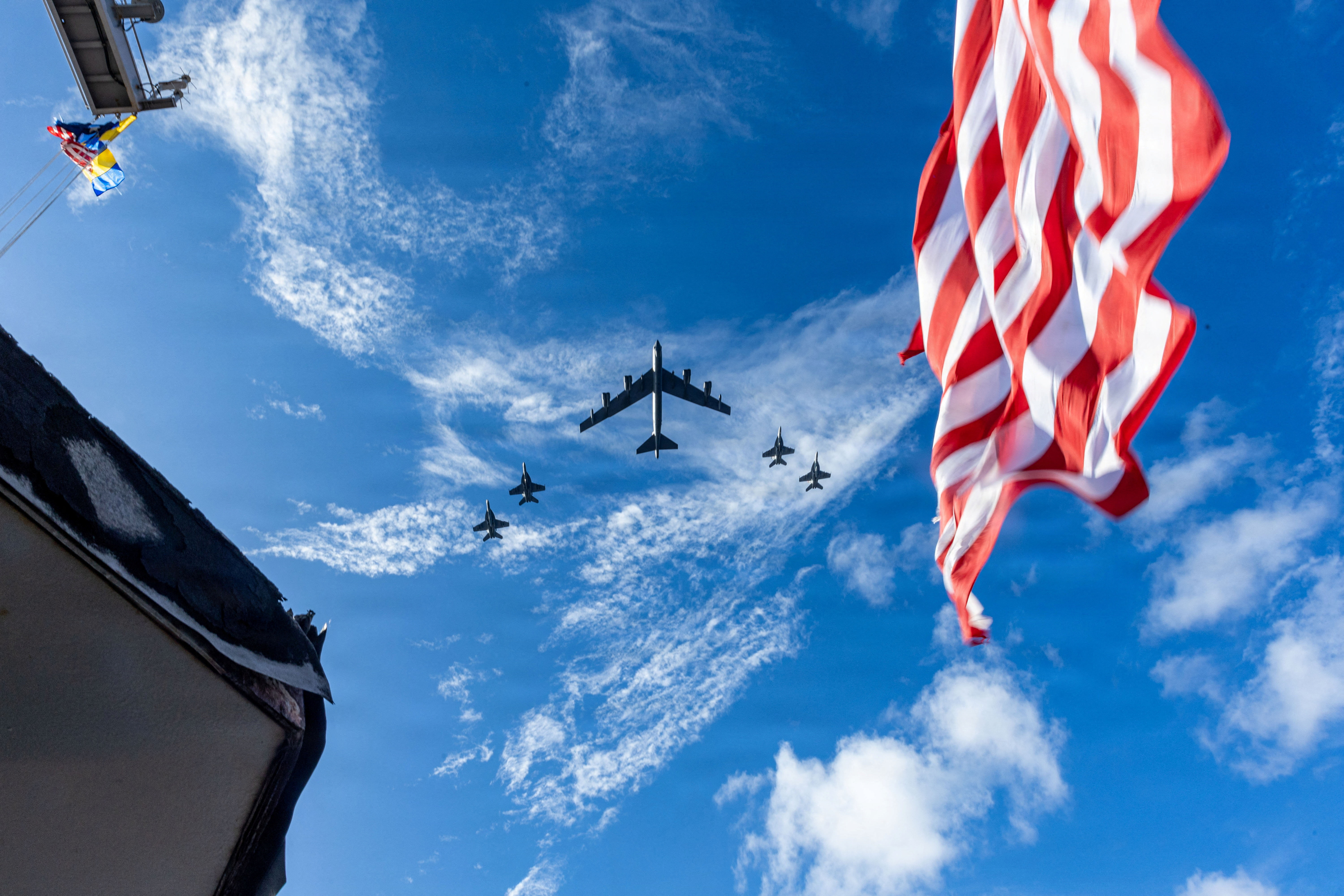
Air Force jets fly to the region as the US military presence builds
US NAVY/SEAMAN ZAMIRAH CONNOR/REUTERS
Over the past two months the force has made at least 21 strikes on boats it claimed were trafficking drugs in both the Caribbean and Pacific, killing 83 people. Many legal experts say the policy is in direct violation of international law.
• Trump says the Venezuela attacks are about drugs. Data suggests otherwise
The Department of Justice’s Office of Legal Counsel has issued a private memo authorising the strikes on alleged drug-smuggling boats, mainly on the basis that Trump’s designation of drug cartels as foreign terrorists makes them legitimate military targets, The Wall Street Journal reported.
The Trump administration alleges that Maduro leads the so-called Cartel of the Suns, a claim the Venezuelan leader strongly denies. Maduro is seen by most western nations as an illegitimate president after an election last year he is widely believed to have stolen by declaring an invented result.
Asked if there was anything Maduro could say to resolve the situation during Monday’s event, Trump said: “It’s hard to say. The question’s a little bit tricky. He’s done tremendous damage to our country. Primarily because of drugs … but more than any other country, the release of prisoners into our country — he’s emptied his jails.
“He’s not been good to the United States … In a certain period of time I will be talking to him.”
Later he added: “Would I launch missiles into Mexico to stop drugs? It’s OK with me. Whatever we have to do to stop drugs … we have no drugs coming in by boats. Would I do that on land corridors? Absolutely … we have every one of those corridors under major surveillance. Colombia, they have cocaine factories. Would I knock out a cocaine factory? I would be proud to do so. … I’m not saying I’m doing it. But I’d be proud to do it.”
The US already has a $50 million (£35 million) award in place for information leading to the capture of Maduro, a former bus driver. Further awards are in place for the defence and interior ministers.
Some co-operation continues between the US and Venezuela. Deportation flights from the United States arrive regularly at the main Caracas international airport. And the US oil giant, Chevron, maintains an operation in Venezuela, although it is prohibited by the US Treasury from making any monetary payments to the Venezuelan state: instead it settles its debts in oil.