Global markets will also look closely at the upcoming US data including the August non-farm payrolls out on Thursday, including shaping of Fed rate cut expectations for December. Thus far, the FOMC certainly seems more split on a December rate cut also relative to the previous policy meeting, but with the Governors probably leaning slightly more dovish relative to the Presidents of the regional banks. Overnight, Governor Waller called for a December rate cut, saying that his reading of the data leads him to support a cut as a matter of risk management, and with relatively small effects from tariffs and inflation still well anchored.
There were several other local stories out from Asia, including from Taiwan and India. The Taiwan Dollar erased some of its gains post the joint statement between the US Treasury and CBC, and as worries around the sustainability of the AI boom weighed to some extent on TWD.
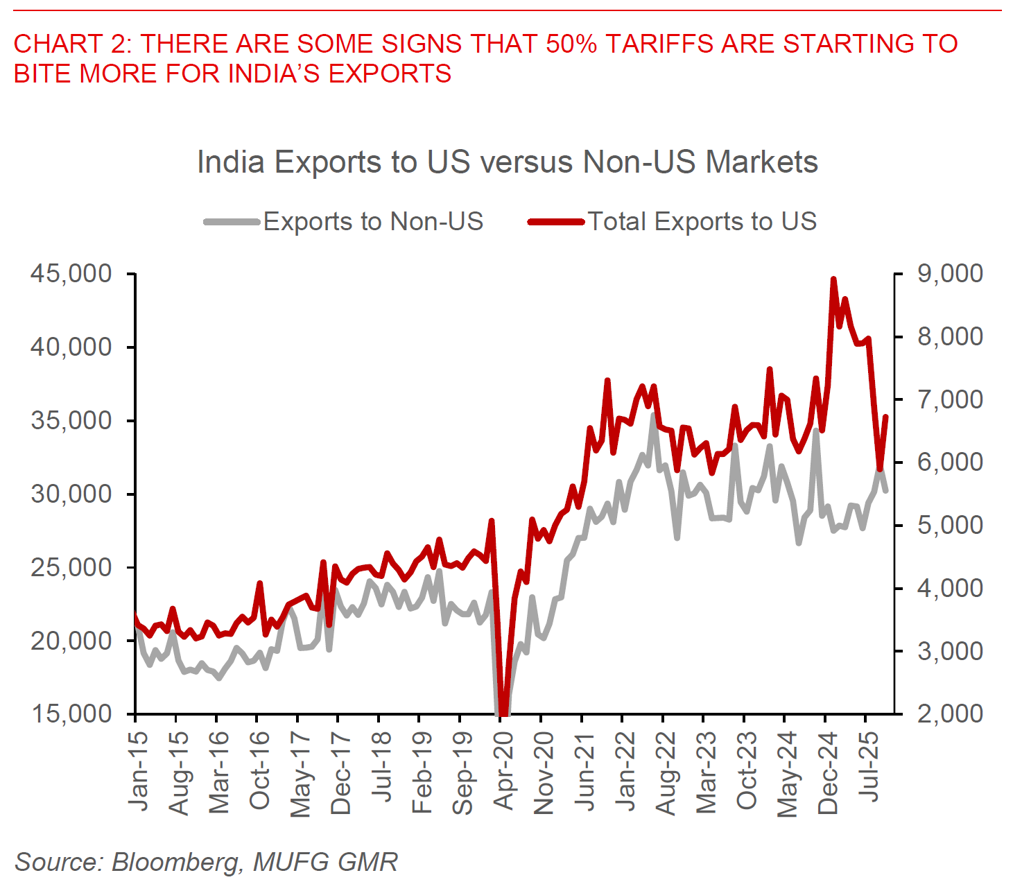
Meanwhile, India’s October trade deficit was a blowout US$42bn, although this is also a month where seasonality is not helpful with key holidays in India. Exports fell 11%yoy and by our estimates declined by 2.4%mom – so not helpful, but not as bad as what the headline yoy growth numbers suggest. So far up till September India’s exports have been able to diversify exports to non-US markets, but there are signs in the October trade numbers that the 50% tariffs are starting to bite more. Imports rose by a further 2% in October after a 21%mom rise in September, with a sharp rise in gold imports, and to a smaller extent non-oil non-gold imports, highlighting how the GST tax cuts and reforms are boosting domestic demand. Net-net the FX impact for INR will also depend on whether the widening CA deficit can be financed both through portfolio inflows and FDI, and this will also depend on the ultimate level of tariffs India receives.
We still think dips in USD/INR will be shallow even as RBI remains protecting on the topside at 88.80 levels. Our working assumption is that India will see lower tariffs at 25%, but on a relative perspective this should be higher than its trade competitors such as Vietnam.