
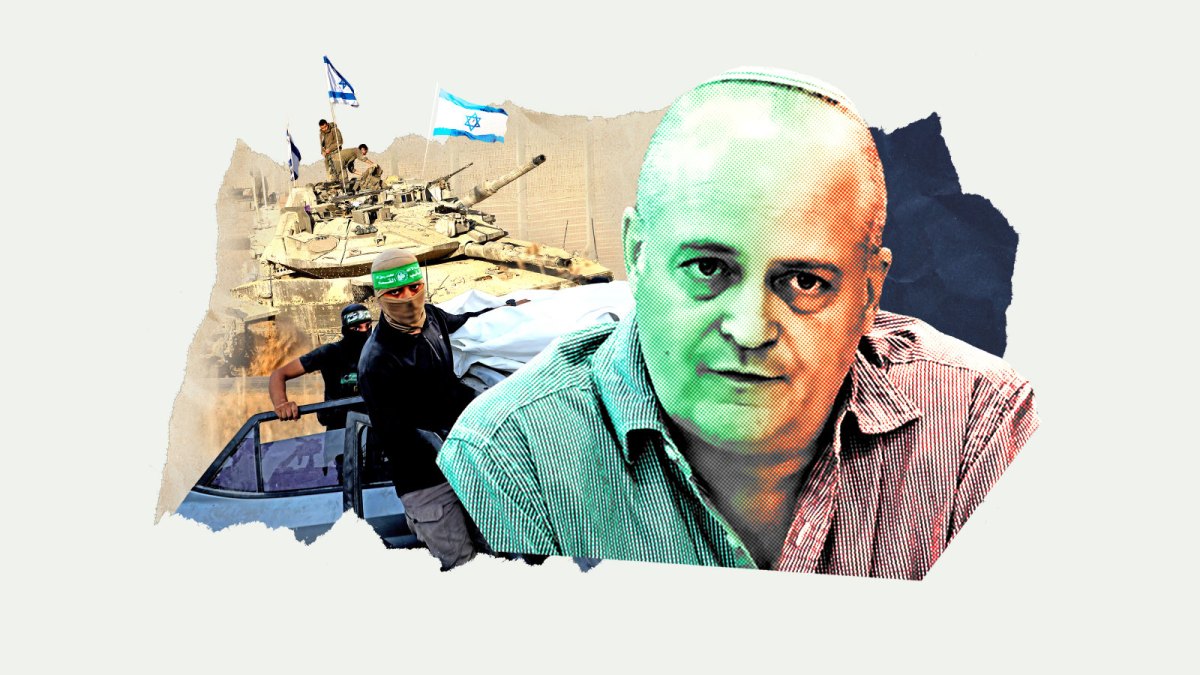
Hamas fighters who remain in a tunnel network in parts of Gaza controlled by the Israeli military should face starvation, suffocation or explosive attacks unless they surrender, a former senior Israel Defence Forces commander has said.
Some 100 fighters are currently in hiding and refusing to give themselves up in areas west of the so-called yellow line, which marks the boundary of Israeli military control under the terms of the ceasefire deal brokered by President Trump.
The renegades have presented an obstacle in ongoing negotiations to progress to a second phase of the truce, under which Hamas would be disarmed and control of the strip passed to an international “board of peace”, with international troops providing security.
Erez Winner, a retired brigadier general who was in charge of the IDF’s southern command as a reservist officer during the October 7 attacks in 2023 and for a decade before, said the militants could surrender and be exiled, in accordance with the terms of the agreement signed last month, but he added that he would prefer to see them be detained or die.
• Whisper it, but both sides are making concessions on Gaza
“We know this area, we have the ability to cut it [the tunnels off] slowly, slowly, either by penetrating cement or other elements inside, or exploding it part by part,” Winner, 57, said, after briefing members of cabinet on his strategy this week.
“It will be a rather long operation but since they are captured deep in the areas that are under Israeli hold, it’s possible it’s only a matter of working slowly and not as fast as possible, not endangering IDF troops,” he said.
“What will force them out of the tunnels, like we saw last week with the four or five terrorists who did come out, is when the food and water that they stole from their own people will be finished — the hunger will push them out.”
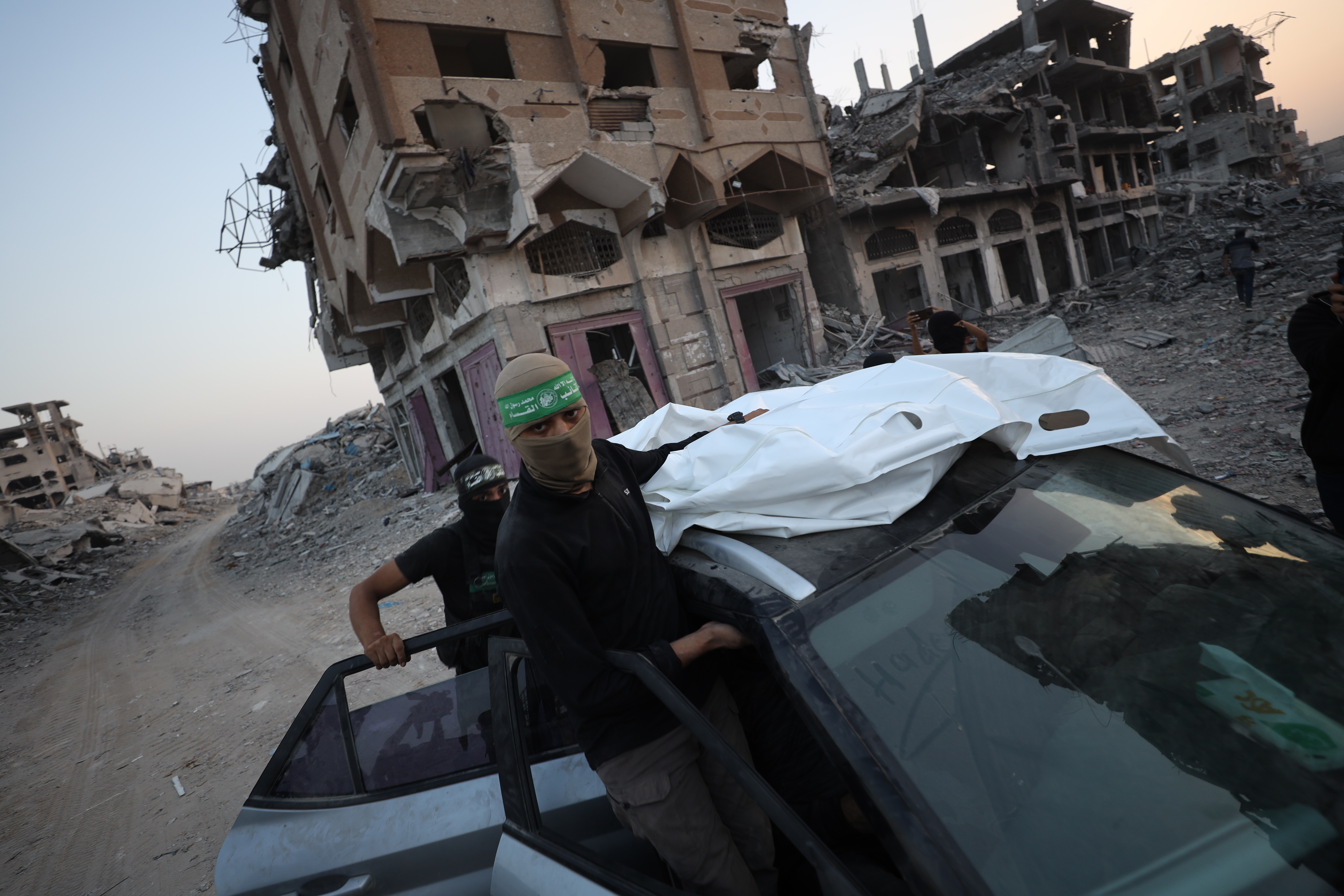
Hamas swiftly re-established its hold over areas from which Israel withdrew
KHAMES ALREFI/ANADOLU/GETTY IMAGES
On Monday the UN security council approved a US-led motion to endorse the Trump-backed deal, including the idea of a technocratic administration that is intended to run Gaza, as well as the international peacekeeping force that will provide security for an initial two years.
Russia and China abstained from the vote, allowing it to pass 13-0. Trump said it would “go down as one of the biggest approvals in the History of the United Nations”. Hamas, meanwhile, rejected the resolution.
“It dismantles Hamas’ grip, it ensures Gaza rises free from terror’s shadow, prosperous and secure,” Mike Waltz, the US ambassador to the UN, said before the vote.
Since the last 20 surviving hostages and most of the 28 who had died were released from Gaza in exchange for nearly 2,000 Palestinian prisoners and 330 bodies, officials have been attempting to confirm the second phase of the truce.
Winner said American officials were concerned with bigger questions than the fate of the Hamas fighters holed up in the south of the strip. “Their desire to continue with that agreement, that has much bigger, much bigger goals than just Gaza,” he said. “They want to continue and they see that 100 or so terrorists in Rafah, they say it is an obstacle that should be … sidestepped and passed over.”
After the ceasefire began last month, Hamas swiftly re-established its hold over areas from which Israel withdrew, killing dozens of Palestinians it accused of collaboration, theft or other crimes.
The Trump administration is reported to have a plan to divide Gaza into a “green zone” under Israeli and international military control and a “red zone”, which in the short term would be left in ruins.
In the green zone, Israel “could enter an international force that will deal with the population, that will start the reconstruction and will start to build the new Gaza”, Winner said, but the red zone would be where it could resume its military campaign and finally eliminate Hamas.
“In the red area, where Hamas is now, there will be no reconstruction,” he said. “And I believe that sooner or later, Israel will have to do the job and demolish Hamas and make sure that as an organisation and as a regime, they won’t exist in Gaza.”
Trump’s 20-point plan envisages that a reformed Palestinian Authority could eventually regain political power in Gaza and therefore create the conditions “for a credible pathway to Palestinian self-determination and statehood”.

The Shujaiya neighbourhood in Gaza City
NIR ELIAS/REUTERS
Ahead of the security council vote that could effectively make Trump’s plan international law, Binyamin Netanyahu, the Israeli prime minister, said his opposition to a Palestinian state was unwavering.
“Our opposition to a Palestinian state in any territory west of the Jordan [River], this opposition is existing, valid and has not changed one bit,” Netanyahu said at a cabinet meeting on Sunday. “I have been rebuffing these attempts for decades and I am doing it both against pressures from outside and against pressures from within.”
While Indonesia has formally said it would send troops and is now expected to form the bulk of the proposed International Stabilisation Force, Jordan, Oman and the United Arab Emirates, who had been expected to take a leading role, ruled out sending troops into Gaza. Most Arab and Muslim states have hinged their involvement in Gaza on the creation of a Palestinian state, an idea that Israel flatly rejects.
Just before the weekend, the US and key regional allies including Qatar, Egypt, the UAE, Indonesia and Pakistan issued a joint statement on the resolution, saying it presented a “viable path toward peace and stability, not only between the Israelis and the Palestinians, but for the entire region”.
Countries including China, which has veto power on the security council, are understood to be seeking clearer language in the resolution in support of Palestinian statehood and defining a role for the Palestinian Authority before they will endorse it.
Winner, a research fellow at the Israel Centre for Grand Strategy who previously served as former chief of general staff of the IDF, is among those calling for the military to retain control in Gaza for as long as Hamas can still be considered a threat.
He is also among the more hardline voices advocating for Israeli settlements in the territory.
“I do support Jewish resettlement everywhere, everywhere possible, but I do think that we have to do things in terms, and for the time being, we have to make sure Hamas is destroyed,” he said.
“I think that part of the biggest pressure on Hamas is taking land out of their possession and this is why the current agreement, with Israel staying in all of the higher ground around the surroundings of Gaza, is something that we should keep for as long as possible … unless we will be sure that there were no threat from Gaza and no Hamas.”
He added: “And in some of those places, Israeli agriculture, Israeli strong points, and maybe in the future, Israeli settlement could be part of the answer.”