


Listen to this article
Estimated 4 minutes
The audio version of this article is generated by text-to-speech, a technology based on artificial intelligence.
Premier François Legault says his government will not make any exceptions for permanent residency applications submitted through the province’s soon-to-be defunct Quebec Experience Program (PEQ).
The Quebec government announced last week that the PEQ — an important pathway to permanent residency — will end on Nov. 19, making the Skilled Worker Selection Program (PSTQ) the only route for those wishing to settle in the province for economic reasons.
The government will continue to process PEQ applications received before the pathway was suspended, but they will now be evaluated based on criteria for the PSTQ.
In a scrum on Tuesday, Legault said the government is trying to reduce the number of non-permanent residents in the province since “there are too many temporary immigrants” in Montreal and Laval.
“When we have needs, we will be able to accept them, but no favouritism clause like there was before, no grandfather clause,” Legault said in reference to PEQ applicants who were not yet approved.
Protests against the removal of the PEQ — organized by immigration advocacy group Le Québec c’est nous aussi (LQCNA) — took place Monday morning at the Quebec Immigration Ministry’s office in downtown Montreal and in front of the National Assembly in Quebec City.
The PEQ fast-tracks permanent residency applications for people already in Quebec. It is made up of two streams: one for temporary foreign workers and another for Quebec graduates.
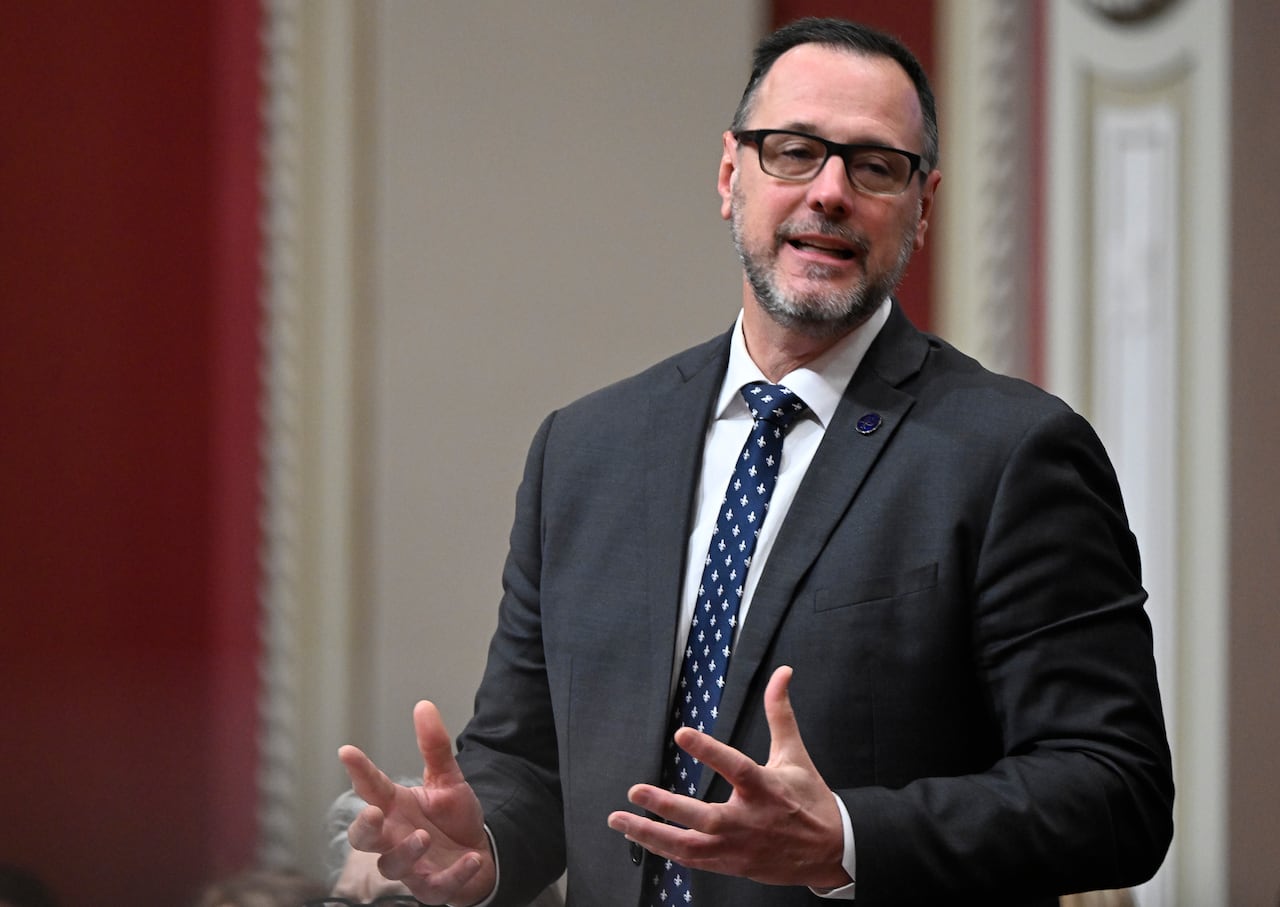 Quebec Immigration Minister Jean-François Roberge has said that people who were counting on the Quebec Experience Program for permanent resident status may not necessarily qualify under the Skilled Worker Selection Program. (Jacques Boissinot/The Canadian Press)
Quebec Immigration Minister Jean-François Roberge has said that people who were counting on the PEQ for permanent resident status may not necessarily qualify under the PSTQ, noting that it’s “not automatic.”
With the PSTQ, the government will prioritize Quebec graduates who have work experience and foreign workers who are already in the province.
Under the PSTQ, the government assesses the education, French-language proficiency and work experience of temporary residents using a 1200-point scale. The higher the score, the greater the likelihood that immigrants will be invited to apply for permanent resident status.
Claire Launay, president of LQCNA, said in a media statement published on Monday that by cutting the PEQ and imposing a moratorium on work permits in Montreal and Laval, the government is sending a clear message to workers that they should leave.
Earlier in November, the Quebec government reduced its immigration targets for the next four years to 45,000 new permanent residents annually — an important drop from the 61,000 who are expected in Quebec this year.
“Clearly, the government is prepared to tarnish Quebec’s reputation abroad and destroy the life plans of thousands of families here, simply to satisfy the anti-immigration sentiment it has cultivated among its voters,” Launay said.
Recognize ‘everything we have done,’ applicant pleads
Service worker Ahmed Dine Dine, who attended the protest in Quebec City, said the end of the PEQ has put his and his wife’s futures at risk.
He said they chose to put down roots in Quebec because, as French-speaking Moroccans, they thought their fluency in the province’s official language would make integrating easier.
“By paying our taxes, like all Quebecers, we have been trying to make every effort to be here,” Dine Dine said.
“We abandoned everything at home to start a new life here in the hope of being accepted and useful and being part of this community.”
Dine Dine said PEQ applicants are not asking for handouts: they are asking the government to recognize “everything we have done” while following rules Quebec imposed.