

The IDF struck Hamas targets in the Gaza Strip on Wednesday afternoon after terrorists violated the ceasefire agreement by opening fire on Israeli troops near Khan Younis, the military said.
According to the IDF, Hamas gunmen fired at forces operating along the designated “yellow line” buffer zone near Khan Younis in southern Gaza. No Israeli soldiers were injured. In response, the IDF launched a series of airstrikes across the Gaza Strip, mainly in Gaza City’s Zeitoun neighborhood, coordinated by the Southern Command and guided by intelligence from the Shin Bet internal security service.
Among those killed in the strikes were the Hamas battalion commander for Zeitoun and a senior member of the group’s naval operations in the territory, according to the IDF.
“This action constitutes a violation of the ceasefire agreement,” the military said in a statement. “IDF troops in the Southern Command remain deployed in the area and will continue to operate to remove any imminent threat. The IDF will continue to operate to remove any threat to the State of Israel.”
Palestinian sources reported that the IDF also struck targets in Khan Younis, Shijaiyah and near Palestine Square in central Gaza City. At least 25 people were reported killed in the strikes.
3 View gallery
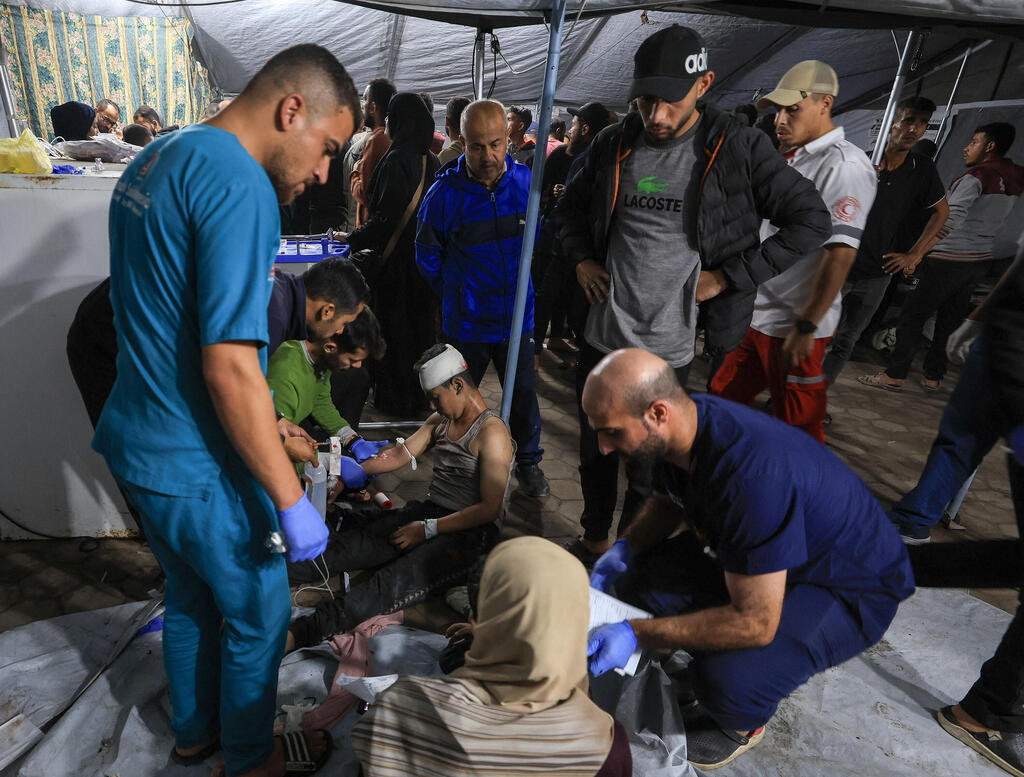
Medical staff treat wounded Palestinians at Al-Ahli Hospital in Gaza City following an Israeli airstrike, Wednesday, Nov. 19, 2025
(Photo: REUTERS/Dawoud Abu Alkas)
Earlier on Wednesday, before the exchange of fire near Khan Younis, a separate incident occurred in northern Gaza. The IDF said a 2nd Brigade combat team identified terrorists crossing the yellow line. The suspects approached Israeli forces in a manner that posed an “immediate threat,” prompting troops to open fire and kill one of them.
With no alternative authority in place, Hamas continues to govern the Palestinian-controlled parts of the Gaza Strip, collecting taxes and overseeing the entry of humanitarian aid—preventing its looting, at least according to the United Nations.
3 View gallery
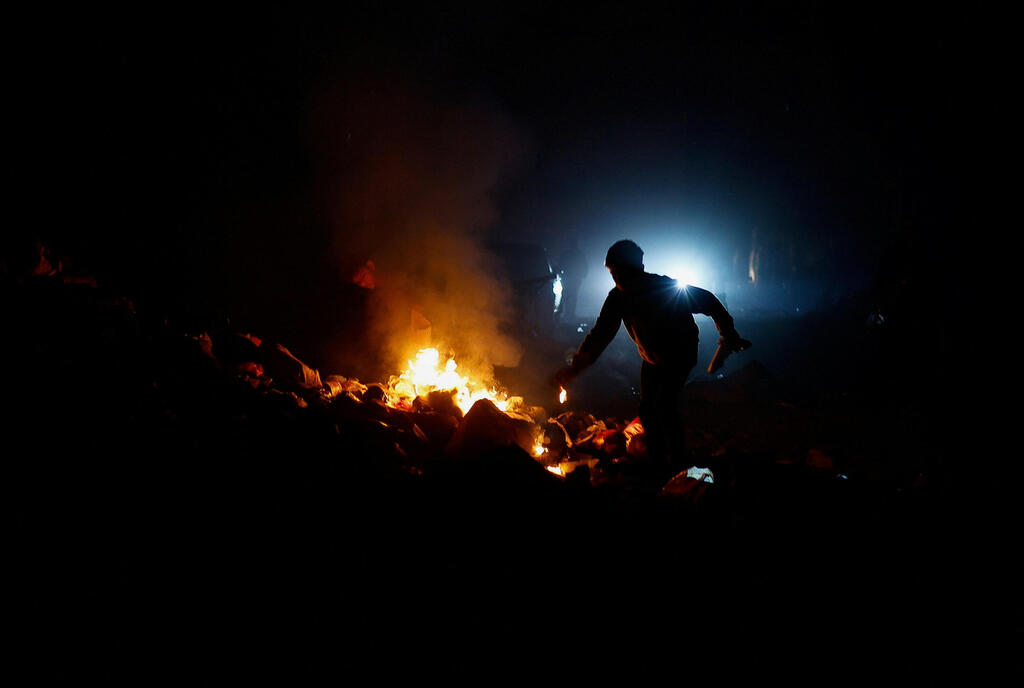
A man walks amid flames and debris after an Israeli airstrike in Gaza, Wednesday, Nov. 19, 2025
(Photo: REUTERS/Dawoud Abu Alkas)
Since the ceasefire took effect on October 10 and Israeli forces withdrew from parts of the enclave, Hamas has redeployed its operatives in the streets of Gaza, working to restore order after weeks of chaos. Despite having brought devastation upon the territory, some residents reportedly welcome the drop in crime and looting under Hamas’ renewed street presence.
While the next phase of the Trump plan—which includes dismantling the terror group’s military capabilities—remains stalled, Palestinian analysts, pollsters and some Gaza residents say Hamas is rebuilding its public image. As a result, the group is tightening its grip on nearly half of Gaza, in the areas where the IDF is no longer operating. Some locals now view Hamas as a “pragmatic” force, enabling a semblance of livable conditions in the absence of any real alternatives.
Currently, Hamas controls approximately 47% of the Gaza Strip, west of the yellow line, with the remaining 53% under IDF control. However, the vast majority of Gaza’s nearly two million residents live in the Hamas-run territory. Western officials have recently warned that the “lack of progress” in implementing Trump’s plan could lead to “years of separation” between the two zones.