
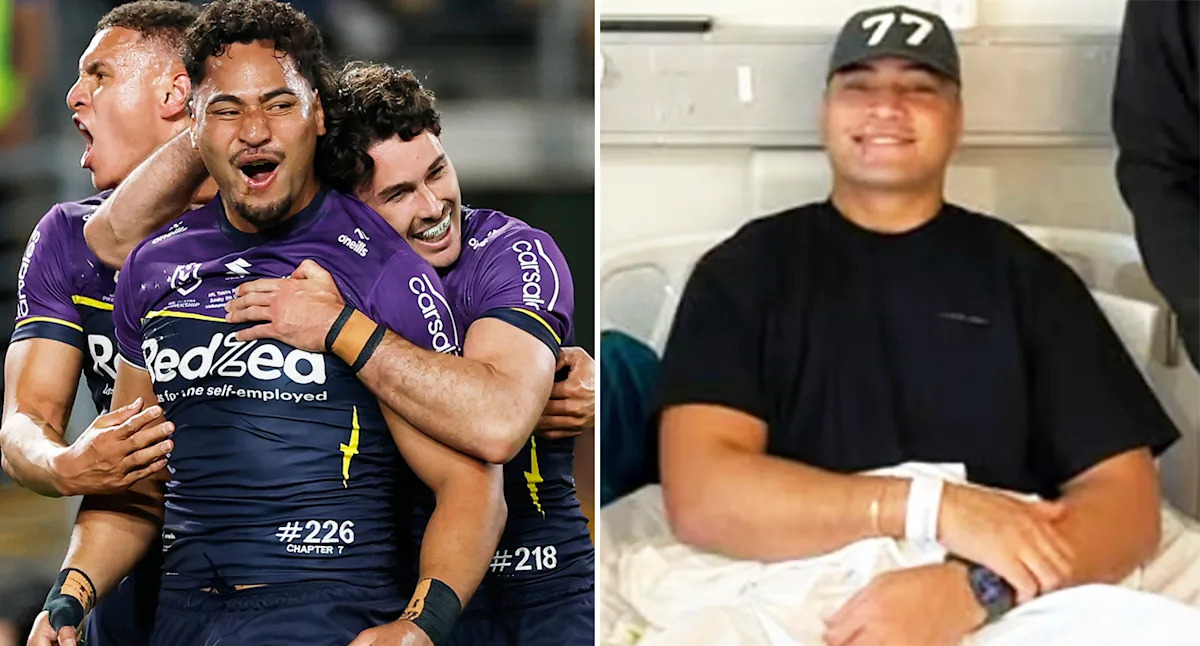
Melbourne Storm CEO Justin Rodski has revealed Eli Katoa is “struggling to process” the “devastating” news that he won’t play NRL in 2026. And Rodski has admitted the second-rower realistically “can’t be replaced” despite the fact the NRL is expected to give the Storm salary cap relief.
Because Katoa was injured playing rep footy, the Storm can apply for the NRL to cover a part of his salary for 2026. It’s the same situation for the Cronulla Sharks and Ronaldo Mulitalo, who tore his ACL playing for New Zealand.
Katoa is on a reported $700,000 per season, and the NRL is expected to cover a large majority of it. With Ryan Papenhuyzen, Nelson Asofa-Solomona and Jonah Pezet also getting out of their contracts for 2026 and forfeiting money, the Storm suddenly have around $2 million to spend on free agents.
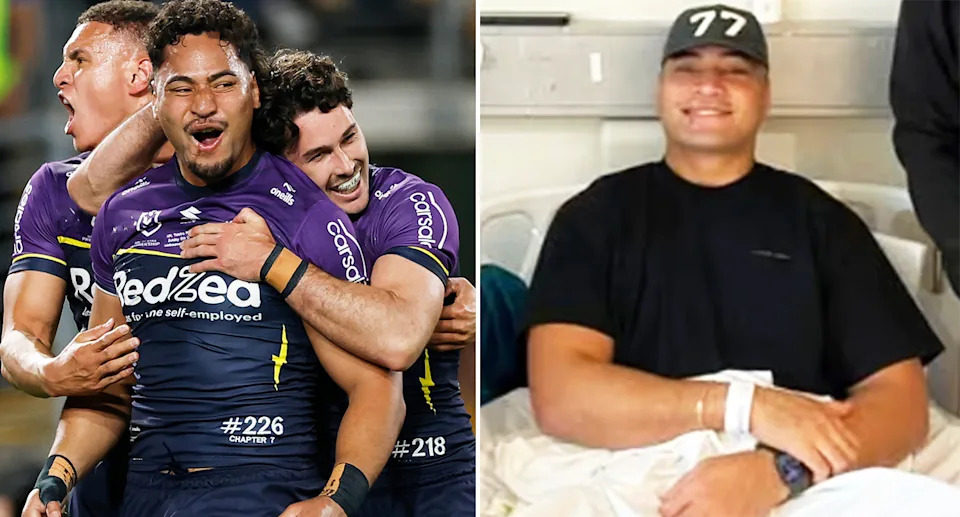
Eli Katoa is back in Melbourne, but won’t play NRL in 2026. Image: Getty/Eli Katoa
But as Rodski pointed out on Wednesday, there are very few free agents for 2026 as clubs have usually filled up their rosters by now. “It’s very late in the piece (for 2026), so with Paul Bunn and our recruitment team we’re obviously now looking at all options,” Rodski said on SEN radio.
“We’ve got a few players in our current squad that we think can come in and do a job, but at the same time, clearly there’s going to be an opportunity for us to go to the market. (But) he’s not really replaceable, to be honest, he’s been such a power force for us, such a great combination with (halfback) Jahrome Hughes on that edge. We’re going to miss him.”
Earlier on SEN radio, leading journalist Michael Carayannis named Adam Elliott and Ryan Matterson as players the Storm could potentially target. Neither have a contract for 2026 at this stage, but the former Newcastle and Parramatta players would bring vast experience to the Storm’s second-row with Katoa out.
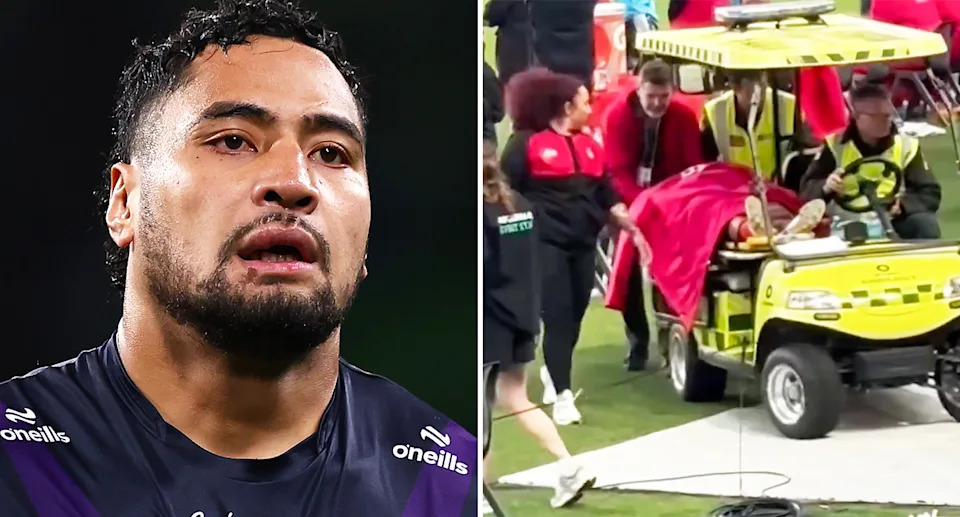
Eli Katoa had to be rushed to hospital. Image: Getty/Supplied
Eli Katoa ‘struggling to process’ whole situation
The Storm announced on Tuesday night that Katoa won’t be available for the entirety of the 2026 season as he focuses on his long recovery. The 25-year-old suffered a brain bleed after three separate head knocks during a game for Tonga against New Zealand.
“He’s got a long road ahead but pleasingly, he’s in a stable condition and improving every day,” Rodski said on Wednesday. “He’s struggling to process it all, obviously.
“He’s an athlete, he’s a competitor, he is a young man at the peak of his powers, and he’s now facing at a minimum a year on the sidelines. As you can imagine, he’s struggling to deal with that part of this. His passion and love is rugby league, and, for that to be taken away from him, is pretty devastating for him.”
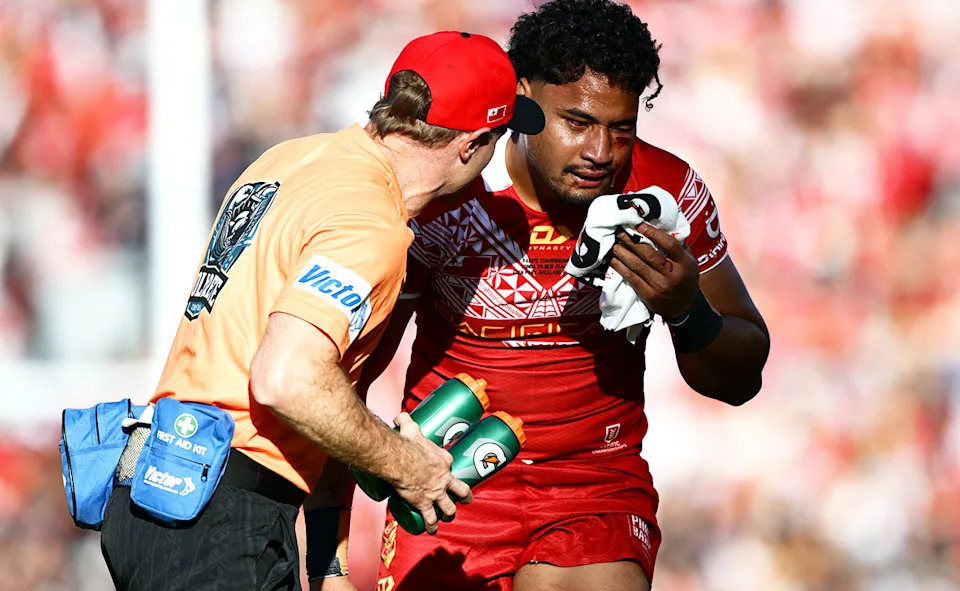
Eli Katoa copped three separate head knocks while playing for Tonga against New Zealand. (Photo by Hannah Peters/Getty Images)
Melbourne Storm won’t speculate on NRL investigation
Katoa was interviewed in recent days as part of an NRL investigation into what transpired. He suffered the first head knock in an accidental warm-up collision with teammate Lehi Hopoate, and then copped two more during the game.
Tongan officials have stated they didn’t see the collision with Hopoate at the time, and weren’t shown broadcast footage of the incident either. They’ve stated they wouldn’t have allowed him to play if they were aware of how bad it was.
RELATED:
Katoa passed a HIA (head injury assessment) after the second knock and was allowed back on the field. After the third knock he suffered ‘seizure activity’ on the sideline and had to be rushed to hospital, where he had surgery to relieve swelling on his brain.
“It’s way too early to even consider that, to be honest,” Rodski said about the NRL’s investigation and whether the club is looking at potential legal action. “Until all the information is in front of us, I don’t think it’s fair on anyone to start speculating on that other than to say we’ll await the findings of the NRL’s investigation.”
Part of the investigation’s findings are believed to be around new recommendations for all warm-ups to be filmed and watched by independent doctors. Training sessions are filmed and monitored so potential concussions can be reviewed, but warm-ups before games aren’t.
with AAP