
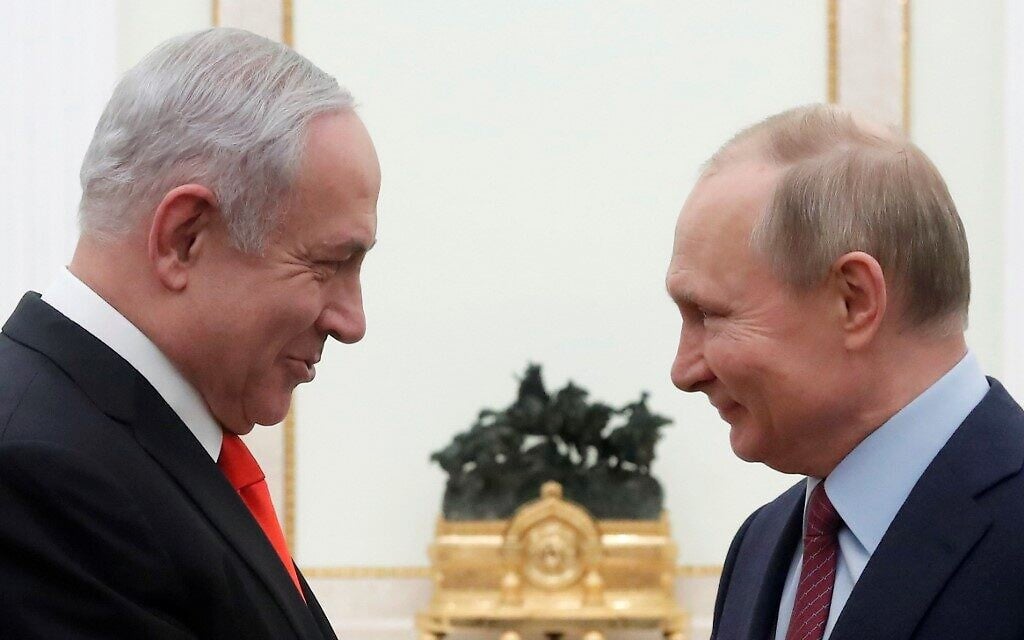
Russian President Vladimir Putin spoke by phone with Prime Minister Benjamin Netanyahu on Monday, the Kremlin said, to discuss various developments in the Middle East, including recent sectarian violence in Syria and Iran’s nuclear program.
During the call, Putin stressed Syria’s territorial integrity, the Kremlin said, after sectarian violence in the Druze majority city of Sweida earlier this month prompted Israeli intervention in the form of airstrikes against Syrian military targets in both Sweida and Damascus.
Clashes in the Druze-majority Sweida province, which began on July 13 and ended with a ceasefire a week later, initially involved Druze fighters and Sunni Bedouin tribes, but quickly widened with the intervention of government forces on behalf of the Bedouin, according to witnesses, experts and the Syrian Observatory for Human Rights monitor.
The war monitor claimed the violence killed more than 1,400 people, mostly Druze, and accused government personnel of summarily executing more than 250 Druze civilians.
Putin, who has been waging war and conquering territory belonging to neighboring Ukraine for the past three years, “emphasized the importance of supporting the unity, sovereignty and territorial integrity” of Syria, said a Kremlin statement.
Get The Times of Israel’s Daily Edition
by email and never miss our top stories
By signing up, you agree to the terms
The Russian leader added that the political stability in the country must be achieved through respect for “all ethnic and religious groups’ interests.”
Russia, a close ally of Syria’s ousted president Bashar al-Assad, who fled to Moscow with his family after his regime was overthrown in December, still has two military bases in the country.
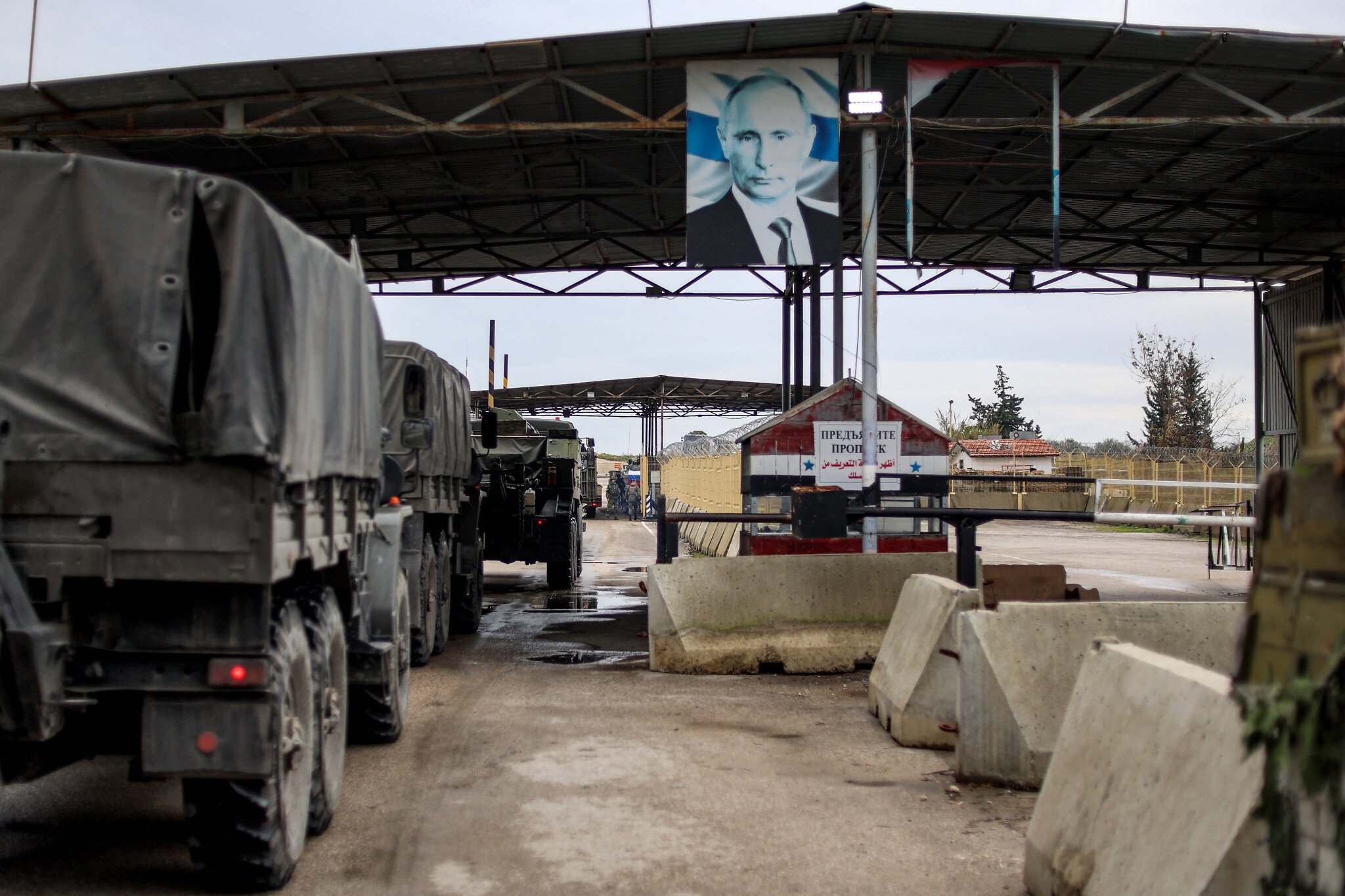
A portrait of Russia’s President Vladimir Putin hangs above as Russian military trucks enter the Russian-leased Syrian military base of Hmeimim in Latakia province in western Syria on December 29, 2024. (Aaref Watad / AFP)
Also during the call, Putin again offered to mediate in talks on Iran’s nuclear program, after negotiations ground to a halt last month, when Israel launched its surprise attack on Iranian military and nuclear targets, kickstarting a 12-day war between the two countries.
There was no immediate readout of the call from Netanyahu’s office.
Russia is close to Iran, having boosted military ties amid the Kremlin’s war in Ukraine, but also strives for good relations with Israel, home to a large Russian-born community.
As such, it refrained from offering any concrete support to Tehran during Israeli and US strikes on Iranian nuclear facilities last month.
Earlier in July, the Kan public broadcaster reported that Israel was conducting under-the-radar diplomatic talks with Russia concerning both Iran and Syria, as Jerusalem sees Moscow as a possible conduit for de-escalation with both countries.
In June, days before Israel launched its surprise assault on Iran and during intensive nuclear talks with the US, Russian Deputy Foreign Minister Sergei Ryabkov said his country would be willing to remove highly enriched uranium from Iran and convert it into civilian reactor fuel, as a potential way to help narrow US-Iranian differences over the Islamic Republic’s nuclear program.
The offer was reminiscent of the key role it played in the deportation of Iran’s enriched uranium supply during the 2015 Iran nuclear deal under the Obama administration.
It is unclear whether Moscow would offer to play a similar role at the current juncture, however.
Nava Freiberg contributed to this report.
Is The Times of Israel important to you?
If so, we have a request.
Every day, even during war, our journalists keep you abreast of the most important developments that merit your attention. Millions of people rely on ToI for fast, fair and free coverage of Israel and the Jewish world.
We care about Israel – and we know you do too. So today, we have an ask: show your appreciation for our work by joining The Times of Israel Community, an exclusive group for readers like you who appreciate and financially support our work.
Already a member? Sign in to stop seeing this
You appreciate our journalism

You clearly find our careful reporting valuable, in a time when facts are often distorted and news coverage often lacks context.
Your support is essential to continue our work. We want to continue delivering the professional journalism you value, even as the demands on our newsroom have grown dramatically since October 7.
So today, please consider joining our reader support group, The Times of Israel Community. For as little as $6 a month you’ll become our partners while enjoying The Times of Israel AD-FREE, as well as accessing exclusive content available only to Times of Israel Community members.
Thank you,
David Horovitz, Founding Editor of The Times of Israel