
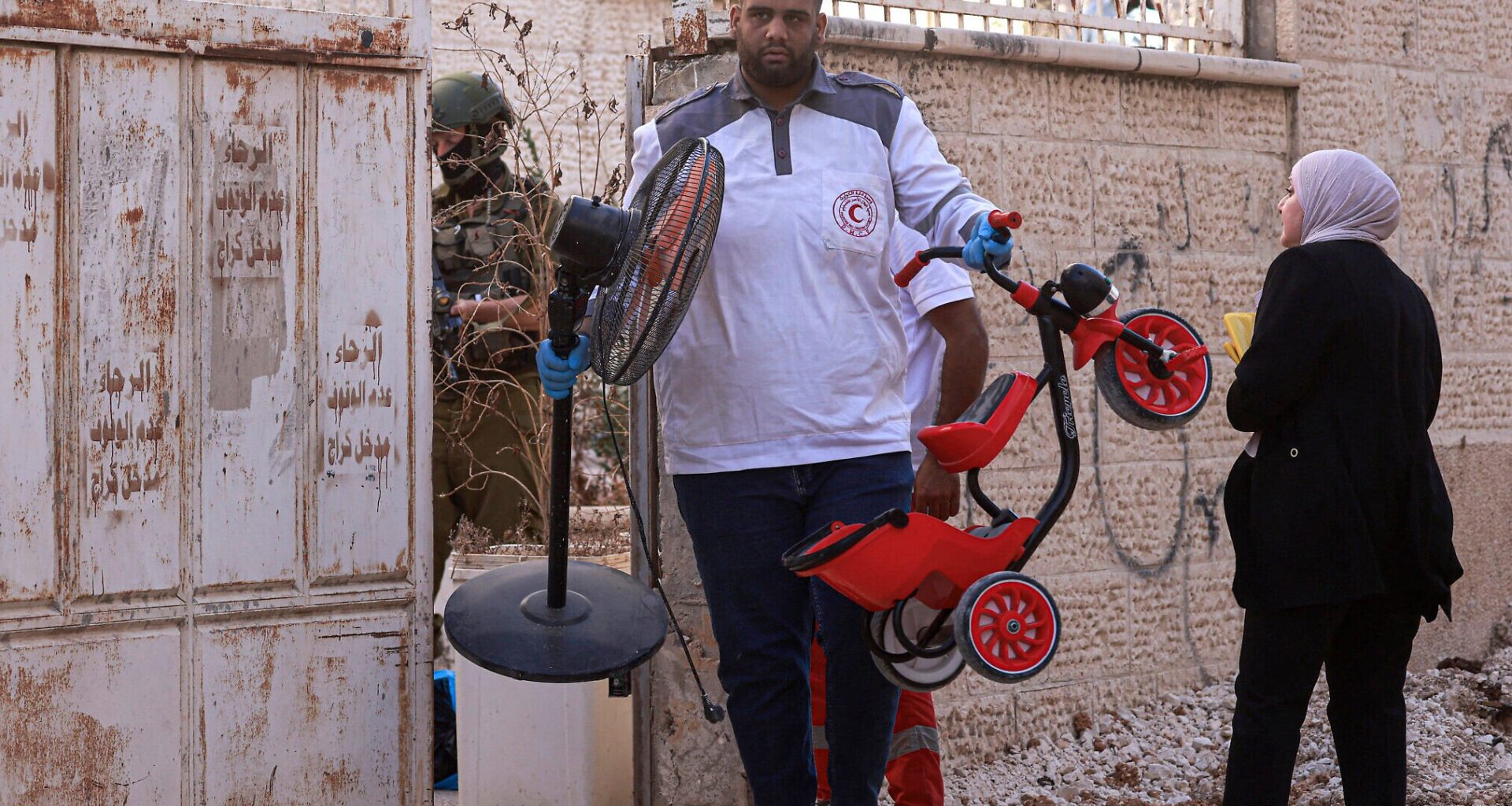
Israel’s expulsion of tens of thousands of Palestinians from three West Bank towns in early 2025 amounts to war crimes and crimes against humanity, Human Rights Watch asserted on Thursday, calling for international measures to hold Israeli officials accountable and stop further alleged abuses.
The US-based rights group said about 32,000 residents of Jenin, Tulkarm, and Nur Shams refugee camps were forcibly displaced by Israeli forces during Operation Iron Wall in January-February. The displaced have been barred from returning, and hundreds of homes were demolished, said the group’s 105-page report, titled “All My Dreams Have Been Erased.”
“Ten months after their displacement, none of the family residents have been able to go back to their homes,” said Milena Ansari, a researcher for Human Rights Watch who worked on the report, speaking to Reuters on Wednesday.
The Israel Defense Forces said in a statement to Reuters on Wednesday that it needed to demolish some civilian infrastructure so that it could not be exploited by terrorists. It did not say when residents could return.
In January, the military launched its offensive against terror operatives in the northern West Bank. Operation Iron Wall began in the Jenin refugee camp, adjacent to the city of Jenin, and later expanded to include refugee camps near the city of Tulkarem in the western West Bank — the Tulkarem and Nur Shams camps.
Get The Times of Israel’s Daily Edition
by email and never miss our top stories
By signing up, you agree to the terms
There are 20 historical refugee camps in the West Bank, all of which were established shortly after 1948, housing Palestinians who fled or were expelled during the War of Independence from homes located in what is now the State of Israel. Over the years, these camps have evolved into densely populated and enclosed neighborhoods.
The IDF’s offensive followed a spike in West Bank violence, following October 7, 2023, when the Palestinian terror group Hamas led a devastating invasion of southern Israel, triggering a war in the Gaza Strip. Since the Hamas onslaught, troops have arrested at least 6,000 wanted Palestinians across the West Bank, including more than 2,350 affiliated with Hamas.
The Gaza war halted in October this year with a US-brokered ceasefire agreement.
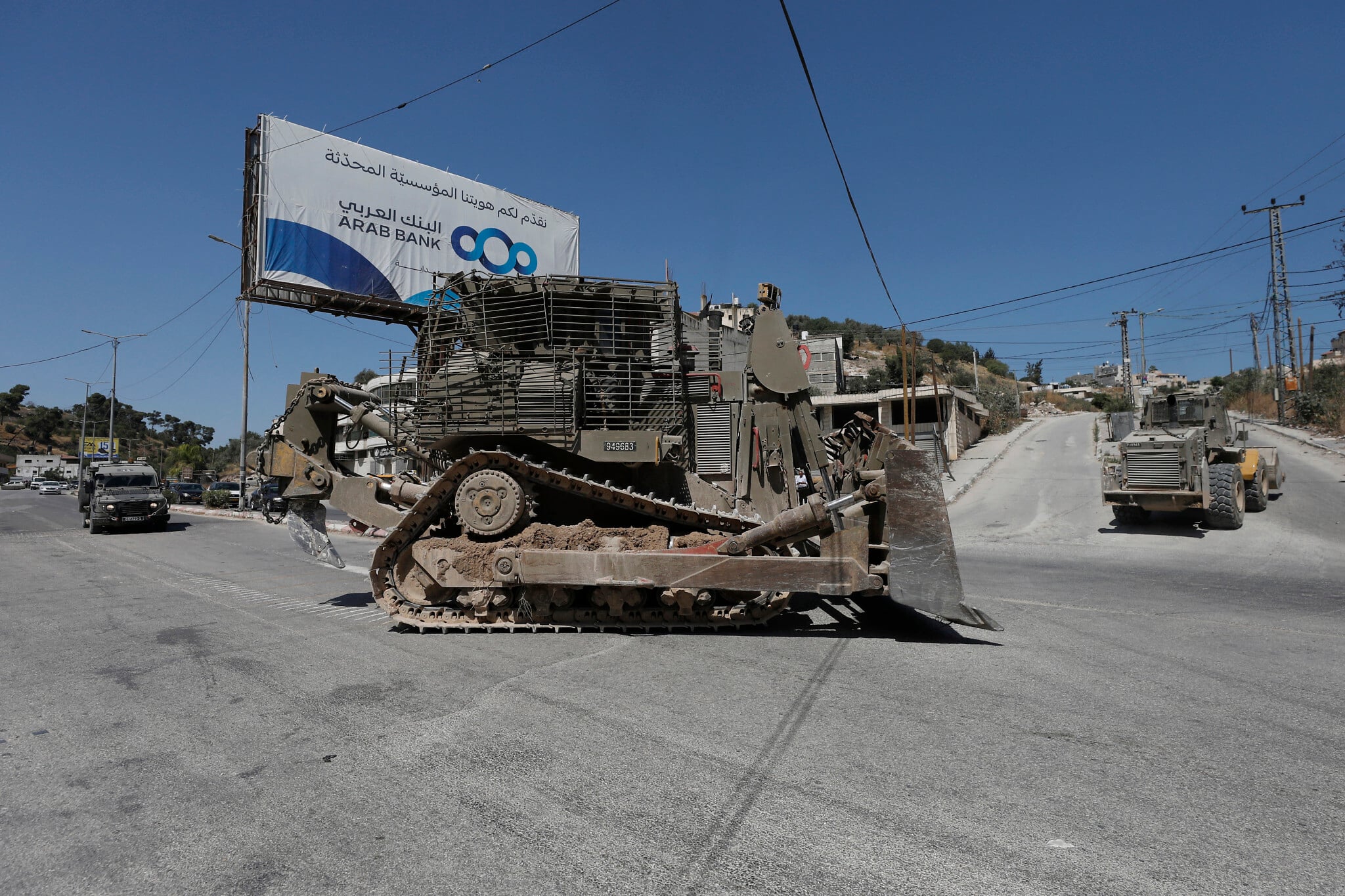
Israeli army bulldozers join a convoy of armored vehicles during a military raid in the Palestinian city of Jenin in the West Bank on May 21, 2025. (Mohammad MANSOUR / AFP)
In early May, the IDF stated that “to prevent terrorism from reestablishing itself in northern Samaria, the IDF is making changes in the camps — including the opening of routes and roads — in order to allow freedom of movement and operational capability for IDF forces in the area.”
Security sources have told Hebrew media that the dense construction in the camps made them strongholds for terrorists. The demolitions are to make room for the reconstruction of more sparsely laid out urban neighborhoods that also enable the IDF freedom of operation, the sources said. Footage has shown homes demolished to widen roads.
Residents of the camps have told The Times of Israel they were given short notice to leave their homes, with some claiming there was no warning at all.
The residents have not been able to return to their homes, many of which have been demolished. In August, Defense Minister Israel Katz said that the army will remain in the northern West Bank refugee camps at least until the end of the year.
“Today, there is no terror in the camps, and the scope of terror alerts in Judea and Samaria has dropped by 80 percent,” Katz said at the time, using the Biblical name for the West Bank.
‘A very hard life’
The Geneva Conventions prohibit displacement of civilians from occupied territory, except temporarily for imperative military reasons or their security. HRW said senior officials responsible should be prosecuted for war crimes and crimes against humanity.
The report describes soldiers storming homes, ransacking property and ordering families out via loudspeakers mounted on drones. It said residents reported bulldozers razing buildings as they fled and that Israeli forces offered no shelter or aid, leaving families to crowd into relatives’ homes or seek refuge in mosques, schools, and charities.
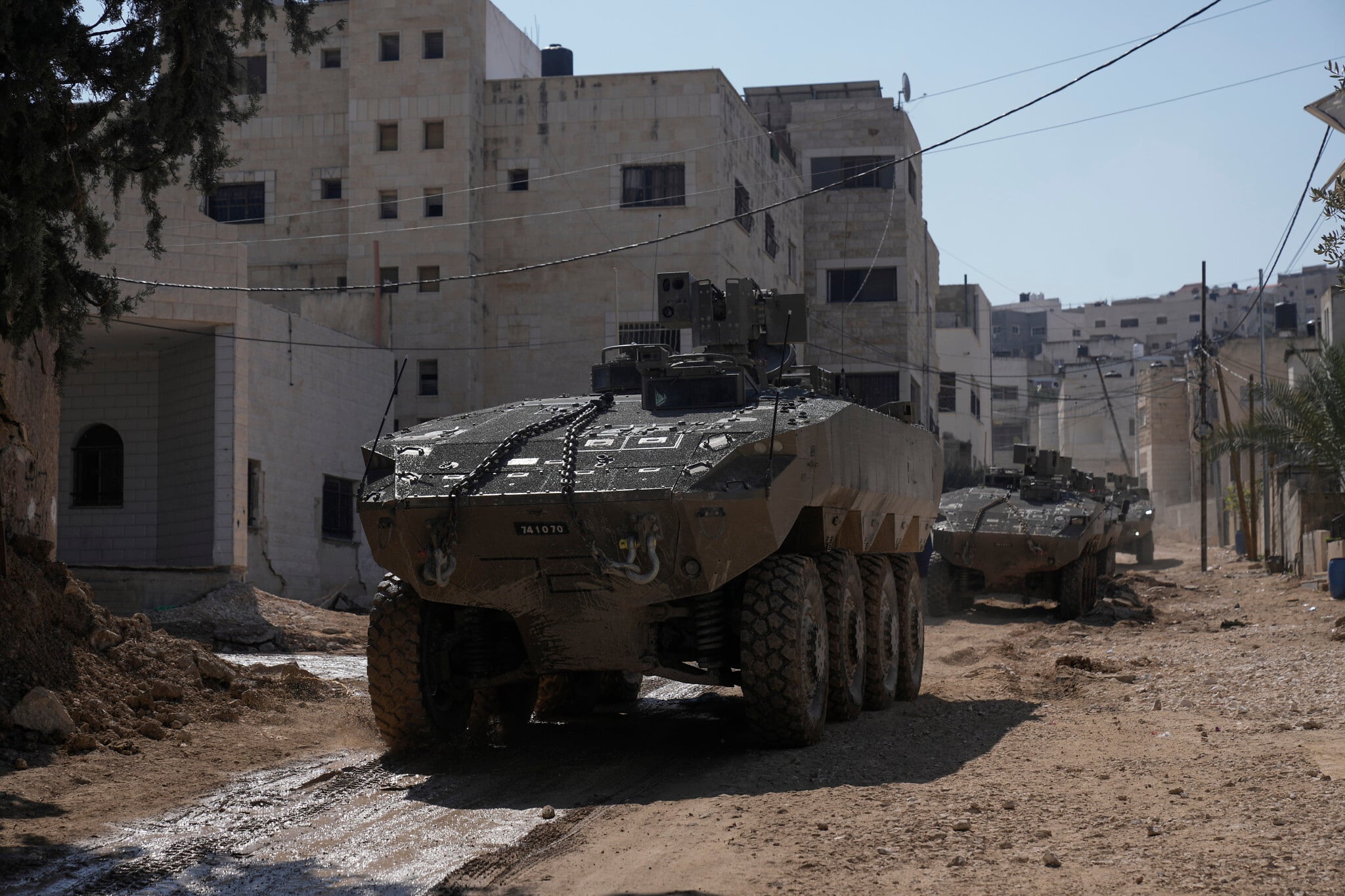
Israeli army vehicles are seen during a military operation in the West Bank city of Jenin, March 11, 2025. (Majdi Mohammed/AP)
Hisham Abu Tabeekh, who was expelled from the Jenin refugee camp, said that his family was not able to take anything with them when they were expelled.
“We are talking about having no food, no drink, no medicine, no expenses… we are living a very hard life,” said Tabeekh, speaking to Reuters on Wednesday.
Human Rights Watch said it interviewed 31 displaced Palestinians from the three camps and analyzed satellite imagery, demolition orders, and verified videos. It found more than 850 structures destroyed or heavily damaged, while a UN assessment put the figure at 1,460 buildings.
Human Rights Watch said that in response, Israeli officials had written that the operation targeted what they called terrorist elements, but gave no reason for mass expulsions or the ban on return.
HRW said the expulsions, carried out while global attention focused on Gaza, form part of crimes against humanity of apartheid and persecution.
A surge of violence
Since the massive Hamas-led attack on southern Israel on October 7, 2023, Israeli forces have killed nearly 1,000 Palestinians in the West Bank, expanded detention without trial, demolished homes, and accelerated settlement building, while settler violence and alleged torture of detainees have increased, the report said.
The IDF says the vast majority of those killed were gunmen during exchanges of fire, rioters who clashed with troops or terrorists carrying out attacks.
Settler violence surged in October, when Israeli settlers carried out at least 264 attacks against Palestinians, the United Nations has reported, the biggest monthly total since UN officials began tracking such incidents in 2006.
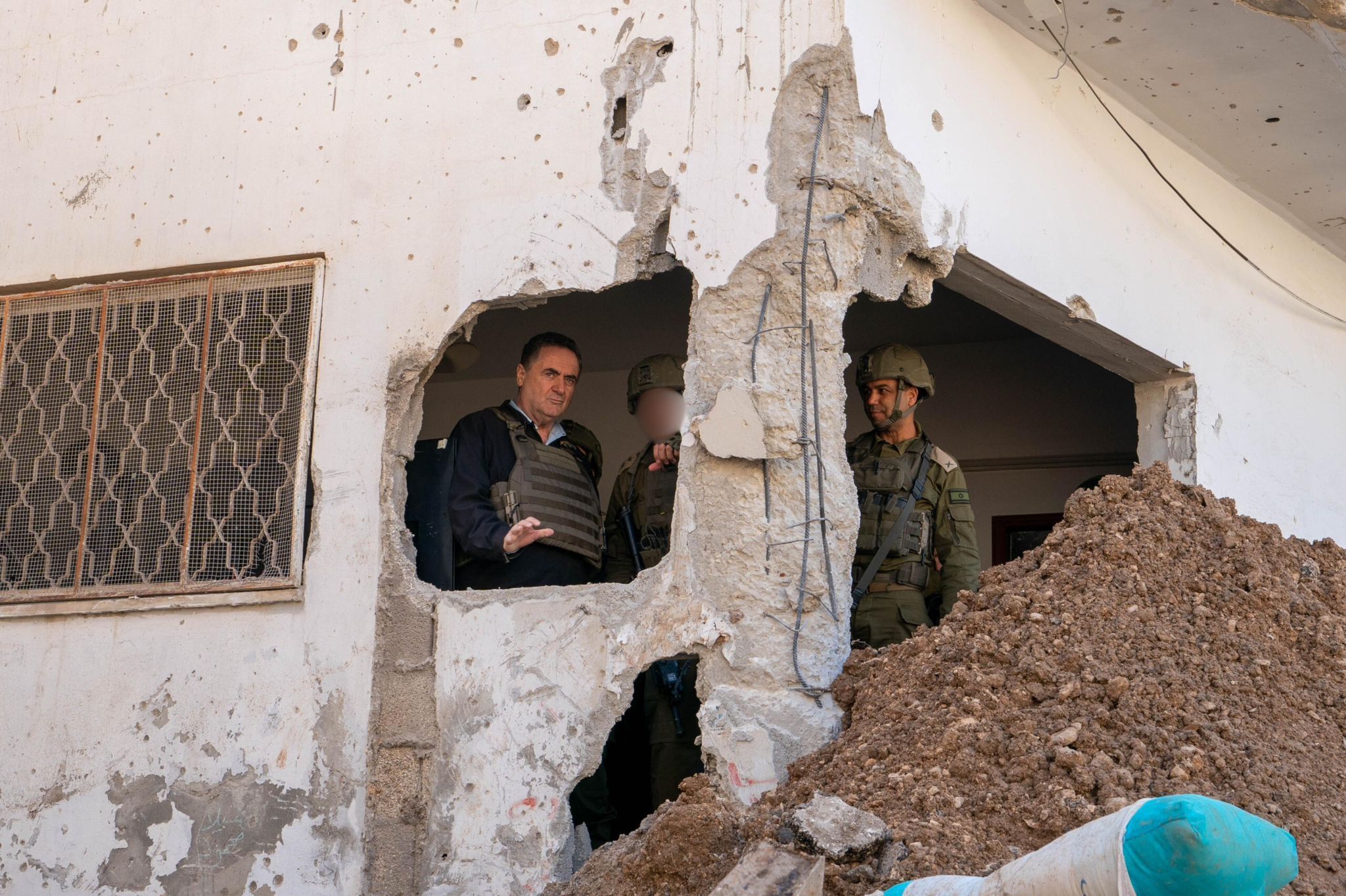
Defense Minister Israel Katz (left) and the commander of the West Bank division, Brig. Gen. Yaki Dolf are seen in the Jenin refugee camp, January 29, 2025. (Ariel Hermoni/Defense Ministry)
There have also been terror attacks targeting Israelis. In the latest, an Israeli man was killed and three others were injured during a car ramming and stabbing at the Gush Etzion Junction on Tuesday.
Israel cites historical and biblical ties to the West Bank, which it gained control of during the 1967 Six Day War, and says the settlements provide strategic depth and security.
Most of the global community considers all settlements illegal under international law. Israel rejects this, saying the West Bank is “disputed” rather than “occupied” territory.
HRW urged governments to impose targeted sanctions on Israeli officials and commanders, suspend arms sales and trade benefits, ban settlement goods, and enforce International Criminal Court arrest warrants.
The group characterized the expulsions as ethnic cleansing, which it described as a non-legal term commonly used to describe the unlawful removal of an ethnic or religious population from a specific area by another group.