
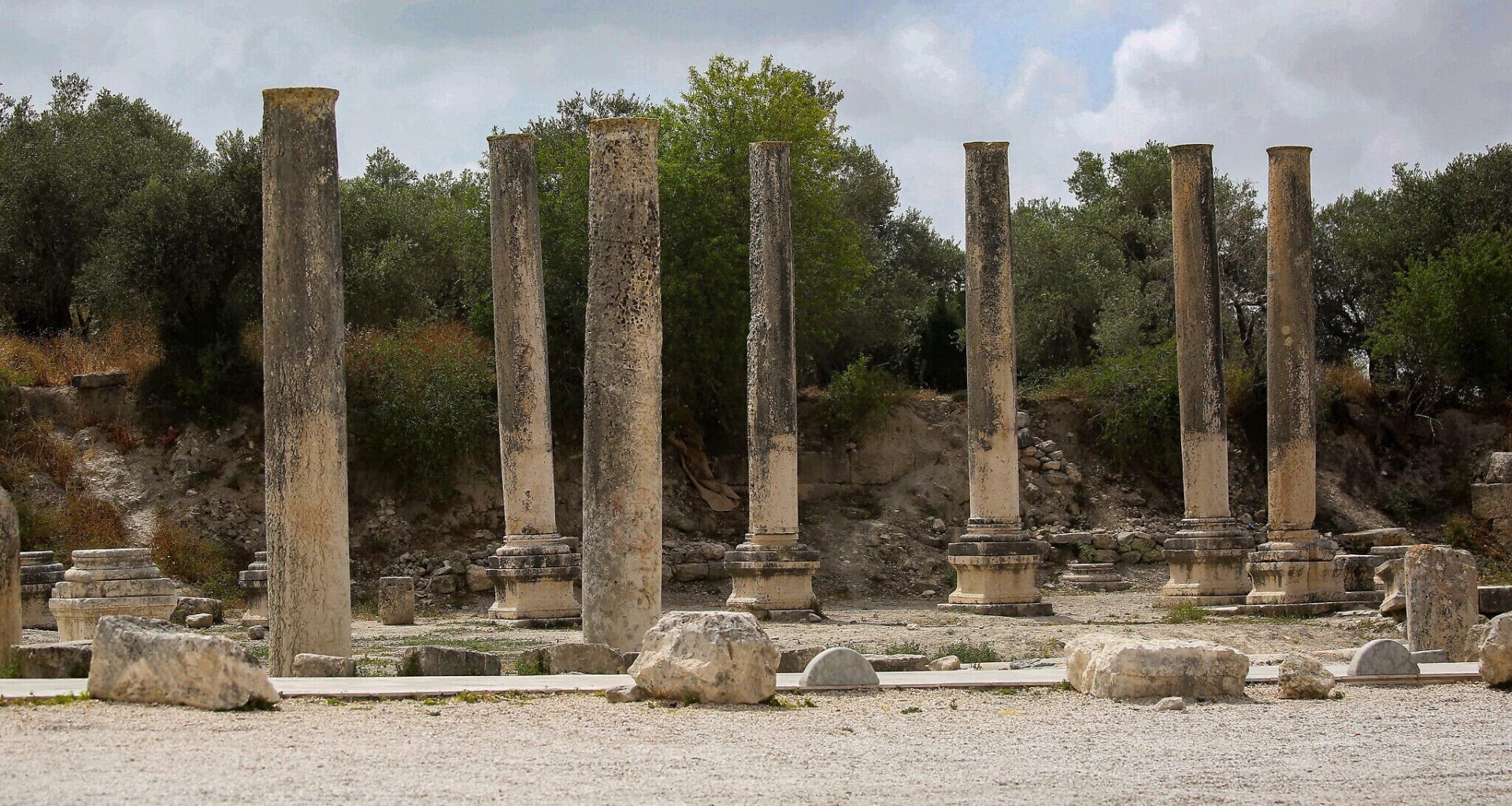
The Civil Administration, which manages civilian affairs in the West Bank, said Thursday it has begun to expropriate 1,800 dunams (445 acres) of land in the West Bank for the “preservation and development” of an archaeological site.
A parcel of land in the West Bank has begun to be expropriated for the “preservation and development” of an archaeological site, the Civil Administration, which manages civilian affairs in the West Bank, said Thursday.
The 1,800 dunams (445 acres) of land being expropriated surround the archaeological site of Sebastia, near Nablus, which is thought to have been the capital of the northern Israelite kingdom in the 9th and 8th centuries BCE.
The Civil Administration, a branch of the Defense Ministry’s Coordinator for Government Affairs in the Territories (COGAT) unit, said the expropriation is “expected to enable infrastructure development, the expansion of archaeological excavations, and the uncovering of additional historical findings.”
“The expropriation will be carried out in areas of the archaeological site located in Area C” of the West Bank, which is under full Israeli security and civil control, “and is being implemented following intentional neglect by the landowners and the Palestinian authorities,” it said.
Get The Times of Israel’s Daily Edition
by email and never miss our top stories
By signing up, you agree to the terms
The Civil Administration said its officials have notified landowners of the beginning of the process and the transfer of the land surrounding Sebastia to the management of the Civil Administration’s archaeology unit.
“This is being done in accordance with the law, and as part of a broad project led by the Heritage Ministry, which includes an investment of roughly NIS 32 million to upgrade the site, improve visitor access, and develop the archaeological area,” the Civil Administration said.
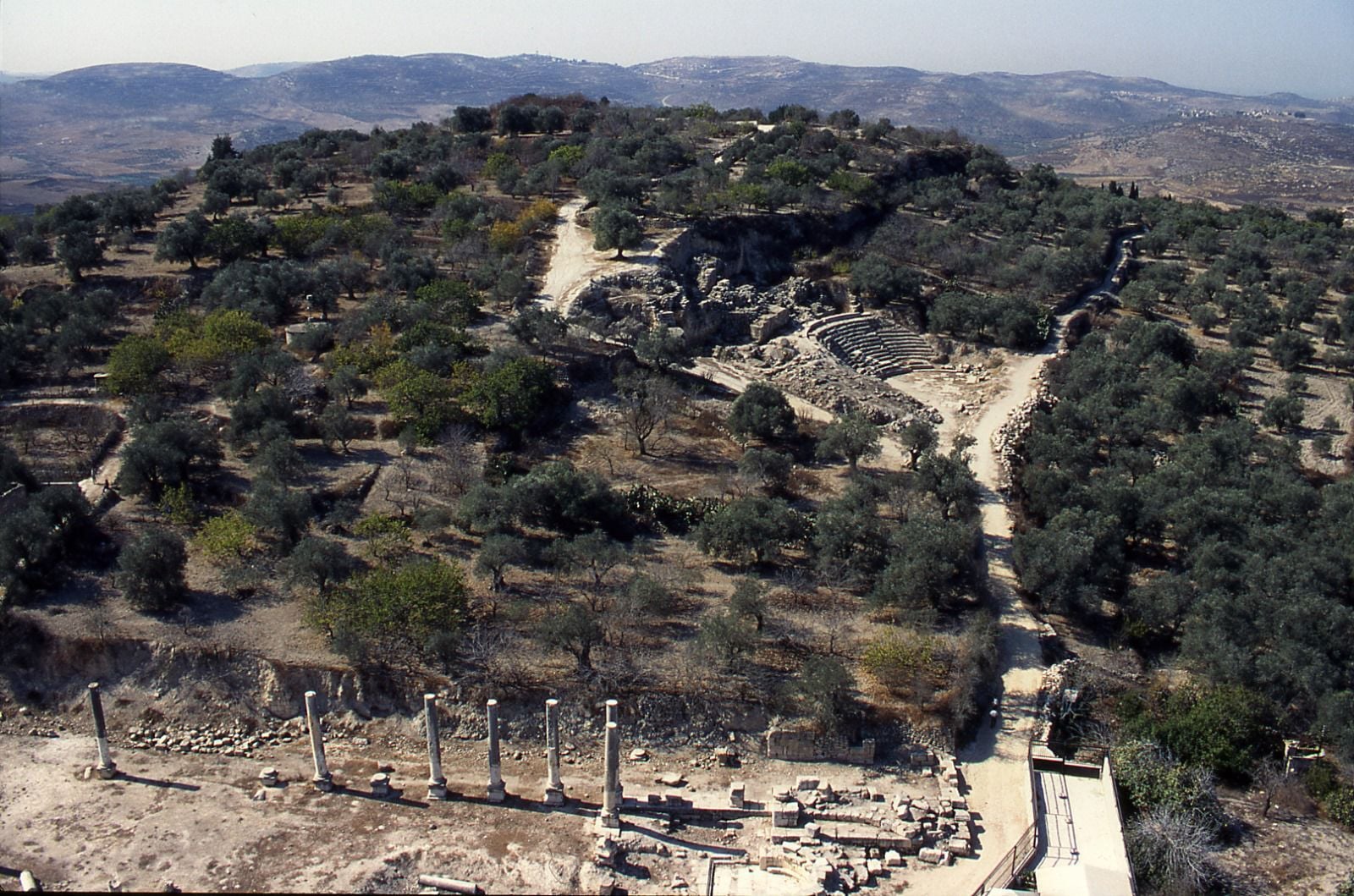
The archaeological site of Sebastia in the West Bank, in a handout photo issued on November 20, 2025. (COGAT)
Ahead of the announcement, the left-wing Peace Now organization decried the measure on Tuesday, stating, “The Israeli government’s lust for dispossession and annexation is insatiable, and it is willing to blatantly violate international law to that end.”
“This is part of a complete process of takeover and settlement in areas northwest of Nablus that Israel evacuated as part of the Disengagement,” the statement read, referring to the 2005 evacuation of Israeli settlements in the Gaza Strip and the northern West Bank.
“Sebastia is an archaeological site in a Palestinian village that is part of their heritage and part of a future Palestinian state. According to the Oslo Accords, which Israel signed, it was supposed to pass some time ago to Palestinian administration,” Peace Now said.
Sebastia’s archaeological site features remains from several periods, from the Iron Age (1200–586 BCE) to modern times. Its overlapping layers of history date back nearly 3,000 years, from biblical kings to Roman conquerors, Crusaders, and Ottomans. Fragments of houses, walls, and a palace (which some associate with Israel’s biblical kings) from the Iron Age remain, as well as many ruins from Roman times.
Both Israelis and Palestinians lay claim to the site as part of their cultural heritage, though it has largely remained undeveloped and unexcavated for decades.
In 2023, the government approved a budget of NIS 32 million for the restoration and development of the site, an initiative spearheaded by the heritage, environmental protection, and tourism ministries. The Heritage Ministry announced earlier this year that it planned to spend an additional NIS 4 million ($1.21 million) to renovate an old train station located next to Sebastia.
Since 2012, the site has been on UNESCO’s tentative list of heritage sites, after the Palestinian Authority submitted an application to include Sebastia on its list of Palestinian heritage sites. The entry described the site as “the capital of the northern kingdom during the Iron Age II in Palestine and a major urban center during the Hellenistic and Roman periods,” without mentioning any Jewish connection.
UNESCO can decide to include it in the final heritage list within the next few years, though no final decision has been made.
Rossella Tercatin and Times of Israel staff contributed to this report
Watch DocuNation Season 3: The Heart of Israel
when you join the ToI Community
In this season of DocuNation, you can stream six outstanding Israeli documentaries with English subtitles and then join a live online discussion with the filmmakers. The selected films show Israel beyond the conflict: a place of storytellers and musicians, of dreamers, makers, and communities rooted in meaning and trust.
When you watch DocuNation, you’re also supporting Israeli creators at a time when it’s increasingly difficult for them to share their work globally.

To learn more about DocuNation: The Heart of Israel, click here.
Support ToI and get DocuNation
Support ToI and get DocuNation
Already a member? Sign in to stop seeing this
You appreciate our journalism

You clearly find our careful reporting valuable, in a time when facts are often distorted and news coverage often lacks context.
Your support is essential to continue our work. We want to continue delivering the professional journalism you value, even as the demands on our newsroom have grown dramatically since October 7.
So today, please consider joining our reader support group, The Times of Israel Community. For as little as $6 a month you’ll become our partners while enjoying The Times of Israel AD-FREE, as well as accessing exclusive content available only to Times of Israel Community members.
Thank you,
David Horovitz, Founding Editor of The Times of Israel