
Thanksgiving is the number one day of the year for home cooking fires in the U.S., and leaving food unattended is the leading cause. According to the National Fire Protection Association, cooking accounts for 80% of Thanksgiving Day home fires and 40% of related injuries.
With crowded kitchens, hot stoves and busy households, a simple distraction can quickly lead to danger. But home fires aren’t the only concern during the holiday. Thanksgiving also brings an increase in medical emergencies including burns, cuts, car accidents and cardiac-related incidents as people travel, cook and gather.
That’s why the American Red Cross is encouraging people to take steps to prevent home fires and learn lifesaving skills that can make a critical difference when seconds count.
WHY LIFESAVING SKILLS MATTER
More than 350,000 out-of-hospital cardiac arrests occur in the United States every year, and about 70% happen at home. That means if someone goes into cardiac arrest this Thanksgiving, the person most likely to save them isn’t a first responder — it’s a loved one seated at the same dinner table.
Emergency department visits also spike during the holidays, particularly on Thanksgiving, due to burns, cuts, car accidents and heart-related emergencies. Stress, rich food and increased travel all contribute to the rise in incidents. Knowing CPR and basic first aid skills could mean the difference between tragedy and a life saved. Find a class near you at redcross.org/takeaclass.
COOKING SAFETY TIPS The Red Cross wants everyone to have a happy ─ and safe ─ Thanksgiving and offers ten steps everyone can follow as they prepare their Thanksgiving feast.
Stay in the kitchen while using the stovetop or oven to keep an eye on things.
If you must leave the kitchen for even a short period of time, turn off the stove or oven.
Use a timer to remind yourself that the stove or oven is on.
Avoid wearing loose clothing or dangling sleeves while cooking.
Keep kids and pets at least three feet away from cooking areas.
Keep anything that can catch fire ─ potholders, oven mitts, wooden utensils, paper or plastic bags, food packaging and towels or curtains ─ away from your stove top and oven or any other appliance that generates heat.
Clean cooking surfaces regularly to prevent grease buildup.
Consider purchasing a fire extinguisher to keep in your kitchen.
Always check the kitchen before going to bed or leaving home to make sure stoves, ovens and small appliances are turned off.
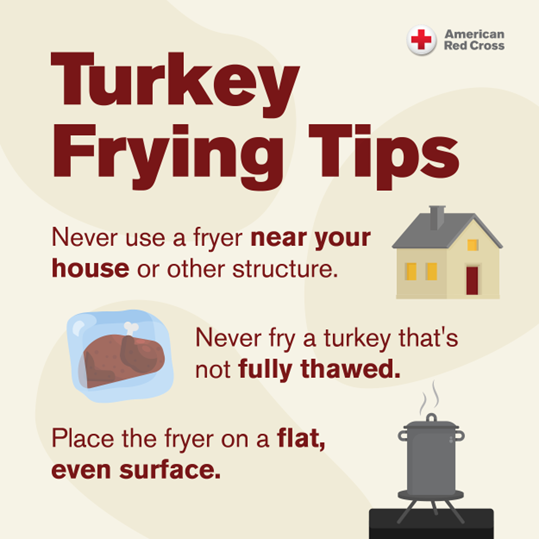
Frying your turkey this year? Never use a fryer near your house or other structure. Place the fryer on a flat, even surface. Never fry a turkey that’s not fully thawed.
Follow these safety tips and visit redcross.org/fire for more information, including a fire escape plan to practice with your family.
SMOKE ALARMS SAVE LIVES. Place smoke alarms on each level of your home, including inside and outside bedrooms and sleeping areas. In addition to testing your smoke alarms once a month, change the batteries at least once a year, if your model requires it. Check the manufacturer’s date of your smoke alarms. If they’re 10 years or older, they need to be replaced because the sensor becomes less sensitive over time. Follow the manufacturer’s instructions. If you cannot afford to purchase smoke alarms or are physically unable to install one, the Red Cross may be able to help. Contact your local Red Cross for more information.