
Reid’s asking price, meanwhile, is nudging $2 million per year as agents realise clubs have room to move because the collective bargaining agreement will drive their salary cap up to $18,148,376 per club in 2026.
Club sources have become annoyed that the money offered to DeKoning and the figures being bandied around Reid have distorted the market for individual players, although they don’t blame Wanganeen-Milera or any club chasing him for responding to the market.
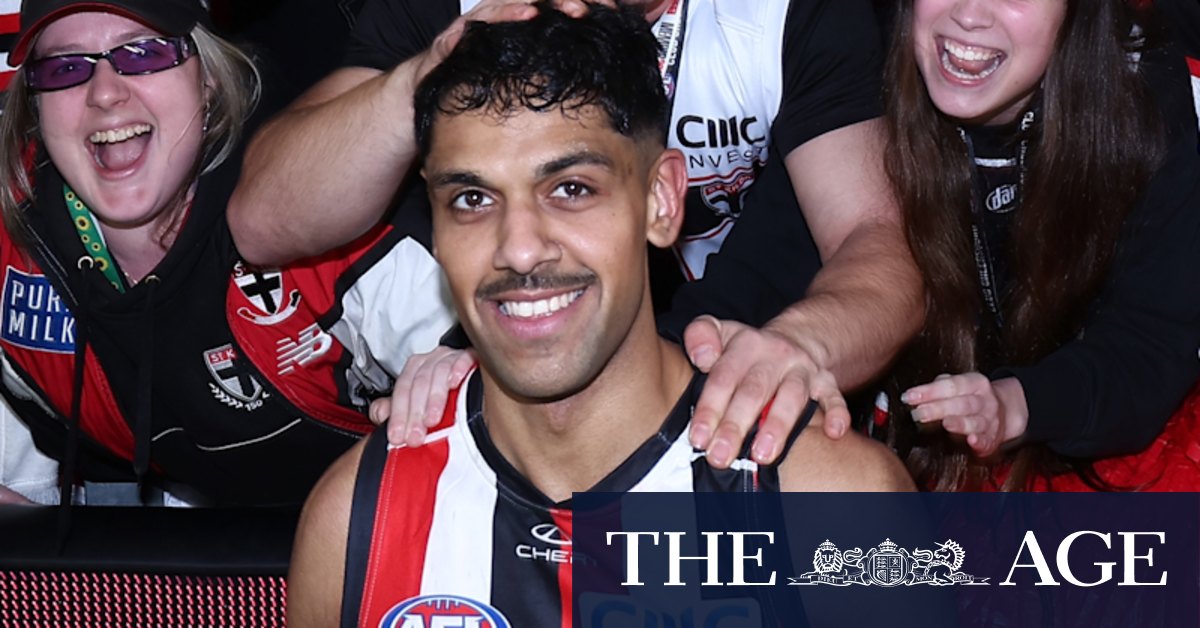
Wanganeen-Milera’s form has exceeded Reid’s in 2025 as the game continues to favour an inside-outside player with speed who can use the ball. It has also exceeded the expectations of most football watchers. He entered the season as a promising rebounding defender who had kicked six goals in 63 games, but has now kicked six goals in the past two matches to have 17 for the season as he has evolved into an explosive and damaging midfielder.
Loading
Both Wanganeen-Milera and Reid are considered game-changers, who could help transform whatever club they play for in the next decade.
Wanganeen-Milera’s decision to concentrate on football rather than sign an extension with the Saints before the end of the season is paying off as the market for young talent becomes inflated and his price rises. He has shown no indication as to what he wants to do next season nor has it affected his performance in any way.
Free agent compensation tweak could fast track rebuilds
Carlton and West Coast could land a free agent in the upcoming trade period without affecting the compensation they receive for losing Tom DeKoning and Oscar Allen to other clubs as is expected at season’s end.
The AFL have discussed the idea as they consider its introduction as a way to promote equalisation although remain uncertain whether such a change to the free agency compensation system could happen this year.
Under the current rules clubs receive free agency compensation based on their net losses and gains of free agents during the trade period. It means clubs who lose a free agent are reluctant to recruit a free agent in the same trade period to ensure they receive full draft compensation for losing a good player.
For instance North Melbourne did not want to recruit a free agent after finishing second bottom in the year they lost Ben McKay to Essendon because their compensation, which was pick three in the 2023 national draft, would be affected.
If the new rule being considered was in place at that time the Kangaroos could have landed a free agent and pick three to fast track a rise up the ladder.
Similarly, the Eagles could receive pick two for the loss of Allen and also be in the market to gain a free agent.
Under current rules, the Eagles pursuit of a quality free agent such as West Australian-raised, Lions’ defender Brandon Starcevich, who remains out of contract, is complicated by the fact it may affect their compensation for Allen. The clubs might have to trade if that scenario arose rather than the Eagles, who have been cellar dwellers, being able to add an early draft pick and a premiership player in the same season they lose Allen.
New football boss Greg Swann told Triple M on Tuesday morning the player movement and draft system had to support equalisation.
“When you get a free agent and you lose a free agent, that nets off. So there might be scope for bottom clubs to grab a free agent and still get the full compensation if they lose a player,” Swann said.
Keep up to date with the best AFL coverage in the country. Sign up for the Real Footy newsletter.