
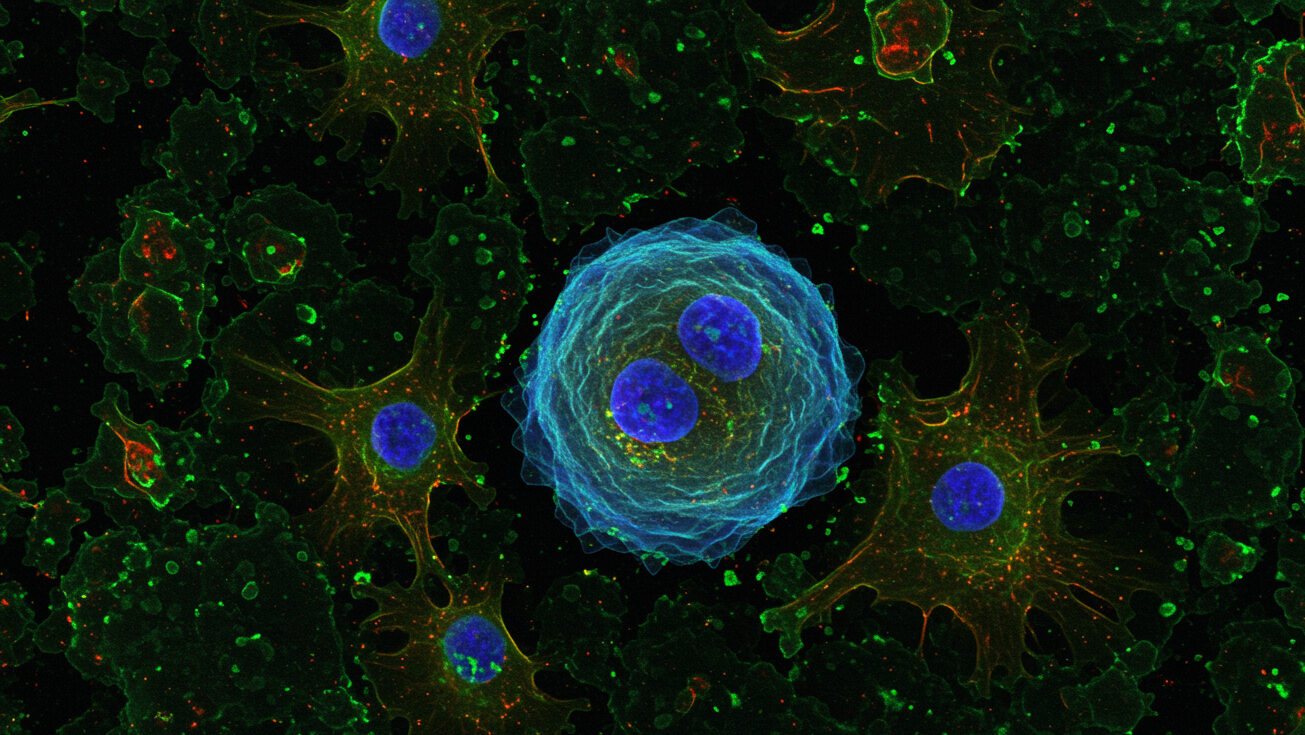
Researchers at the Weizmann Institute of Science in Israel say they have engineered a new kind of cancer drug that turns a tumor’s own defenses against it, according to a study published Wednesday in the journal Cell. Working in mice and on human tumor samples, the team reports that their experimental molecules, called MiTEs, can reawaken the immune system inside tumors that had resisted standard immunotherapy.
The work centers on macrophages, immune cells that normally patrol tissues but inside tumors often switch sides and help the cancer grow. “For years we have known that in cancer, macrophages can be both the problem and the solution,” says Prof. Ido Amit, director of Weizmann’s Immunotherapy Research Center. “Tumors hijack them to suppress immune responses and promote their own growth. Our goal has been to re-educate these cells rather than remove them.”

Prof. Ido Amit, director of Weizmann Institute’s Immunotherapy Research Center. (Weizmann Institute)
Earlier studies from Amit’s lab and others identified a subset of macrophages carrying high levels of a receptor called TREM2, strongly linked with poor response to immunotherapy and lower survival rates. The new MiTEs are engineered antibodies that latch onto these TREM2-bearing macrophages while at the same time delivering a dose of IL-2, a powerful immune-activating cytokine, to nearby killer T cells and natural killer cells.
To avoid triggering dangerous, body-wide immune reactions, the IL-2 portion of MiTEs is “masked” and only switched on by enzymes inside the tumor. “The dual function of MiTEs enables them to attack the tumor from multiple immune angles at once,” explains Michelle von Locquenghien, a doctoral student in Weizmann’s Department of Systems Immunology.

Doctoral student Michelle von Locquenghien. (Weizmann Institute)
In mice, MiTE treatment shrank tumors and reshaped the immune landscape; in human kidney cancer samples, it sparked strong immune activation. “The future of immunotherapy lies in combining safety with precision—reprogramming the immune ecosystem from the inside rather than targeting cancer cells directly,” says Amit.