

Listen to this article
Estimated 4 minutes
The audio version of this article is generated by text-to-speech, a technology based on artificial intelligence.
A Norwegian company plans to invest $3.2 billion to build North America’s largest synthetic graphite production facility in St. Thomas, Ont., with the aim of creating up to 1,000 jobs.
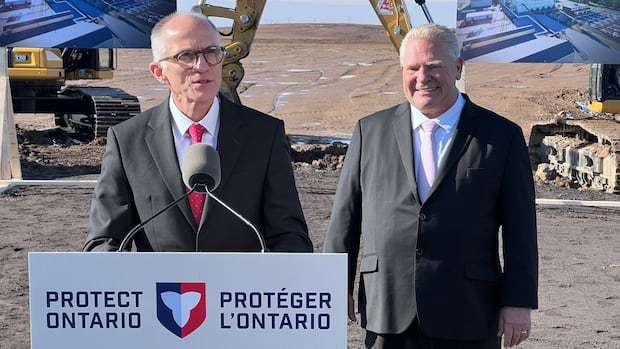
Vianode’s plans — first announced last month — were explained in more detail at a news conference Thursday that drew politicians from all three levels of government, including Ontario Premier Doug Ford and Vianode CEO Burkhard Straube.
Straube said the facility will help address what has become a pinch point in the supply chain of a material essential to the production of lithium-ion batteries.
“We’re interested in investing in North America,” Straube said. “There’s a huge deficit of synthetic graphite — all of it comes from China right now. It’s highly subsidized and not a level playing field.”
According to Straube, synthetic graphite from China is being supplied at “unsustainably low prices” to keep North American companies out of the market.
Straube said investing in St. Thomas made sense for Vianode because the Yarmouth Yards industrial area, currently under construction, will provide a ready-made site with access to hydro power needed for production.
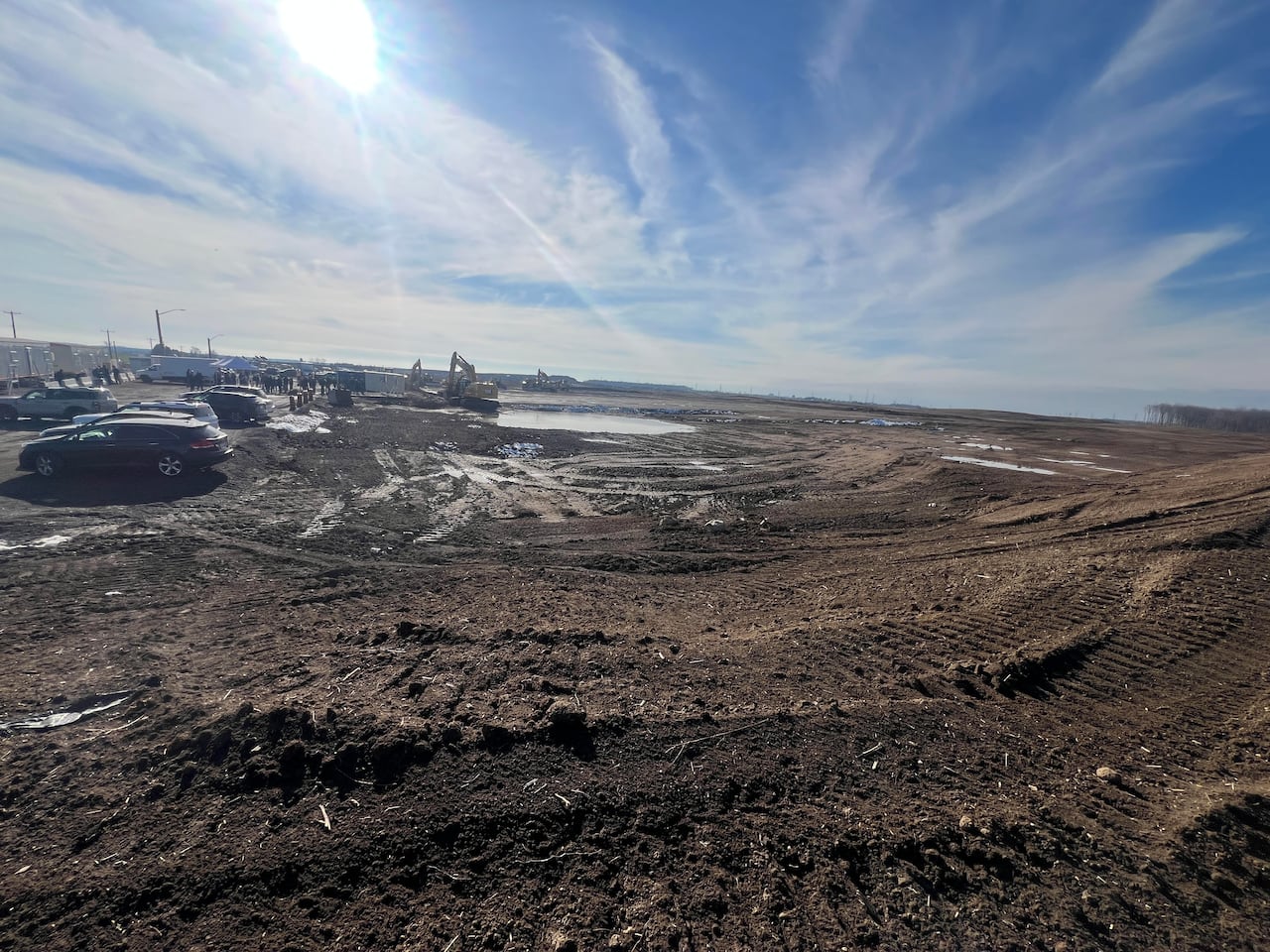 Vianode will be located on 56 hectares in Yarmouth Yards, St. Thomas’s 600-hectare industrial park that will also house the PowerCo battery plant currently under construction.
(Andrew Lupton/CBC News)
Yarmouth is intended to be part of what’s called the automotive alley of businesses around Volkswagen’s massive PowerCo. battery plant, where construction began last month.
Also, Straube said, Canada’s stability “both economically and politically” helped solidify St. Thomas as the right place to build the site.
The Ontario government will provide a $670-million loan to Vianode to support the site’s construction.
‘Highly paid’ jobs coming
Straube said the facility will initially create 300 “highly paid” jobs when production begins, and that’ll increase to 1,000 jobs when the plant reaches full capacity.
Synthetic graphite isn’t mined but is a byproduct of the petrochemical industry. It’s a process that requires high heat and large energy demands. Still, Straube said, his company can produce graphite in a sustainable way.
“We believe in sustainability and we believe strongly in local supply chains,” he said. “Our raw materials, which is primarily coke, will come from North American and Canadian sources.”
Production at the facility is expected to start in 2027, with the goal of reaching up to 150,000 tonnes a year once it hits full capacity.
Investment a ‘game-changer,’ Ford says
Ford said the plant’s output will be enough to support the production of two million electric vehicles a year. He also said it will bring spinoff benefits to the area at a time when Canadian manufacturing is threatened by the trade war with the United States.
“It’s not just this investment,” said Ford. “It’s reciprocal jobs around the community that’s really going to turn this whole area around. It brings jobs and wealth to the area. This is a game-changer.”
Straube said Vianode’s efforts to build in St. Thomas weren’t directly related to Volkswagen’s decision to build its massive plant nearby.
Both Ford and Straube said their faith in the future of the EV industry has not been shaken by the experience at the General Motors CAMI Assembly plant in nearby Ingersoll.
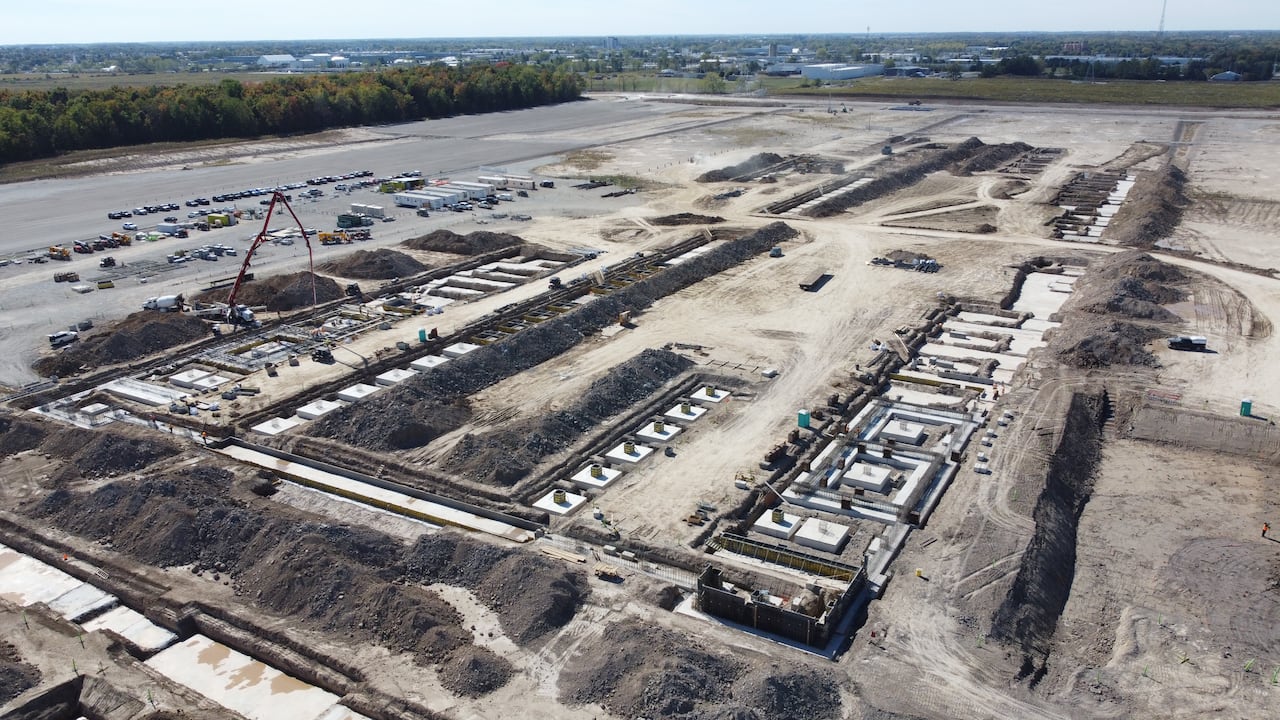 A drone image dated Oct. 2 shows foundation work underway at PowerCo’s gigafactory site in northeast St. Thomas. (Handout\PowerCo Canada)
That plant retooled three years ago with the help of millions in public money to switch production to an electric delivery van. Production was paused in the spring before the company announced in October it would stop production for good due to low customer demand.
“Every single contract is different,” said Ford of the GM situation in Ingersoll. “They signed a contract and they’ll be held accountable.”
Ford said he’s in talks with the federal government and GM to “look at different options” to continue vehicle production at CAMI.
“Maybe we can build federal military vehicles as well,” said Ford. “There’s all sorts of options but We’re going to make sure we support those folks any way we can.”