
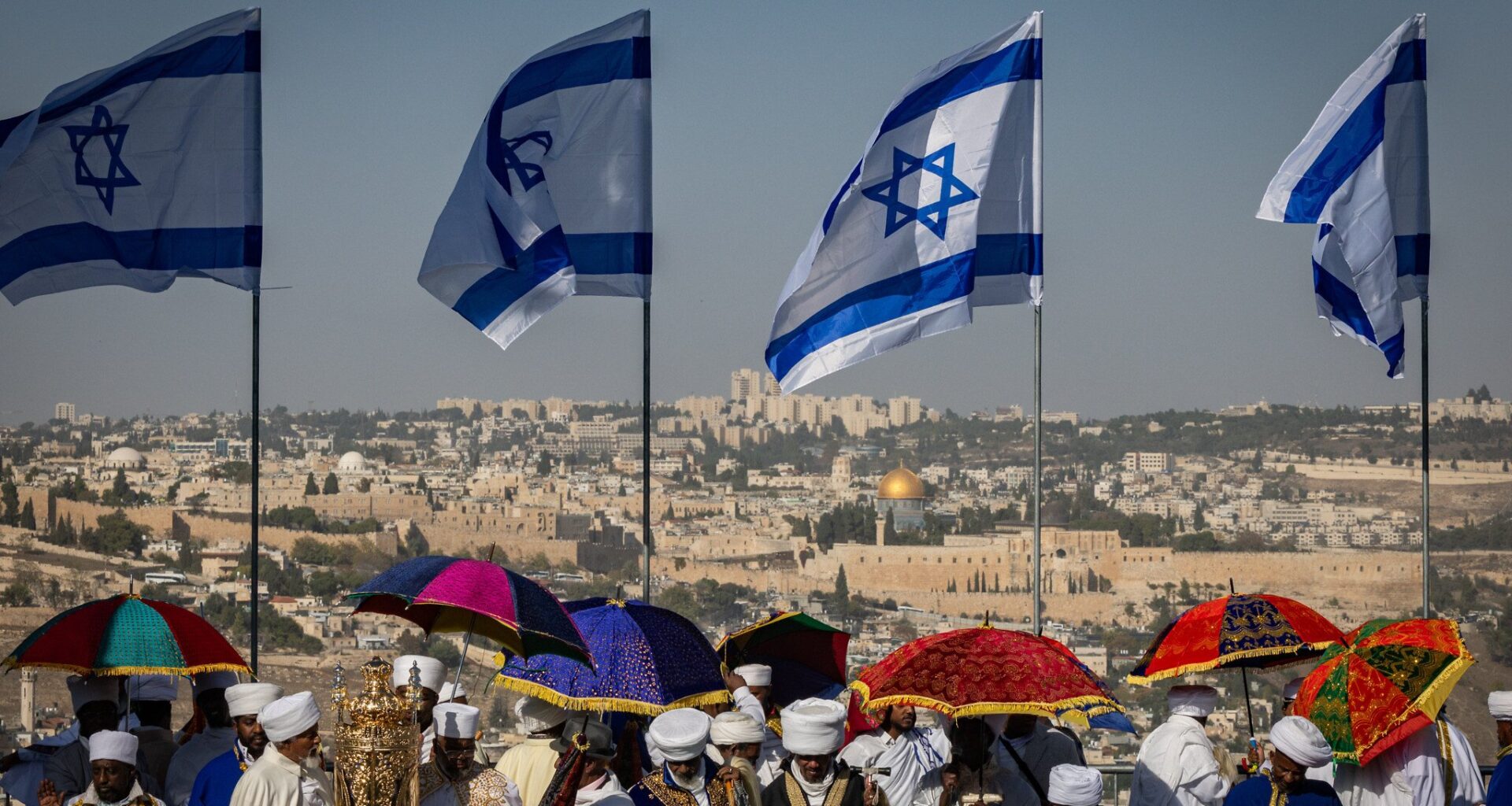
Avner Nado still remembers celebrating the Sigd holiday in Ethiopia.
“People would come from distant communities to our synagogue in Ambober; many would stay and sleep there for three or four days,” recalled Nado. “We went up a mountain to pray, which was the most imposing mountain [in the region]. It was like our Mount Sinai.”
Nado, 50, spoke with The Times of Israel on the sidelines of the Sigd ceremony held at the promenade in Jerusalem’s Armon Hanatziv neighborhood, before a spectacular view of the Old City.
For decades, Ethiopian Jews in Israel have gathered in this spot every year to mark the festival, which falls 50 days after Yom Kippur, on the 29th day of the Hebrew month of Cheshvan. To emphasize the connection with Yom Kippur, Ethiopian Jews traditionally begin the day with a fast. The prayers are recited in Amharic, the community’s native language.
On stage, several kessim, the religious leaders of Ethiopian Jewry, recited prayers dressed in traditional white robes under the shade of golden-trimmed, colorful parasols, celebrating the renewal of the covenant between the Jewish people, God, and the Torah, as well as the aspiration to return to the Land of Israel.
Get The Times of Israel’s Daily Edition
by email and never miss our top stories
By signing up, you agree to the terms
“For generations, we prayed that we would ascend to the land, and now that we did, we continue to pray to express gratitude to God,” Nado said.
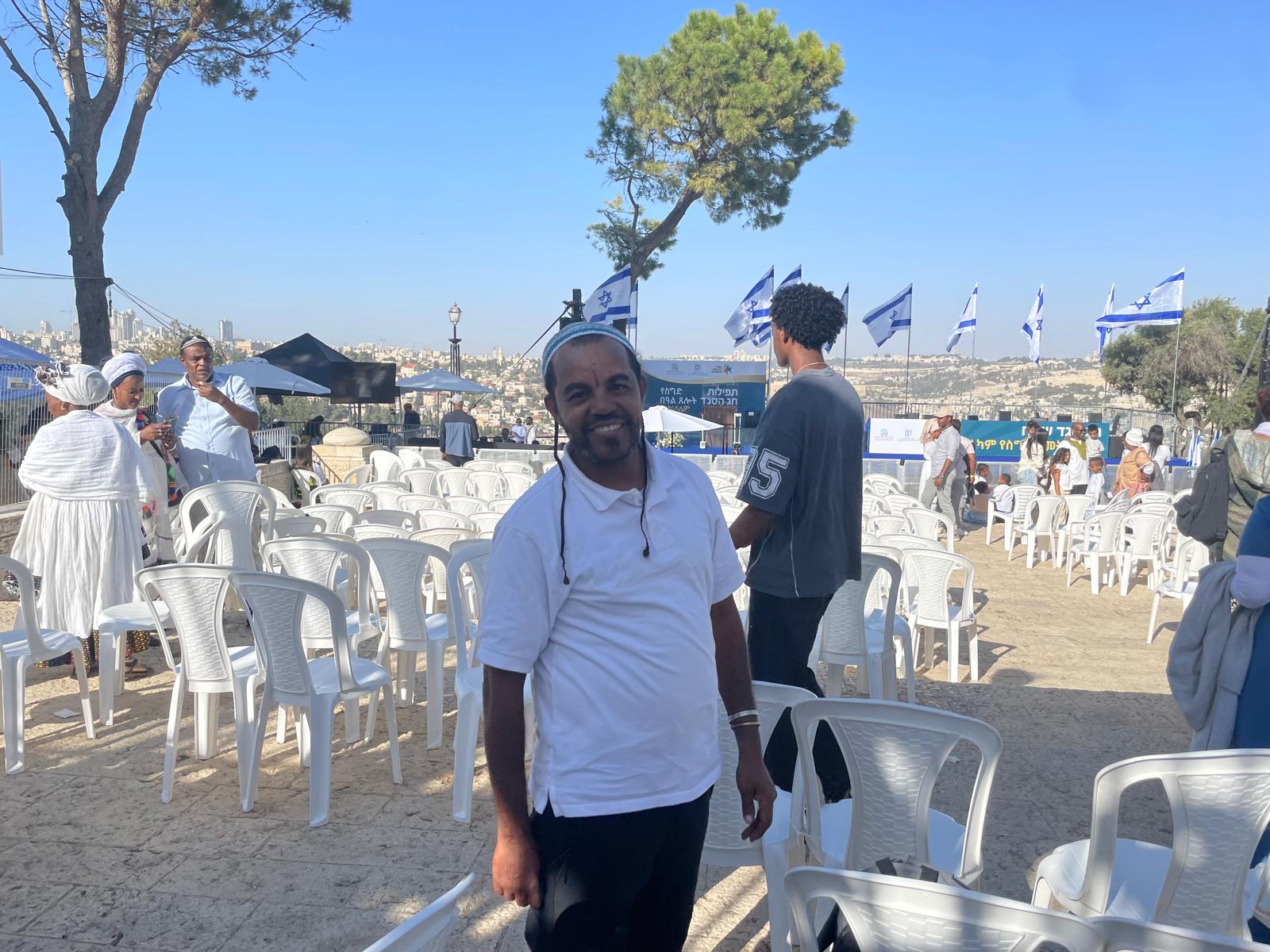
Avner Nado attends a ceremony for the Sigd holiday on the Armon Hanatziv Promenade overlooking Jerusalem’s Old City on November 20, 2025. (Rossella Tercatin/Times of Israel)
Ethiopian Jews trace their origins in the region back over 2,000 years. For almost two millennia, they remained isolated from the rest of the Jewish world, facing persecution and violence, until the first contacts were made at the beginning of the 20th century. Most Ethiopian Jews emigrated to Israel in the 1980s and 1990s. A few thousand, especially among those whose ancestors were forced to convert to Christianity — who are known as Falasha Mura — are still waiting to immigrate. According to the Central Bureau of Statistics, by the end of 2022, there were almost 170,000 Jews of Ethiopian origin in the country.
Nado was 16 when he moved to Israel in 1991. Every year, he, his wife, and his children travel from Hadera, where they live, to Jerusalem to attend the ceremony.
“Our ancestors prayed that they would be in Jerusalem one day; they did not manage, but we, the children, grandchildren, and great-grandchildren, are all here,” he said.
Indeed, walking along the promenade and its garden, still booming and green despite the approaching winter, were thousands of Ethiopian Jews of all ages and walks of life.
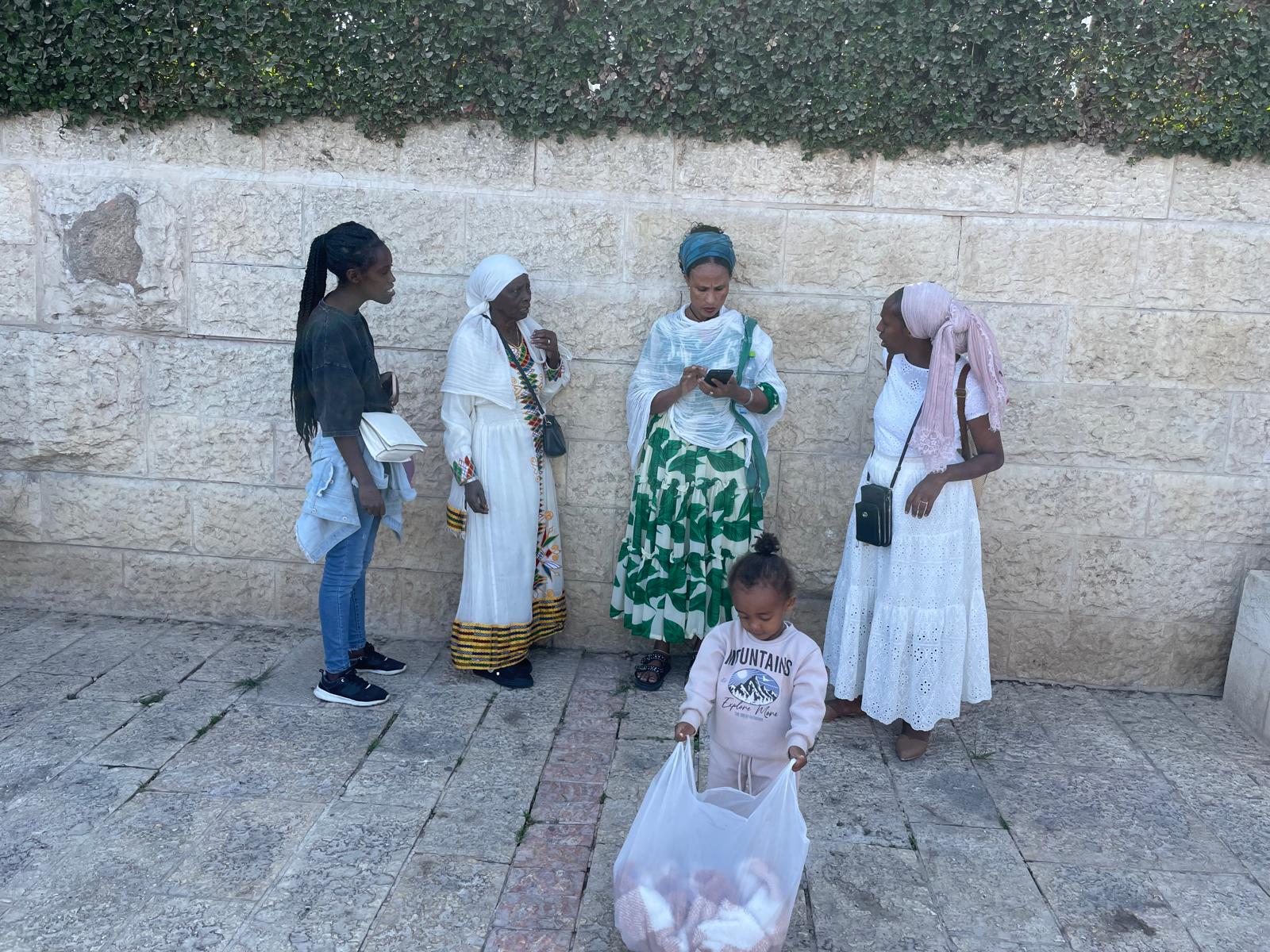
Ethiopian Jews attend a ceremony for the Sigd holiday on the Armon Hanatziv Promenade overlooking Jerusalem’s Old City on November 20, 2025. (Rossella Tercatin/Times of Israel)
Many women, especially the older ones, wore traditional white robes with colorful inserts. Kippahs for men and headcoverings for women were as common as fashionable hairstyles. Younger participants sported sneakers, jeans, and branded shirts, with many of them hanging out with friends and on their phones away from the central stage. Parents pushed strollers and baby carriages. Extended family groups found their favorite spots on the grass for a picnic, sometimes getting a pizza delivered.
Orel Aviel, 20, was talking to a group of young women.
“I am here because we are celebrating a holiday,” she told The Times of Israel.
Aviel, who lives in Jerusalem, was born in Israel.
“I think people who are older can explain the meaning of the holiday better than I,” she said. “But we are continuing on the path of our parents. This is a very tight-knit community.”
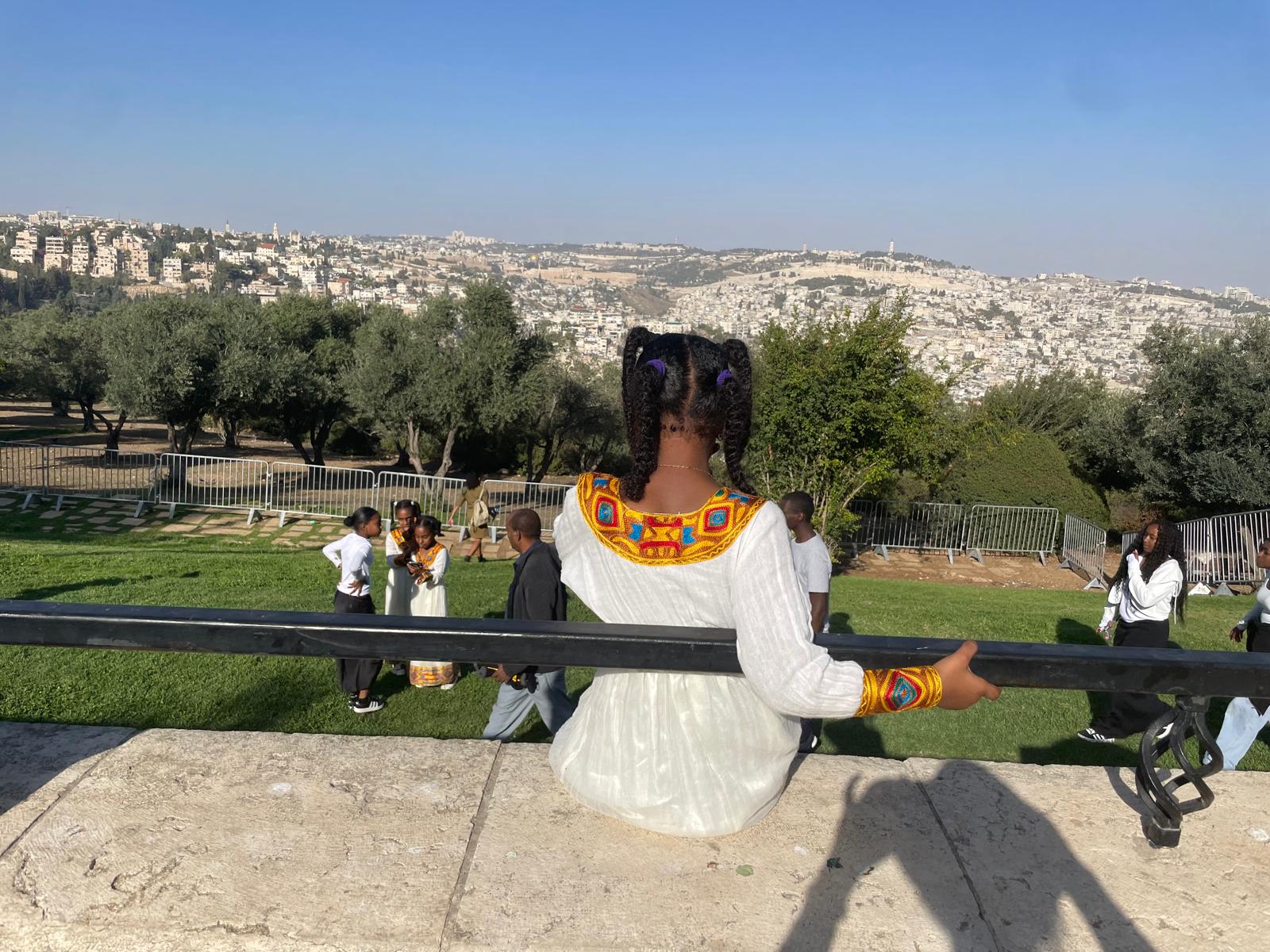
Ethiopian Jews attend a ceremony for the Sigd holiday on the Armon Hanatziv Promenade overlooking Jerusalem’s Old City on November 20, 2025. (Rossella Tercatin/Times of Israel)
‘Truel realization of the Zionist dream’
Sigd was declared a national holiday in Israel in 2008.
As in previous years, the religious rituals on the promenade were followed by a state ceremony attended, among others, by President Isaac Herzog and Aliyah Minister Ophir Sofer.
“You who came home to the Holy Land that your forefathers never, ever forgot, remind us all of what our values are as a nation,” Herzog said. “You brought with you an immense spiritual and cultural treasure, and an immense love for the people of Israel. We have seen this in the past two years. We have seen your central place in all spheres. This is a shining expression of the covenant within our people and a true realization of the Zionist dream.”
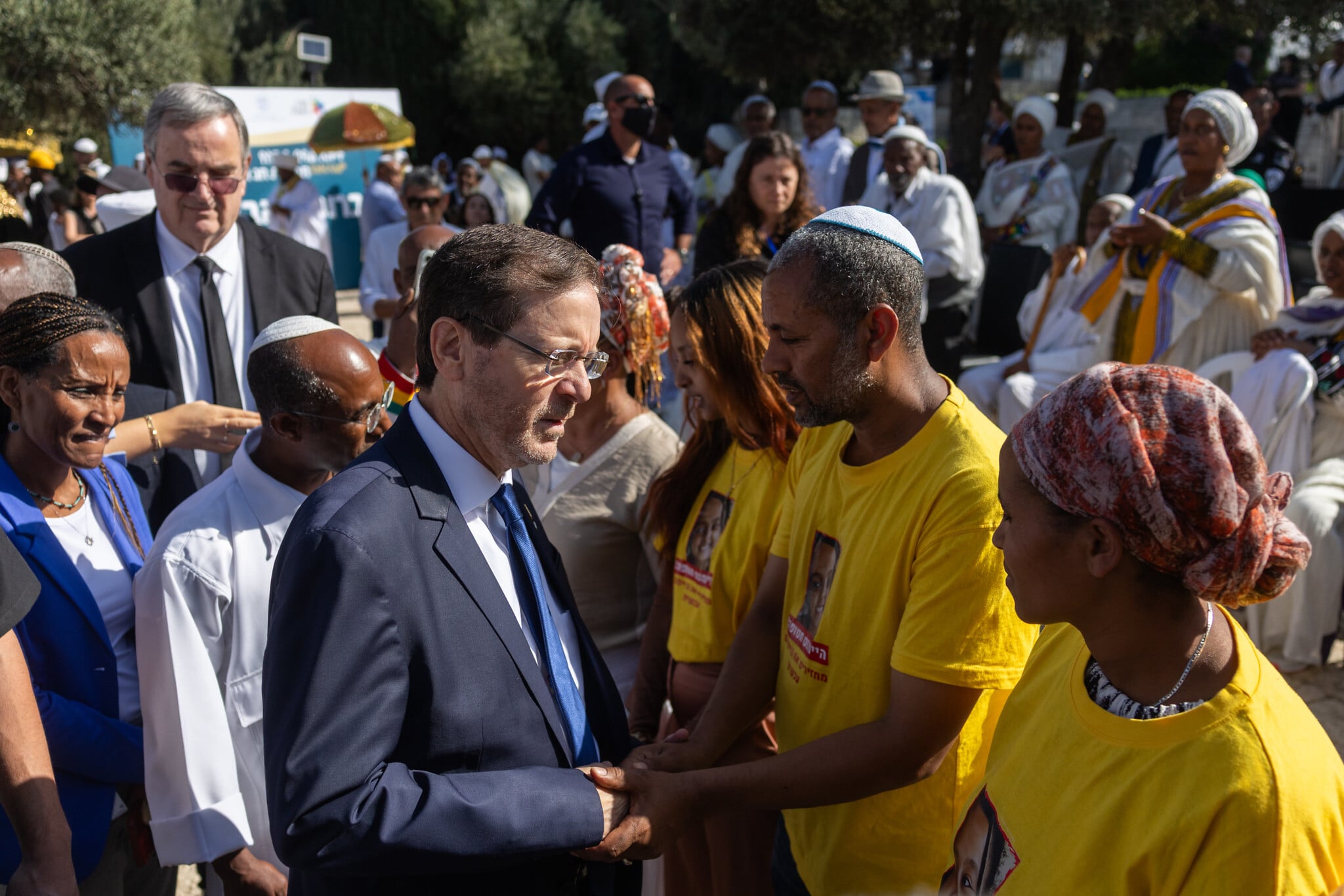
Israeli President Isaac Herzog meets with family members of Haymanut Kasau, a 9-year-old who disappeared in 2024, during the Sigd holiday in Jerusalem on November 20, 2025. (Yonatan Sindel/Flash90)
As in the past, the event also became an opportunity for the community to raise awareness of the issues it faces, like the disappearance of Haymanut Kasau, a 9-year-old Israeli-Ethiopian girl who vanished from an Absorption Center in Safed in 2024. Some of the participants wore t-shirts featuring Haymanut’s picture, and the plight of her family was mentioned by Herzog, who met with her parents, and Fentahun Assefa-Dawit, council chair of the Ethiopian Jewry Heritage Center.
In previous years, many urged Israeli authorities to save Avera Mengistu, who, as a young man, entered the Gaza Strip of his own accord in 2014, amid mental distress, and was kept there by Hamas for over ten years, before his release in February 2025.
This year, Mengistu attended the ceremony.
Passing down the tradition
The importance of passing down traditions to the next generation was the central theme among the participants.
“This is a holy day for Ethiopian Jewry,” said Assefa-Dawit. “We renew the covenant between the individual and the community, the community and Israeli society, and first and foremost, between each person and God.”
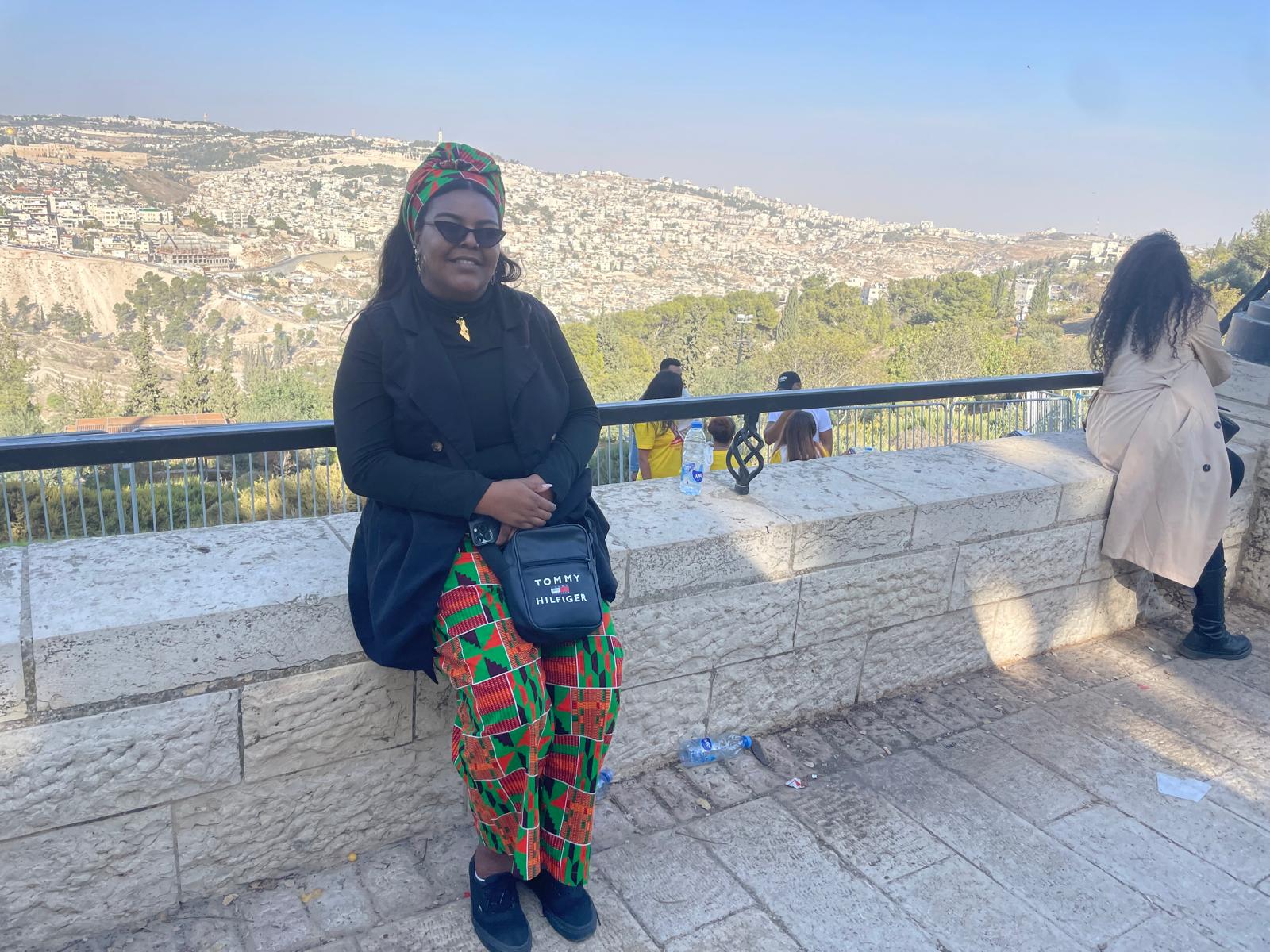
Ricky (who declined to give her last name) attends a ceremony for the Sigd holiday on the Armon Hanatziv Promenade overlooking Jerusalem’s Old City on November 20, 2025. (Rossella Tercatin/Times of Israel)
“Our tradition does not only tell us about our past, but it teaches us how to live in the present and to build our future,” he added. “This is a day when we remember to educate our future generations to continue with pride.”
For Dereje Tamano, 38, Ethiopian identity remains central to his daily life.
“Of course I’m here, this is my heritage,” he told The Times of Israel as he sat smoking a cigarette a few steps from his wife and baby daughter.
“Our traditions are my identity and roots; basically, they are who I am,” he added.
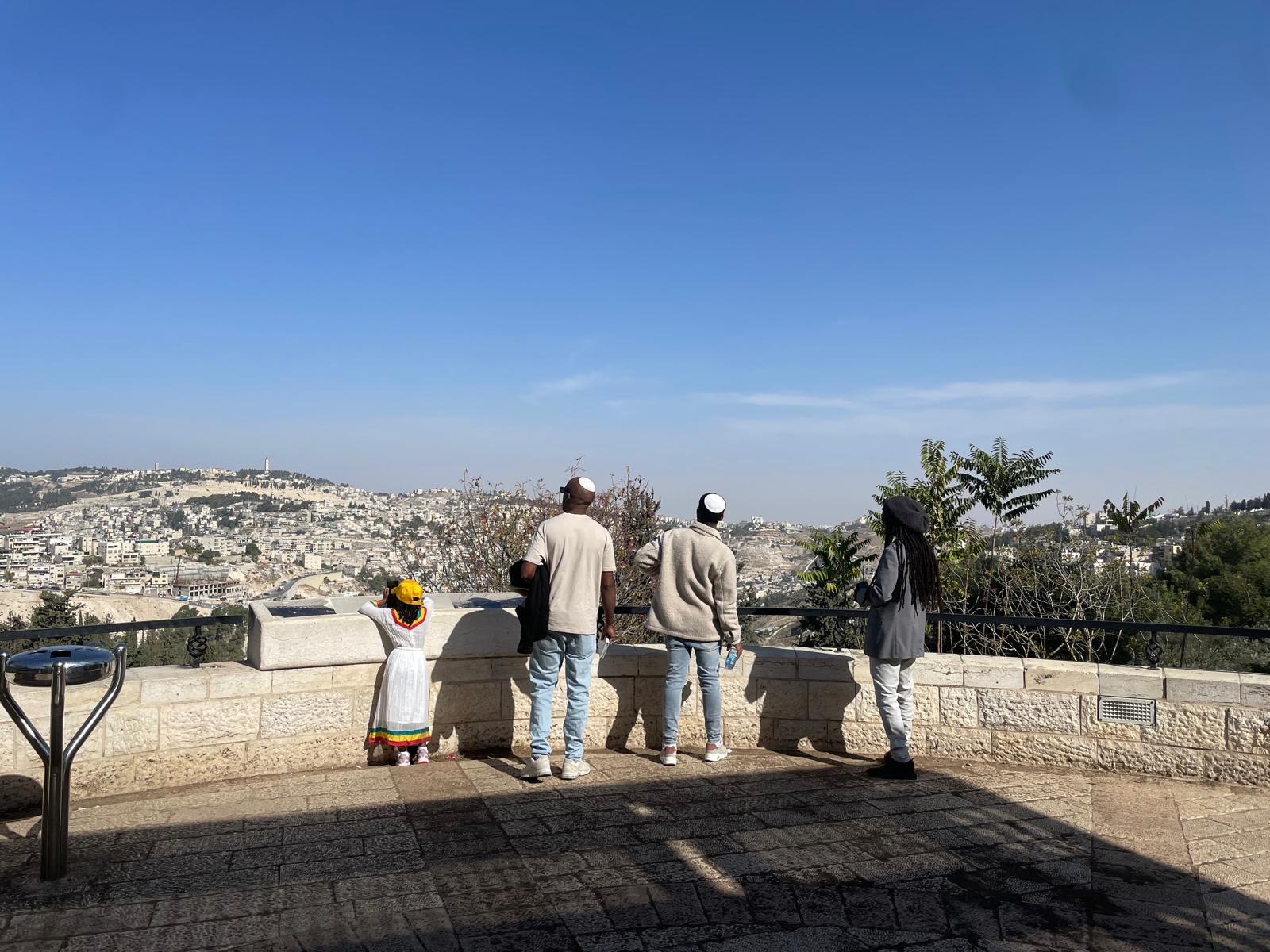
Ethiopian Jews attend a ceremony for the Sigd holiday on the Armon Hanatziv Promenade overlooking Jerusalem’s Old City on November 20, 2025. (Rossella Tercatin/Times of Israel)
After the ceremony ended, many started to slowly make their way to the dozens of buses waiting in a nearby parking lot, while others stayed longer to chat, eat or peruse the little stands selling books about Ethiopian heritage, traditional clothes,and more.
“I come every year,” said 30-year-old Ricky from Netanya, who declined to give her last name. “I honor my roots. There are many holidays here in Israel, but this is different from everything else, because it is a holiday that brings us together as a community.”