
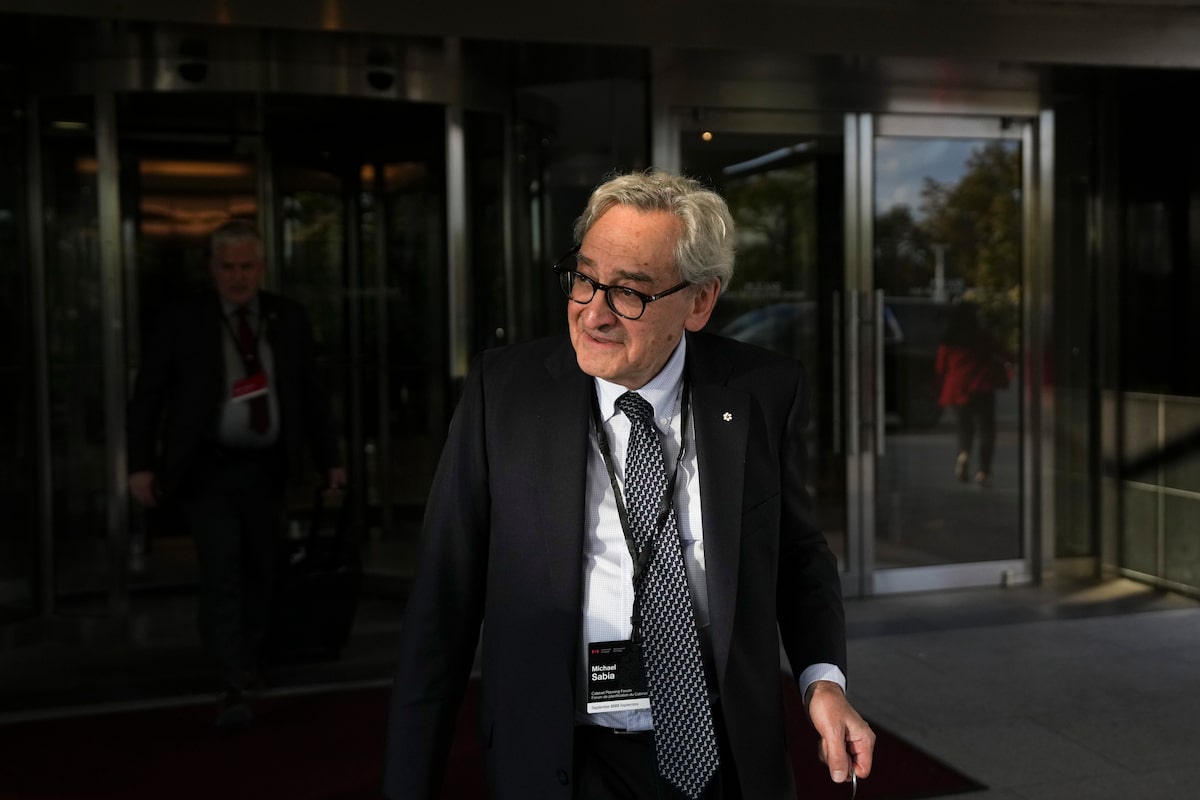
Michael Sabia, Clerk of the Privy Council, says of the six screens that were implemented, four of them are still continuing.Chris Young/The Canadian Press
There have been 13 cases flagged so far as potential conflicts of interest for Prime Minister Mark Carney, his top public servant said Wednesday, and screens were ultimately enacted in six of them.
Privy Council Clerk Michael Sabia, who heads the public service and serves as deputy minister to Mr. Carney, testified at the House Ethics Committee on Wednesday. The committee is studying the Conflict of Interest Act.
An ethics screen is put in place after a public office-holder discloses their assets to the federal ethics commissioner. Mr. Carney must recuse himself from discussions, debates, decisions or votes specifically related to over 100 corporate entities, as per his ethics filing that was publicly disclosed in July.
Those corporate entitles includes Brookfield Asset Management Ltd., which Mr. Carney had a management role in before entering politics, as well as dozens of companies with ties to Brookfield.
Mr. Carney has placed most of his assets into a blind trust, which means he no longer has control over how the holdings are managed. His business ties, and potential conflicts, have been in the spotlight since he decided to run for Liberal leadership.
Carney’s business ties under scrutiny as ethics committee reviews Conflict of Interest Act
The 13 cases were confirmed to Ethics Commissioner Konrad von Finckenstein, Mr. Sabia said in French. In seven cases, the screen was not applicable. Five of those cases did not have any direct interaction with businesses, he said, while two had to do with general tax measures.
Of the six screens that were implemented, four of them are still continuing, Mr. Sabia said. He noted he could not discuss them publicly, as Mr. Carney would be aware and it would defeat their purpose.
Mr. Sabia spoke in broad terms about the other two cases. One was for “adjustments to our tax system in a cross-border circumstance,” he said, while the other was for “a minor change to our tax system.”
The act does not require disclosing how the screen is applied, Mr. Sabia said, but he committed to providing details about the cases – minus the continuing four – to the committee.
Mr. Sabia and Marc-André Blanchard, Mr. Carney’s chief of staff, are responsible for administering the conflict-of-interest screen. The Ethics Commissioner is also involved in the process, Mr. Sabia said.
Carney does not need to divest assets to avoid conflict of interest, ethics watchdog says
He said most of his own assets had been in a blind trust for years. Mr. Sabia added that he sold his shares of Brookfield within 30 minutes of learning from the Ethics Commissioner that he had them.
“I knew that the Prime Minister had investments in some of Brookfield’s activities, and so to better manage the screen, I chose to sell my shares,” he told MPs in French, adding it was simpler this way and not a conflict of interest.
When pressed by opposition MPs about why Mr. Carney has not sold his shares, Mr. Sabia noted the screen was in place. He also added that there needs to be a balance between maintaining Canadians’ trust and ensuring the country can attract talented people into public service and government.
The Conservatives have suggested that a public office-holder should completely divest of their interests, rather than put them in a blind trust.
The act says that a “private interest” does not include an interest in a decision or matter that is of general application, and therefore, the law does not apply. Transparency advocates have suggested this definition is too broad and should be addressed.