
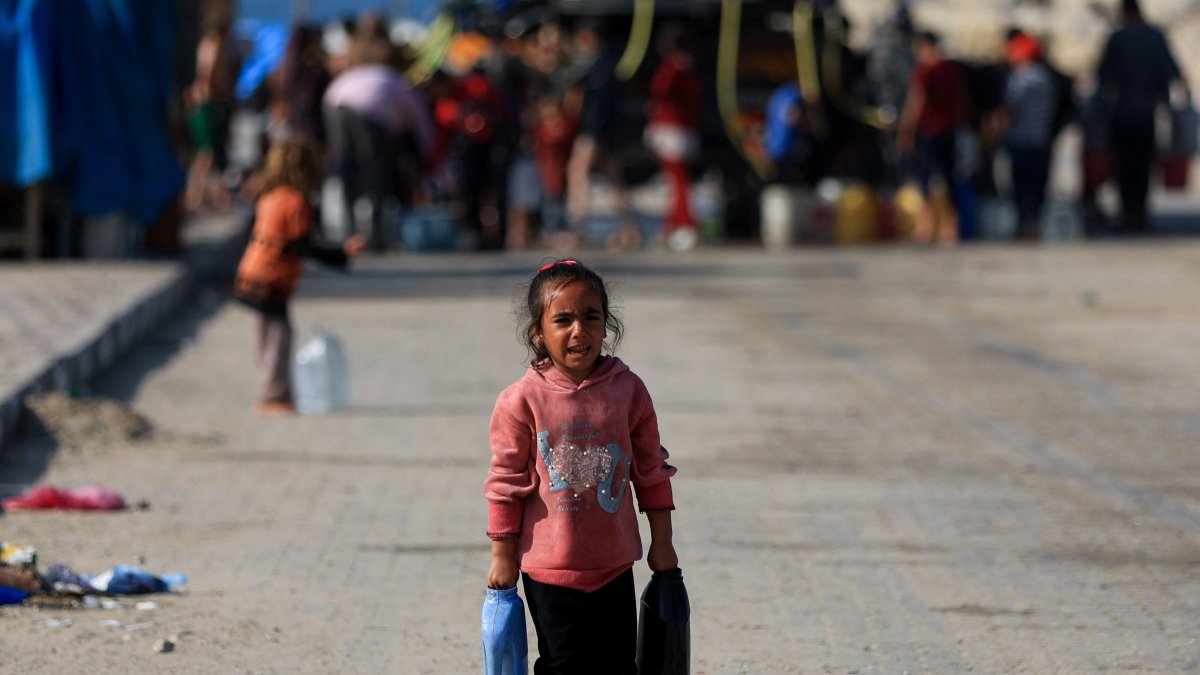
On World Children’s Day, the World Health Organization (WHO) sounded an urgent alarm over the deep psychological wounds left on Gaza’s children after more than two years of conflict, warning that even a fragile cease-fire has done little to ease the scars of bombardment, displacement and repeated loss.
The truce, brokered by the United States and in effect since Oct. 10, 2025, has reduced large-scale fighting, but WHO Director-General Tedros Adhanom Ghebreyesus said the pause offers only “moments of quiet” in a crisis that continues to unravel children’s lives.
The lull has allowed WHO teams and humanitarian partners to expand lifesaving health work, including a vaccination drive targeting more than 40,000 children against polio, measles and pneumonia.
By mid-November, over 10,000 children had received shots, and the campaign’s first phase was extended to capitalize on the temporary calm.
Yet Tedros stressed that no amount of medical outreach can instantly repair the emotional devastation caused by years of fear, loss and instability.
Children, he said, have begun to “breathe, connect, play and even start to heal,” but their long-term recovery will stretch far beyond any cease-fire’s duration.
Health workers are racing to restore Gaza’s battered medical system while scaling up mental health care for children exposed to multiple rounds of escalation since October 2023.
But the cease-fire remains tenuous.
According to Gaza health authorities and international monitors, more than 280 Palestinians have been killed in sporadic violations since Oct. 10, including strikes Israel says responded to security breaches.
U.N. agencies warn that although humanitarian access has improved, the broader crisis continues, with Gaza’s health network running at a fraction of its pre-war capacity.
As international attention focused on Gaza’s children, Israeli human rights groups mounted new pressure on their own government.
Five leading organizations – Physicians for Human Rights Israel, Gisha, HaMoked, Adalah and the Association for Civil Rights in Israel – filed urgent petitions to the Supreme Court around Nov. 20, demanding immediate medical evacuations for critically ill Palestinians who can no longer be treated inside Gaza.
Their filings argue that Israel, which controls the crossings, is legally obligated under domestic and international law to ensure access to lifesaving care for civilians under its effective authority.
The petitions describe a near-total collapse of Gaza’s hospitals.
WHO and UN assessments from late 2025 show that fewer than half of Gaza’s 36 hospitals remain partially functioning, many operating with minimal staff and equipment.
Hospital beds have dropped from about 3,500 before October 2023 to under 2,000 for a population of more than 2 million.
Specialized services – oncology, radiotherapy, intensive care and pediatric treatment – are either severely limited or unavailable.
Gaza’s only dedicated cancer hospital, the Turkish-Palestinian Friendship Hospital, was knocked out early in the war, and subsequent damage to major facilities such as the European Gaza Hospital cut off thousands of patients from treatment.
More than 10,000 cancer patients now lack consistent medication, with many essential drugs at zero stock.
Rights groups estimate that 15,000 to 16,500 patients – including children, women and the elderly – face imminent danger due to untreated illnesses, contamination risks in crowded tent settlements, and surges of infectious disease.
They say the fastest and most realistic solution lies in Palestinian hospitals in East Jerusalem and the West Bank.
Facilities such as Augusta Victoria Hospital, which handled roughly 40% of Gaza’s cancer referrals before the war, have signaled immediate readiness to admit patients, as have West Bank hospitals that previously handled more than half of Gaza’s complex cases.
Citing earlier Supreme Court rulings, the organizations argue that the government must remove barriers to evacuations and restore a predictable medical transfer system.
They note that procedural bottlenecks – not security requirements – are preventing patients from accessing care and that medical supplies prepared by NGOs are sitting at border crossings awaiting approval. As of Nov. 21, no hearing date had been set.
The backdrop to the petitions is a staggering human toll.
Gaza’s Health Ministry, backed by U.N. agencies and multiple independent reviews, reports more than 70,000 Palestinians killed since Oct. 7, 2023, with tens of thousands more injured.
Peer-reviewed studies suggest the death toll could be significantly higher due to undercounting during system collapse.
More than 42,000 amputations – including over 10,000 children – have been documented by WHO, and indirect deaths from disease and malnutrition continue to rise.
.

The Daily Sabah Newsletter
Keep up to date with what’s happening in Turkey,
it’s region and the world.
SIGN ME UP
You can unsubscribe at any time. By signing up you are agreeing to our Terms of Use and Privacy Policy.
This site is protected by reCAPTCHA and the Google Privacy Policy and Terms of Service apply.