
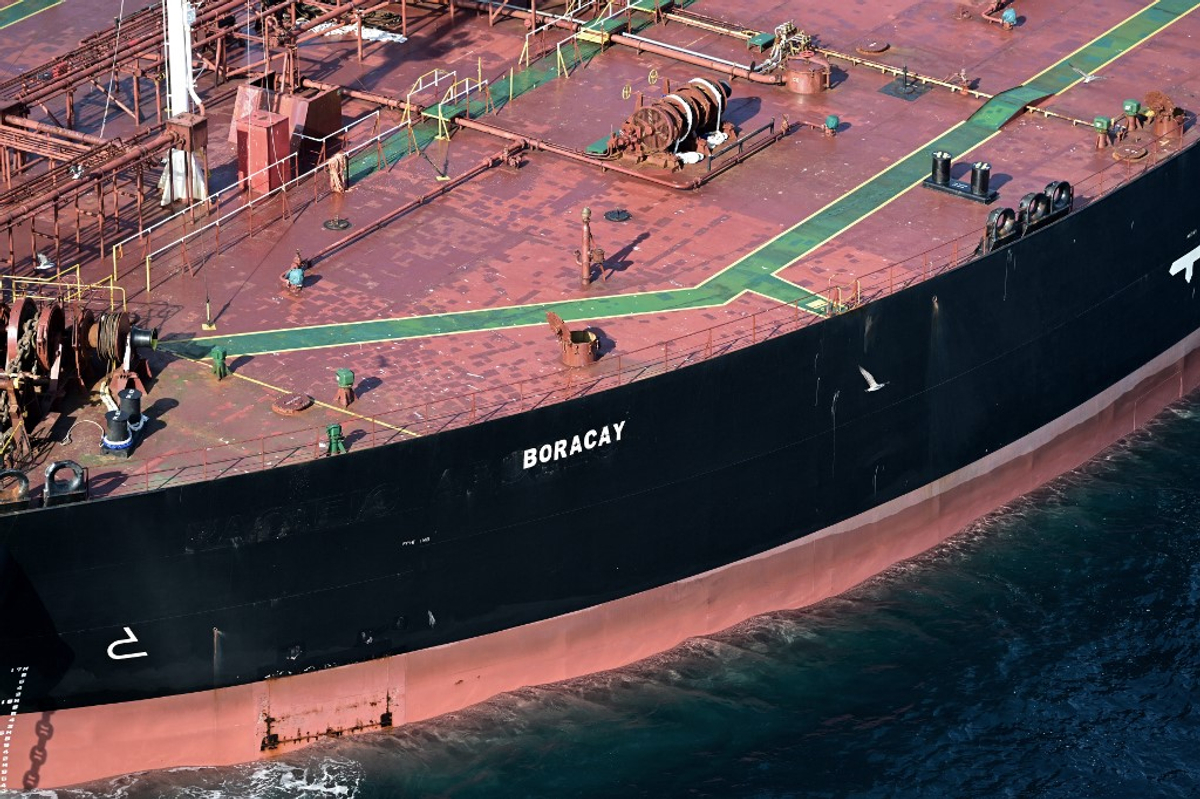
New US sanctions, which took effect Friday, could leave nearly 48 million barrels of Russian crude stranded at sea, forcing dozens of tankers to seek new destinations and reshaping global oil flows, Bloomberg reported.
The United States imposed sanctions on Russia’s two largest oil companies, Rosneft and Lukoil, last month, targeting their crude exports and access to international financial services. The measures, which came into force on Nov. 21, aim to curb Russia’s oil revenue and increase pressure on the Kremlin over the war in Ukraine.
JOIN US ON TELEGRAM
Follow our coverage of the war on the @Kyivpost_official.
The US Treasury said earlier this week that the measures were already a success, given lower demand and discounts on key Russian oil grades, Bloomberg wrote.
Indian refiners are booking cargoes from the Middle East to replace Russian supplies. Freight rates on the route are near a five-year high. Traders track whether any buyers will take Lukoil and Rosneft cargoes already at sea.
“Russian export flows are holding up, but it’s not finding its way through to their destinations yet,” Warren Patterson, head of commodities strategy for ING Groep NV, said. “If that continues and finally backs up all the way, we could start seeing supply falling, which will be a concern to markets.”
Analytics firm Kpler reports that about 48 million barrels of Urals and ESPO crude are in transit or loading. Around 50 tankers aim for China and India, while others lack destinations or target smaller ports, from the Baltic to the South China Sea, Bloomberg wrote.
Other Topics of Interest
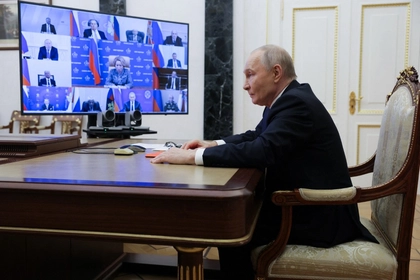
Putin Says Trump Peace Plan Could Be ‘Basis’ For Peace in Ukraine, Threatens Further Aggression
The Russian president accused Ukraine of derailing peace negotiations but said that Moscow would be ready to achieve its goals by military means in an address to his Security Council.
Moscow keeps seaborne exports at roughly 3.4 million barrels a day, according to vessel-tracking data compiled by Bloomberg. Benchmark oil prices have not reacted strongly yet, but not all barrels may find buyers. China and India take most Russian exports, but both are cautious due to potential secondary US sanctions.
Some tankers have “U-turned” in response to sanctions, temporarily reversing course at sea before finding new buyers or safe destinations. The Spirit 2, carrying 730,000 barrels of Urals from Rosneft, later resumed its voyage toward India, as did the Furia after passing the Suez Canal, Bloomberg reported.
Other ships also show signs of disruption. The Cindy, loaded with 770,000 barrels of ESPO crude – a Russian grade exported from the Far East port of Kozmino – sails off Singapore and Malaysia. The Fortis, carrying 720,000 barrels of Urals from Rosneft, shifted course from China to South Korea after a rare ship-to-ship transfer off India.
“‘It’s painful, but it’s painful only for three or four months,” Adam Lanning, senior tanker market analyst at shipbroker SSY said. “What we’ll likely see happening in the months ahead is, as we’ve seen, the markets start to adjust and will find workarounds to import that crude without coming under scrutiny.”
Beyond seaborne shipments, the sanctions are also hitting Russian oil projects and exports. The largest privately owned Russian oil company, Lukoil, declared force majeure – a legal step that suspends its obligations due to circumstances beyond its control – at Iraq’s West Qurna-2 oilfield, one of the country’s largest, after Western sanctions disrupted its operations.
US measures are also affecting Russian oil exports to India. Major Indian refiners are expected to see deliveries fall to nearly zero, with executives saying the latest Washington restrictions would make further Russian imports nearly impossible, Bloomberg reported.