
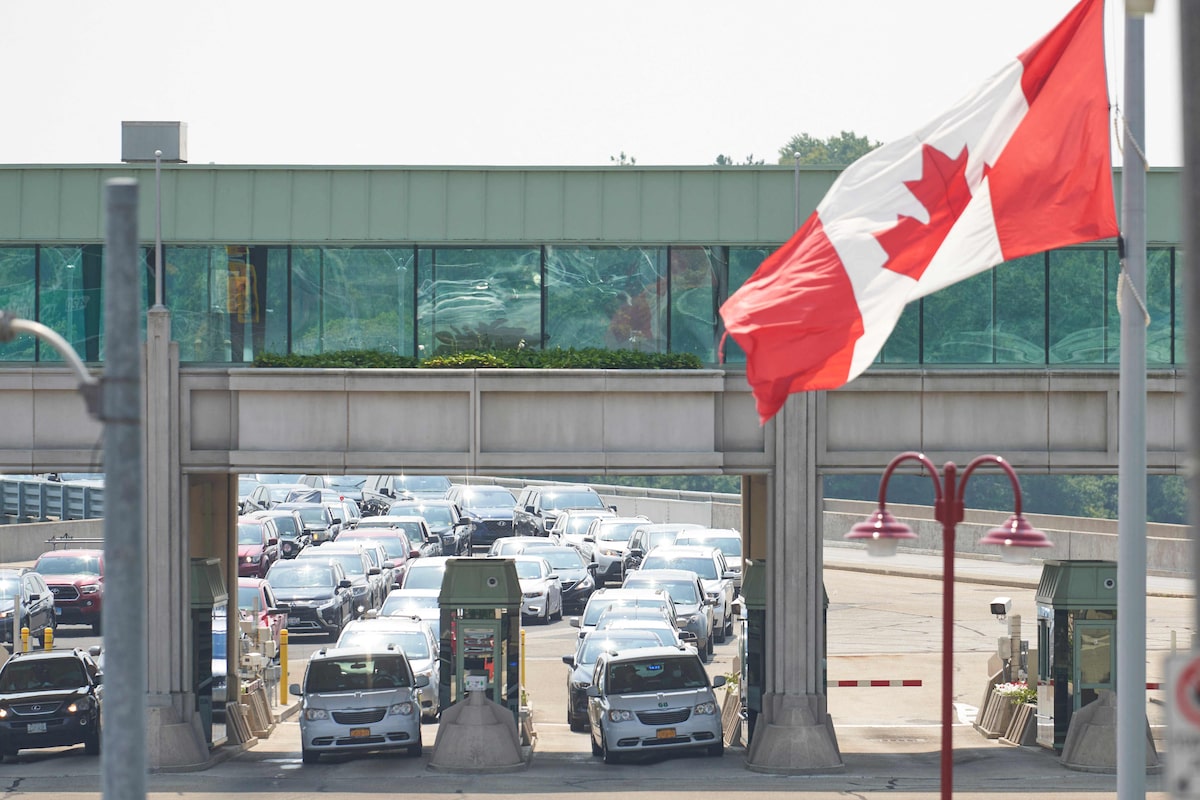
Most asylum claimants arriving to Canada from the U.S. under the Safe Third Country Agreement are turned back.GEOFF ROBINS/AFP/Getty Images
The Conservatives are preparing a slew of amendments to the government’s borders bill to try to bring in sweeping changes to Canada’s asylum regime.
Among the changes they want to introduce is a ban on asylum claims from people who came here via an EU country or a member of the G7 countries, which includes Britain, France, Germany and Italy.
Canada currently sends back most asylum claimants if they arrive from the U.S. under the Safe Third Country Agreement.
Conservative immigration critic, Michelle Rempel Garner, on Thursday announced her party will try to tighten up the asylum system by tabling amendments to Bill C-12, a slimmed-down version of an earlier government border bill that has been put on a slower parliamentary path after facing stiff opposition.
Canada is hosting a meeting of G7 interior and security ministers this weekend in Ottawa where border security is likely to be a theme of discussions.
Lost Canadians bill gets royal assent after years of parliamentary battles
Ontario cancels fast-track immigration program for skilled trades
Ms. Rempel Garner said all politicians should be concerned by a drop in public support for immigration, and public confidence in the system needs to be restored. She said she was pleased that the debate had not descended into “pointing fingers at immigrants themselves.”
Ms. Rempel Garner said one aim of the amendments is to reduce incentives for people to make fraudulent claims and to make it easier to deport people “with no legal reason for being in Canada.”
She said foreigners who commit sexual assaults in Canada “should face deportation, period.” She said the government has lost track of hundreds of foreign criminals facing deportation.
The Conservatives are planning an amendment to make changes to the definition of “serious criminality,” which they believe would lead to more foreign offenders, including those who have committed sex offences, being deported.
Fen Hampson, president of the World Refugee & Migration Council, said “there are arguments to be made for tightening up the system to prevent abuses but by the same token you don’t want to swing wildly in the opposite direction.”
He said banning people from claiming asylum who had passed through an EU or G7 country would bar Canada from accepting people fleeing war-torn states who, for practical reasons, have to pass through Europe to get to Canada.
“You are likely going to have to stop somewhere on your way to Canada and it may be a few days or it may be more than that,” he said. “Few asylum seekers can book a ticket to fly directly to Canada.”
The border and immigration bill – known as Bill C-12 – will be considered clause by clause next week by MPs on the public safety committee.
Ms. Rempel Garner told a press conference on Thursday that her party will table their amendments then. One would end federal benefits for failed claimants of asylum, beyond emergency health care.
Conservative MP Michelle Rempel Garner speaks in the foyer of the House of Commons on Thursday.Adrian Wyld/The Canadian Press
The Conservatives will also try to force asylum claimants to disclose, as soon as they arrive in Canada, their full grounds for seeking protection. Ms. Rempel Garner said this would help prevent “unscrupulous immigration lawyers” from trying to game the system.
The office of Public Safety Minister Gary Anandasangaree declined to comment on the planned Conservative amendments and whether the government would support them.
For them to pass and become law, the Conservatives would need support from other parties. The Bloc Québécois did not respond to a request for comment on whether it is inclined to support the Conservative changes. But in the past Bloc MPs have argued in the House for a tougher asylum regime, and the party recently supported amendments by the Conservatives to a government citizenship bill.
Even if the Bloc supports some or all of the amendments in committee, they could later be reversed on the floor of the House, where NDP MPs would be likely to vote against them with the government.
At the press conference, Ms. Rempel Garner seized on recent testimony at the citizenship and immigration committee by Mark Weber, national president of the Customs and Immigration Union, which she said was “super concerning.” Mr. Weber told MPs on Tuesday about an automatic machine being used to process asylum seekers when they arrive in the country.
He said the One Touch system connects directly with Immigration, Refugees and Citizenship Canada and refugee claimants are given documentation to complete on their own once they’re in the country.
“In essence, to speed things up, because we are short-staffed, we’re allowing people into the country without first doing that security screening,” he said.
The Canada Border Services Agency said One Touch processing has been used since 2022 only for “low-risk eligible refugee claimants.”
CBSA spokesperson Luke Reimer said, “an expedited processing method for low-risk claimants allows officers to focus on interviews and risk assessment, rather than data entry.”
“No security or enforcement requirements are removed from the process for any claimants,” he added in a statement.