
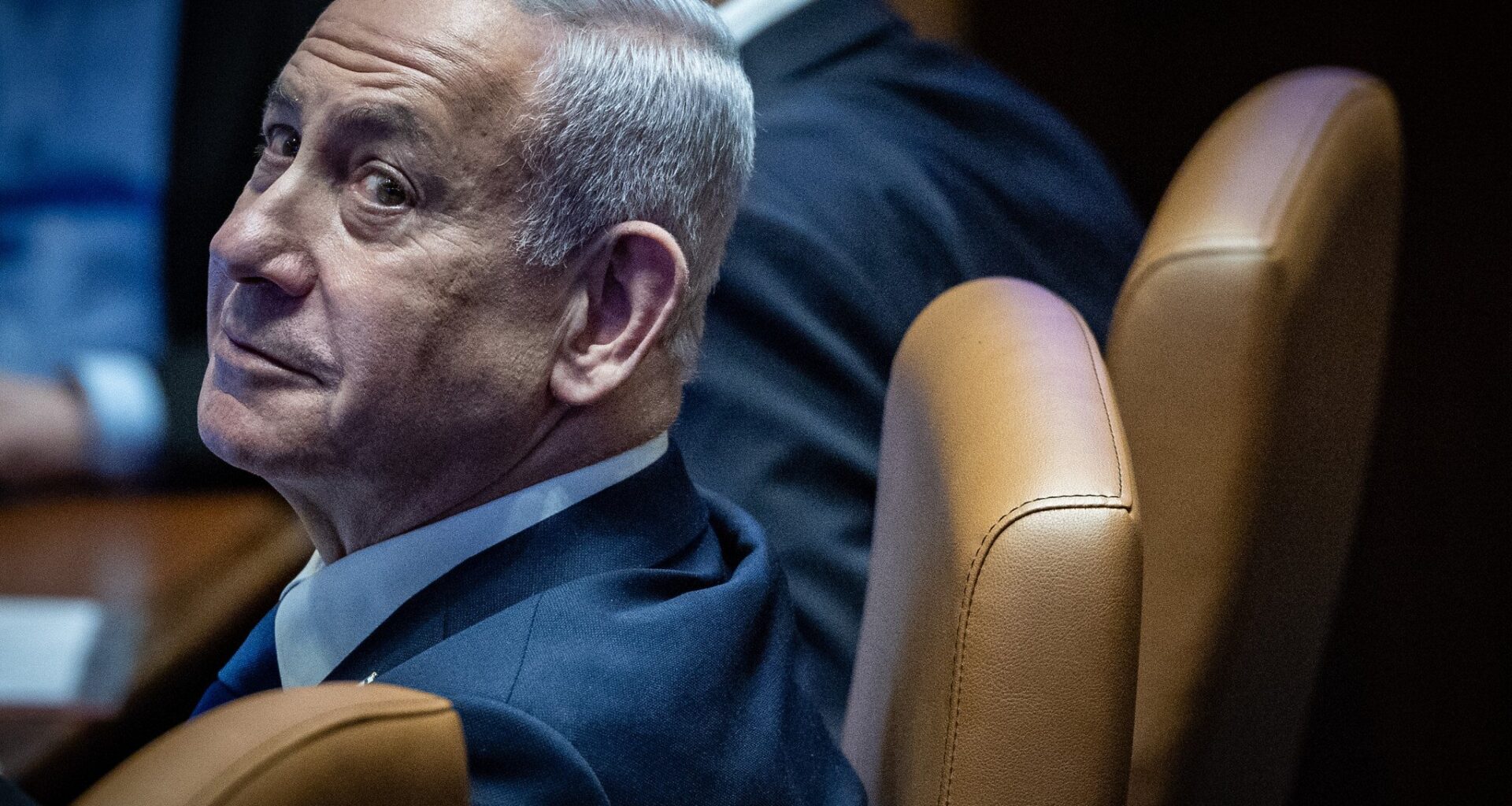
Following over two years of pressure to set up a state commission of inquiry into the failures of October 7, Prime Minister Benjamin Netanyahu’s cabinet announced on Sunday that it had instead approved the establishment of an ostensibly “independent” investigation to probe what went wrong.
Rather than the fully unfettered state commission, the one being set up by the government will have its mandate determined by a panel of ministers — all but one of whom were in office when thousands of Hamas-led terrorists stormed southern Israel to kill some 1,200 people and take 251 hostages, sparking the war in Gaza.
Unsurprisingly, Netanyahu’s political opponents and bereaved families were quick to seize on the announcement, describing the effort as a “whitewashing” commission aimed at avoiding accountability for the catastrophe.
“Netanyahu simply wants to whitewash the incident. How will that happen? He doesn’t care. He’s working on changing the narrative, and that’s what matters to him,” Yesh Atid MK Karin Elharrar told The Times of Israel.
Despite polls showing that a strong majority of Israelis support a state commission of inquiry, the country’s highest investigative authority, Netanyahu and his supporters have long rejected such a commission because its make-up would be determined by the judiciary, which his government does not trust and seeks to weaken through a judicial overhaul.
Get The Times of Israel’s Daily Edition
by email and never miss our top stories
By signing up, you agree to the terms
Concerns that the commission would seek to settle scores with the coalition’s bogeymen rather than reach the truth were exacerbated when Heritage Minister Amichai Eliyahu, a member of the ministerial panel, posted on social network X that the government’s commission will probe “the role of the state prosecution, the judicial system, former [IDF]chiefs of staff, and all those who weakened our deterrence.”

File: Heritage Minister Amichai Eliyahu speaks at the Knesset in Jerusalem, on July 7, 2025 (Yonatan Sindel/Flash90)
Netanyahu has “reached a point where he’s pitting bereaved families against each other, all so that people forget that he was the prime minister on October 7,” charged Elharar, expressing a view prevalent among opposition lawmakers.
A member of the Judicial Selection Committee, which appoints judges, and the Knesset Constitution, Law and Justice Committee, she accused Netanyahu of being so focused on avoiding blame that “everything else is just background noise.”
Pollster Mitchell Barak of Keevoon Research Strategy & Communications noted that despite overwhelming public demand for a state commission, Netanyahu’s move makes sense for him politically, especially with elections scheduled within the year.
Establishing a government inquiry allows him to reframe one of the main opposition talking points while rallying his base, and avoids the risks associated with submitting to a truly independent inquest that could find him responsible for much that went wrong.
“The only reaction so far has been negative from the opposition, which is exactly what he wants. He wants to be attacked by [Opposition Leader] Yair Lapid. It’s perfect for him,” Barak said.
While establishing an alternate commission of inquiry may not necessarily boost his numbers with undecided voters, it allows him to double down on his criticism of the judiciary and gives the right wing an issue to rally around, Barak said.
Lapid, former prime minister Naftali Bennett and other members of the so-called anti-Netanyahu change bloc have repeatedly pledged to establish a state commission of inquiry on their first day of office should they form the next government.
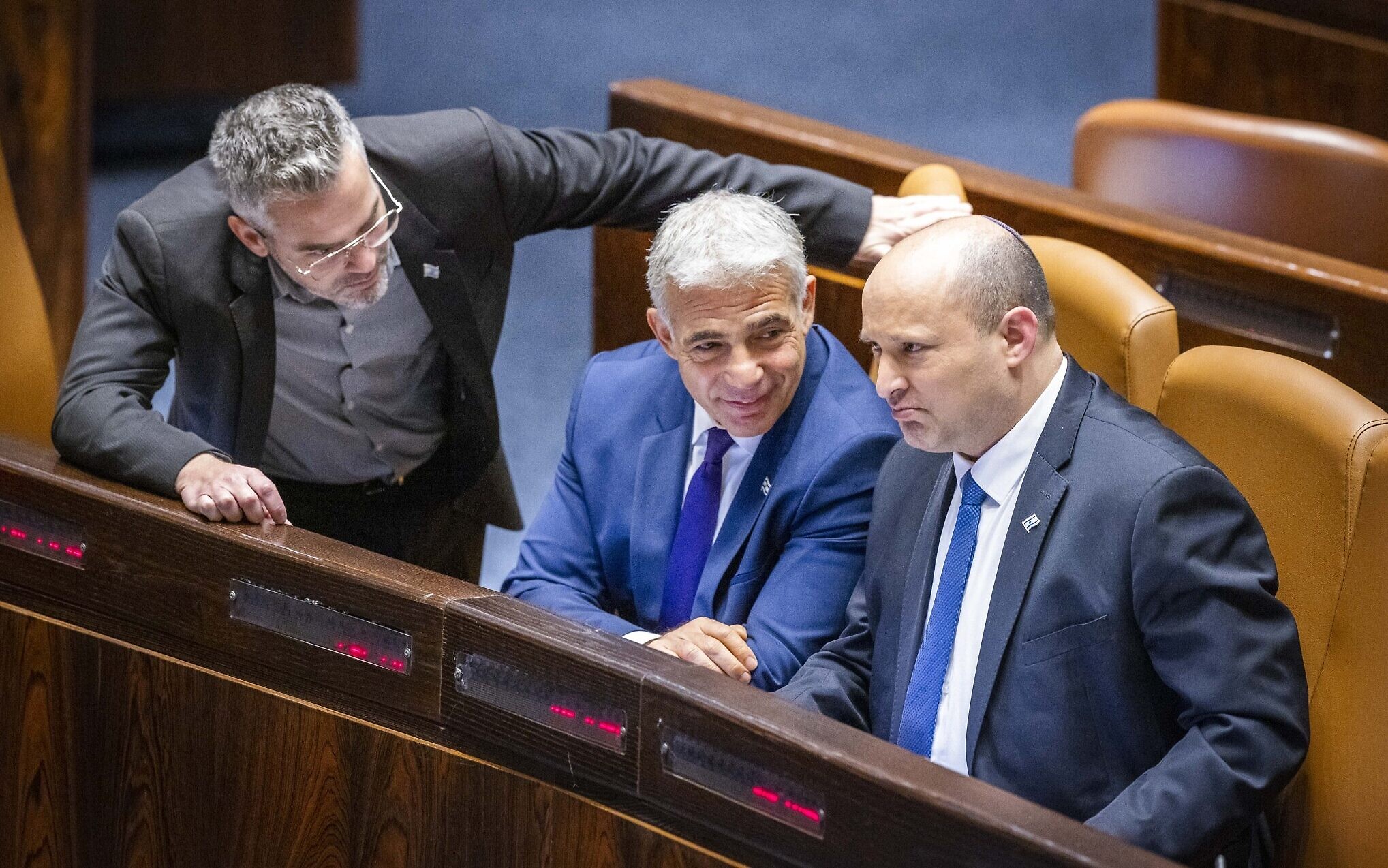
Then-prime minister Naftali Bennett, then-Foreign Affairs Minister Yair Lapid and MK Boaz Toporovsky during a discussion and a vote on a bill to dissolve the Knesset, June 22, 2022. (Olivier Fitoussi/Flash90)
But some people may not really know the difference between that and what Netanyahu has proposed, Barak said.
“You’re arguing about 50 shades of gray. So he’s picked a very light gray and most of the population wants a very dark shade of gray. Now he’s able to say, ‘I’m also for a commission of inquiry’ and then argue about the details,” he explained.
The creation of an alternate investigation into October 7 could also help preempt the opposition from establishing a state commission of inquiry should it win the next election, explained Prof. Yaniv Roznai, Vice-Dean of Reichman University’s Harry Radzyner Law School.
“One of Netanyahu’s intentions is to establish a commission of inquiry in order, in a way, to hinder a future government from establishing a state commission of inquiry,” Roznai said, explaining that even if the next government is able to launch such a probe, it could create a “battle or conflict between the two commissions” which would hinder investigative efforts.
Roznai’s view is consistent with a recent report by Channel 12, citing ministers who have spoken with Netanyahu and believe he is aware that the public will not accept anything less than a full state commission. According to the report, the politicians surmised that Netanyahu sees the establishment of a committee now as creating a “fait accompli” that would supposedly prevent a future government from forming a state commission of inquiry of its own.
Barak noted that Netanyahu was also buying himself time, which is his “main strategy in politics.”
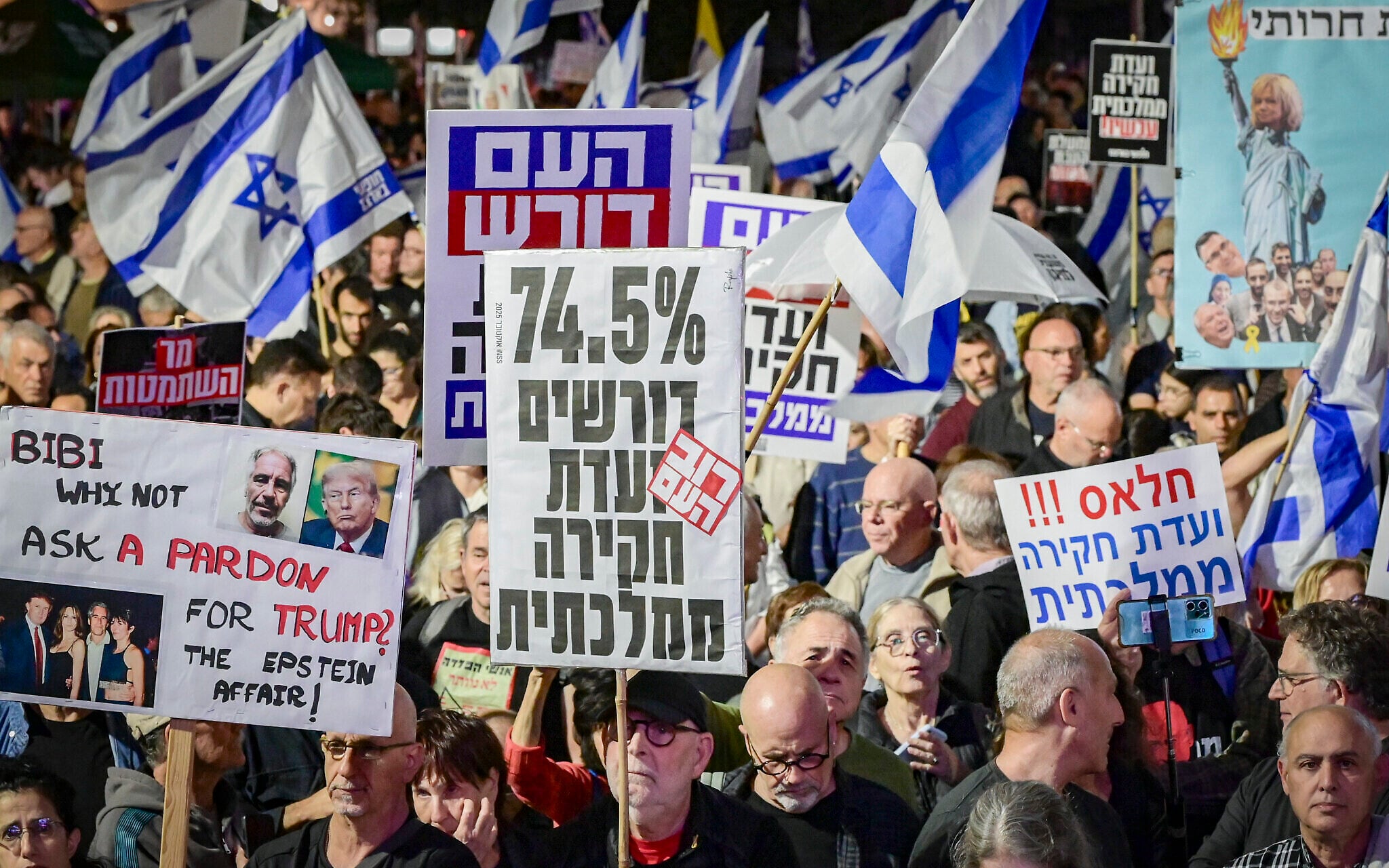
Anti-government protesters demand the establishment of a state commission of inquiry into the October 7 massacre, at Habima Square in Tel Aviv, November 15, 2025. (Avshalom Sassoni/Flash90)
According to the government’s outline, the special ministerial panel charged with determining the inquiry’s mandate will have 45 days to submit its recommendations to the government, including proposed topics and timeframes.
“He has 45 days to produce something. And after 45 days, it’ll be another 45 days, and then they have to find the people who are going to sit on it, and that’ll be another six months,” the pollster said.
But the strategy comes with risks as well. According to Roznai, “the next government could in theory expand or narrow the mandate of [Netanyahu’s] commission.”
And while most voters are not well versed on the differences between a government probe and a state commission of inquiry, “many of the public understand that the difference is whether the Chief Justice appoints or whether the government would appoint” members of the probe, he argued.
“And that’s of course, the major point, because even for the average Israeli, the very idea that the same government that actually had been in power during October 7 would appoint those who would investigate its actions is almost unthinkable,” he said, “like an inherent conflict of interest in a way.”
You appreciate our journalism

You clearly find our careful reporting valuable, in a time when facts are often distorted and news coverage often lacks context.
Your support is essential to continue our work. We want to continue delivering the professional journalism you value, even as the demands on our newsroom have grown dramatically since October 7.
So today, please consider joining our reader support group, The Times of Israel Community. For as little as $6 a month you’ll become our partners while enjoying The Times of Israel AD-FREE, as well as accessing exclusive content available only to Times of Israel Community members.
Thank you,
David Horovitz, Founding Editor of The Times of Israel