

Driving into an underwater tunnel can catch you off guard. One moment you’re in open daylight, and then the road dips and you’re enveloped by concrete, headlights flickering off tiled walls. The sound of the engine changes, tires hum differently, and for a few minutes, the world above might as well not exist. It’s just you, the tunnel, and the steady flow of cars heading somewhere on the other side.
Some tunnels are short and simple, little more than a quick dive under a river. Others stretch for miles, carrying you deep below bays or seas where the weight of water overhead is almost hard to fathom. They’re everyday infrastructure for locals, but for visitors, they can feel like hidden passages.
Channel Tunnel – United Kingdom to France
Image Credit: Kenyh Cevarom – Own work, CC BY-SA 3.0 / Wiki Commons.
The Channel Tunnel, better known as the Chunnel, plunges over 30 miles beneath the English Channel, with 23 of those miles running under the seabed. Completed in 1994 after years of planning, it remains the longest undersea tunnel in the world. Instead of driving through, vehicles are loaded onto shuttle trains that glide through chalk marl at speeds up to 100 mph, carrying everything from family cars to heavy trucks in a matter of minutes.
Inside, the ride feels almost unreal. The air is still and cool, the lighting steady, and the hum of motion constant. One moment you’re on the English coast, the next you’re rolling out into French daylight, geography reversed in under 40 minutes. For commuters, it’s routine, but for visitors, it’s a chance to experience one of the most impressive engineering marvels ever built.
Chesapeake Bay Bridge-Tunnel – Virginia, USA
Image Credit: Jim Powers – CC BY 2.0 / Wiki Commons
At first, it feels like just another coastal highway, wide, open, flanked by water and sky. But as you drive out across the Chesapeake Bay, the roadway keeps going. Low-level trestles stretch for miles, lifting you above the water with nothing but guardrails between you and the vast Atlantic horizon.
Then, almost without warning, you hit the first transition. The bridge dips onto an artificial island, and the road drops away into one of two one-mile-long tunnels. You descend beneath the waves, into a corridor of steady lights, smooth pavement, and the quiet thrum of engines echoing off concrete walls. The tunnel hums with its own rhythm, calm and contained, cutting beneath a major shipping channel while cargo ships pass silently overhead.
Moments later, you rise back into daylight on another island and then repeat the process again further on. Two tunnels, four man-made islands, over 12 miles of trestles, and 17.6 miles in total from shore to shore. It’s more than a crossing, it’s a drive that blends bridge, tunnel, and open sea into one surreal experience.
For locals, it’s routine. For first-time travelers, it feels almost like science fiction: part ocean road, part submarine voyage. And with a new tunnel under construction, the Chesapeake Bay Bridge–Tunnel continues to evolve, carrying drivers through a landscape once thought impassable.
Jiaozhou Bay Tunnel – China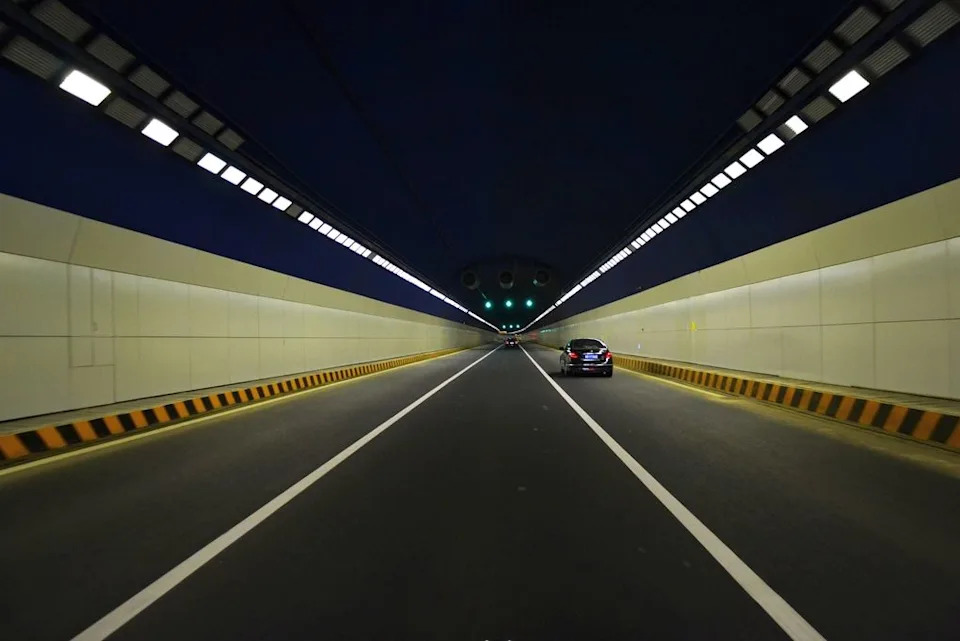
Image Credit: Li Chao – Own work, CC BY-SA 3.0/ Wiki Commons.
Running more than 7 kilometers beneath the waters off Qingdao, the Jiaozhou Bay Tunnel links Huangdao with the city’s urban core, reducing what was once a 40-minute drive around the bay to approximately 20 minutes. The descent begins with sweeping views of the coastline before transitioning into a corridor of warm yellow light. Air stays cool and steady, while the hum of engines creates a low rhythm that carries drivers forward.
Fresh asphalt, crisp lane markings, and blue-and-white safety signs give the tunnel a sense of order beneath the weight of the sea above. Traffic moves smoothly thanks to its wide lanes, and the pressure of the enclosed space feels more soothing than restrictive. Emerging back into daylight, the city greets you with shimmering reflections off the bay. Just a small reminder of how modern engineering can transform a region’s connectivity and daily flow.
Tokyo Bay Aqua-Line – Japan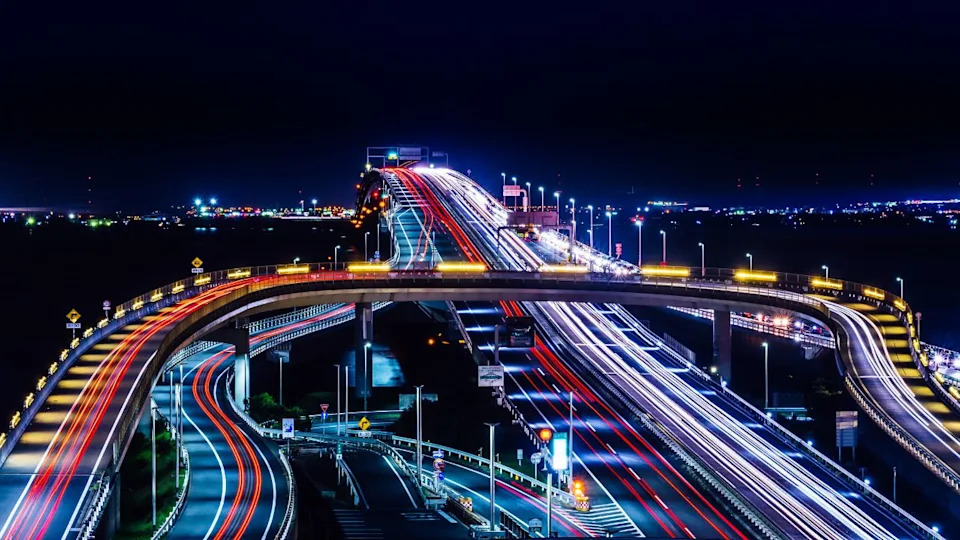
Image Credit: aotaro – Tokyo Bay Aqua-Line Highway, CC BY 2.0 / Wiki Commons.
Linking Kawasaki to Kisarazu, the Tokyo Bay Aqua-Line combines a sweeping bridge with a six-mile tunnel beneath the water. The crossing begins with open-air views of the bay, wind rushing across the deck, and sunlight shimmering on the waves. Soon the road angles downward, trading the horizon for the tunnel’s warm amber glow.
At the midpoint sits Umihotaru, a man-made island where travelers stop for food, sea views, and the steady hum of water around them. Inside the tunnel, headlights ripple across polished paint, and service alcoves flicker by in rhythm. Ventilation towers help circulate air, their presence felt as a faint vibration through the walls. Emerging at the far end brings a sudden burst of space, the bay opening once more beneath the vast Tokyo sky.
Bjorvika Tunnel – Norway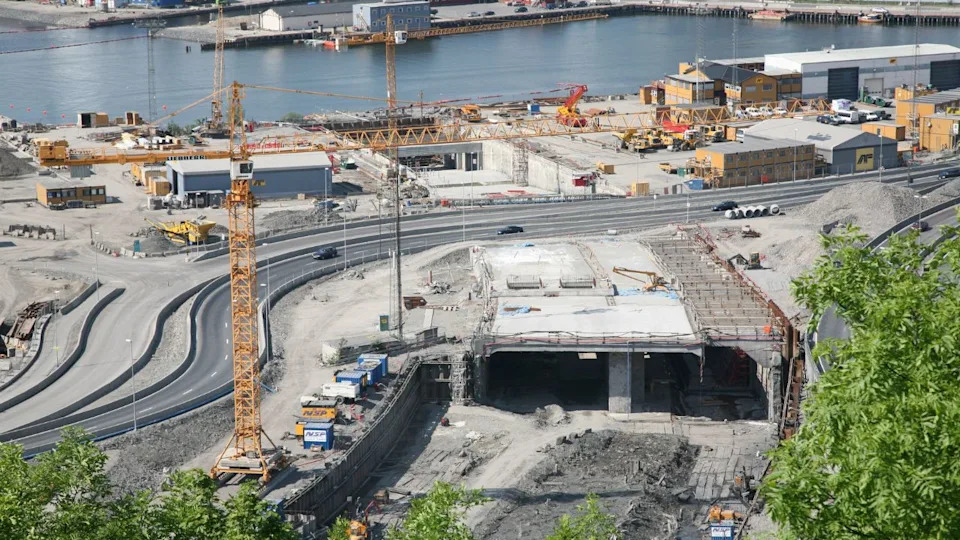
Image Credit: I, Haros, CC BY 2.5 / Wiki Commons.
Running beneath the Oslo Fjord, this tunnel links Ekeberg to Filipstad with a drive that feels steady and self-contained. The entry sits right near the city, and as you descend, the air cools and the faint scent of fresh concrete takes over. Inside, sound is muted to little more than the hum of tires, the walls soaking up noise as if the whole structure were designed for calm.
Golden lights line the roadway in an even rhythm, giving the space a sense of warmth despite the water overhead. Ventilation fans pulse gently above, while polished surfaces reflect the glow of passing cars. Safety alcoves break up the distance, their signs crisp against the smooth walls. As the road lifts again toward daylight, the tunnel gives way in an instant to Oslo’s bright streets, a return that feels both quick and seamless.
Western Scheldt Tunnel – Netherlands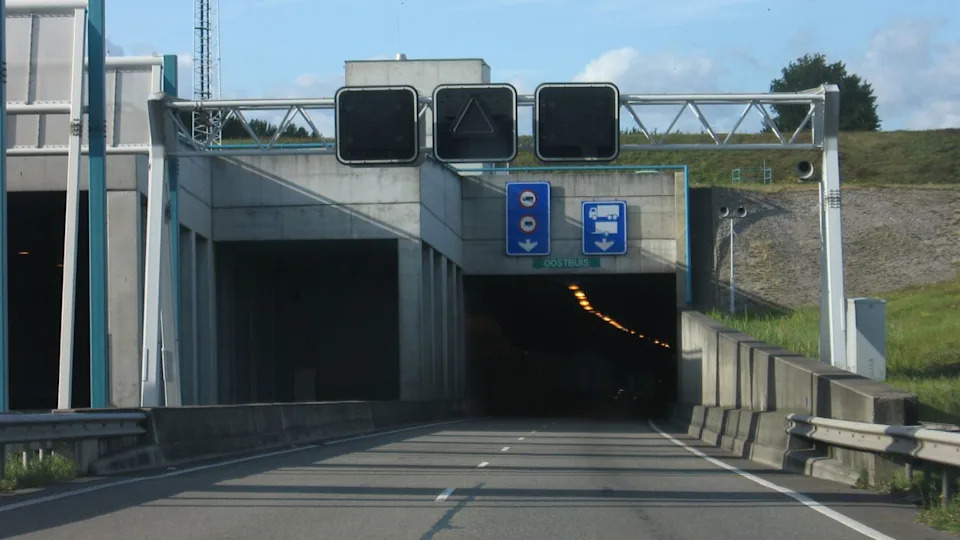
Image Credit: michiel1972, CC BY-SA 3.0 / Wiki Commons.
Beneath the estuary between Ellewoutsdijk and Terneuzen, this tunnel serves as an essential roadway for Zeeland. The approach runs past grassy dikes before dipping into a bright, orderly corridor where headlights trace clean reflections along the walls. The sound of tires settles into a low, steady rhythm, while ventilation shafts above quietly keep the air crisp and clear.
Designed with wide lanes and gentle curves, the tunnel allows traffic to move comfortably in both directions, even for larger vehicles. The climb back toward daylight feels gradual until, suddenly, the space opens to the flat Dutch landscape, where green fields stretch endlessly beneath soft northern light.
Sydney Harbour Tunnel – Australia
Image Credit: OSX – Own work, Public Domain / Wiki Commons.
Linking Sydney’s central business district with the North Shore, this tunnel offers a calm escape from the busy streets above. The approach gives fleeting glimpses of sails on the harbour before the road dips beneath the water, and the city’s bright noise fades away.
Inside, smooth concrete walls carry the glow of headlights, while air moves in a quiet, steady rhythm from overhead vents. Safety exits glow softly in green, and the gentle curves make the passage feel measured and controlled. Minutes later, daylight floods back in, and the skyline reappears from a new angle, glass towers catching the sun as if you’re seeing them for the first time.
Oresund Tunnel – Denmark to Sweden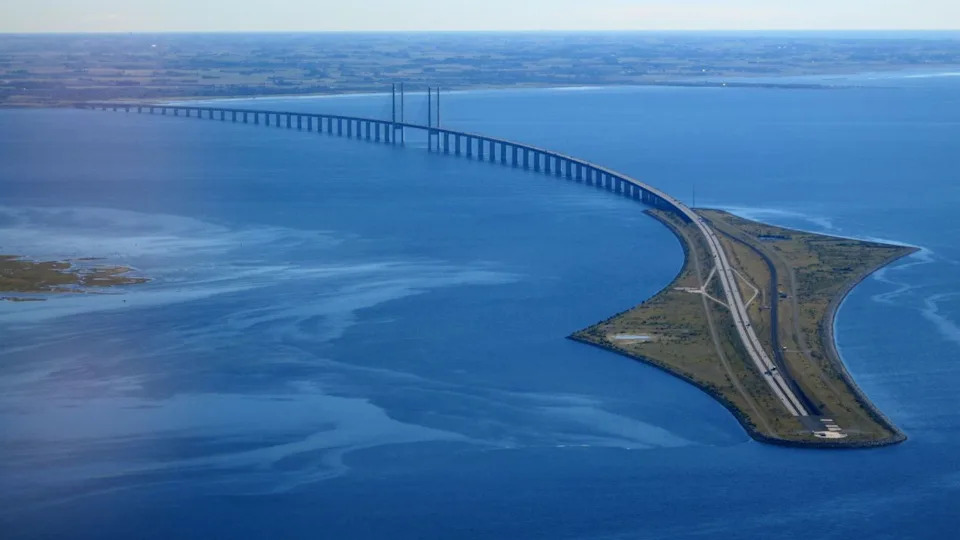
Image Credit: Nick-D – Own work, CC BY-SA 4.0 / Wiki Commons.
From Copenhagen’s shoreline, the tunnel slips under the Øresund for nearly two and a half miles before emerging onto the man-made island of Peberholm. Daylight fades to a steady glow of tunnel lamps, their hum blending with the sound of tires on smooth pavement.
Air moves in a cool, even current, and road markings shine clearly as the immersed tube carries traffic across the seabed. The tunnel surfaces on Peberholm, an artificial island built specifically to connect it to the Øresund Bridge. Here, drivers trade the enclosed calm of the tunnel for open air and sweeping views across the strait. The shift from concrete walls to sky feels dramatic, with the bridge rising ahead like an extension of the road itself. Together, the tunnel and bridge span nearly 10 miles, creating one of Europe’s most remarkable crossings between Denmark and Sweden.
Beneath the Surface, Across the World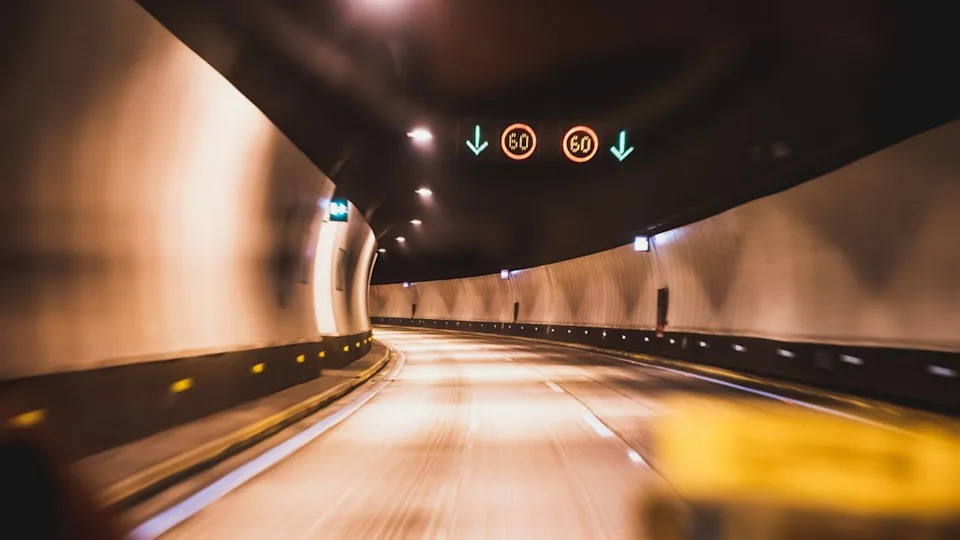
Image Credit: Shutterstock.
They may make you feel like you need to hold your breath, but driving through an underwater tunnel gives you the chance to witness human design and engineering meshing with nature in a way that’s truly remarkable.
These tunnels are lifelines that connect cities, cut hours off trips, and make it possible to move through landscapes that once forced detours. Each one carries its own personality, from the steady pulse of ventilation fans to the sudden burst of daylight when you climb back out.