
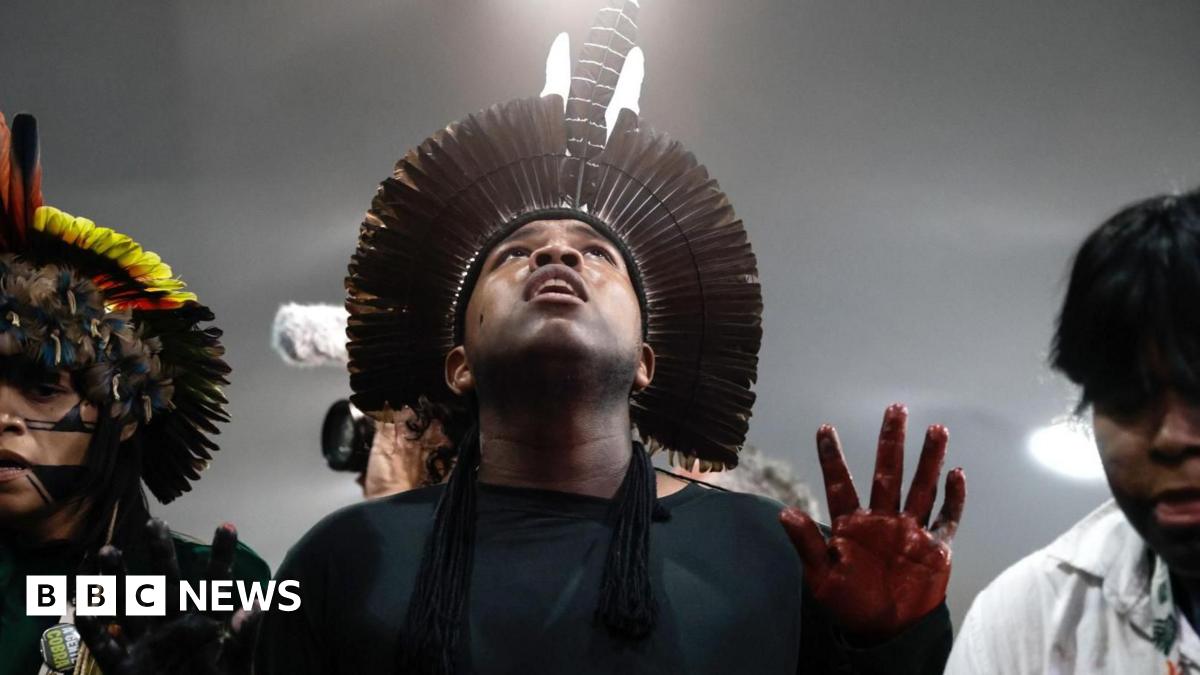
A representative for Colombia furiously criticised the COP presidency for not allowing countries to object to the deal in the final meeting on Saturday, known as a plenary.
Colombia’s President Gustavo Petro said he “does not accept” the agreement.
The final deal, called the Mutirão, calls on countries to “voluntarily” accelerate their climate action.
For the first time, the US did not send a delegation after President Donald Trump said the country will leave the landmark Paris treaty that committed countries to act on climate change in 2015. He has branded climate change “a con”.
Veteran negotiator and former Germany climate envoy Jennifer Morgan told the BBC that the US absence was a “hole” in the negotiations. Often the US has supported blocs like the EU and UK.
“In a 12-hour negotiation overnight, when you have oil-producing countries pushing back hard, to not have someone counteracting on that, it certainly was hard,” she said
But for many countries, the fact that the talks did not collapse or roll back on past climate agreements is a relief.
Antigua and Barbuda Climate Ambassador Ruleta Thomas commented: “We are happy that there is a process that continues to function […] where every country can be heard.”
In the final meeting, a representative for Saudi Arabia said: “Each state must be allowed to build its own path, based on its respective circumstances and economies.”
Like many other leading oil-producing nations, the country has argued it should be allowed to exploit its fossil fuel reserves as others have done in the past.