
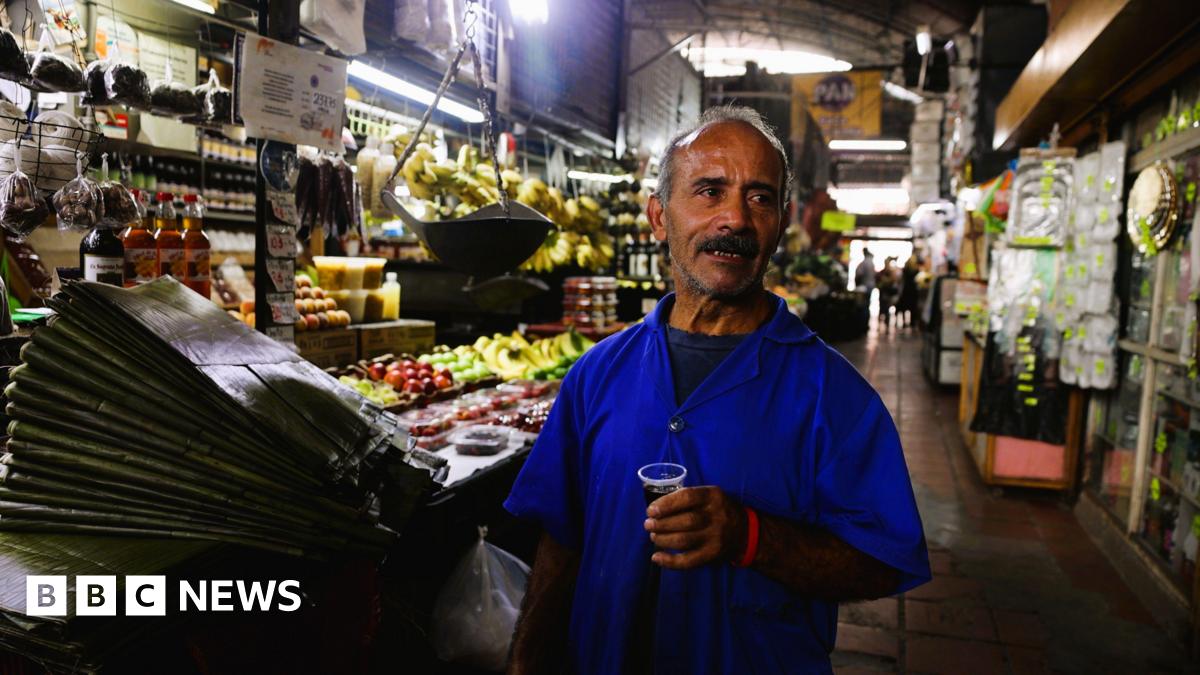
Alejandro downplays the rhetoric between Washington and Caracas.
He’s been selling vegetables in this market for five years. “Look, look how empty this is,” he insists, pointing to a long, lonely aisle full of fresh fruits and vegetables.
A Christmas carol plays, but the festive atmosphere feels overshadowed.
The common enemy of the people is here: the sharp rise in food prices and the lack of purchasing power. In part, this is due to the rapid depreciation of the bolívar, which will have lost 80% of its value this year, according to International Monetary Fund (IMF) figures.
A kilo of chicken, for example, costs about four times the official monthly minimum wage. And although the government offers bonuses to retirees and public workers, the money is still not enough to cover the basic food basket.
Consuelo, 74, is sceptical about an armed conflict with the US and says Venezuelans cannot afford to stock food in preparation for a war.
“Let whatever happens happen! And that’s it!” she tells the BBC, adding that worrying about the spectre of war doesn’t help much.
“Is it true? Is it false? That just makes you sick, walking around nervous, it’s better to stay calm. Emotions can also affect your health,” continues this retired university professor who still works.
“I haven’t done any panic buying; you need a lot of money to do that.”
Two economists living in Venezuela consulted by the BBC for this report preferred not to comment for fear of government reprisals.
“Inflation has reached levels of around 20% monthly,” another expert who requested anonymity pointed out.
The IMF projects a 548% price increase this year and says it will be worse in 2026, when it could soar to 629% – the highest figure on the continent.
Others see a potential US intervention as an opportunity for regime change but are afraid to speak openly about it.
“We’re scared, silent, afraid they’ll throw us in jail. I used to post things, but not anymore – I shouldn’t – because I don’t know who might turn me in,” a merchant from Ciudad Bolívar (in Bolívar state, south) tells the BBC by phone.
“There’s hope, faith, but people are quiet out of fear. You don’t hear anyone talking about it; it’s just at home, with your family, but there’s a hint of joy,” says the woman anonymously.