
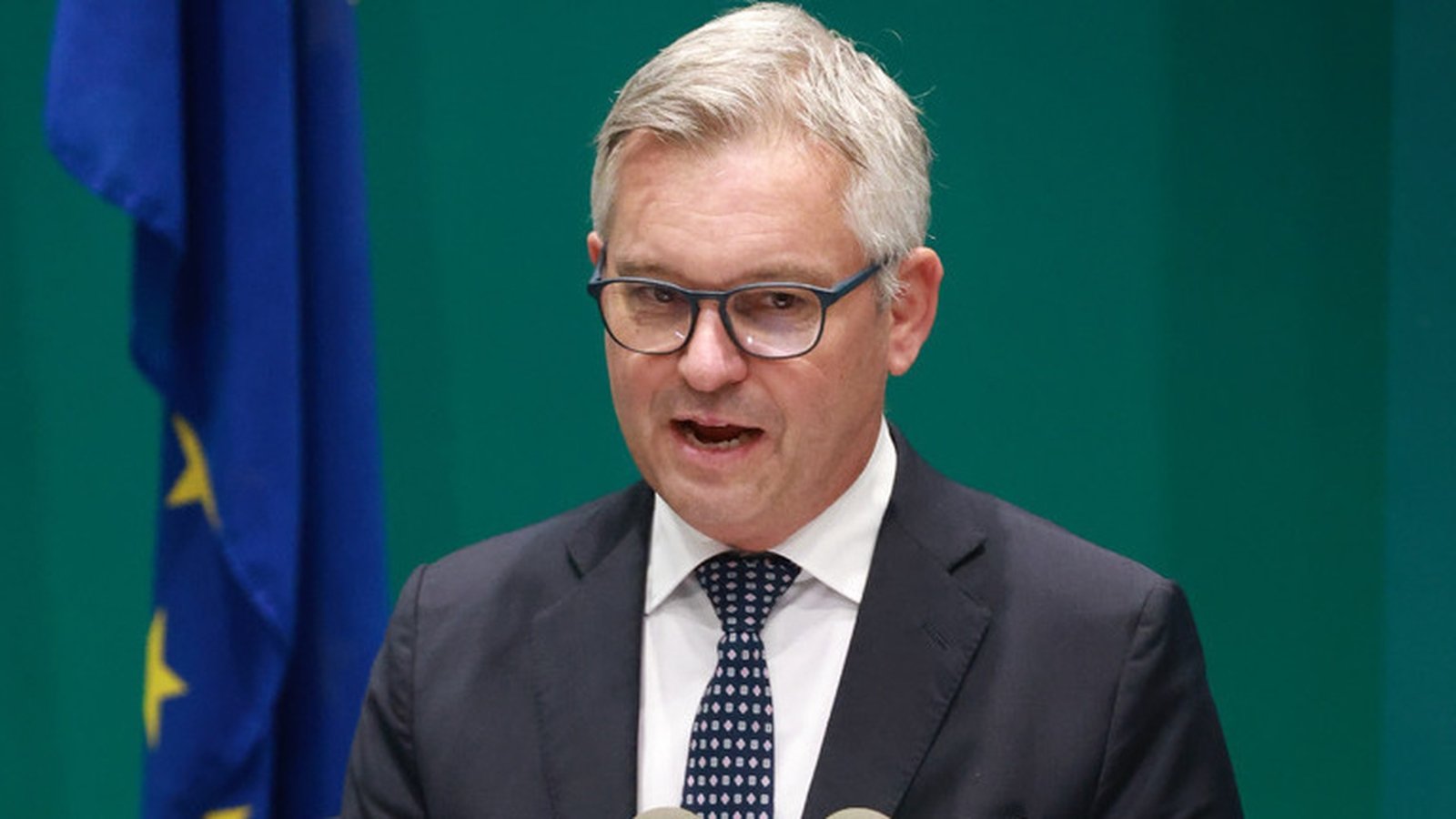
EU Migration Commissioner Magnus Brunner has said Ireland is “very well” placed to adopt the Migration and Asylum Pact, and described the Citywest accommodation centre for International Protection applicants as an example of “best practice”.
He was speaking in Dublin after visiting Citywest, holding meetings with senior gardaí and the head of the Criminal Assets Bureau, as well as speaking to Minister for Justice Jim O’Callaghan.
The Migration and Asylum Pact becomes operational this June and seeks to introduce a more harmonised approach to asylum, migration and border checks, with swifter screening, mandatory health and security checks and a streamlined returns system.
Mr Brunner said he believed the legislation will reduce the number of people entering the EU.
Minister O’Callaghan rejected a suggestion from Sinn Féin that the Government should have struck a bilateral arrangement with Britain over the movement of asylum applicants within the Common Travel Area, rather than sign up to the pact.
The party’s justice spokesperson Matt Carthy claimed that the pact is not in Ireland’s best interests as it does not “take into account Ireland’s unique position as both a member of the EU and part of a Common Travel Area”.
However, Minister O’Callaghan said he has ongoing and close contact with his UK counterpart and the Government would take account of whatever measures the UK introduces at Westminster.
Mr Brunner said such “migration diplomacy” was a good thing, adding it appeared to him that what the UK was doing was bringing its laws in line with what is in place in many EU Member States.
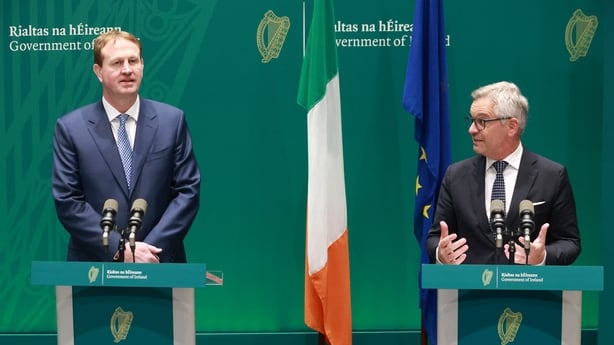
Minister for Justice Jim O’Callaghan met with Magnus Brunner
Overhaul of the EU’s screening and registration of asylum seekers
The pact foresees an overhaul of the EU’s screening and registration of asylum seekers, with an emphasis on faster processing of those arriving in EU member states, combined with a new solidarity mechanism.
That mechanism foresees member states helping those frontline states – such as Greece or Italy – in the event of an overwhelming influx of migrants, which is termed the “Solidarity Pool”.
Justice ministers from EU member states, including Mr O’Callaghan, will meet in Brussels on 8 December to negotiate further what allocations might be shared to which member states in such an event.
Member states will be allowed to choose whether they take on extra asylum seekers to alleviate the burden on frontline states, or instead make a financial contribution.
According to an Oireachtas parliamentary research note, Ireland’s annual contribution will consist of taking on 648 relocations per annum in an emergency situation, or making an annual financial contribution of €12.96m, or a combination of both.
Ireland has opted into all but two elements of the Migration Pact. The State is exempt from the entry/exit system, an automated IT system registering the entry and exit of all third-country nationals travelling to the Schengen passport free travel area.
In a report on 11 November, the European Commission acknowledged the “pressures on Ireland’s reception system – including increased arrivals via the Northern Irish border and significant numbers of Ukrainians. The Commission recommended that Ireland receive priority support from EU agencies and financial instruments,” according to the statement.
Officials believe that a recent returns agreement between the UK and France to curb the flow of small boats bringing migrants across the Channel should reduce the numbers of migrants who make their way south via Northern Ireland.
Separately, member states are negotiating a returns regulation, which could see those whose asylum applications have been refused be sent to so-called returns hubs in third countries deemed safe.