
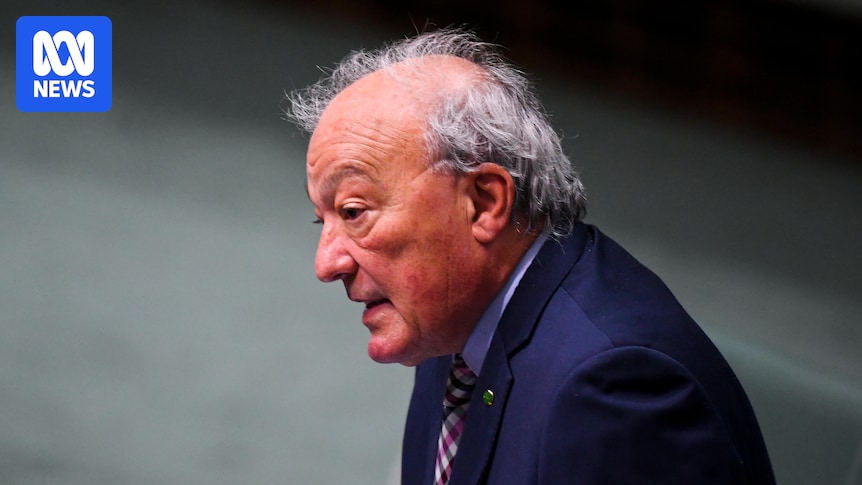
A ban on gambling advertising would pass parliament with a conscience vote, according to a Labor MP in favour of tackling the issue as a matter of public health.
The assessment by Macarthur MP Mike Freelander has been echoed by Liberal Simon Kennedy and independent Kate Chaney, who are co-chairs of the newly revived Parliamentary Friends of Gambling Harm Minimisation group.
In a sign of mounting pressure on the Albanese government to address gambling harms, MPs from across the political divide, unions, Labor grassroots members and advocates are increasingly formalising their efforts to lobby for action.
Mr Freelander told the ABC he believed the multi-partisan support for restricting advertising meant the reforms would “get there” eventually.
“If there was a conscience vote given in the parliament I’ve got no doubt we’d be able to ban gambling advertising, because I think there’s a general consensus we need to act on it, that it does cause a lot of harm,” he said.
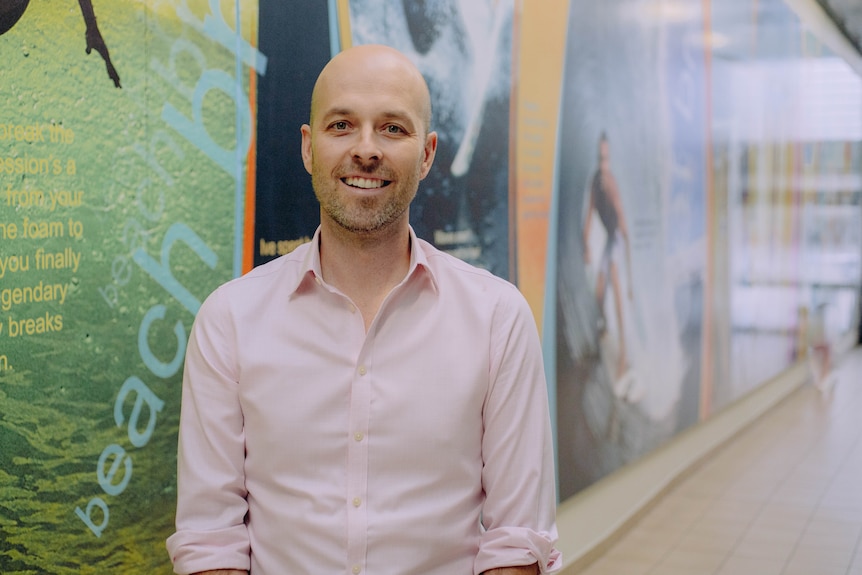
Simon Kennedy has blamed the prime minister for the government’s slow response to recommendations from a 2023 inquiry. (ABC News: Liam Patrick)
Mr Kennedy and Ms Chaney have blamed Anthony Albanese for an apparent lack of haste on the federal government’s response to recommendations from a 2023 inquiry into online gambling, but Mr Freelander said he was not seeking to criticise the prime minister.
The Labor MP, who has decades of medical experience as a paediatrician in Western Sydney, said he saw gambling advertising as a “public health issue”.
“I’ve seen it impact families, the kids I’ve looked after, and I want us to do something to reduce the harm,” Mr Freelander said.
He said he was not a “wowser” who wanted to ban gambling entirely.
“But it does cause a lot of harm and the marketing and advertising is directed at those that are going to be harmed the most,” Mr Freelander said.
“I liken it very much to the campaigns we had in the ’60s and ’70s against tobacco products and advertising and I think we’ll get there [with gambling] eventually.”
Mr Kennedy said there was a “unity ticket in this parliament to address gambling harm” and accused Mr Albanese of “holding it back”.
“Australians have a right to expect more urgency than this,” Mr Kennedy said.
Mr Kennedy said he put his hand up to co-chair the parliamentary group because he had sat with families reading the suicide notes of loved ones impacted by gambling.
If you or anyone you know needs help:Suicide Call Back Service on 1300 659 467Lifeline on 13 11 14Aboriginal & Torres Strait Islander crisis support line 13YARN on 13 92 76Kids Helpline on 1800 551 800Beyond Blue on 1300 224 636Headspace on 1800 650 890ReachOut at au.reachout.comMensLine Australia on 1300 789 978QLife 1800 184 527
“This isn’t about shutting down gambling — it’s about protecting the most vulnerable people form an industry that can overwhelm them,” he said.
Ms Chaney said there was “broad support” across the political spectrum for “serious reform of the predatory online gambling industry”.
“Members of the crossbench are speaking up for their communities on this issue,” she said.
“But with the prime minister blocking any action, joining the Parliamentary Friends of Gambling Harm Minimisation may be the only way Labor MPs can express their community’s support for serious reform.”
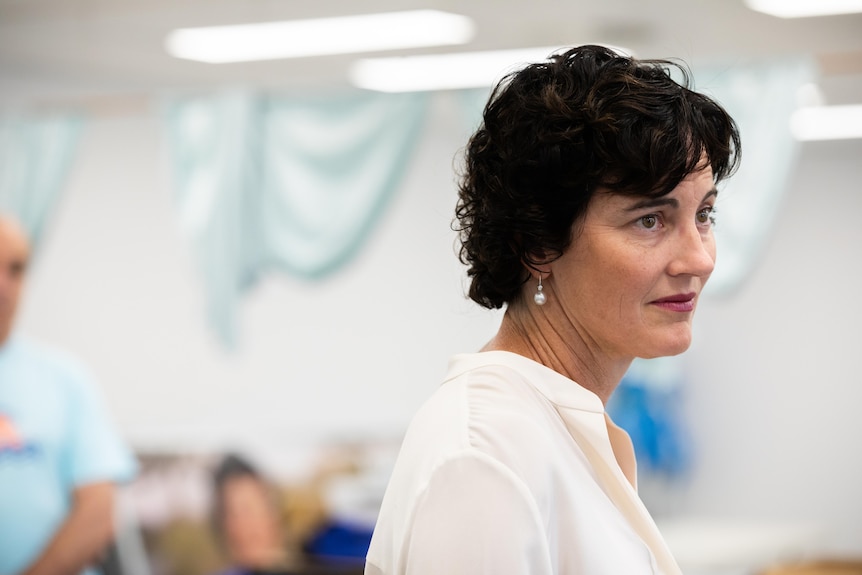
Kate Chaney says the crossbench is speaking up on the harms of gambling advertising. (ABC News: Keane Bourke)
Momentum for action building
The group will host reform advocates in Canberra on Wednesday for a presentation of new research making the case for a national regulator for the sector.
Alliance for Gambling Reform chief executive Martin Thomas said the current system had allowed the Northern Territory to act as a “regulatory haven” for foreign-owned bookmakers with “low tax, light oversight and quick approvals”.
“A single NT licence allows foreign companies to operate nationwide, bypassing stronger regulatory regimes that in places in other states,” he said.
Australian gambling on the rise
About 1 per cent of online bettors generate more than 40 per cent of all losses, according to research collated for the alliance.
High-loss gamblers are predominantly employed men aged 25 to 44, including many with children and mortgages, as well as people in financial stress or with mental health vulnerabilities.
Momentum is also building at a grassroots level following last month’s formation of the Labor for Gambling Reform group spearheaded by party heavyweights and Unions NSW boss Mark Morey.
Mr Morey said the group was starting to recruit supporters among branches in NSW, but he expected that to spread nationally in the new year.
Fear grips the Labor party on banning gambling advertising
The aim is to create a “pinch-point” for the government and give more Labor MPs “cover” to speak out publicly.
“We have a unique ability to drive this [reform] from inside the party,” Mr Morey said.
The group will seek to have gambling reform added to Labor’s platform at the next national conference in July.
Mr Morey said as a union leader he had heard harrowing stories of the impacts of gambling, with the greatest losses coming from “working class suburbs” in areas such as Western Sydney.
Responsible Wagering Australia (RWA), which acts on behalf of the gambling industry, has argued the real “wild west” was run by offshore operators who avoided regulation entirely.
Gambling helplines:
RWA chief Kai Cantwell said the industry had “backed nationally consistent regulation”.
“The focus must be on improving current protections for customers, not adding another layer of bureaucracy that delays decision-making and makes it harder for governments, industry and punters to get practical results,” he said.
A government spokesperson said Labor had undertaken the “most significant gambling harm reduction measures in the past decade”.
This included banning the use of credit cards for online wagering, launching the national self-exclusion register BetStop and forcing companies to send customers monthly statements outlining wins and losses.