
‘This will send the appropriate message both to him and to others, that hateful threats against Jews and their institutions will be met by significant sanction,’ justice says of restaurant owner who had threatened to ‘plant a bomb in every synagogue in Toronto’
The Newmarket business owner found guilty of uttering threatening remarks after saying he would “plant a bomb in every synagogue in Toronto” received a conditional sentence of 60 days of house arrest July 28.
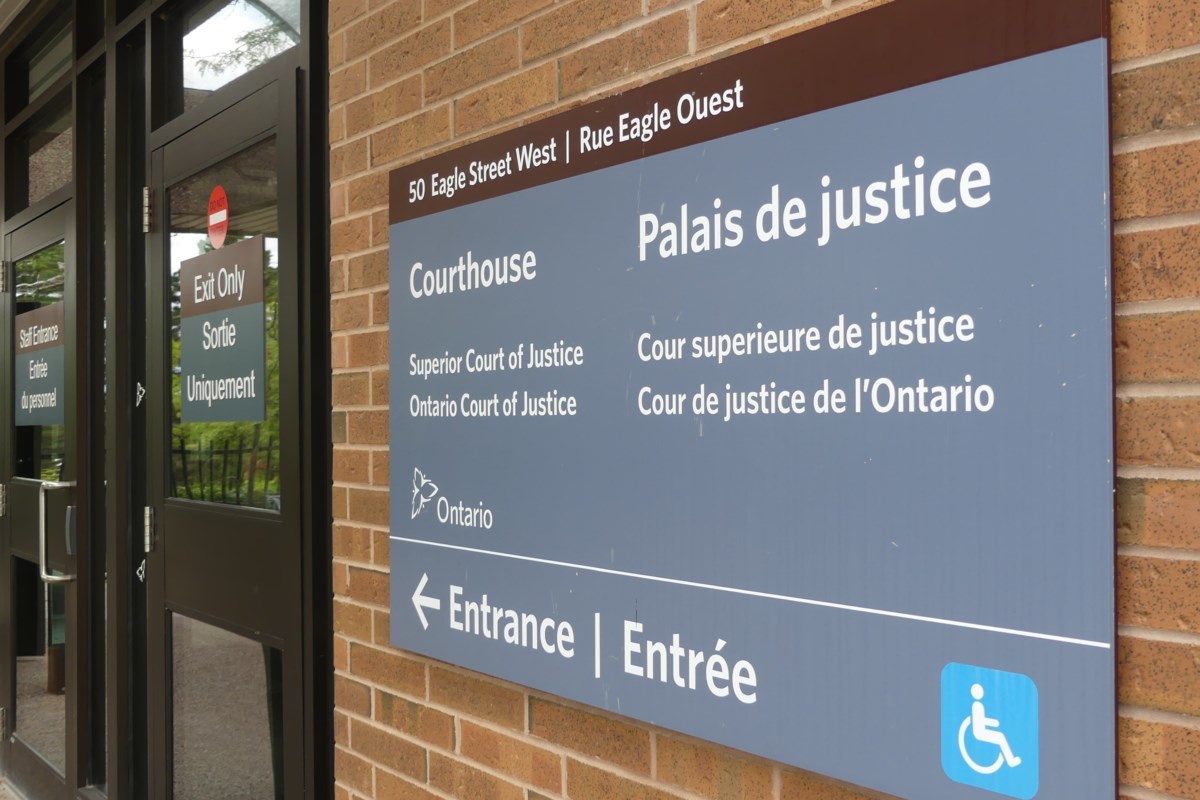
Justice Edward Prutschi delivered the sentence to Waisuddin Akbari at the Ontario Court of Justice in Newmarket. Akbari was found guilty in November 2024 following an altercation at a car dealership earlier that year, in which Akbari was said to have made a number of hateful remarks, comparing Jewish and Israeli people to cockroaches who should be exterminated. He also threatened to blow up synagogues in Toronto.
The case picked up widespread media attention. Justice Prutschi said the hurt to the Jewish community from the incident was significant, to the point that he could not grant the conditional discharge with probation that the defence sought. However, he stopped short of giving time in jail sought by prosecution and said that Akbari has taken steps since, as he is waitlisted for supportive services from the Canadian Mental Health Association and will be educated about antisemitism.
“This will send the appropriate message both to him and to others, that hateful threats against Jews and their institutions will be met by significant sanction,” Prutschi said. “At the same time, it will leave open a path to rehabilitation, without the crushing disruption of further jail time.”
The incident stems back to March 4, 2024. Akbari, who owns a Newmarket restaurant, attended a BMW dealership for an oil change. He had a conversation with a dealership representative about Israel and Palestine. That conversation took a dark turn as Akbari began talking about attacking Jewish places of worship and getting media attention for it.
“I know when I’m going to die because I’m going to plant a bomb in every synagogue in Toronto and blow them up to kill as many Jews as possible,” Akbari is quoted as saying. “I’ll make sure those attacks are filmed and posted online so the world can see what I’ve done.”
While Akbari contested in the trial that he did not say those remarks, Prutschi found the dealership representative to be a more credible witness at the time.
Prutschi recounted a number of victim impact statements submitted by various organizations relating to this trial. Jaime Kirzner-Roberts of the Friends of Simon Wiesenthal Center for Holocaust Studies wrote about the significance of the threats.
The threats are “not just an act of hate against Jewish people, it’s an attack on Canada’s values, laws and way of life,” Kirzner-Roberts was quoted from a victim impact statement.
Prutschi further said and recounted statements describing how hateful incidents against Jewish people are on the rise, and that congregations are fearing more for their safety over the past couple of years, stemming from the conflict between Israel and Palestine.
While Akbari was found to have made those threats, Prutschi said the police investigation thoroughly searched his home and found no evidence that he had taken any steps toward carrying out attacks.
Justice Prutschi also noted that Akbari has lost business as a result of the incident, with his restaurant being removed from franchising, leaving him reliant on savings and community support to get by.
While both the defence and prosecution agreed with a three-year probation with auxiliary orders including a weapons prohibition, they disagreed on further punishment. The defence sought a conditional discharge, while the prosecution sought four to six months’ jail time.
The justice ultimately settled on 60 days in custody to be served at house arrest conditions in the community, plus the four days he already served in jail awaiting bail. The house arrest conditions will have limited exceptions, allowing Akbari to leave only during short windows of time for necessities like groceries, as well as counselling.
Akbari will also be required to report to a conditional sentence supervisor and probation officer, and will participate in counselling for gambling addiction and antisemitism education. He can also not be in possession of any weapons or incendiary devices.
After the sentencing, Friends of Simon Wiesenthal Center decried it as a “light sentence” and called for reform to Canadian crime laws to ensure hate crimes are taken more seriously.
“It’s because of Akbari and those like him that Jewish Canadians don’t feel safe, and indeed are not safe, even in the very spaces meant to offer solace and peace. While we appreciate the court’s acknowledgment of the virulently antisemitic nature of this crime, this minimal sentence fails to reflect the severity of the threat made against the Jewish community,” Kirzner-Roberts said in a news release, adding that without reforms, “those who incite or commit hate and violence against Jews or other minority groups will not be substantially deterred.”
Prutschi noted that if the conditions are violated, Akbari would be back before him in court, and the default decision would be jail time.
“I sincerely thank you very much for giving me the chance,” Akbhari said through an interpreter. “I will not let you down and I will abide and be a better person.”
Prutschi said he appreciated the comment, but added, “to a large extent, it’s not me that you have to worry about letting down. It’s the people who are impacted by this.”
Editor’s note, July 28: This article was edited to add comment after the sentencing from the Friends of Simon Wiesenthal Center.