
1. By ensuring food security and basic needs
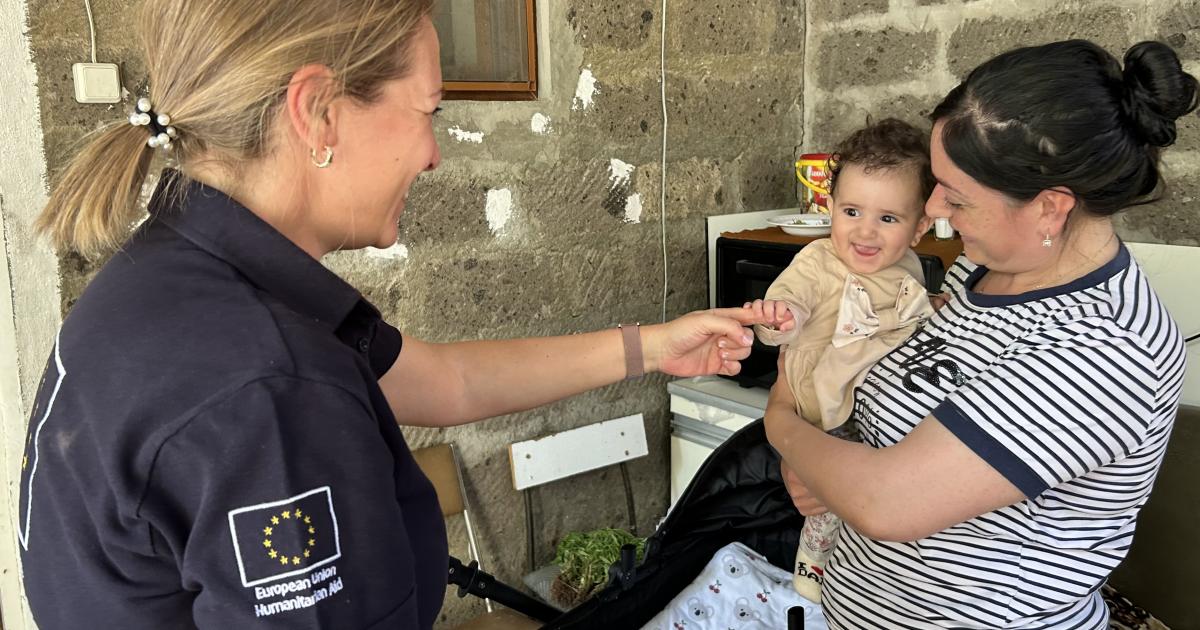
Daily survival remains a challenge for refugees’ families. Mariam, a mother of 4, has been displaced several times since 2020. She recently settled near Yerevan, hoping to find better job opportunities.
Through an EU-funded programme implemented by the World Food Programme (WFP), Mariam received a bank card that allows her to purchase essential food items from local shops. This assistance is targeted at the most vulnerable households, ensuring that 4,000 families like Mariam’s can meet their basic needs.
‘I was so happy and relieved to receive this assistance,’ Mariam says. ‘It means I can cover my family’s basic food needs – flour, oil, vegetables, and fruit.’
I will cook healthy meals again, including my children’s favorite, buckwheat porridge (a paste made from Sarasin very popular in Armenia),’ she says.
2. By providing psychosocial support to the most vulnerable
Behind every forced displacement, there are invisible wounds, such as fear, loss and separation. Children, in particular, often suffer deep trauma. Aware of these needs, the EU funds psychosocial support programmes in several regions of the country.
14,000 adults and children are receiving tailored support delivered by EU’s partner, the Armenian Red Cross Society. This includes:
individual or group counselling sessionsdiscussion and mutual support groupsrecreational activitiessafe spaces for children
Margarita, aged 48, now lives with her family in the Armavir region. 2 of her children were killed during the war. When she started the group sessions, she was unable to speak. ‘It’s hard to talk in front of strangers when you don’t know if you can trust them, but after each session, I felt more at ease’, she confides. ‘Being surrounded by others who had gone through the same upheaval helped me open up and trust people again.’
Meanwhile, children can take part in “Smiley Clubs”, safe spaces where they can play, learn, and express themselves freely. Games, drawing, and group activities help children process their emotions and fears. Then, they begin to rebuild a sense of security and confidence. ‘I really like the kindness and care of the volunteers’, says 12-year-old Mane with a smile.
With EU support, 6 clubs across Armenia have been renovated, equipped and staffed to welcome children like Mane. Nearly 300 of them now attend the sessions several times a week, regaining emotional balance and rebuilding their social skills.
‘The EU’s action is based on a simple yet fundamental principle: every displaced person deserves protection, support, and assistance to help them rebuild their lives,’ says Volodymyr Kuzka, Programme Officer at the EU Humanitarian Aid Office in Armenia.
‘The EU stands by the displaced families, helping transform survival into a foundation for a new beginning.’