
Sign up for the Slatest to get the most insightful analysis, criticism, and advice out there, delivered to your inbox daily.
The past weekend flashed a neon sign, more garishly beaming than ever, that U.S. foreign policy is in shambles, a three-ring circus of tripping clowns and miscued jugglers.
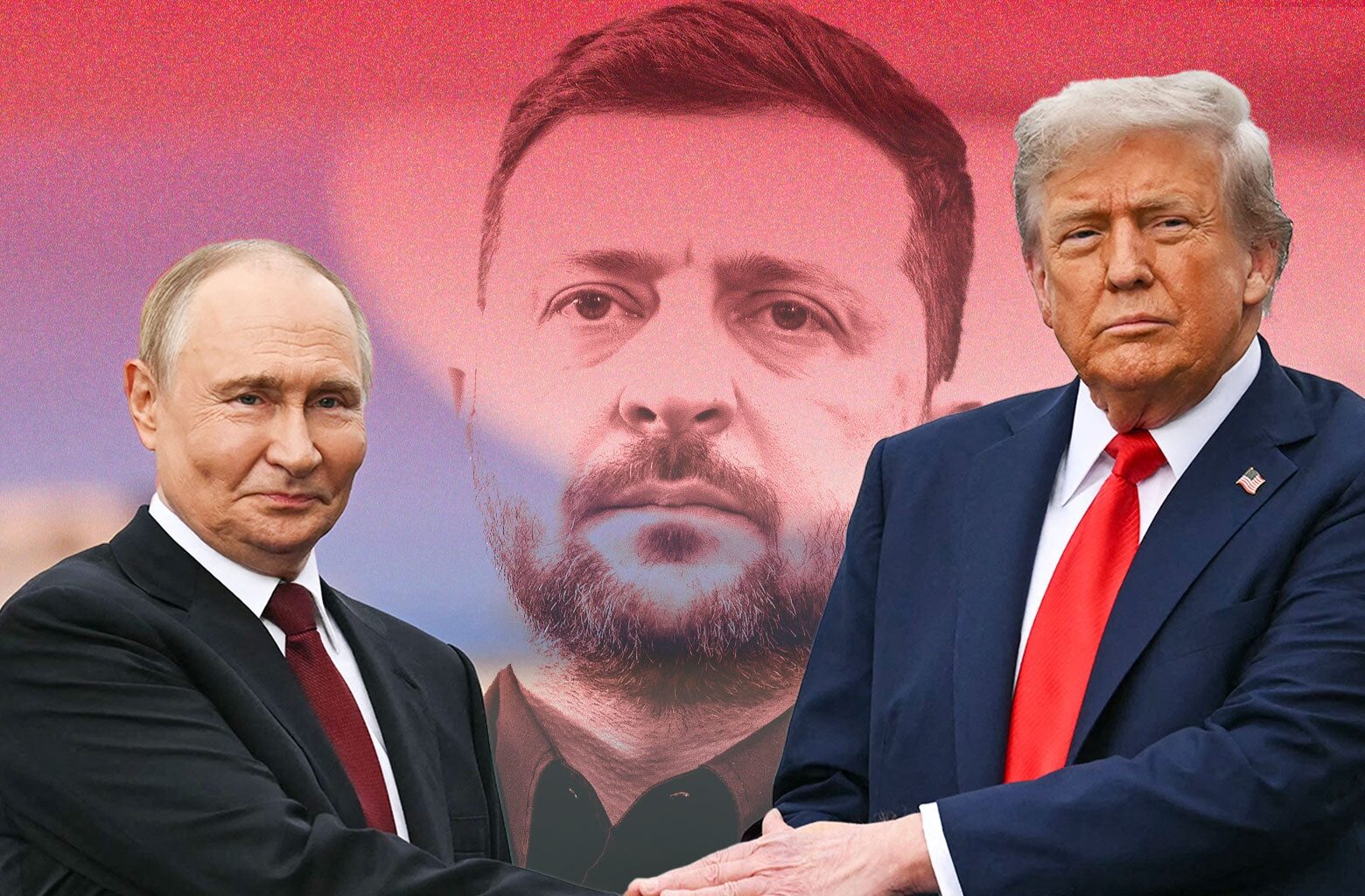
The Trump administration’s 28-point Russia–Ukraine “peace” plan, which Axios published on Thursday, set the stage for this chaos. First, President Donald Trump embraced it, giving Ukrainian President Volodymyr Zelensky till Thanksgiving to accept its terms or continue to “fight his little heart out.”
Then, Marco Rubio, who’d been cut out of the plan’s drafting despite the two hats he wears as secretary of state and national security adviser, told American lawmakers attending a security conference in Halifax, Nova Scotia, that the plan was not a U.S. proposal (a report he later denied) and, in any case, amounted to a Kremlin wish list—an appraisal matching that of many analysts (including mine). At that point, Trump said the document was not his final offer (making hash of his earlier deadline). On Sunday and Monday, European diplomats—who were surprised by the document and alarmed by its contents—met in Geneva with U.S. and Ukrainian counterparts to hammer out a rewrite that looks more like a reasonable proposal than a Ukrainian white flag. Once they present it, Russian President Vladimir Putin—who said on Monday that he liked the original draft just fine—will no doubt reject it.
And so, the war will rage on, and America’s role as leader of the free world—or as a general guarantor of security worth taking at all seriously—will take another hit, perhaps the most severe of Trump’s presidency, which is saying a lot.
The 28-point plan would have required Ukraine to give up Crimea and the eastern provinces of Luhansk and Donetsk, to withdraw its troops from those and all other areas of fighting, to reduce the size of its army by one-third, to change its constitution to forbid ever joining NATO, and to stop firing missiles into Russia (with no reciprocal restraint from Russia). Meanwhile, the deal would have let Russia rejoin the G8 (from which it had been banished after invading Ukraine) and be reintegrated into the world economy (with all sanctions dropped). It also noted that Russia would be “expected not to invade neighboring countries” but did not explicitly bar it from doing so.
Even Neville Chamberlain would likely have turned away from this sort of deal. Certainly he would have stopped short of declaring it “peace in our time.”
How did this come about? How did even Trump associate himself with such a blatantly one-sided offer?
According to a tick-tock in Monday’s issue of Axios (which was also the first publication to reveal the existence of the deal late last week), the plan was hatched on Oct. 22 by Trump’s all-purpose envoy, Steve Witkoff, and his son-in-law, Jared Kushner, as they flew from the Middle East to Miami. Toasting themselves over the Gaza ceasefire, they turned to discussing how they might apply its methods—described as “draft a plan, put it on the table, and figure out how to get both sides to agree”—to the war in Ukraine.
Three days later, the pair met with Putin’s envoy, Kirill Dmitriev, the head of Russia’s sovereign wealth fund, for dinner in Miami, and again for several hours a day later, to hammer out the plan.
They did this without formally consulting any experienced diplomats (if there are any left inside the hollowed-out State Department) or anyone who might know something about Russia or Ukraine. These talks went on for a month, completely in a back channel. According to Bloomberg News, Rubio didn’t know about the talks until nearly their endpoint; even Trump, though giving Witkoff and Kushner a green light, wasn’t kept informed of their progress. Last month, when Trump canceled a planned U.S.–Russia summit in Belgrade after realizing that Putin had no interest in peace, so there’d be nothing to talk about, he didn’t know that his envoy and son-in-law kept working on the 28-point plan with Dmitriev.
This brand of chaos is what happens when you have a president who A) acts entirely on impulse, B) thinks he doesn’t need expert advisers, and C) has no functional National Security Council—the group of top officials from all the relevant agencies who, in a normal administration, meet routinely to discuss key issues, assess competing ideas, and hammer out consensus policies.
This is what happens, in other words, when Donald Trump runs U.S. foreign policy on his own whims and instincts, choosing to ignore established routines and institutions as the disposed detritus of the “deep state.”
After the 28-point plan became public last week, many in Congress, Europe, and not least Ukraine panicked, seeing it—along with Trump’s Thanksgiving deadline—as the latest, most aggressively detailed attempt to push Ukraine into surrender.
This impression was bolstered when Trump ordered Secretary of the Army Dan Driscoll, who was already in Ukraine to discuss technical military matters, to expand his itinerary to a diplomatic dimension by hard-pressuring Zelensky into accepting the deal.
Fred Kaplan
What the People Behind Trump’s Ukraine Peace Plan Fail to Understand About the War
Read More
Driscoll, it turns out, is a friend of Vice President J.D. Vance, who seems to be heading up the anti-Ukraine/pro-Russia faction in the White House. (You may recall it was Vance who started berating Zelensky for insufficient gratitude during the ill-fated Oval Office meeting with Trump last February, which led to Trump yelling at his visitor, canceling their lunch, and calling off long-standing plans to sign an economic agreement.)
It was at this point that Rubio—who has background in foreign affairs and has done more than anyone else to nudge Trump in a more pro-Ukraine stance—called a few congressmen, who were at the Halifax Security Conference (which the Pentagon was boycotting) to tell them that this 28-point plan was not a done deal and amounted to a Moscow wish list. Rubio then denied saying this, but the congressmen, some of them Republicans, reaffirmed that he did say it. (This story also, incidentally, gives us a glimpse into what seems a huge rivalry—for the control of foreign policy and perhaps for the successorship to Trump’s presidency—between Vance and Rubio.)
Rubio swiftly assented to calls from European leaders to meet in Geneva to review the Witkoff-Kushner-Dmitriev plan. In advance of the meeting, a team of British, French, and German diplomats wrote their own version of a peace plan. The larger group in Geneva reworked the 28 points into a 19-point document, which they then submitted (or will soon submit) to their heads of state.
The revision’s contents have not yet been revealed. But two things are likely: first, that the more flagrant anti-Ukraine positions have been deleted; and second, that Putin will reject the new document.
It Turns Out Lindsey Halligan Was a Fake Prosecutor All Along
This Content is Available for Slate Plus members only
We Just Learned the Most Embarrassing Omission From Todd Blanche’s Interview With an Epstein Accomplice
Once in a while, Trump experiences a flash of insight about Putin’s true nature. In April, after the Russian leader waved away a peace overture and launched a massive drone-and-missile strike against Ukrainian cities, Trump said, “It makes me think that maybe he doesn’t want to stop the war, he’s just tapping me along.”
The flash lasted for just a moment. Putin soon came knocking again, with promises of flowers and candy, and Trump let him in. Hopes were dashed once again in the Alaska summit, where Putin brushed aside demands for a ceasefire, and again in the buildup to the meeting in Belgrade, which Trump canceled rather than reexperience the disappointment.
That brings us to the present, and the impending sour dénouement to the calamitous 28 points. Will Trump ever learn that diplomacy is not for amateurs? Will he realize, for more than a few moments, that Putin isn’t interested in diplomacy anyway? And if he does, what will he do about it? That is the big question, for Ukraine, for the West, and for the rest of us.

Sign up for Slate’s evening newsletter.