
Strengthening Skills in El Salvador
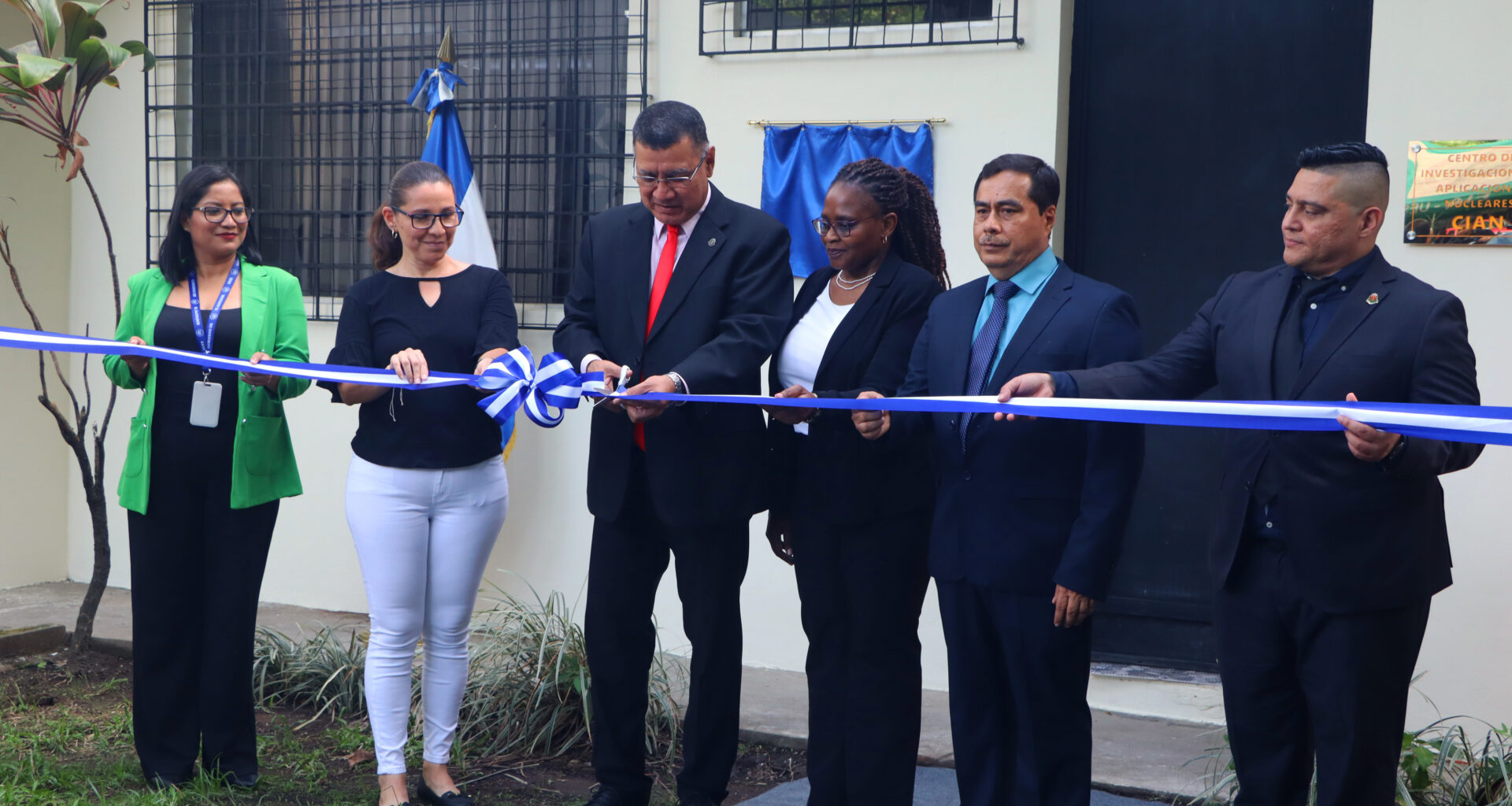
Through its technical cooperation and human health programmes, the IAEA provided El Salvador with expert guidance and equipment, including beam irradiators, ionization chambers and other essential technology. The new laboratory reflects eight years of collaboration to build national capacity for radiation safety.
“With IAEA support, El Salvador’s Centre for Nuclear Research and Applications is building a self-sufficient system for radiation safety. The new laboratory is a key step, ensuring accurate dose measurement for patient safety and regulatory control,” said Scarlett Ihlau, IAEA Programme Management Officer for El Salvador. “The IAEA will continue to support capacity building at the laboratory to ensure sustainability.”
To strengthen local expertise, the IAEA arranged a short-term fellowship for Salvadorian staff to train at Mexico’s National Institute for Nuclear Research — one of 88 member laboratories in the IAEA and World Health Organization (WHO) Network of SSDLs.
The University of El Salvador marked the laboratory’s opening in May 2025 with a congress on ionizing radiation metrology and its impact on medicine and industry.
“As El Salvador continues to build on its experience, its new laboratory can consider joining the IAEA/WHO Network of SSDLs,” said Zakithi Msimang, IAEA SSDL officer and medical radiation physicist. “This would provide access to a global pool of knowledge and allow the country to contribute to international dosimetry efforts by sharing best practices, exchanging experiences and providing calibrations to others within their country and beyond.”