
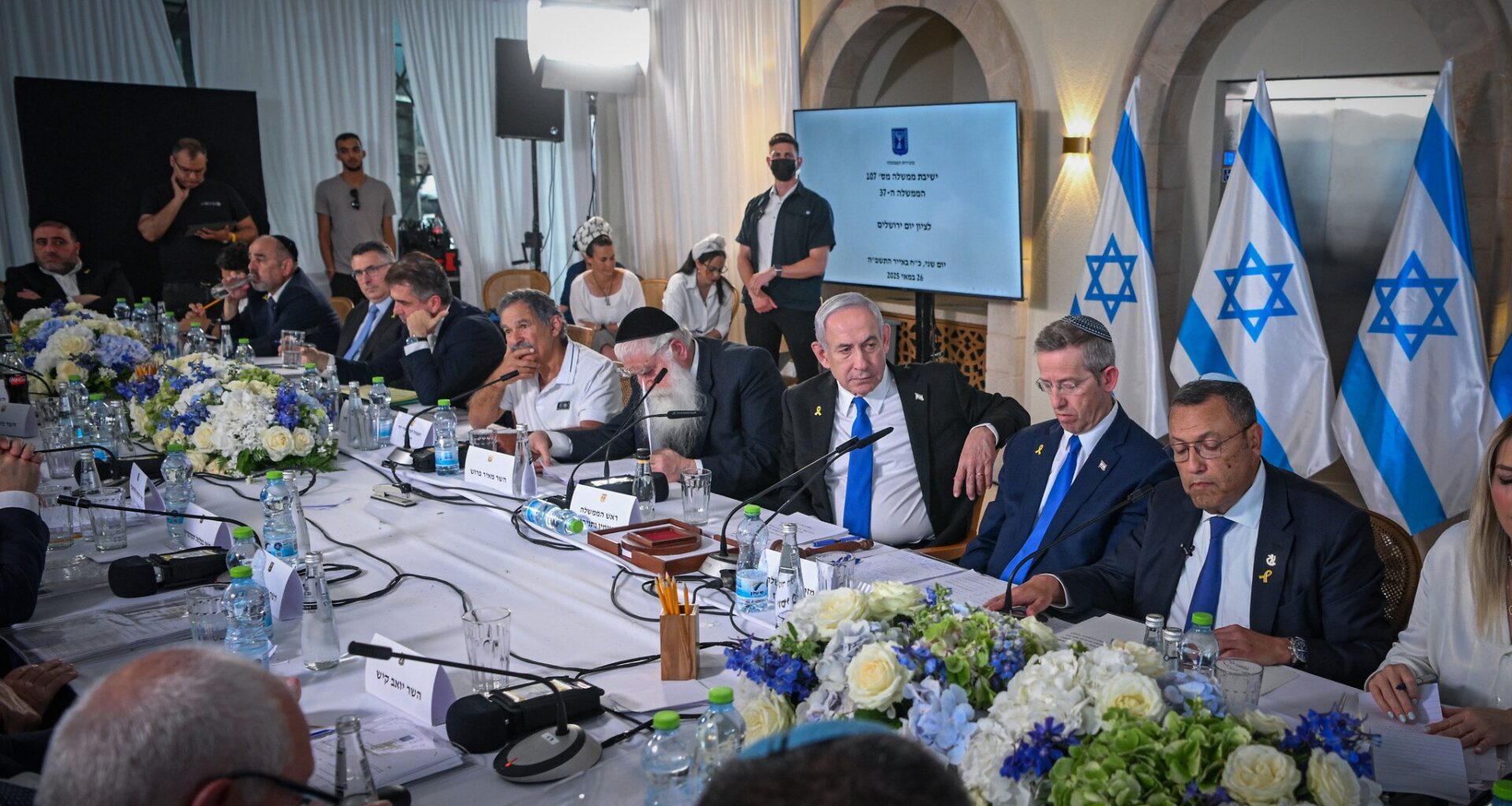
On Monday evening, the Knesset voted to ratify the cabinet’s nominations of Tourism Minister Haim Katz and Justice Minister Yariv Levin to head five ministries left leaderless when the ultra-Orthodox lawmakers who had helmed them withdrew from the government this summer.
The appointments of the two Likud loyalists were an attempt to fill a management vacuum that experts argue has significantly harmed the government’s ability to function for the country’s citizens for months on end.
With the vote, the Labor, Religious Services and Jerusalem Affairs ministries are now officially led by Levin, while Katz now holds the Health portfolio as well as Welfare and Social Affairs. Both lawmakers had initially been appointed as acting heads of the ministries, though the temporary arrangements ended weeks ago.
In addition, Prime Minister Benjamin Netanyahu, who is under indictment and therefore precluded from holding ministries other than the premiership, was temporarily granted a number of powers usually assigned to the interior minister — a position that will remain unfilled.
While Levin and Katz’s appointments significantly reduce the number of ministries without full-time ministers, it is unclear how the pair will be able to effectively deal with the responsibilities of multiple concurrent portfolios, which have been without dedicated leaders since July. The appointment of loyalists with existing portfolios rather than the promotion of lawmakers who can dedicate themselves to a ministry full-time is usually a sign that a government intends to merely keep the seat warm until the expected return of the original minister.
Get The Times of Israel’s Daily Edition
by email and never miss our top stories
By signing up, you agree to the terms
The fact that Israel has gone so long without a full-time health minister “is a disgrace, especially now that we have a major national outbreak of measles and when there are so many challenges following the war,” Prof. Nadav Davidovitch, chairman of the Taub Center’s Health Policy Program, told The Times of Israel.
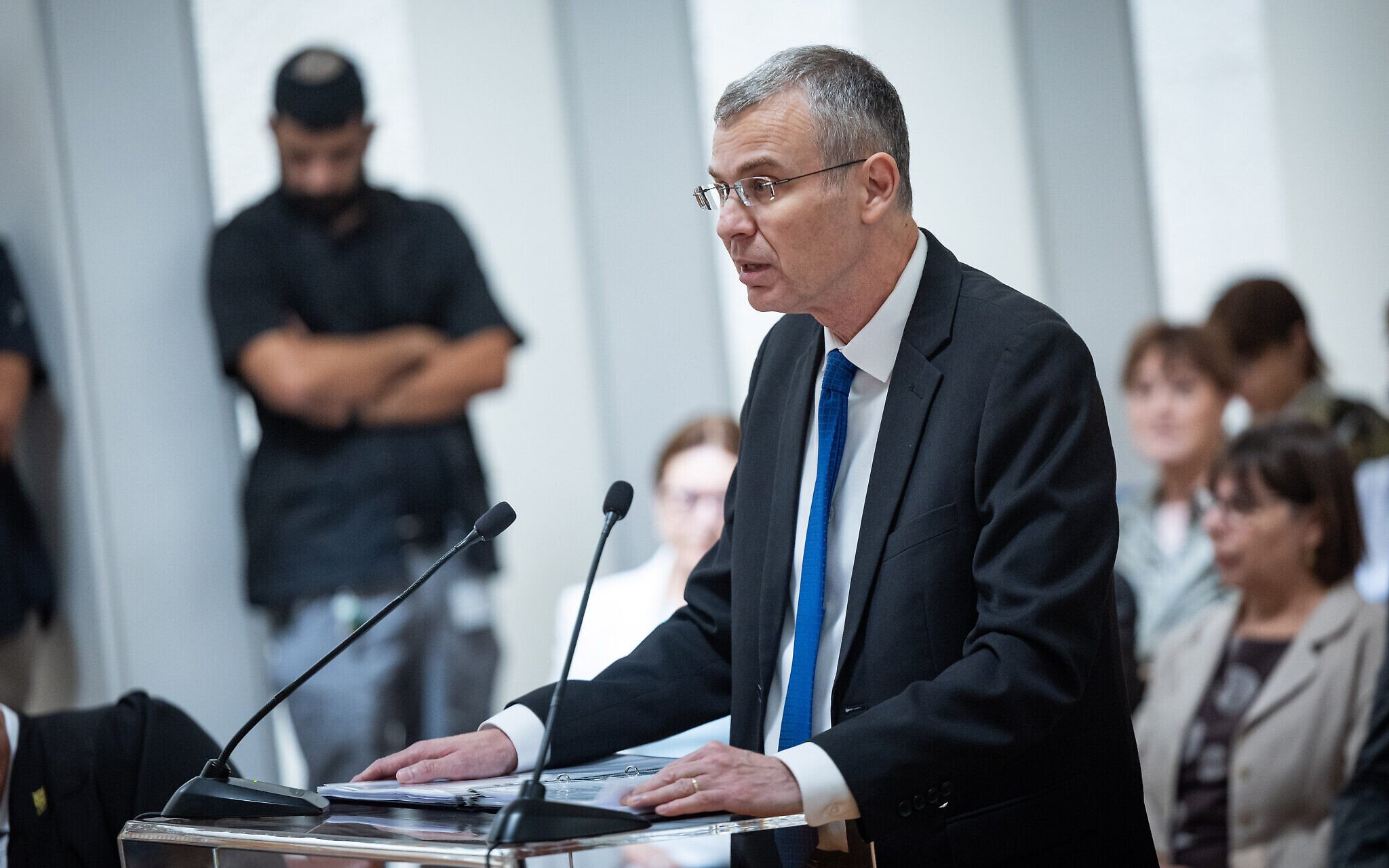
Justice Minister Yariv Levin speaks a ceremony for outgoing Supreme Court Justice Yosef Elron at the Supreme Court in Jerusalem, September 18, 2025. (Yonatan Sindel/Flash90)
Ministers often lack expertise in their assigned portfolio, but their position as members of the government gives them a singular role in setting policy, advancing initiatives, securing budgets, handling inter-ministerial matters, and appointing officials to key roles.
“In order to protect health, you need political will, you need political power, you need a strong minister that is experienced, that can make long-term plans, that can protect health needs, and fight the battle for health in terms of budget and everything,” said Hagai Levine, who heads the Israeli Association of Public Health Physicians.
The ministries were left leaderless in July when the United Torah Judaism and Shas parties both bolted the government to protest its failure to advance a core demand of theirs: legislation on military draft exemptions for yeshiva students.
The cabinet initially voted to appoint Levin to temporarily take over the Interior, Religious Affairs and Labor ministries in an acting capacity to replace Shas lawmakers who had been at their helm.
The welfare and health ministries were transferred to Katz, who was already serving as interim housing minister after UTJ head Yitzhak Goldknopf earlier resigned from the post prior to his party leaving the government.
The temporary appointments ended after three months, leaving multiple ministries truly leaderless by early November, though Katz was appointed as permanent housing minister in September.
The cabinet has also yet to appoint a replacement for Strategic Affairs Minister Ron Dermer, who stepped down from his post this month, in a development unrelated to the ultra-Orthodox defections.
Levin and Katz’s initial tenure as interim ministers raised serious concerns regarding their ability to handle the day-to-day responsibilities of multiple distinct portfolios dealing with critical issues ranging from rebuilding Israel’s battered postwar healthcare system to ensuring that benefits reach those harmed by the two-year-long military conflict in Gaza.
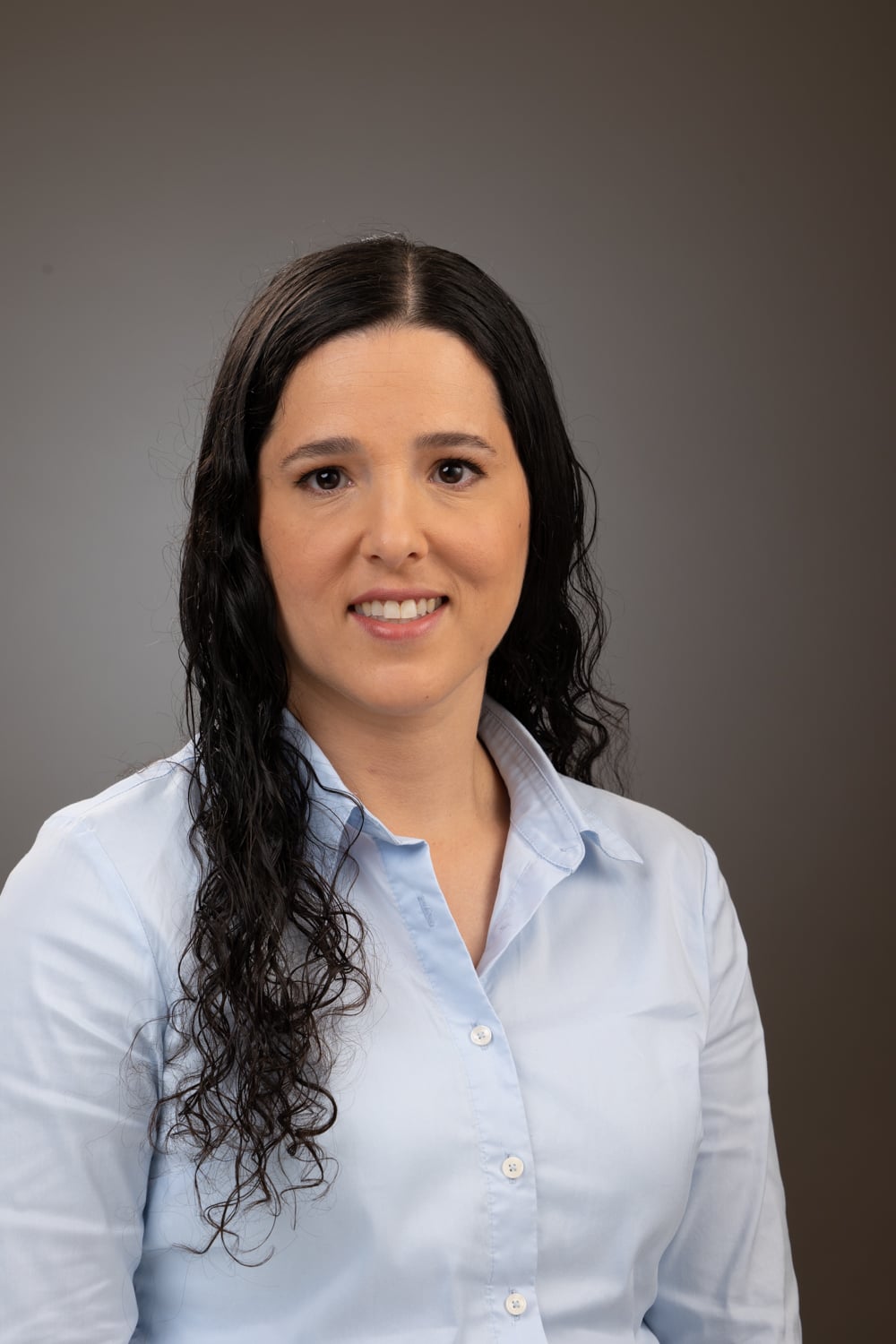
Israel Democracy Institute researcher Dr. Moran Kandelshtein-Haina. (Oded Antman)
These concerns have only been magnified by the government’s Monday decision, which effectively ensures the posts will remain in the hands of lawmakers much of whose attention is focused elsewhere, unless the ultra-Orthodox parties return and reclaim their seats.
“I think that it’s pretty obvious that they won’t be able to do their jobs,” Moran Kandelshtein-Haina, a researcher at the Israel Democracy Institute, told The Times of Israel. “Maybe they can handle all of the urgent, pressing matters like issuing regulations or making appointments, but there’s serious doubt whether they can give the full attention that should be devoted to each and every ministry. In fact, you can say that the opposite is true. There is no chance.”
She noted Hebrew media reports that said Shas will continue to retain unofficial control of its former ministries through back channels.
Monday evening’s vote was “yet another indication of a sick and rotten government,” charged an opposition source to The Times of Israel. “Israel is currently governed by a non-functioning minority government that is harming the country’s citizens, all in order to rubberstamp a pathetic deal with the ultra-Orthodox parties. The citizens of Israel deserve better.”
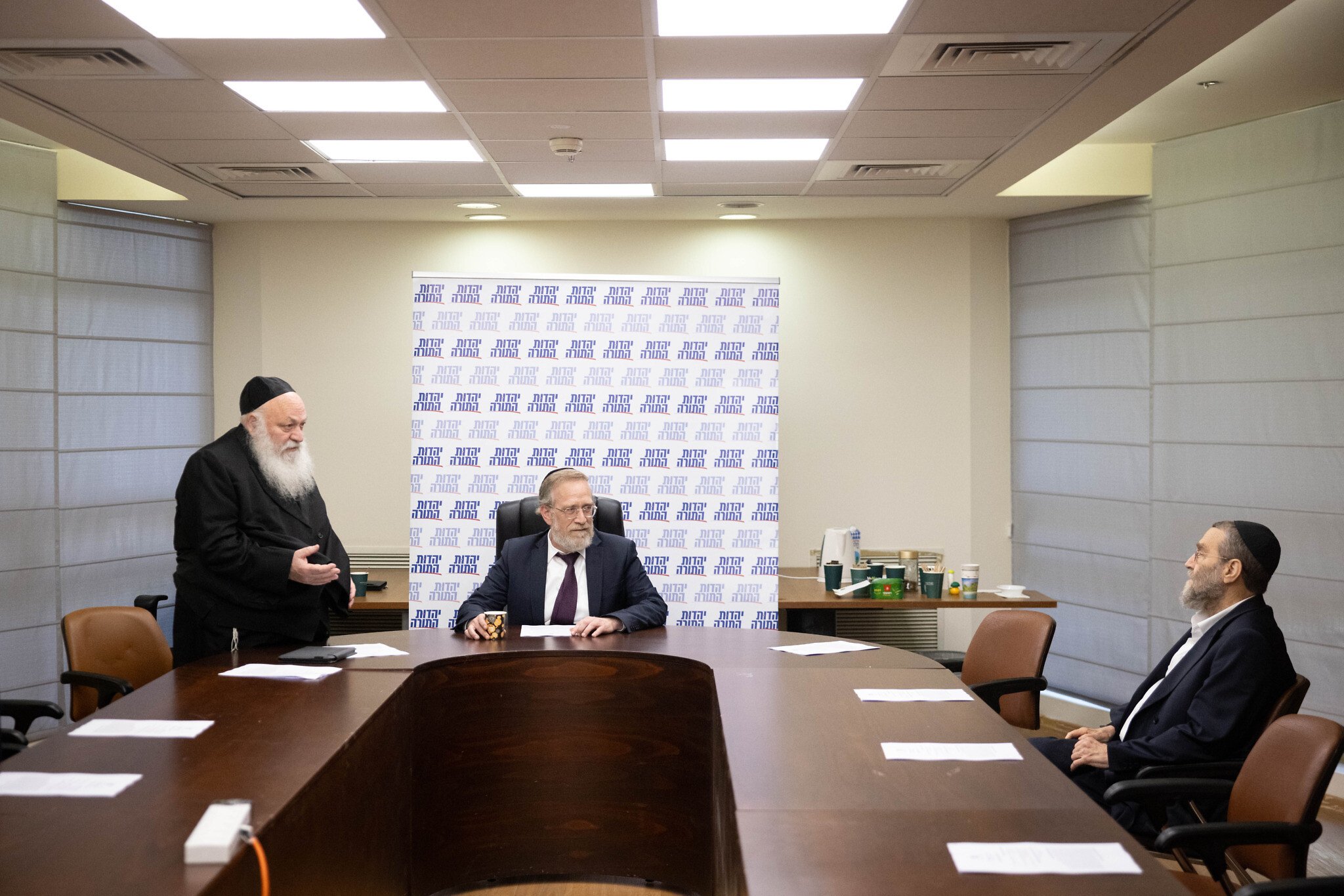
Lawmakers from the United Torah Judaism party take part in a faction meeting in the Knesset, June 9, 2025. (Chaim Goldberg/Flash90)
As justice minister, Levin is involved in a high-profile effort to overhaul the judiciary and weaken the Attorney General’s Office, as well as now heading a ministerial panel that will determine the mandate of the government’s controversial commission of inquiry into failures surrounding the Hamas onslaught of October 7, 2023.
A spokesman for Levin did not respond when asked how he would handle his newly increased workload, telling The Times of Israel on Sunday only that the minister will remain in charge of these additional files “until Shas returns to the government.” After the vote, Levin was seen chatting in the plenum with former labor minister Yoav Ben-Tzur of Shas.
Katz’s office declined to offer an on-record response to questions about how he would juggle the responsibilities.
A source close to the minister said on condition of anonymity that Katz is a “very professional” minister who “relies heavily on the professional teams in the ministries, trusts them, and gives them strong backing” but “ultimately leads the work.”

Haim Katz (right), then serving as national security minister, and Chief of Police Daniel Levi visit the Western Wall in Jerusalem’s Old City, during the first Friday prayers of the Muslim holy month of Ramadan on March 7, 2025. (Chaim Goldberg/Flash90)
The source noted that Katz had previously served as welfare minister and chairman of the Knesset Labor and Welfare and Health committees.
“This is not a world that is foreign to him,” the source said. “He knows how to manage his time and divide his attention between what is essential and what is secondary. But there are professional bodies here who do their work, and he is here to give them support, to lead, and to guide according to the ministry’s needs and the issues currently on the agenda.”
No minister, no policy, no money
Even more concerning than the lack of a dedicated minister was the situation in the past several weeks, during which no government figure was in charge, said Kandelshtein-Haina.
The lack of ministers hobbled the work of government in several ways, from interfering in the functioning of inter-ministerial discussions to holding up legislation and preventing the formulation of policy, she said.
Although the ministries continue to operate on an administrative level, “the job of the political leadership is to set general policy,” and without a minister, “there is nobody who can set clear policy and direction and advance new initiatives,” Kandelshtein-Haina charged, calling it “a major problem.”

Health Ministry director-general Moshe Bar Siman Tov (right) and health minister Uriel Busso confer at meeting announcing the 2024 health basket recommendations, February 22, 2024. (Courtesy of Health Ministry)
In addition, the appointment of officials, such as the head of the Food Security Council, was delayed and the Ministerial Committee for Legislation has been unable to approve certain bills without the input of the relevant ministers, Kandelshtein-Haina continued. Ministries without ministers are also unable to formulate regulations in accordance with the powers granted to them by Knesset legislation.
“So sometimes we can talk about solutions but I think there are still bad consequences for the day-to-day reality in each ministry,” the expert said.
The vacuum has led the government to assign itself and Netanyahu several powers usually granted to ministers.
Last week, the cabinet voted to transfer to Netanyahu jurisdiction over several issues reserved for the interior and labor ministers while abrogating for itself the authority to choose members of the public committee for expanding health service subsidies for 2026.
Ministers also play an important role in making sure their ministries’ programs are funded and money is allocated to meet citizens’ needs in their area of work, a task that can include employing powerful political levers unavailable to bureaucrats. For portfolios like education, welfare or health, not having an invested minister can seriously harm budgeting for those services.
As Finance Minister Bezalel Smotrich advances the 2026 state budget, “no one is working at the political level on how to promote better health for Israelis, which is clearly missing in the financial program,” argued Levine, who also leads the pressure group White Coats – Healthcare Professionals for Democracy.
“Regarding the planned budget, there is no political power to ensure that the health needs are met. Israeli health after the war requires a national plan for recovery from the mental and physical injuries related to the war,” he said.
He called the fact that there was no full-time, dedicated minister “a joke.”
“There was no one really in charge,” he said.

Prof. Hagai Levine, a leader of the White Coats – Healthcare Professionals for Democracy and head of the Israeli Association of Public Health Physicians, at the ‘Tomorrow Conference,’ Haifa Conference Center, northern Israel, September 6, 2024. (Sue Surkes/Times of Israel)
Last month, the government approved Katz’s proposal to boost funding for mental health services by NIS 541 million ($164 million), as part of a Health Ministry initiative to upgrade Israel’s mental-health system.
Davidovitch agreed with Levine, telling The Times of Israel that “having no minister or an acting minister” is a “disgrace” and a potential sign that the government does not believe that health or other issues being handled by Levin and Katz’s new ministries are a high priority.
“We need the budget, but even more important, the managerial attention and prioritization,” he said.