
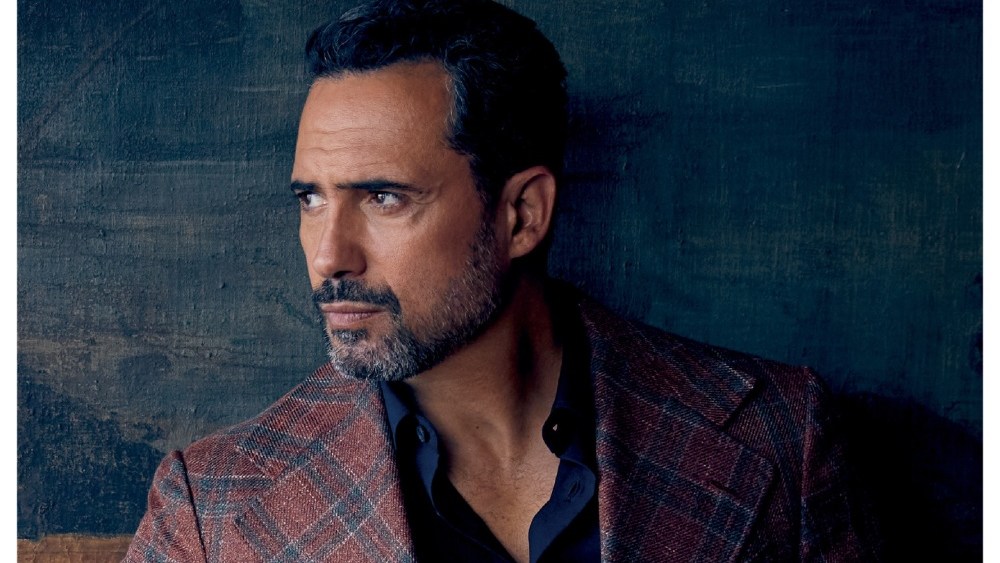
London-based Tunisian actor, director and former professional soccer player Dhafer L’Abidine has long been active in the film and TV spheres of both the Arab and Western worlds. He played the lead in hit Tunisian TV series “Maktoub” and has also made appearances in Alfonso Cuaron’s “Children of Men,” “Sex and the City 2” and Damien Chazelle’s French Netflix series “The Eddy.”
L’Abidine is currently at the inaugural Doha Film Festival in Qatar, serving as a competition jury member and attending as part of the cast of Annemarie Jacir’s historical drama “Palestine 36,” which is playing as a special screening. In “Palestine 36,” L’Abidine plays a wealthy newspaper publisher named Amir who is navigating escalating tensions caused by increasing Jewish immigration to Palestine in 1936 — tensions that sparked a massive revolt against British colonial rule there.
Below, L’Abidine speaks to Variety about being in Doha and also his latest directorial effort, “Sophia” —following “Ghodwa” and “To My Son” — in which he stars opposite Jessica Brown Findlay (“Downton Abbey”).
Tell me about being part of “Palestine 36” which, of course, is such a timely film.
I feel privileged about being invited to be part it because it’s a Palestinian film and I’m Tunisian. It’s a story that affected the future of of Palestine, but also the whole region. Not a lot of people know about what happened between 1936 and 1939. You don’t learn about it in history classes in the West, or even in the Middle East. We all watch the news and we see what’s happening, but a film like “Palestine 36” creates empathy, a connection with what happened there. That’s the importance of this film.
What do you think “Palestine 36” audiences are going to connect with the most?
Some people might think that this was a land without people. No. The Palestinians have lived there for thousands of years. This was a flourishing land where you had agriculture and rich people. In the film you see the Palestinian upper class, the middle class, the working class and a massive culture that’s been there for centuries. So it’s only the beginning of that story. But I think it’s crucial that this film got made.
Talk to me about begin selected to be part of the inaugural Doha Film Festival jury.
When the Doha/Tribeca film festival started years ago, it was such a breath of fresh air for the region, because it brought quality and big ambition. Then it ended. And now I’m so happy and proud that a [full-fledged Doha festival] is back again. The truth is that the Doha Film Institute (DFI) continued even when its initial festival ended. They have been behind so many films that have gone to festivals and backed new talent. But now I think the DFI also needs this platform and I’m really proud to be part it and to be one of the first members of this first edition’s jury. As for Qatar, it has been a voice of peace and has been trying to resolve so many types of conflicts happening around the world — of course the Palestine issue, but also Ukraine. Similarly, I think the festival’s ambition is also a human one. It’s not just about business. It’s about understanding understand each other and opening channels, culturally, where we can understand each other between East and West.
Speaking of which, you’ve just directed your third feature, titled “Sophia,” that aims to do just that. Am I right?
Yes. “Sophia” is a story that happens between the U.K. and Tunisia. It’s about an estranged mixed couple who have a small daughter and haven’t seen each other for over six years. When Emily, the wife, arrives in Tunisia to introduce the daughter to her father, the girl disappears. The story starts there. It’s a thriller. I wanted something that anyone could relate to, whether they’re Western or Middle Eastern, Christian or Muslim. I wanted a human story. I’ve tried to make a thriller with a heart. There are other things you discover about them, about their cultures, about misunderstanding, about prejudice. I think it was so important for me, in my third film, to actually cross that bridge. Myself being married to British woman, I’ve lived in the U.K. for many years. I thought there are so many untold stories that could make us sit in a cinema and all feel connected the same way.
This interview has been edited and condensed for clarity.