
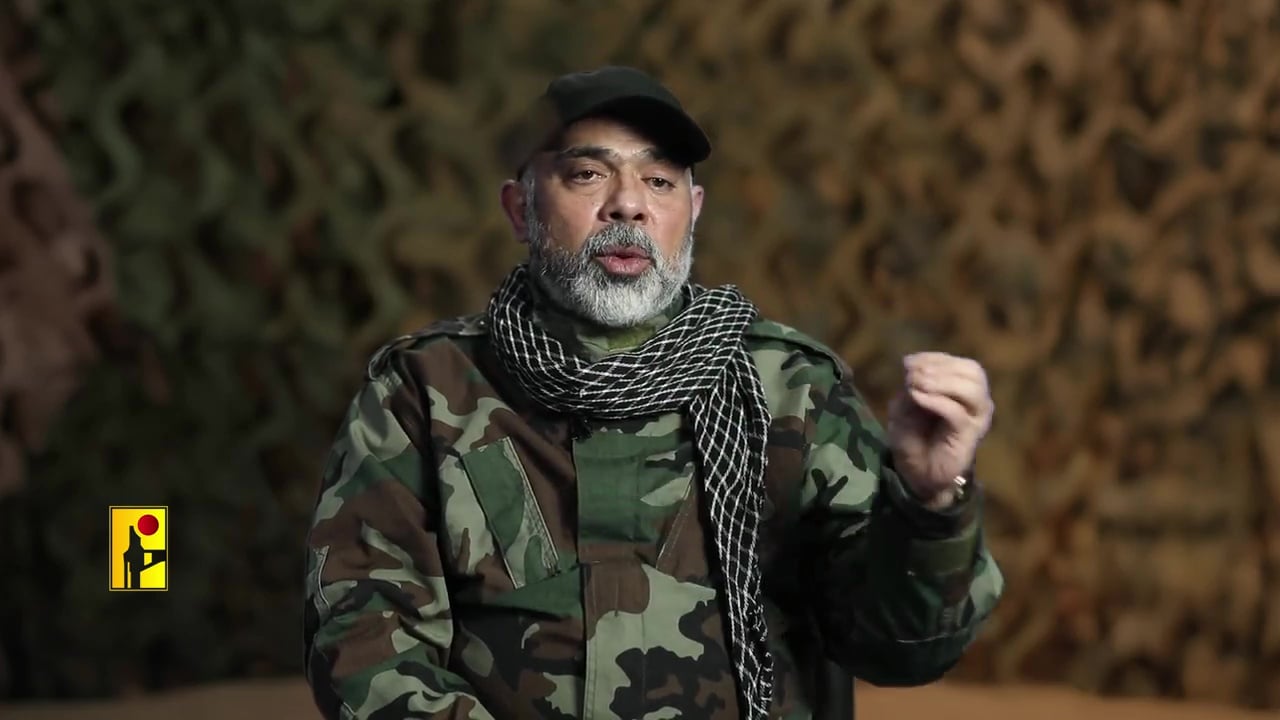
Haytham Ali Tabatabai, the Hezbollah military chief of staff killed by Israel on Sunday in a Beirut airstrike, was a key part of the terror group’s efforts to rebuild following the devastating losses it suffered in its recent war with the Jewish state.
The Wall Street Journal reported Monday, echoing Israel, that Tabatabai focused on building back Hezbollah’s forces in southern Lebanon, despite the ceasefire reached in November 2024, which demanded the terror group withdraw to north of the Litani River, and required the national government of Lebanon to disarm Hezbollah.
The agreement ended a year of fighting that started when Hezbollah attacked Israel on October 8, 2023.
After the war, Tabatabai helped Hezbollah largely replace its thousands of lost fighters, ensure commanders trained capable replacements lest they be killed, and transition to fighting in smaller cells to better survive another war with Israel, according to the Journal.
Tabatabai’s killing came after a year of near-daily Israeli airstrikes in southern Lebanon, accompanied by accusations that Hezbollah is operating in the area contrary to the terms of the truce.
Get The Times of Israel’s Daily Edition
by email and never miss our top stories
By signing up, you agree to the terms
That agreement allows Israel to strike immediate threats, though longer-term issues must be directed to an international committee. The truce also ordered Israel to withdraw its troops from southern Lebanon entirely, though Israel has kept forces at five strategic locations.
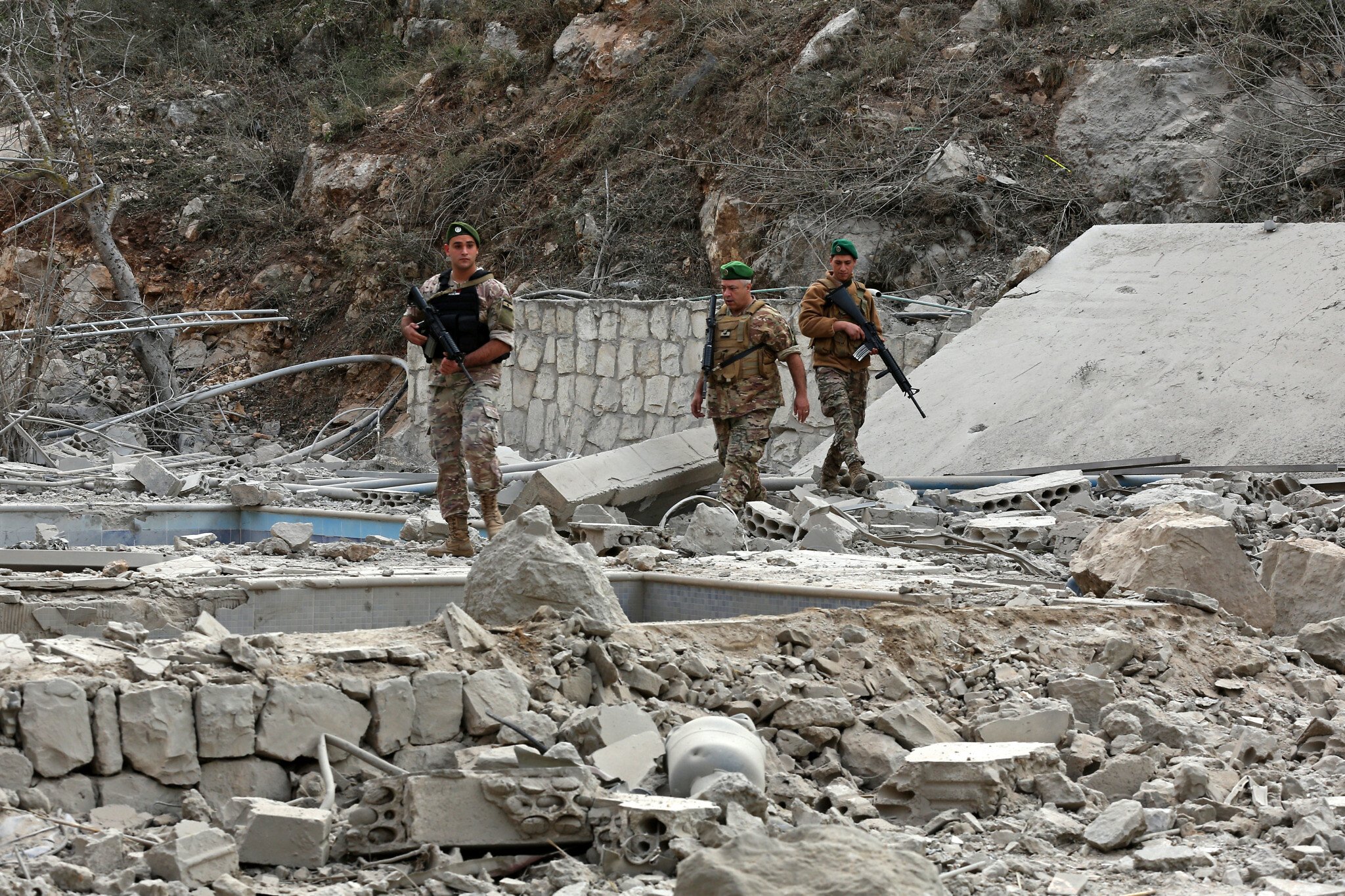
Lebanese army soldiers inspect the site of an Israeli airstrike in the southern Lebanese village of Tair Felsay near the Litani River, early on November 13, 2025. (MAHMOUD ZAYYAT / AFP)
After the ceasefire was reached, the Lebanese government drew up plans to completely disarm Hezbollah, despite the terror group’s repeated declarations that it would not give up its weapons.
The Lebanese Armed Forces has over the last year successfully removed nearly 10,000 rockets, almost 400 missiles and over 205,000 unexploded ordnance fragments, according to the US Central Command.
However, the army has only done so in southern Lebanon, and it is unclear whether it will succeed in expanding the disarmament project further north. Meanwhile, Israel has warned that the terror group is working to rearm.
Previous WSJ reporting has said that Arab and Israeli intelligence indicates the terror group is restocking rockets, anti-tank missiles and artillery.
Before the strike and in its wake, Israeli officials vowed to respond to ceasefire violations and to take all actions necessary to prevent Hezbollah from restoring its ability to threaten Israel.
Tabatabai led Hezbollah forces in Syria, helped train Houthis
According to the report, Tabatabai, 57 when he was killed, joined Hezbollah as a minor, when the group began, and helped to form what became the elite Radwan force, which is tasked with preparations to invade Israel.
He rose through Hezbollah’s ranks and went on to lead its forces in Syria, where they supported the since-deposed president Bashar al-Assad in the country’s long civil war. In January 2015, Tabatabai survived an Israeli strike in southern Syria.
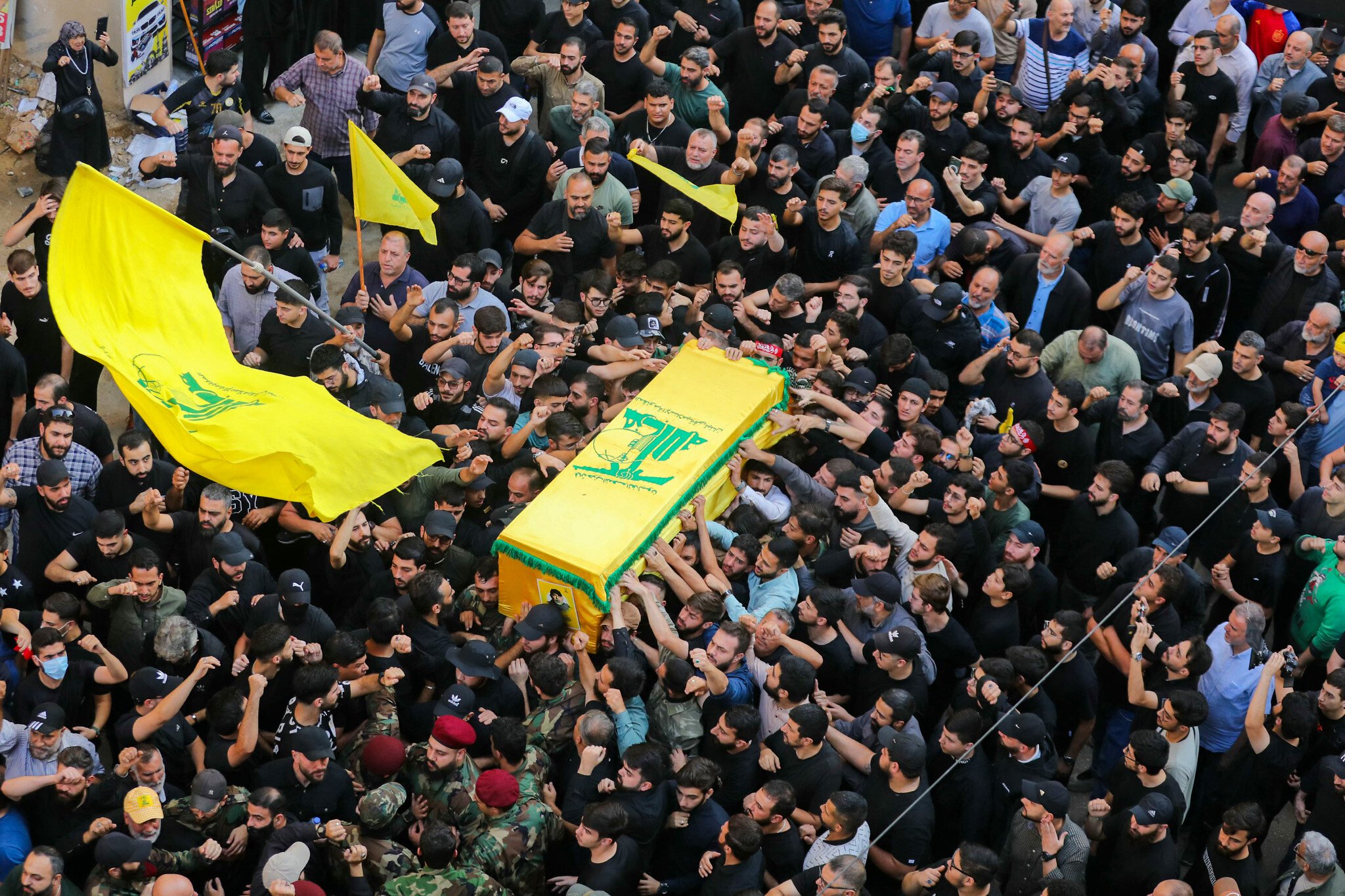
Mourners carry the coffin of top Hezbollah military chief Haytham Ali Tabatabai during his funeral in Beirut’s southern suburbs on November 24, 2025. (Ibrahim AMRO / AFP)
Later, he was dispatched to Yemen to help train the Houthi rebel group, another Iran-backed militia that has fought with Israel since the Hamas terror group’s October 7 attack on Israel triggered a multi-front war.
Hamas, Hezbollah said to boost cooperation of late
Separately, the Kan public broadcaster reported Tuesday that Hezbollah and Hamas have substantially boosted their military cooperation in Lebanon.
Hamas has allocated entire companies, made up of hundreds of fighters, to potentially join the Radwan force, according to the report.
Hamas has managed to strengthen its presence in Lebanon, as Israel focused most of its strikes on Hezbollah during the war.
Lately, it has focused on raising funds and increasing production of rockets on Lebanese territory, mainly in the cities of Tyre, Sidon and Tripoli.
Last week, Israel carried out a relatively rare strike against what it said was a Hamas training center in Sidon.
Watch DocuNation Season 3: The Heart of Israel
when you join the ToI Community
In this season of DocuNation, you can stream six outstanding Israeli documentaries with English subtitles and then join a live online discussion with the filmmakers. The selected films show Israel beyond the conflict: a place of storytellers and musicians, of dreamers, makers, and communities rooted in meaning and trust.
When you watch DocuNation, you’re also supporting Israeli creators at a time when it’s increasingly difficult for them to share their work globally.
To learn more about DocuNation: The Heart of Israel, click here.
Support ToI and get DocuNation
Support ToI and get DocuNation
Already a member? Sign in to stop seeing this
You appreciate our journalism

You clearly find our careful reporting valuable, in a time when facts are often distorted and news coverage often lacks context.
Your support is essential to continue our work. We want to continue delivering the professional journalism you value, even as the demands on our newsroom have grown dramatically since October 7.
So today, please consider joining our reader support group, The Times of Israel Community. For as little as $6 a month you’ll become our partners while enjoying The Times of Israel AD-FREE, as well as accessing exclusive content available only to Times of Israel Community members.
Thank you,
David Horovitz, Founding Editor of The Times of Israel