As the weather warms, beaches across the country are serving an important purpose as thousands of animals come ashore to breed. Aussies play an important role in this process, and are being urged to heed warnings after several people were recently spotted on a popular beach doing the opposite.
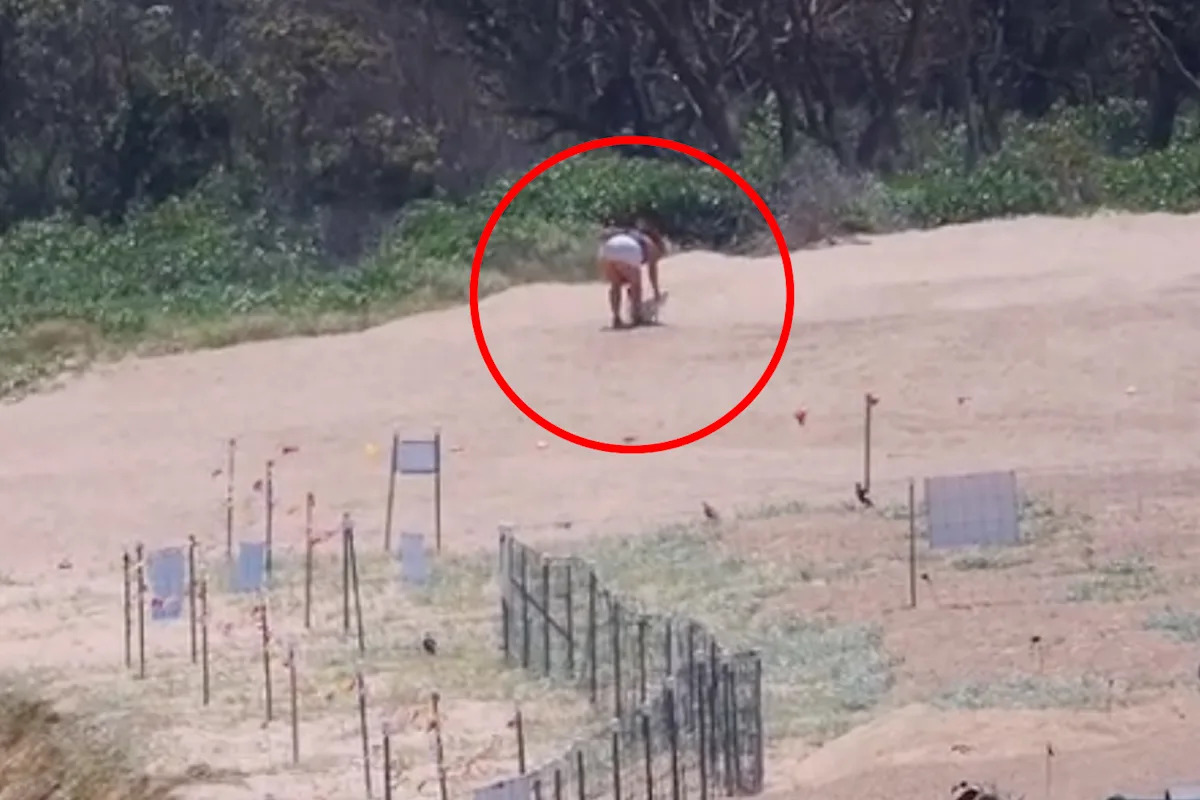
Fencing at Karagi Point at The Entrance Beach on the Central Coast of NSW has been cordoned off for several months to allow endangered little terns to nest.
However, on Friday, despite the fencing and signage, a dog was spotted on the beach and was even taken off-leash, allowed to roam around the area, dangerously close to where the native birds are fighting to survive.
The incident was caught on camera by a member of Marine Wildlife Rescue Central Coast, a team of volunteers who are working tirelessly to help preserve the nesting site.
“People think we’re having a go at dogs but we’re not. There’s a reason why they can’t be there… They’re disruptive,” Cathy Gilmore told Yahoo News.
“Wildlife can smell dogs. It’s threatening. That’s why dogs aren’t allowed at national parks,” she said.
Have you witnessed bad behaviour on the beach? Contact newsroomau@yahoonews.com
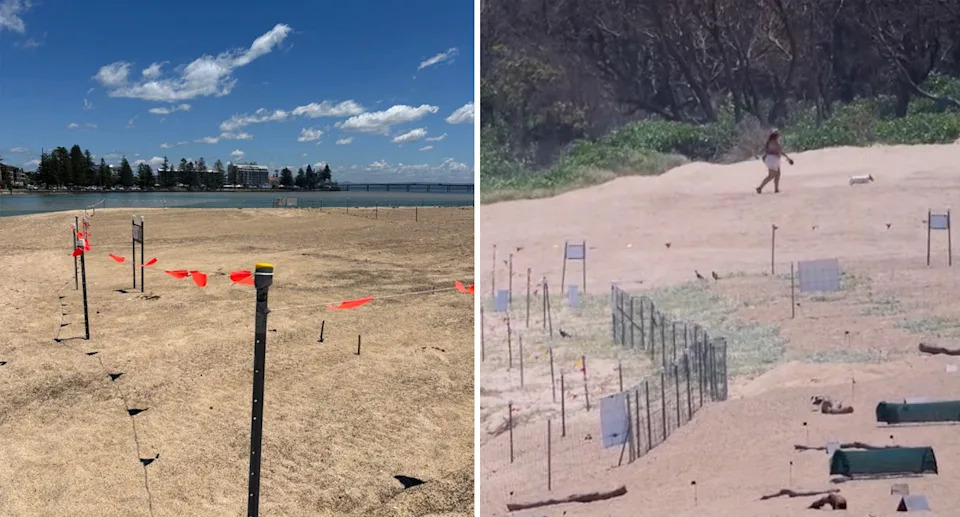
There are nesting sites for little terns at The Entrance. Source: Facebook/Marine Wildlife Rescue Central Coast & Cathy Gilmore
It’s not the first time beachgoers have ignored the ‘no dogs allowed’ signs on the beach, with the rescuers admitting they feel like broken records, continuously asking people to give the birds plenty of space.
Littering incidents have also been challenging, with Cathy explaining one bird had to be euthanised after it got tangled up in a fishing line.
“The species is endangered because of humans. We’re trying to reverse that… Just stay away. It’s not hard,” she said.
Little terns are a protected species, and dogs are prohibited from Karagi Point at any time. Disturbance to endangered species or their nests can result in a maximum penalty of $333,000 and even two years of imprisonment, under the Biodiversity Conservation Act 2016.
Central Coast Council told Yahoo News that fines apply; however, “obviously a person with their dog on the beach needs to be seen by a ranger to be fined”.
“Rangers will be patrolling the beach more regularly during the little tern nesting season,” a council spokesperson said.
Volunteers hand-make fencing for endangered birds on the beach
Volunteers from Marine Wildlife Rescue Central Coast and environment charity Take 3 spent an entire week making the fencing at The Entrance beach from $16 worth of fabric off-cuts from Ikea, after plastic fencing had previously been used.
With microplastics posing a significant environmental threat to seabirds, the team decided to band together to make an alternative.
“The flagging is really important to fence off that area so people don’t walk over where they nest in the sand,” Giselle Coates from Take 3 told Yahoo previously.
“We want to keep the public away because they can squash the eggs… They’re hard to see. They camouflage into the sand.”
The flagging helps to cordon off the area and give the birds the best chance at a successful hatching process, with only 3,000 mature birds believed to now exist in Australia, according to the Department of Climate Change, Energy, the Environment and Water.
Due to the dwindling population, there continues to be extensive efforts to try to help little terns along the beach.
Last October, authorities introduced a large fence to keep beachgoers, as well as dogs and foxes, away from the nesting site, and a record-breaking 228 fledglings were recorded in the season.
Do you have a story tip? Email: newsroomau@yahoonews.com.
You can also follow us on Facebook, Instagram, TikTok, Twitter and YouTube.