
Air travel in India was disrupted on Tuesday as authorities conducted regulatory checks following a volcanic eruption in Ethiopia.
The eruption sent a large ash cloud into the air that has drifted across several countries
A number of flights in India were cancelled due to the eruption
The ash cloud is expected to clear Indian skies later Tuesday
What do we know about the Ethiopian volcanic eruption?
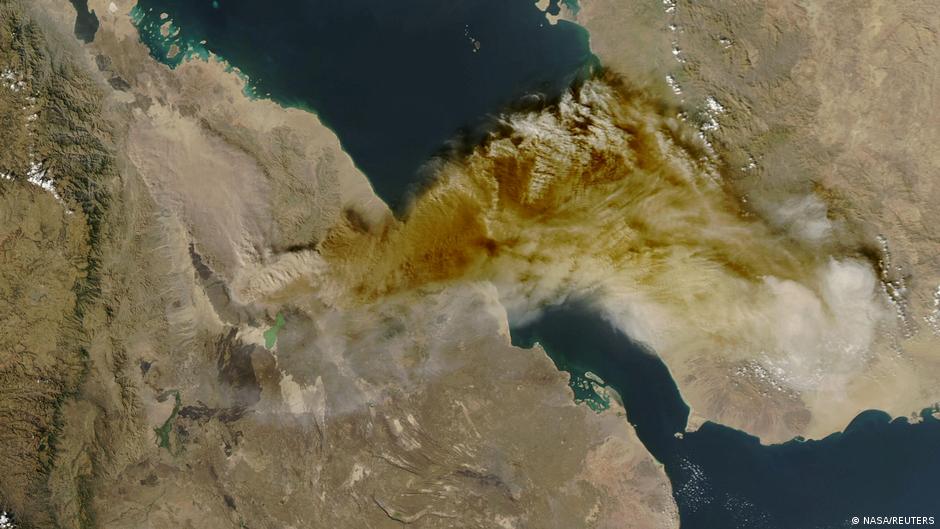
The long-dormant Hayli Gubb volcano, located in the Afar region near the Eritrean border, erupted for the first time in nearly 12,000 years on Sunday.
Social media and satellite photos captured the activity, as the volcano billowed a blast of ash up to 14 kilometers (9 miles) into the air, according to media reports.
The ash cloud then drifted across the Red Sea toward Yemen, Oman, Pakistan and northern India, the Volcanic Ash Advisory Center said.
On Tuesday, the regional government in Afar posted on Facebook that people with asthma and bronchitis should take precautions as necessary to avoid health complications.
A local administrator, Mohammed Seid, earlier told the Associated Press that there were no casualties, but the eruption could have economic implications for the local farming community.
How was travel impacted in India?
India’s flag carrier, Air India, said it canceled 11 flights on Monday and Tuesday to carry out precautionary checks on aircraft that had flown over some locations after the eruption, following a directive to airlines from India’s aviation regulator.
Budget carrier Akasa said it had scrapped scheduled flights to Middle East destinations such as Jeddah, Kuwait and Abu Dhabi scheduled during the two days.
On Tuesday, the ash had covered parts of Pakistan and northern India, according to tracking website Flightradar24, after crossing Yemen and Oman.
The ash cloud is moving towards China and is expected to clear Indian skies by 1400 GMT Tuesday, the India Meteorological Department said in a statement.
Edited by: Sean Sinico