
African negotiators secured significant gains on just transition, including recognition of clean cooking and energy poverty, marking the first time these priorities entered the formal United Nations climate negotiations.Adaptation finance advanced but remains insufficient, with wealthy nations pledging to triple support only by 2035, despite Africa’s urgent needs and widespread concern over loan-heavy climate finance.Forest conservation gained new momentum, with broad backing for a global deforestation roadmap and fresh funding initiatives like Brazil’s Tropical Forever Forest Fund (TFFF) and the Canopy Trust targeting Amazon and Congo Basin conservation.Failure to agree on a fossil fuel phaseout puts Africa at heightened risk, with scientists warning that if carbon emissions continue to rise unabated, they could fuel more extreme events like droughts and floods, destabilize food systems, and displace people.
See All Key Ideas
The climate talks at COP30 in Belém, Brazil, closed with gains for Africa, Indigenous peoples and adaptation finance — but the summit’s failure to agree on a global fossil fuel phase-out overshadowed those wins.
This year’s climate summit produced several notable outcomes. Countries agreed to establish a Just Transition Mechanism, launched a roadmap to triple adaptation finance by 2035, and formally adopted the Belém Adaptation Indicators, a set of benchmarks to track global progress on adaptation goals.
African negotiators hailed the stronger language on just transition pathways. A just energy transition means shifting from fossil fuels to clean energy in a way that is fair, inclusive and rights-based so that climate action reduces inequality rather than deepening it.
Read our special on just energy transition in Africa
In an exclusive interview with Mongabay, Richard Muyungi, chair of the African Group of Negotiators (AGN), called the agreement on a new Just Transition Mechanism “historic.” “It is the first time the term ‘clean cooking’ has been accepted in just transition negotiations,” he said. “We also secured recognition that addressing energy poverty — affecting 680 million Africans — is a prerequisite for development.”
Sierra Leone’s minister of environment and climate change, Jiwoh Abdulai, echoed Muyungi’s assessment in prepared remarks shared with Mongabay, noting that while the COP did not deliver everything Africa sought, “progress was made on just transition, technology, and capacity.”
One of Africa’s most symbolic gains on climate justice came with little fanfare. After more than a decade of pushing for its inclusion, an agenda item recognizing the ‘special needs and special circumstances of Africa’ was placed on COP30’s agenda, suggesting the continent could attract greater climate finance and technological support in the future.
Eugene Nforngwa of the Pan-African Climate Justice Alliance (PACJA) called it “one of the continent’s most meaningful wins in years,” saying it shifts the debate from whether Africa deserves special consideration to how that recognition can be translated into action. He noted that this breakthrough sets the stage for COP32 in Addis Ababa, Ethiopia, in 2027.
Civil society organizations offered a more cautious assessment of the negotiations’ outcomes. In a statement, the Global Campaign to Demand Climate Justice, a network representing frontline communities (including in Africa, Asia and Latin America), welcomed the “hard-fought gains” achieved through sustained pressure from grassroots movements. The creation of a Just Transition Mechanism within the United Nations Framework Convention on Climate Change (UNFCCC) offers hope for a “just, equitable, and ecological” pathway that leaves no one behind, the statement said.
The network criticized the Global North, especially the EU and the U.K., for blocking efforts to pressure richer countries to deliver on their commitments to climate finance for developing countries.
Under the presidency of Donald Trump, the U.S., one of the biggest greenhouse gas emitters, turned its back on the landmark Paris Climate Agreement reached in 2015 and did not participate in the talks.
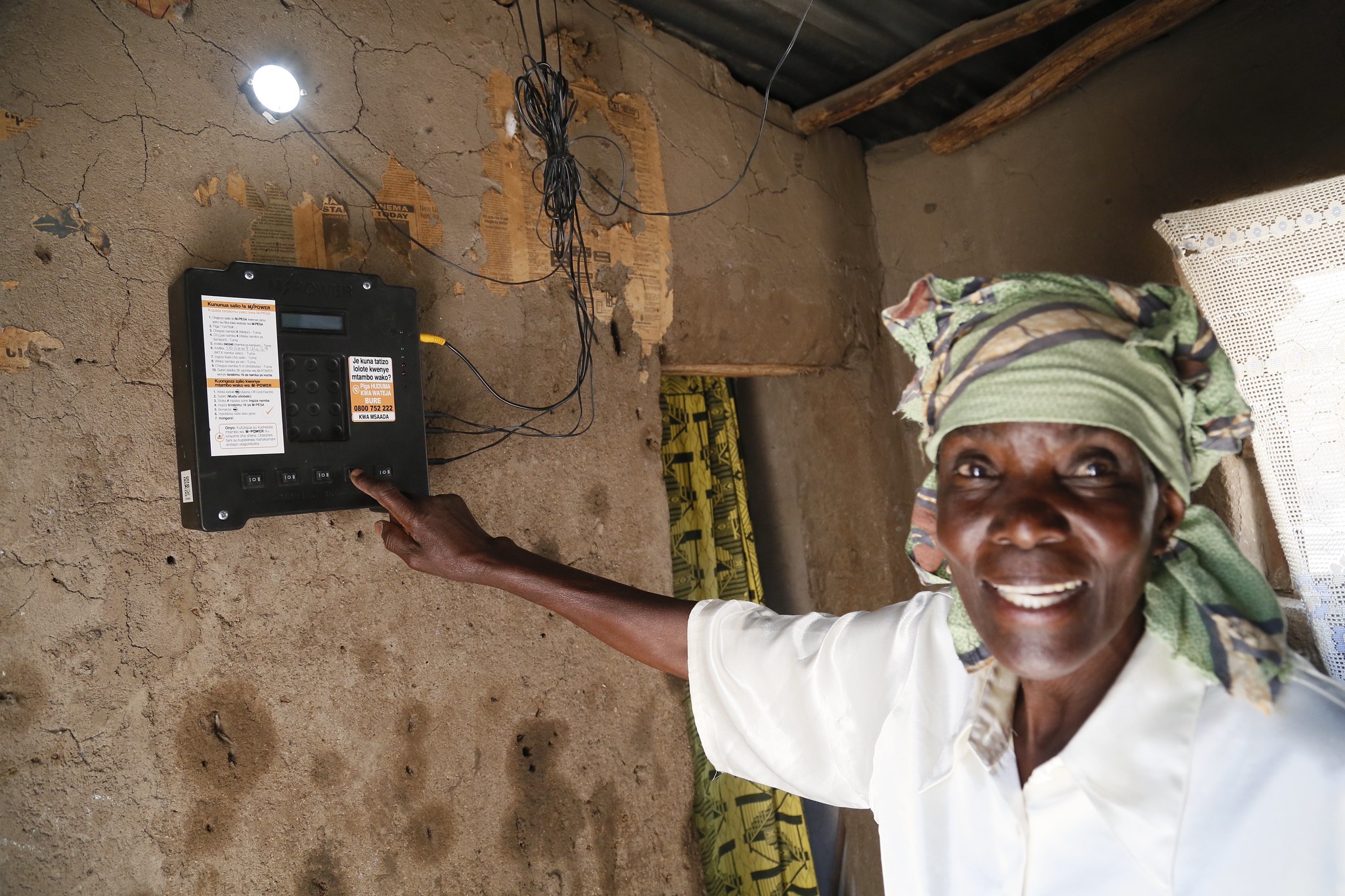 Elizabeth Mukwimba from Tanzania shows the solar-powered lighting and electricity in her house. Image by Russell Watkins/Department for International Development via Flickr (CC BY 2.0).
Adaptation finance: Progress, but delayed
Adaptation finance — consistently underfunded despite being a top priority for developing countries — saw progress, but not at the pace many hoped. The United Nations Adaptation Gap shows that developing countries’ needs are 10-18 times higher than current financial flows, while wealthy nations continue to favor mitigation funding.
At COP30, developed countries committed to tripling adaptation finance. While some observers hailed it as progress, others pointed out that the funding is expected to materialize only by 2035.
“The recognition of the need to boost adaptation finance is welcome,” said Elizabeth Nsimadala, president of the Eastern African Farmers Federation (EAFF), in a statement obtained by Mongabay. “But the Global Goal on Adaptation does nothing to ensure this funding reaches smallholders and sustainable agriculture.”
Many African negotiators said they worry about the dominance of loans in climate finance. “Loans worsen the situations of countries already over-indebted,” Muyungi told Mongabay. “If adaptation finance depends on loans, adaptation is impossible.”
The COP30 agreements also provided guidance to major climate funds — including the Green Climate Fund, the Global Environment Facility, and the Adaptation Fund — to increase support for national adaptation plans. An additional $135 million was pledged to the Adaptation Fund during the negotiations.
Africa’s climate finance needs are now measured in the trillions, according to reports. Africa faces increasingly severe heatwaves, floods, and droughts that can lead to food system collapses and climate change-linked displacement, the Intergovernmental Panel on Climate Change (IPCC) warned in its Sixth Assessment Report published in 2023. The IPCC produces the science that informs the U.N. climate negotiations and helps shape climate policies worldwide.
At the COP29 in Baku, Azerbaijan, countries agreed to scale up global climate finance to at least $1.3 trillion per year by 2035, in recognition of the growing climate finance needs.
Nearly 200 parties (a majority of which are nation-states) have ratified the UNFCCC.
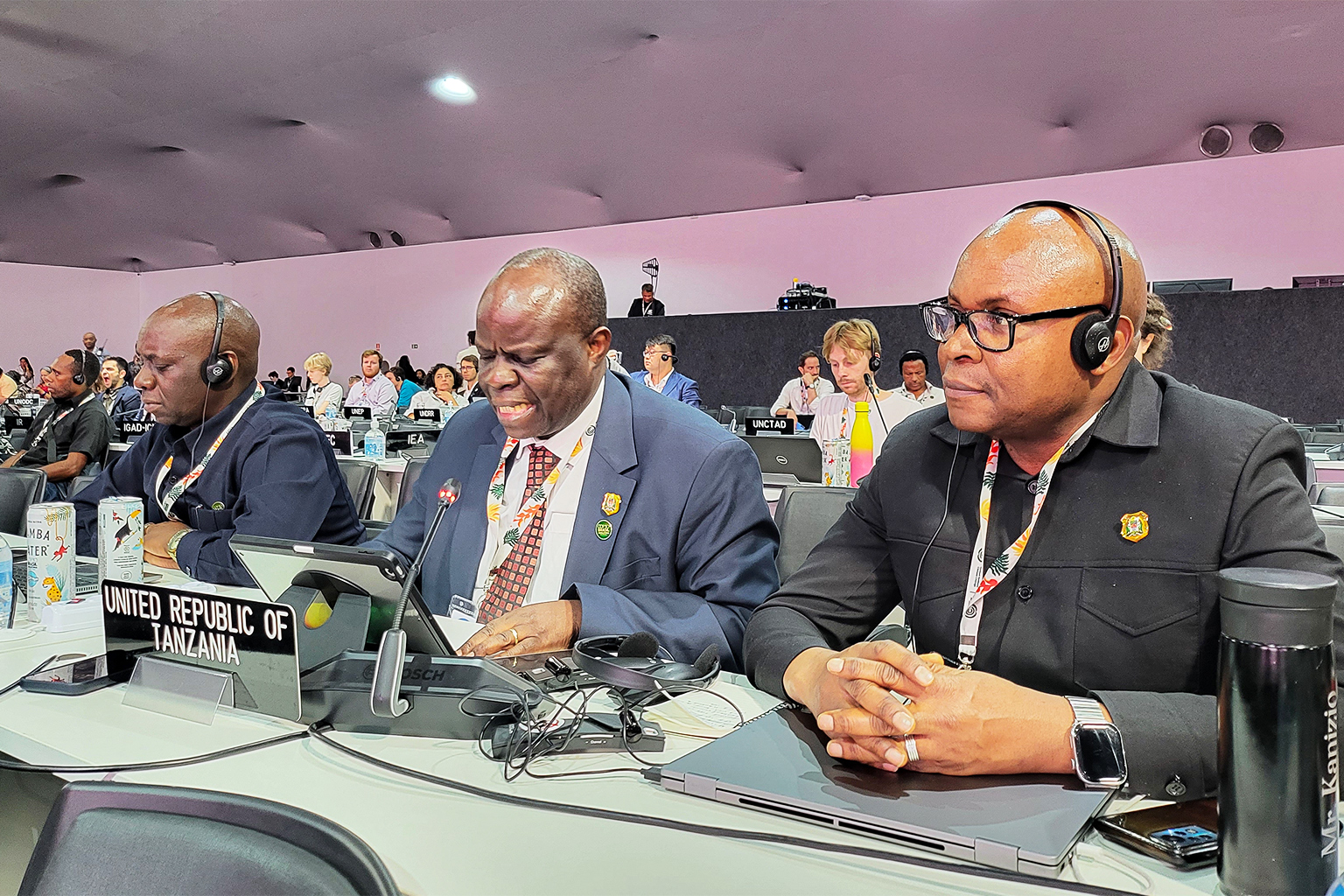 Richard Muyungi (middle), chair of the African Group of Negotiators (AGN), called the agreement on the new Just Transition Mechanism “historic.” Image courtesy of Hector Sann’do Nammangue.
Hope for the Congo Basin
Forests were expected to feature prominently, with Brazil, home to the Amazon rainforest, hosting the COP. More than 90 countries — including the Congo Basin states — backed a call for a global deforestation roadmap centered on finance, monitoring and recognition of Indigenous land rights.
Brazil highlighted significant progress in reducing Amazon deforestation and the Tropical Forest Forever Facility (TFFF), backed by $6.7 billion in commitments, including $3 billion from Norway. Experts applauded the fund’s innovation but cautioned that efforts to curb global forest loss remain “off track.”
Norway’s climate minister, Andreas Bjelland Eriksen, told Mongabay that both the TFFF and the newly launched Canopy Trust — which aims to mobilize $1 billion for the Congo Basin — could help close finance gaps by de-risking investments and supporting local value chains. But he stressed that African climate finance needs are “in the trillions.”
Some parties to the U.N. climate negotiations, particularly those from heavily indebted countries, criticized market-based and private-sector solutions. They argued that such approaches can increase their debt burden and often fail to deliver results depending on the market, economic and political contexts in which they operate. This is why many of them prefer grant-based support, they said.
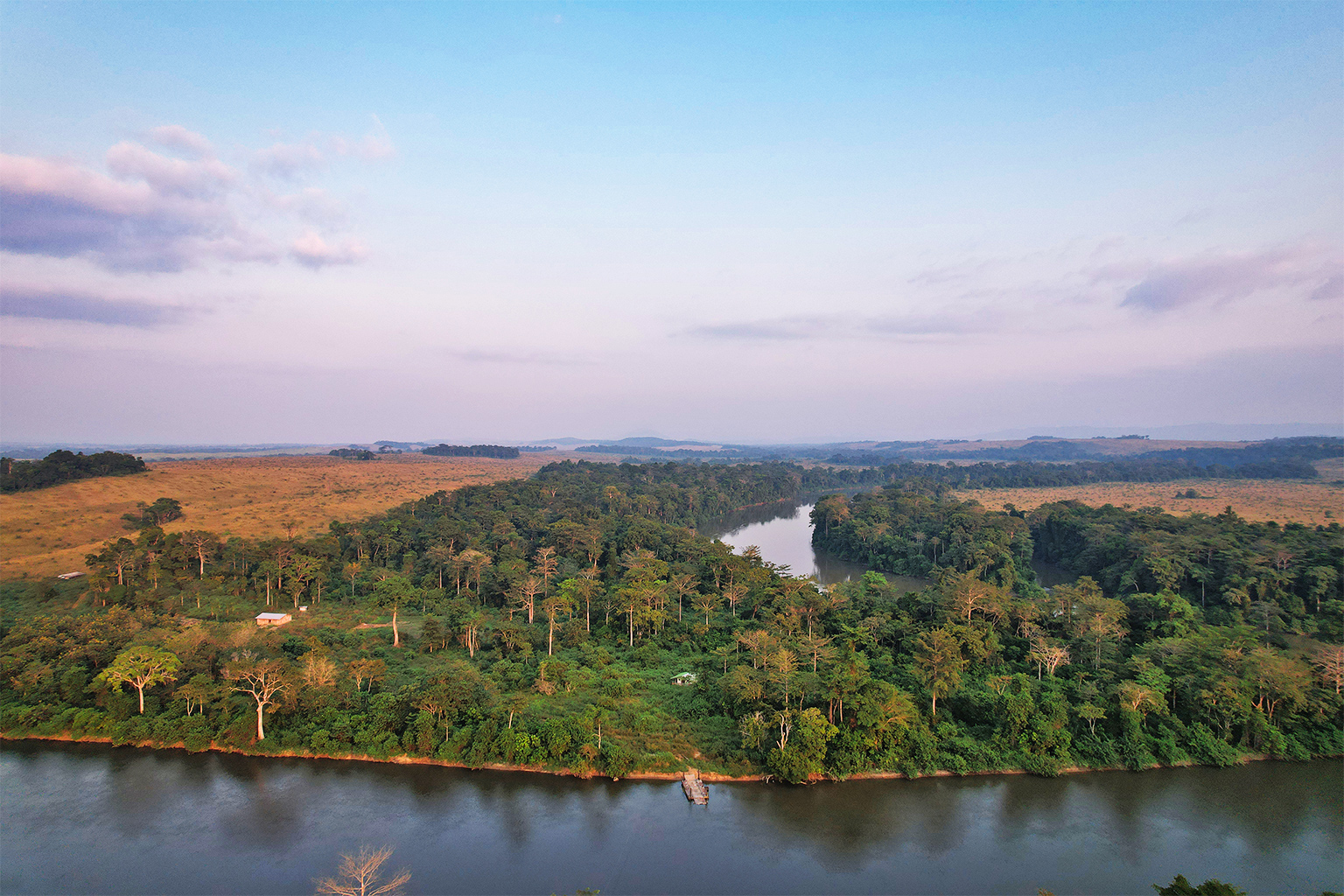 Nyanga River in Moukalaba-Doudau National Park, Gabon, Congo River Basin. Image by Rhett A. Butler/Mongabay.
Fossil-fuel inaction risks amplifying climate disasters
Two years ago, at COP28, held in the United Arab Emirates, a major oil-producing country, the final agreement contained language calling for a transition away from fossil fuels. Many experts at the time celebrated it as a major milestone in the climate talks, as no COP had previously reached consensus on such a sticky, contentious issue.
But this year’s summit’s inability to secure language on phasing out fossil fuels has been described as a disappointment by several parties to the negotiation.
Despite pressure from vulnerable nations and civil society, COP30 ended without a commitment to reduce dependence on oil, gas and coal in a phased manner, even as global emissions hit new highs in 2024, according to the International Energy Agency (IEA).
“This shameful outcome is the result of narrow self-interest and cynical politicking,” said James Dyke of the Global Systems Institute at the University of Exeter, U.K., in a statement posted online. “Rich nations needed to phase out fossil fuels while supporting transitions in the Global South. Neither has happened.”
African civil society leaders also expressed frustration. “COP30 kept the process alive — but process alone will not cool the planet,” said Mohamed Adow, founding director of Power Shift Africa, a Kenya-based think tank. “Roadmaps and workplans will mean nothing unless they translate into real finance and real action.”
Current national plans to cut emissions put the world on track for 2.2-2.3° Celsius (4-4.1° Fahrenheit) of warming by the end of the century. Climate experts warn that breaching the 1.5°C (2.7°F) mark could lock in some of the worst impacts of climate change. This could be especially dire for African countries, which are already bearing the brunt of climate change and have less resources at their disposal to safeguard their citizens.
“We will exceed 1.5°C,” warned Chris Stokes, a glaciologist at Durham University in the U.K., “but limiting the overshoot is now critical.”
The absence of a plan to phase out fossil fuels does not augur well for efforts to limit planet-warming greenhouse gas emissions.
Despite the disappointments, AGN negotiators viewed COP30 as a step forward. “We finally have a clear framework for measuring adaptation. We have strengthened the role of funds in supporting National Adaptation Plans and launched the modalities for the Loss and Damage Fund,” said Muyungi.
He added that explicit recognition of energy access as part of a just transition “places African needs at the heart of the climate debate.”
“We never obtain everything we ask for at a COP,” he said. “But we have made positive and gradual progress — and that is how we move forward.”
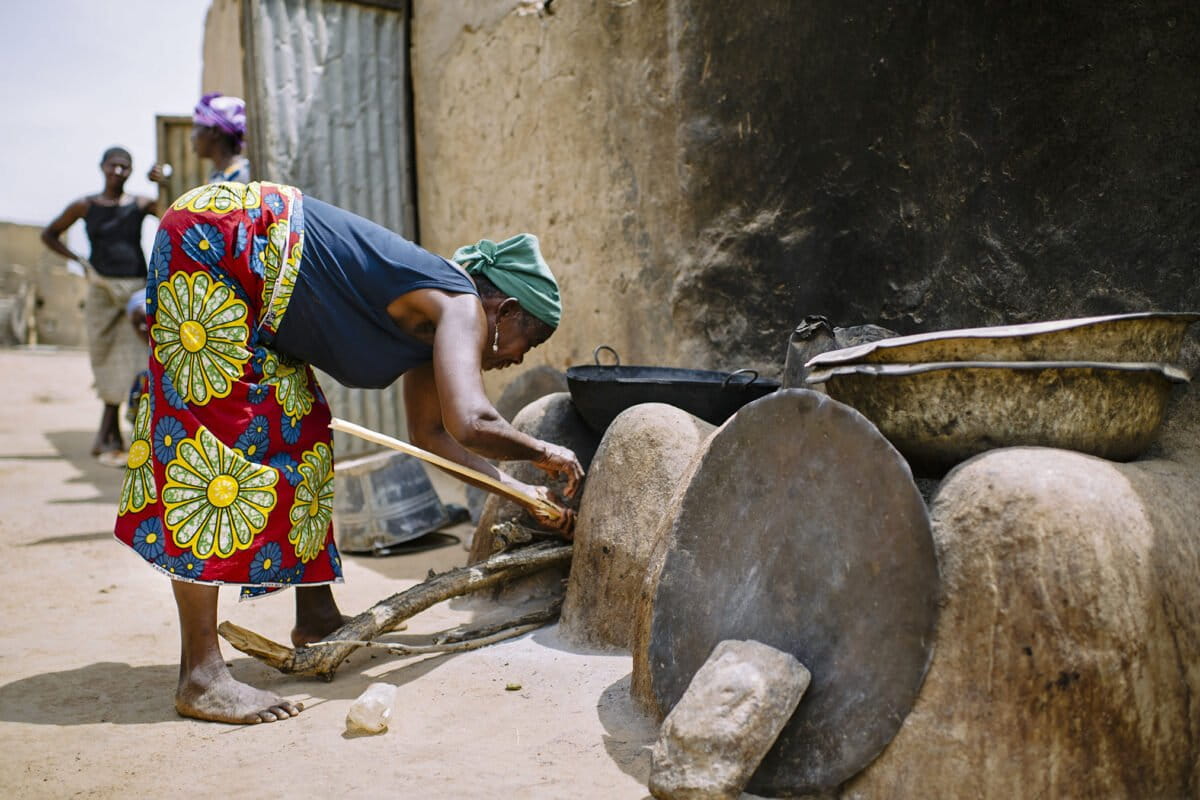
Banner image: A woman lights her stove to prepare lunch, in the village of Zorro, Burkina Faso. By using an improved cook stove, women reduce smoke inhalation and fuel consumption. Image by Ollivier Girard/CIFOR via Flickr (CC BY-NC-ND 2.0).
Hector Sann’do Nammangue contributed reporting from Belém, Brazil.
What does the just energy transition mean for Africa?
Brazil aims for alternative route to fossil fuel road map after COP30 failure
Experts say wealthy nations owe Africa double its climate adaptation needs
