
HIGHLIGHTS
• Incidents of heavy rain highlight the vulnerability of Gaza’s population, many of whom reside in tents and were immediately exposed to risk of flooding with the onset of winter weather, highlighting the urgent need for expanded access to bring in more food aid, winterization supplies and shelter materials.
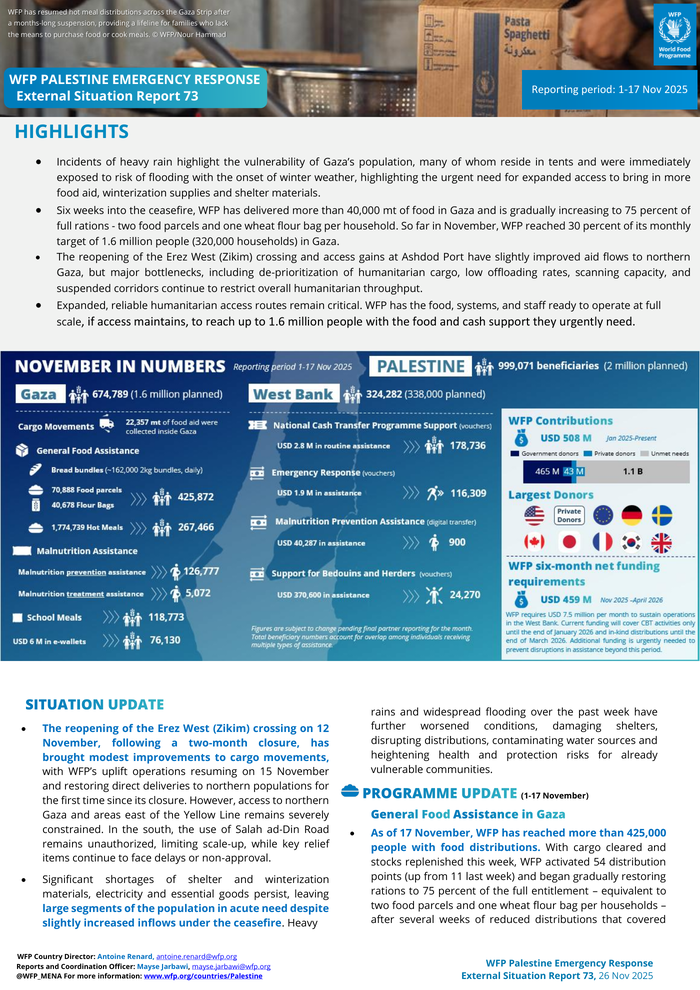
• Six weeks into the ceasefire, WFP has delivered more than 40,000 mt of food in Gaza and is gradually increasing to 75 percent of full rations – two food parcels and one wheat flour bag per household. So far in November, WFP reached 30 percent of its monthly target of 1.6 million people (320,000 households) in Gaza.
• The reopening of the Erez West (Zikim) crossing and access gains at Ashdod Port have slightly improved aid flows to northern Gaza, but major bottlenecks, including de-prioritization of humanitarian cargo, low offloading rates, scanning capacity, and suspended corridors continue to restrict overall humanitarian throughput.
• Expanded, reliable humanitarian access routes remain critical. WFP has the food, systems, and staff ready to operate at full scale, if access maintains, to reach up to 1.6 million people with the food and cash support they urgently need.
SITUATION UPDATE
• The reopening of the Erez West (Zikim) crossing on 12 November, following a two-month closure, has brought modest improvements to cargo movements, with WFP’s uplift operations resuming on 15 November and restoring direct deliveries to northern populations for the first time since its closure. However, access to northern Gaza and areas east of the Yellow Line remains severely constrained. In the south, the use of Salah ad-Din Road remains unauthorized, limiting scale-up, while key relief items continue to face delays or non-approval.
• Significant shortages of shelter and winterization materials, electricity and essential goods persist, leaving large segments of the population in acute need despite slightly increased inflows under the ceasefire. Heavy rains and widespread flooding over the past week have further worsened conditions, damaging shelters, disrupting distributions, contaminating water sources and heightening health and protection risks for already vulnerable communities.