
Unlock the Editor’s Digest for free
Roula Khalaf, Editor of the FT, selects her favourite stories in this weekly newsletter.
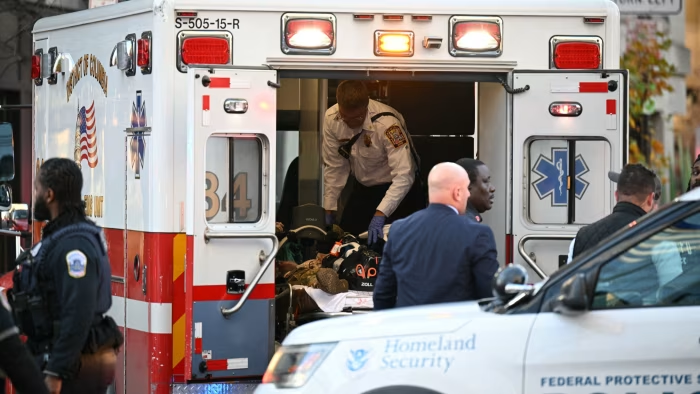
Two members of the National Guard have been shot near the White House in Washington and are “critically wounded”, President Donald Trump said on Wednesday.
“The animal that shot the two National Guardsmen, with both being critically wounded, and now in two separate hospitals, is also severely wounded, but regardless, will pay a very steep price,” Trump wrote on Truth Social from his Mar-a-Lago resort in Florida.
Trump deployed troops from the National Guard to Washington in August in a controversial move to use US military to crack down on crime and civil unrest on domestic soil.
Jeffery Carroll, executive assistant chief of Washington’s Metropolitan Police Department, told reporters that a suspected shooter “came around the corner . . . and discharged” at National Guard members who were patrolling near the White House at approximately 2.15pm.
Other troops nearby were able to “hold down the suspect after he had been shot on the ground”, Caroll said. The suspect is now in custody.
Carroll said it was unclear who had shot the suspect, who appeared to be a “lone gunman”. He said the suspect was being treated at a local hospital.
The motive behind the shooting was unknown, Carroll added.
Defence secretary Pete Hegseth, who is in the Dominican Republic, told reporters that Trump had asked him to deploy an additional 500 National Guard members to the city.
“This will only stiffen our resolve,” Hegseth said. “President Trump will never back down.”
The shootings occurred near the Farragut West metro station, two blocks from the White House in the downtown area of the US capital. More than two dozen emergency vehicles converged on the scene shortly after the incident.
FBI director Kash Patel said in a social media post that the bureau was “engaged and assisting with the investigation” in Washington.
Trump’s move to deploy the National Guard to Washington and take temporary control of the city’s police force was part of a broader crackdown on illegal immigration. His actions have mostly targeted Democratic cities and have prompted legal challenges over the limits to presidential power.
Additional reporting by Steff Chávez in Mexico City