
The Aukus nuclear submarine deal and Australia’s involvement in military conflicts will be considered by a secretive new committee of federal parliament, dubbed a “closed shop” by the Greens over plans to exclude minor parties and independents.
Labor and the Coalition are preparing to pass legislation to establish a joint House and Senate committee on defence as soon as Thursday, with a makeup mirroring the powerful parliamentary joint committee on intelligence and security.
Originally recommended by a review of parliamentary oversight and accountability measures covering defence, the committee will scrutinise the Australian defence force, the defence department, veterans’ affairs and other areas of government working on the Aukus agreement with the US and UK, including the Australian Submarine Agency.
Its work will be conducted in secret, except when public hearings are authorised by the defence minister.
MPs who are members will be tasked with considering defence strategy, planning and contingencies, capability and examining decisions by the government to commit Australian troops to conflicts.
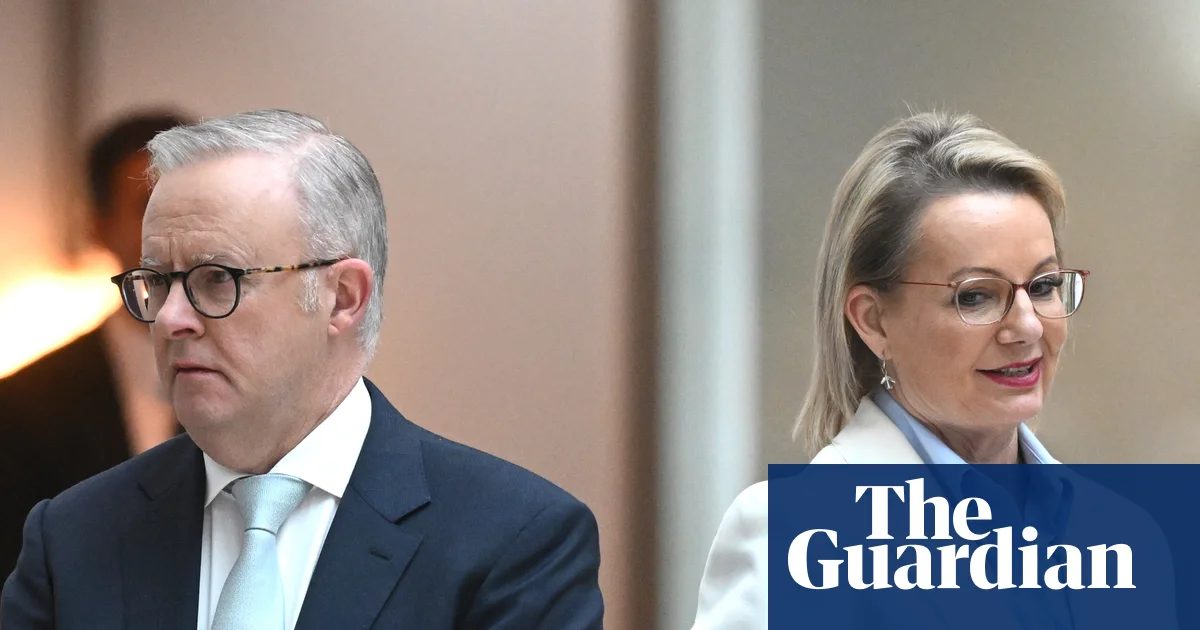
Its membership will be determined by Anthony Albanese, in consultation with the opposition leader, Sussan Ley. No more than seven government MPs will be appointed, along with six non-government members.
Sign up: AU Breaking News email
A government spokesperson said the makeup of the committee would be modelled on the PJCIS, which does not include independent or Greens MPs.
The Greens defence spokesperson, David Shoebridge, criticised the plan, accusing the major parties of trying to shut out other voices.
He called the PJCIS “a secret closed shop without a single crossbench member”.
“Creating another secret committee where the major parties can furiously agree and back in their groupthink on defence does the public no good,” he told Guardian Australia.
“Aukus is a toxic deal, and the more the Australian public sees of it, the more they oppose it. Labor has responded to this challenge by leaning into secrecy and keeping as much as possible from the public.”
 Is Aukus a $368bn fix for Australia’s problems, or will it create more headaches? – video
High-profile Liberal MP Andrew Hastie, a former assistant defence minister and SAS troop commander, has lobbied across parliament for the committee to be established, calling it a forum where senior defence leaders can face hard questions.
Hastie clashed with former opposition leader Peter Dutton over the plan before the May election. The committee idea was reportedly dropped from the Coalition’s election policies over Dutton’s concerns Albanese would appoint Greens and independent MPs.
skip past newsletter promotion
Sign up to Breaking News Australia
Get the most important news as it breaks
Privacy Notice: Newsletters may contain information about charities, online ads, and content funded by outside parties. If you do not have an account, we will create a guest account for you on theguardian.com to send you this newsletter. You can complete full registration at any time. For more information about how we use your data see our Privacy Policy. We use Google reCaptcha to protect our website and the Google Privacy Policy and Terms of Service apply.
after newsletter promotion
Hastie, who quit Ley’s frontbench last month, has told parliament that Greens MPs should not be appointed to the committee due to what he called “deeply anti-defence views”.
“We need serious parliamentarians, not performative ones chasing online outrage,” he said.
“This committee would mean we can ask hard questions of the defence bureaucracy and those in uniform in a protected classified environment. We need continuity, competence and bipartisanship, which is why we should follow the proven model of the PJCIS with government and opposition parties being involved.”
Before the election, Hastie worked on the plan with the defence minister, Richard Marles, as well as Australia’s ambassador to Washington, Kevin Rudd, and serving defence officials.
The shadow defence minister, Angus Taylor, has pushed for membership of the committee to be “predicated on support of higher spending on defence, a recognition of the threat environment, and support for the success of Aukus”.
Labor MP Peter Khalil, a former chair of the PJCIS, said in October that a new defence committee would allow MPs “to express their views on these issues integral to the national security of our country”.
The Aukus deal is expected to cost Australia up to $368bn to the mid-2050s and has the support of both major parties.