
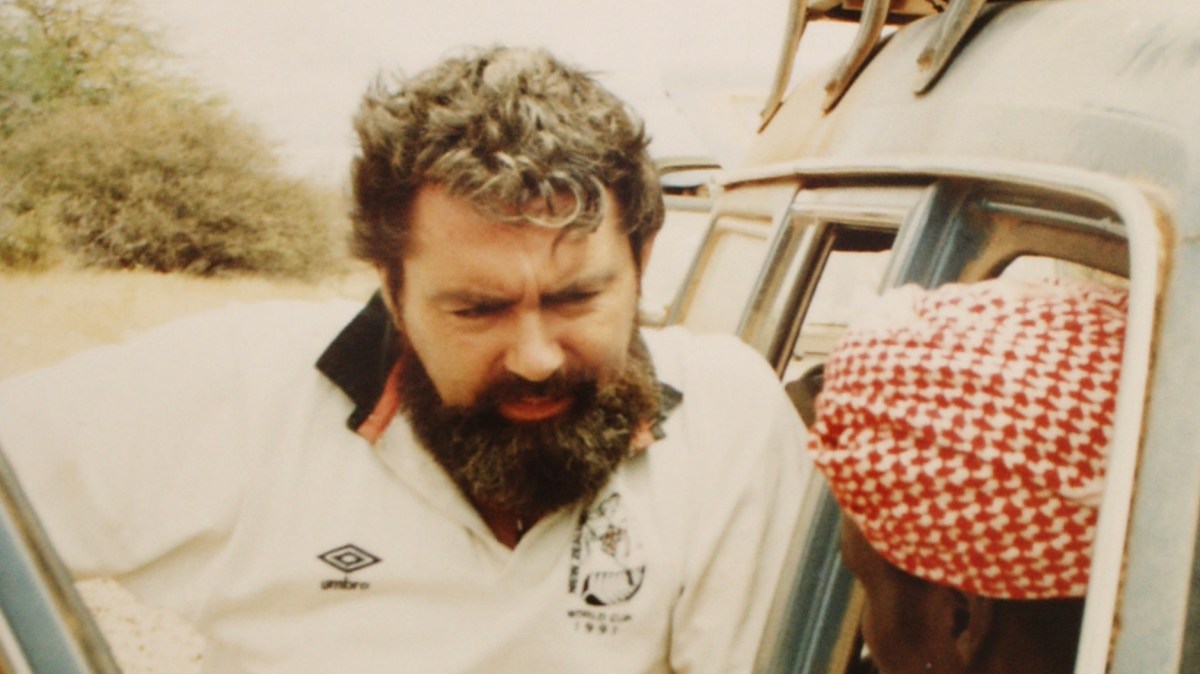
A year before Bob Geldof alerted the world to the devastating famine in Ethiopia in 1984, there was another “mouthy Irishman” making his mark in the stricken east African country. Mike McDonagh become a leading “troubleshooter” and humanitarian aid worker — first for the Irish NGO Concern and later for the United Nations — serving the starving and afflicted in some of the most dangerous, godforsaken places in the world.
In doing so he built a well-earned reputation as a lovable rogue and maverick in the world of international development. However, when his bosses at Concern nagged him over the late filing of financial reports, he had a good excuse. The office he was running in the capital of Angola, Luanda, had just been blown up.
McDonagh was running Concern’s operations in the country, where a long-running civil war was still broiling between the Soviet Union and Cuba-backed communists, the People’s Movement for the Liberation of Angola, and the US and South Africa-backed opposition, the National Union for the Total Independence of Angola (Unita).
In 1994 the city of Malanje in the Angolan central highlands was besieged by Unita, causing widespread starvation there and the reported deaths of 250 children a day. No NGO dared attempt to breach the blockade because Unita had already attacked humanitarian relief operations, notably on June 21, 1994, when a relief convoy between Lobito and Bocoio was hit with mortar bombs and small arms fire, destroying 15 World Food Programme (WFP) vehicles and injuring two of its workers.
Aid workers had been driven out of Malanje by Unita; the city was in desperate need of medicine, vaccines and food aid. Trucking in aid when snipers were happy to shoot at anyone was clearly out of the question. Against all advice, McDonagh ordered in aircraft to fly supplies into Malanje. Other hitherto risk-averse aid agencies immediately followed suit.
A veteran of many other war zones and crisis-hit placesin postings to Laos, Cambodia, Somalia, Angola, Rwanda, Sierra Leone, Liberia, North Korea, Honduras, Albania, Zimbabwe, Iraq and Libya during his four-decade career as an aid worker, McDongah had witnessed a colleague being shot dead and once lost three stone while under siege in Sudan for several months.
An otherwise stout figure in his trademark waistcoats, McDonagh was eloquent, passionate, bombastic and decisive. The phrase “work hard, play hard” might have been invented for him. But if he was no shrinker from the glass, it was only, he said, because it helped him keep sane.
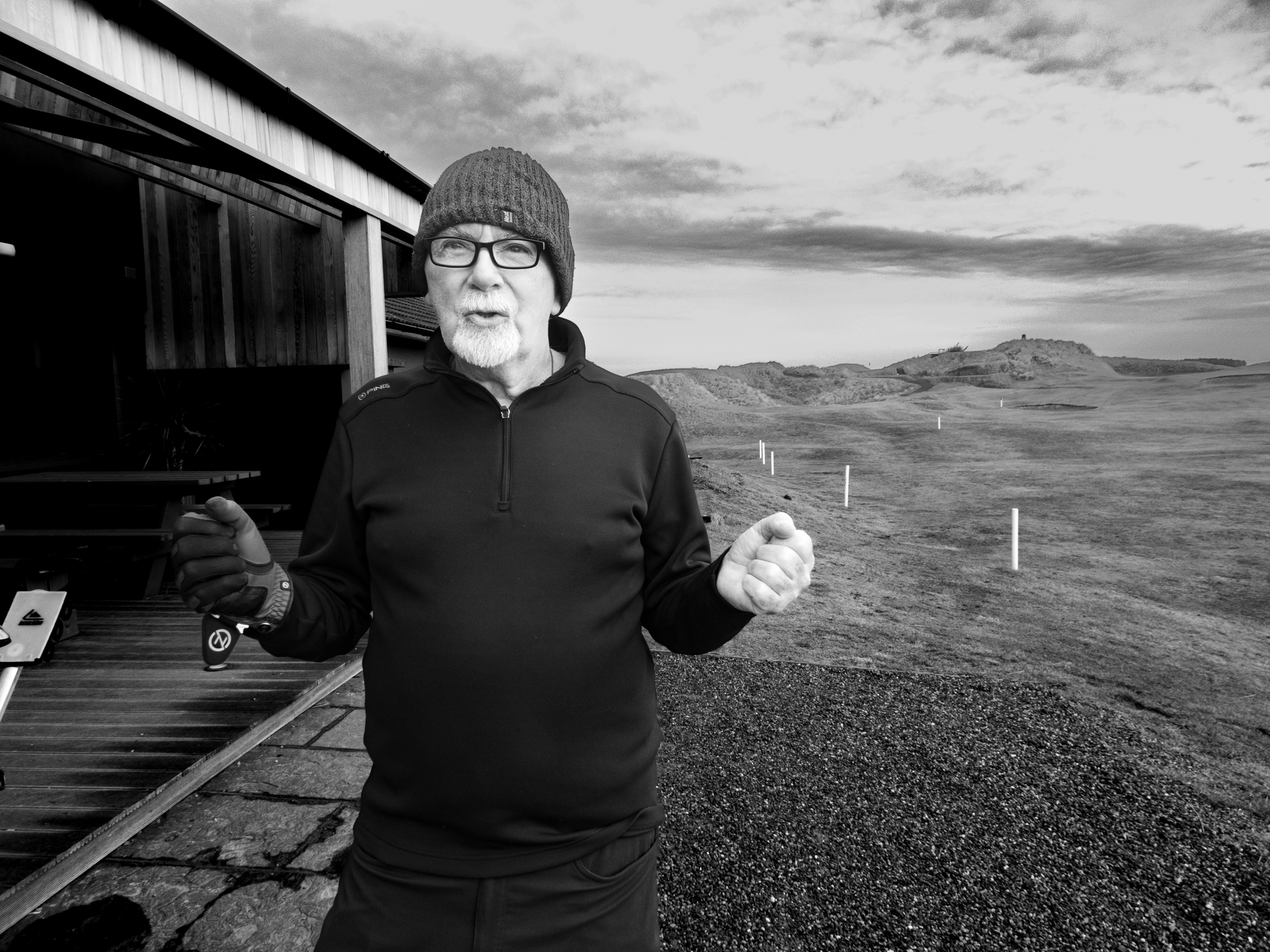
McDonagh returned to Ireland to raise his family after three decades in the field
From 2004 McDonagh worked for the UN’s Office for the Co-ordination of Humanitarian Affairs (OCHA), in Darfur, western Sudan, where the ethnic cleansing of hundreds of thousands of “non-Arabs” was in its full terrible throes. McDonagh drew international attention to the attacks on humanitarian workers there, and the impact these had on aid for the civilian population, who were being deliberately starved by government forces, aided and abetted by the militia group the Janjaweed, or “devils on horseback”.
Speaking truth to power, McDonagh would not curb his anger while his lexicon could be colourful. One leading American figure in international development, a strict Baptist, blanched after a meeting with McDonagh and remarked quietly afterwards that his bearded Irish counterpart had “sworn like a sailor”. The money McDonagh asked for was forthcoming.
From 2004 McDonagh worked with OCHA in Ethiopia, Iraq and Libya. On news of his death, the OCHA’s chief of staff said: “He was famed for his one-word email replies, and for finding ‘creative’ ways to get things done. He was a legend, with many of us retelling any one of his numerous escapades to inventively overcome challenges to get assistance to people in need.” If it meant someone would not die of hunger, McDonagh would negotiate with a rebel commander or a warlord, or bribe a corrupt government official with a case of whisky.
Michael Patrick McDonagh was born in Ennis, Co Clare, in 1956 to Joseph, a post office worker, and Maura (née Kelleher). After being educated by the Christian Brothers in the town, McDonagh trained as an accountant and began working for the Midwestern Health Board, which provided health services in Clare, Limerick and north Tipperary, in 1975. He began volunteering overseas for Concern in 1983 and after several long leaves of absences, he prepared for a professional life in international aid by studying economics at the LSE, graduating in 1991. He later took a master’s in peace, conflict and development at Bradford University. In the early 1990s he joined the staff of the NGO full-time.
In Sudan in 2005 McDonagh met Sarah McNiece, who was working for USAid. “He came in and gave a briefing to donors,” she recalled. After realising that he was the “most passionate and knowledgeable person in the room”, she fell in love.
After years of “active bachelordom”, McDonagh married McNiece in 2008. He retired in 2015 to focus on his young family. Eventually moving back to Co Clare, he dedicated himself to being a father to his daughters Saoirse and Molly. But no one could accuse him of not having lived out his personal mission statement to “go to the most dangerous and godforsaken places where he was needed most and do as much as you can for as long as you can and push things to the limit”.
Mike McDonagh, aid worker, was born on January 28, 1956. He died of an aortic aneurysm on June 21, 2025, aged 69