

A teenage boy whose single mother was murdered while on holiday abroad does not have the right to continue living in their council apartment, the Supreme Court has ruled.
However, two Supreme Court judges said the Oireachtas must change the law to protect minor children, especially the vulnerable children of single parents.
Judge Donal O’Donnell said the now 17-year-old boy had hoped to carry on the tenancy of the apartment, with his aunt – his legal guardian – coming to live with him.
 A teenage boy whose single mother was murdered while on holiday abroad does not have the right to continue living in their council apartment, the Supreme Court has ruled. Pic: Getty Images
His family had argued it was in his best interests to remain in his home following the tragedy. His aunt had agreed to leave her home to move in. However, only a dead person’s partner, or children aged over 18, could take over the lease, under the terms of the Residential Tenancies Act, the judge said, adding: ‘The background circumstances of this case demand sympathy at a human level for the young boy whose life has been so cruelly altered by the loss of his mother in tragic circumstances. If this case involved simply a discretionary decision as to what provision might be made for a single case, it might be easier.
‘But a constitutional challenge such as that involved in this case involves a consideration of law of general application.’
He said the boy’s mother had been on a local authority housing list for 11 years before renting the apartment. He said it was also ‘unfortunate’ the lengthy court case meant the apartment had been empty for three years, and had not been available to others on the housing list.
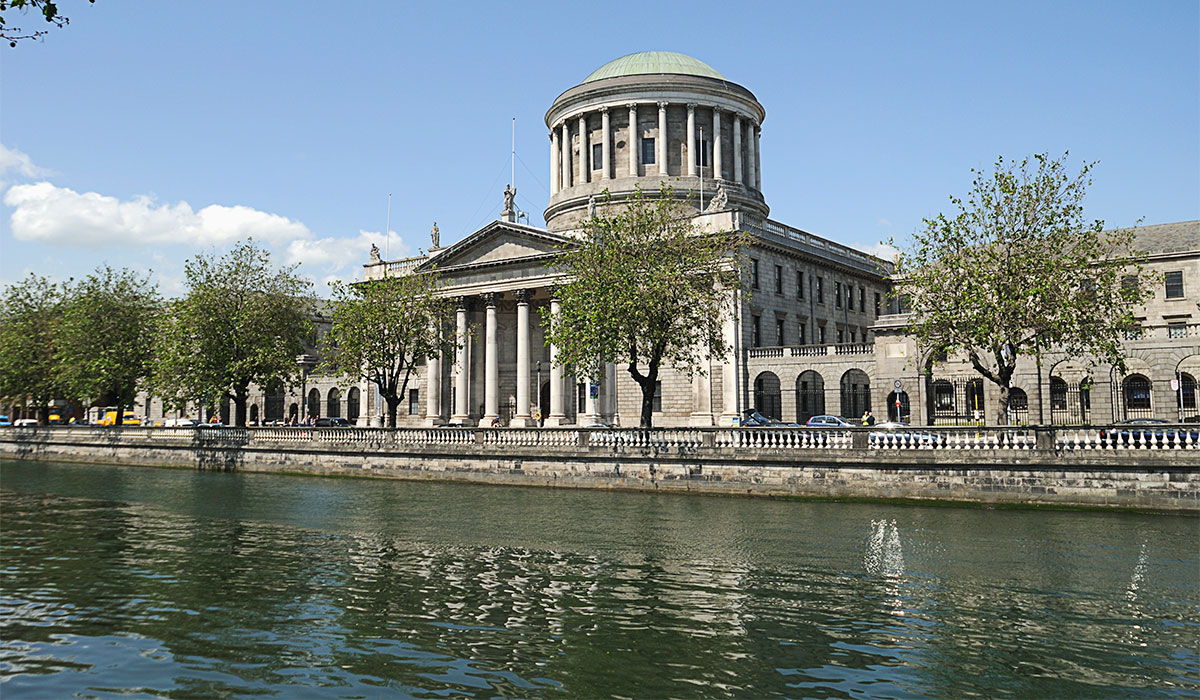 Two Supreme Court judges said the Oireachtas must change the law to protect minor children, especially the vulnerable children of single parents. Pic: Getty Images
The boy, with the support of his aunt and grandparents, had sought declarations including that a provision of the Residential Tenancies Act preventing the child from taking over a tenancy breached his constitutional right to equality.
Judge O’Donnell dismissed their argument, saying that a distinction between adults and minors was a rational one which was commonplace in the law, in the field of tenancies, and in the Constitution itself.
His judgment was supported by fellow Supreme Court judges Peter Charleton and Séamus Woulfe.
But Judge Gerard Hogan and Judge Aileen Donnelly said the Residential Tenancies Act needed to be changed. Judge Hogan said the boy’s life had been ‘full of tragedy’. He said the boy was just 14 when his mother was violently killed in July 2023, and an individual had recently been convicted of her murder in a foreign court. He said the Clúid Housing Association sought to terminate the tenancy later that year, as there was no one qualified to take over the lease. He said the boy went to live with his grandparents, but had been allowed visit his old home.
He said: ‘The Oireachtas was (and is) in breach of its constitutional obligation to uphold and protect the inviolability of the dwelling… by failing to provide for any mechanism whatsoever whereby a child under 18 can seek to remain in a family home by having a legal guardian taking over the lease following the death of a parent who was a tenant of the premises. I would to that extent allow the appeal.’
Judge Donnelly said the legislation was unconstitutional, and that ‘the distinction made between minor children and adult children in occupation at the time of their parent’s death to succeed to the tenancy is arbitrary and irrational’.